Medical Delivery Services: Same-Day, STAT, and Scheduled Options Compared

Updated April 2026 — reviewed and refreshed by carGO Health editorial team.
Every healthcare organization depends on the reliable movement of specimens, medications, medical devices, and documents between facilities. The question is not whether you need medical delivery services, but which type of delivery model matches your operational requirements. The three primary categories of medical delivery are same-day, STAT (emergency), and scheduled (routed), and each serves a distinct function in the healthcare supply chain. Choosing the wrong model for a given situation can mean the difference between a viable specimen and a rejected one, between a patient receiving medication on time and a dangerous gap in treatment adherence. Understanding the capabilities, costs, and clinical implications of each delivery type is essential for any healthcare organization that transports time-sensitive materials.
The stakes are not theoretical. Research published by the American Society for Clinical Pathology has shown that specimen integrity degrades along predictable timelines once a sample is collected. Potassium levels in whole blood begin rising within 30 minutes at room temperature. Coagulation factors in citrated plasma lose stability within hours. Certain molecular diagnostic specimens become unviable if not processed within defined windows. On the pharmaceutical side, the Centers for Disease Control and Prevention reports that medication non-adherence, often caused by delivery delays or gaps in pharmacy logistics, contributes to approximately 125,000 preventable deaths per year in the United States. The delivery model a healthcare organization selects directly determines how effectively it can protect specimen integrity and medication access for its patients.

1. STAT Medical Deliveries: When Minutes Determine Patient Outcomes
STAT deliveries represent the highest priority tier in medical deliveries. The term STAT comes from the Latin “statim,” meaning immediately, and in clinical logistics it designates a transport that must be initiated within minutes of the request and completed in the shortest possible timeframe. STAT deliveries are reserved for situations where a delay of even 30 to 60 minutes could directly compromise a patient outcome, a diagnostic result, or a time-critical clinical decision.
Common use cases for STAT medical delivery include:
- Emergency blood products needed for active transfusions or surgical procedures
- Time-critical specimens such as arterial blood gases, which must be analyzed within 30 minutes of collection
- Organ and tissue transport for transplant procedures with narrow viability windows
- Emergency medications including antivenom, specific antidotes, or rare blood type products not available on-site
- Critical pathology specimens from intraoperative frozen sections requiring immediate analysis
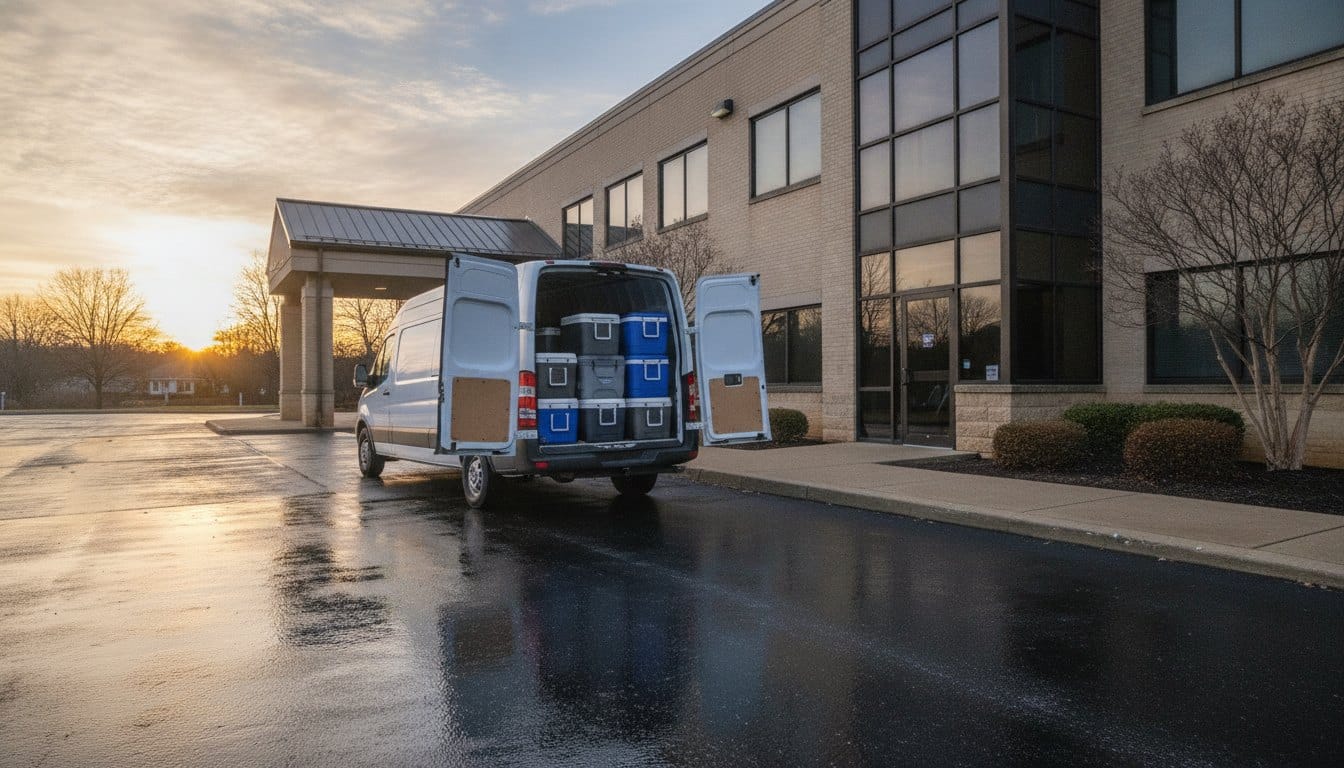
STAT deliveries typically involve dedicated courier dispatch within 15 to 30 minutes of the request, with direct point-to-point transport and no intermediate stops. The courier assigned to a STAT run focuses exclusively on that single shipment until delivery is confirmed. This dedicated resource model is what enables the rapid turnaround, typically 60 to 90 minutes from request to delivery depending on distance, but it also makes STAT the most resource-intensive and highest-cost delivery category.
For a STAT delivery system to function effectively, the logistics provider must maintain a distributed courier network with sufficient geographic coverage to reach any pickup location quickly. AI-powered dispatch technology plays a critical role here, automatically identifying the nearest available courier, calculating the optimal route based on real-time traffic data, and initiating the assignment without the delays inherent in manual dispatch. The difference between a manual dispatch process that takes 10 minutes and an AI dispatch that takes 30 seconds can be the difference between a viable specimen and a rejected one.
Turnaround time: 60 to 90 minutes from request to delivery, with courier dispatch within 15 to 30 minutes.
Cost profile: Highest per-delivery cost due to dedicated courier assignment, direct routing, and rapid response requirements. Typically 2 to 4 times the cost of a same-day delivery.
Best used when: Patient safety or clinical decision-making depends on delivery within a defined, short timeframe that cannot be met by same-day or scheduled service.
2. Same-Day Medical Deliveries: Balancing Speed and Efficiency
Same-day medical delivery services occupy the middle tier between STAT urgency and scheduled efficiency. A same-day delivery is requested and completed within the same calendar day, typically with a turnaround time of 2 to 6 hours depending on distance, routing complexity, and the logistics provider’s operational model. Same-day deliveries are the most versatile category in medical logistics and represent the highest volume of on-demand medical transport requests for most healthcare organizations.
Common use cases for same-day medical delivery include:
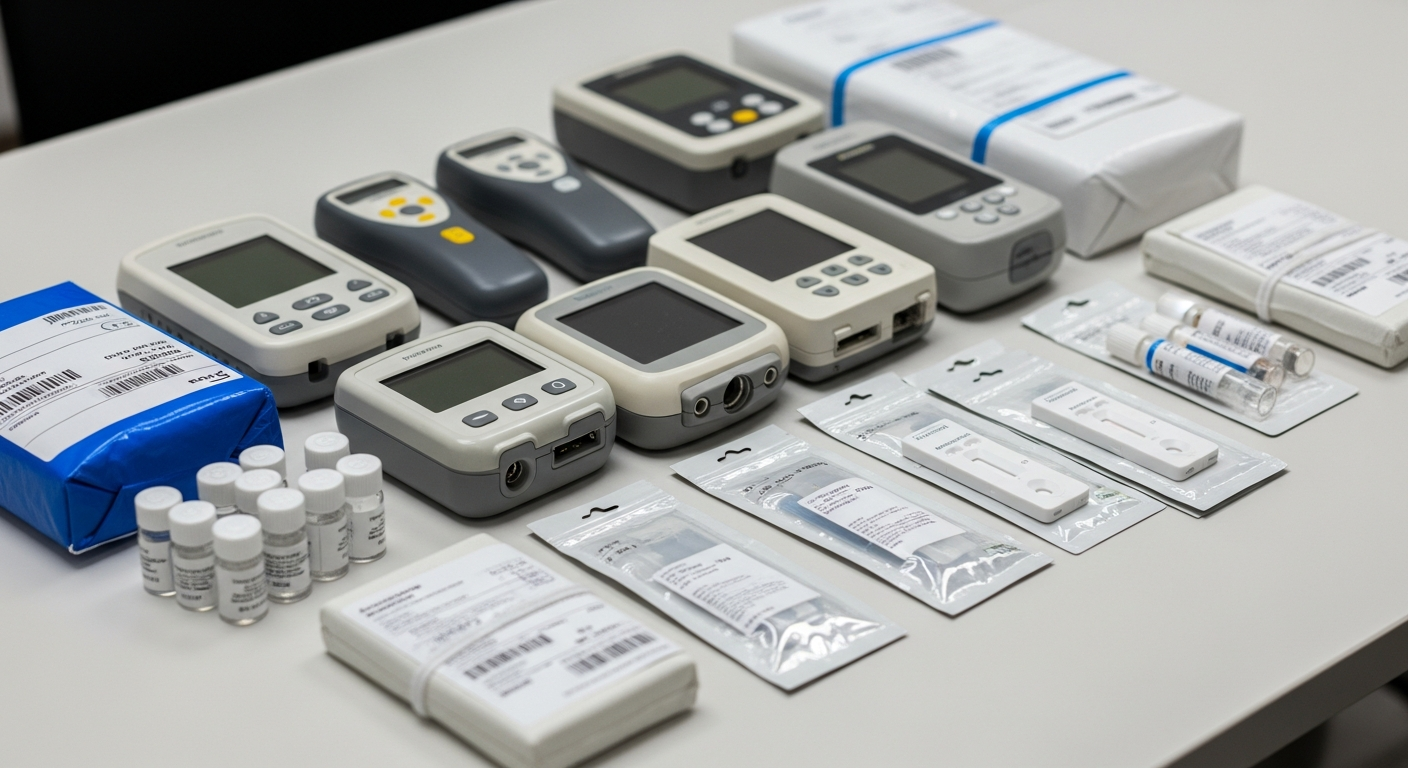
- Routine clinical specimens sent to reference laboratories that require same-day processing to maintain integrity
- Prescription medications delivered from specialty pharmacies to patients or healthcare facilities
- Medical supplies and devices needed for procedures scheduled later the same day
- Pathology specimens that are time-sensitive but do not require the immediate response of a STAT run
- Inter-facility document transfers including patient records, consent forms, and imaging media
The operational model for same-day delivery allows the logistics provider to optimize routing by batching multiple pickups and deliveries on a single courier run when geographic proximity permits. This shared-route approach reduces the per-delivery cost compared to STAT while still meeting clinically acceptable turnaround times. A well-managed same-day operation uses real-time tracking technology to provide visibility into courier location and estimated arrival, so sending and receiving facilities can plan their workflows accordingly.
The critical consideration for same-day medical deliveries is specimen stability. Not every specimen that seems appropriate for same-day service actually is. A coagulation panel in citrated plasma has a stability window of approximately 4 hours from collection, which means a same-day delivery with a 5-hour turnaround will produce a rejected specimen. A glucose measurement in an unpreserved tube begins degrading within 30 minutes as cellular glycolysis continues. Healthcare organizations must match their specimen types to the appropriate delivery tier based on actual stability data, not assumptions about what constitutes acceptable speed.
Understanding these stability constraints is where working with a specialized medical courier service rather than a general delivery provider becomes essential. A purpose-built medical courier classifies each specimen by its stability requirements and ensures that the delivery model assigned matches the clinical need, preventing the kind of delivery errors that drive unnecessary costs and compromise patient care.
Turnaround time: 2 to 6 hours from request to delivery, depending on distance and route optimization.
Cost profile: Moderate per-delivery cost. Route optimization and multi-stop batching reduce costs compared to dedicated STAT runs.
Best used when: Materials are time-sensitive and must arrive the same day, but do not require the immediate, dedicated response of a STAT delivery.
3. Scheduled and Routed Medical Deliveries: Predictability at Scale
Scheduled medical deliveries, also called routed deliveries, operate on predetermined schedules with fixed pickup times and established routes. This is the delivery model used by healthcare organizations that generate consistent, predictable transport volume between the same locations on a daily or weekly basis. Reference laboratories, hospital networks, multi-site physician groups, and pharmacies with regular distribution needs all rely heavily on scheduled delivery infrastructure.
Common use cases for scheduled medical delivery include:
- Daily specimen pickups from physician offices, urgent care clinics, and hospital outpatient departments for reference laboratory processing
- Routine pharmaceutical distribution from central pharmacies to satellite locations, long-term care facilities, or home health programs
- Medical supply replenishment on fixed schedules for clinics, surgical centers, and nursing facilities
- Inter-facility mail runs for medical records, pathology slides, and administrative documents
- Biorepository and clinical trial specimen transport on established collection schedules
The primary advantage of scheduled delivery is cost efficiency. Because routes are planned in advance and optimized for geographic clustering, scheduled deliveries achieve the lowest per-stop cost of any delivery model. A single routed courier run that picks up specimens from 15 physician offices and delivers them to a central laboratory is dramatically more cost-effective than 15 individual on-demand pickups. For high-volume operations, this cost difference is substantial, often representing a 40 to 60 percent reduction in per-specimen transport cost compared to on-demand same-day service.
The tradeoff is flexibility. Scheduled routes are designed around fixed timeframes, which means they cannot accommodate urgent or unplanned transport needs. A physician office that has a STAT specimen after the scheduled courier has already departed must request a separate on-demand pickup. This is why most healthcare organizations need a medical delivery company that provides all three delivery tiers, scheduled, same-day, and STAT, within a single integrated operation. Relying on one provider for scheduled routes and a different provider for on-demand needs creates coordination complexity, inconsistent handling protocols, and gaps in chain of custody documentation.
For organizations managing laboratory outreach programs or multi-site networks, the decision between in-house and outsourced medical courier operations is most relevant in the scheduled delivery tier. In-house courier teams can manage fixed routes, but they lack the surge capacity for same-day and STAT needs. Outsourcing to a specialized medical courier that handles all three tiers eliminates the need to maintain separate internal logistics infrastructure while gaining access to advanced dispatch technology and broader geographic coverage.
Turnaround time: Predetermined, based on fixed route schedules. Typical pickup windows range from daily to multiple times per day depending on volume and specimen requirements.
Cost profile: Lowest per-delivery cost due to route optimization, multi-stop batching, and predictable volume. Typically 40 to 60 percent less than on-demand same-day service per stop.
Best used when: Transport volume is consistent, pickup locations are fixed, and materials can be batched for collection at predetermined times.
4. How Delivery Speed Impacts Patient Outcomes and Specimen Quality
The connection between delivery speed and clinical outcomes is not abstract. It is measurable, documented, and directly relevant to how healthcare organizations should design their delivery strategies. Every clinical specimen has a defined stability window, the period between collection and processing during which the specimen remains diagnostically valid. When transport time exceeds that window, the result is a pre-analytical error that compromises diagnostic accuracy.
Specimen stability timelines that drive delivery tier selection:
- Arterial blood gases: must be analyzed within 30 minutes of collection, requiring STAT transport
- Coagulation studies (PT/INR, PTT): stable for approximately 4 hours in citrated plasma at room temperature
- Complete blood count with differential: stable for up to 24 hours when refrigerated, but cellular morphology begins changing within 6 hours
- Glucose in unpreserved tubes: glycolysis reduces glucose levels by 5 to 7 percent per hour at room temperature
- Potassium levels: pseudohyperkalemia from red blood cell leakage begins within 30 minutes in whole blood at room temperature
- Lactic acid: levels rise rapidly due to continued cellular metabolism, requiring immediate chilled transport and processing
According to research published in the National Library of Medicine, pre-analytical errors account for up to 70 percent of all laboratory errors, and transport-related factors including time, temperature, and handling are among the most common causes. Specimen rejection due to transport delay forces recollection, which delays diagnosis by 24 to 48 hours, increases patient discomfort, consumes additional clinical resources, and in some cases results in patients who fail to return for recollection at all.
On the pharmaceutical side, delivery speed directly affects medication adherence. The Centers for Disease Control and Prevention has documented that medication non-adherence is a primary driver of preventable hospital readmissions and adverse health outcomes. For specialty medications that require cold chain logistics and temperature control, delivery delays introduce both adherence gaps and temperature excursion risks. A biologic medication that arrives 6 hours late may have exceeded its temperature stability window, rendering it clinically ineffective or potentially unsafe.
These clinical realities make delivery tier selection a clinical decision, not just a logistics decision. Healthcare organizations should work with their laboratory directors, pharmacists, and logistics partners to map every material type to the appropriate delivery tier based on documented stability data and clinical requirements. A specialized medical courier partner can assist with this mapping process and ensure that every shipment is assigned to the delivery tier that protects its clinical value.
5. Building an Integrated Medical Delivery Strategy
The most effective approach to medical delivery is not selecting one tier and applying it universally. It is building an integrated strategy that deploys all three delivery types based on material requirements, clinical urgency, and cost optimization. This integrated approach requires a logistics partner with the infrastructure, technology, and operational expertise to manage scheduled routes, same-day on-demand requests, and STAT emergencies within a single, unified platform.
Key elements of an integrated medical delivery strategy:
- Material classification protocol: every specimen, medication, and supply type mapped to the appropriate delivery tier based on stability data and clinical requirements
- Scheduled route optimization: fixed routes designed around geographic clustering, pickup volume, and specimen processing deadlines
- On-demand surge capacity: same-day and STAT capabilities available 24/7/365 to handle unplanned or urgent transport needs
- Unified technology platform: a single system for order placement, real-time tracking, chain of custody documentation, and performance reporting across all delivery tiers
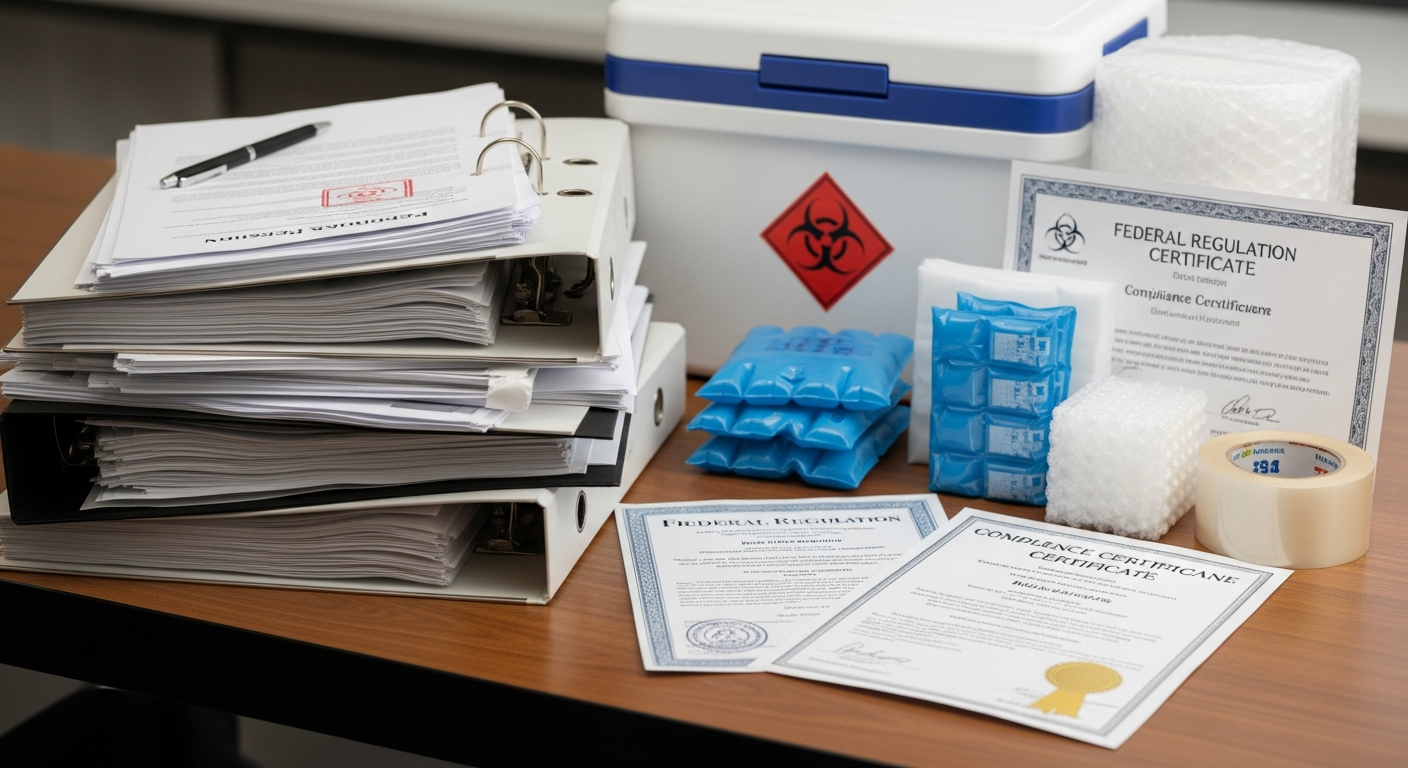
- Compliance consistency: the same HIPAA, OSHA, and DOT compliance standards applied uniformly regardless of delivery tier or urgency level
- Performance analytics: data-driven review of delivery times, specimen rejection rates, temperature compliance, and cost per delivery across all service tiers
Organizations that manage their delivery strategy through a single specialized partner gain significant advantages over those that use multiple vendors or attempt to maintain in-house logistics alongside outsourced emergency coverage. A single partner maintains consistent handling protocols, unified HIPAA and OSHA compliance standards, and a single chain of custody system that simplifies regulatory documentation and audit preparation.
The technology platform underlying the delivery operation determines how effectively an integrated strategy can be executed. AI-powered dispatch that dynamically assigns deliveries to the appropriate tier, optimizes routes in real time, and provides continuous visibility to all stakeholders is the operational backbone of a modern medical delivery program. Without this technology infrastructure, even well-designed delivery strategies degrade into manual coordination, missed windows, and inconsistent performance.
carGO Health provides all three delivery tiers, STAT, same-day, and scheduled, within a single integrated operation supported by AI-powered dispatch, real-time tracking, certified medical couriers, and full regulatory compliance across the healthcare organizations we serve throughout New York, New Jersey, Connecticut, Massachusetts, Pennsylvania, Delaware, Maryland, and Virginia. With over 150,000 completed deliveries and 100 percent customer retention, we provide the infrastructure healthcare organizations need to protect specimen integrity, maintain medication access, and optimize logistics costs across every delivery type.
Key Takeaways
Same-day, STAT, and scheduled medical deliveries each serve distinct roles in the healthcare supply chain. STAT deliveries provide the fastest response for time-critical emergencies but at the highest cost. Same-day deliveries balance speed and efficiency for materials that must arrive within hours. Scheduled deliveries deliver the lowest per-stop cost for predictable, high-volume transport needs. The most effective medical delivery strategy uses all three tiers, matching each material to the delivery model that protects its clinical value while optimizing overall logistics costs.
Delivery speed is not just an operational metric. It is a clinical variable that directly affects specimen integrity, diagnostic accuracy, medication adherence, and patient outcomes. Healthcare organizations that treat delivery tier selection as a clinical decision, informed by specimen stability data and patient care requirements, will consistently outperform those that default to a single delivery model for all materials.
If your organization needs a medical delivery partner that provides STAT, same-day, and scheduled service within a single integrated platform, request a demo to see how carGO Health can streamline your medical delivery operations.
Frequently Asked Questions
What is the difference between STAT and same-day medical delivery?
STAT medical delivery is an emergency service where a dedicated courier is dispatched within 15 to 30 minutes for direct point-to-point transport, typically completing delivery within 60 to 90 minutes. Same-day delivery is completed within the same calendar day, usually within 2 to 6 hours, and may involve optimized routing with multiple stops. STAT is reserved for time-critical situations where patient outcomes depend on immediate delivery, while same-day serves materials that are urgent but not emergent.
How do I determine which medical delivery type my organization needs?
The delivery type should be determined by the stability requirements and clinical urgency of the materials being transported. Map each specimen type, medication, and supply to its documented stability window and clinical timeline. Materials with stability windows under 60 minutes, such as arterial blood gases, require STAT delivery. Materials stable for several hours can use same-day service. Predictable, recurring transport needs with flexible timing are best served by scheduled routes. Most organizations need all three tiers.
How much do medical delivery services cost compared to each other?
STAT deliveries are the most expensive, typically 2 to 4 times the cost of same-day service, because they require dedicated courier assignment and immediate dispatch. Same-day deliveries cost less due to route optimization and multi-stop batching. Scheduled routed deliveries offer the lowest per-stop cost, often 40 to 60 percent less than on-demand same-day service, because routes are pre-planned for maximum efficiency. The overall cost depends on volume, distance, and service area.
Can one medical delivery company handle all three delivery types?
Yes, and using a single provider for all three delivery tiers is strongly recommended. A single medical delivery company that handles STAT, same-day, and scheduled deliveries maintains consistent handling protocols, unified compliance standards, and a single chain of custody system across all service types. This simplifies regulatory documentation, ensures consistent specimen handling, and eliminates the coordination complexity of managing multiple logistics vendors.
How does delivery speed affect specimen quality and patient care?
Delivery speed directly affects specimen integrity because every clinical specimen has a defined stability window. Exceeding that window causes measurable degradation, such as potassium elevation in whole blood within 30 minutes, glucose reduction of 5 to 7 percent per hour, and coagulation factor loss within 4 hours. Degraded specimens produce inaccurate results, force recollection that delays diagnosis by 24 to 48 hours, and in some cases lead to incorrect treatment decisions that harm patients.
Related Reading
- Comprehensive Guide to Medical Courier Services
- Why Hospitals Outsource Medical Courier Operations
- STAT Medical Courier Service: Emergency Response Standards
- Medical Specimen Transport: Protocols and Compliance
- HIPAA Compliant Medical Courier: What to Look For
- Get a Quote — carGO Health Medical Courier Services
Related Resources