The State of Medical Courier Technology in 2026: AI, Automation, and the Future of Healthcare Logistics
Updated April 2026 — reviewed and refreshed by carGO Health editorial team.
The medical courier industry is undergoing the most significant technological transformation in its history. What was once an operations-heavy, manually dispatched service sector has become a proving ground for artificial intelligence, Internet of Things sensor networks, blockchain-verified chain of custody, and predictive analytics platforms that are fundamentally redefining how healthcare materials move between facilities. According to a 2025 report from Grand View Research, the global healthcare logistics market is projected to reach $188.2 billion by 2030, growing at a compound annual growth rate of 7.8%, with technology adoption cited as the primary catalyst. For healthcare organizations that depend on the timely, compliant, and condition-controlled transport of specimens, pharmaceuticals, blood products, and medical devices, understanding the current state of medical courier technology is not an academic exercise. It is an operational imperative that directly affects patient outcomes, regulatory compliance, and financial performance.
This white paper provides a comprehensive examination of the technologies currently deployed in advanced medical courier operations, evaluates their measurable impact on delivery performance and specimen viability, analyzes the regulatory technology requirements that govern healthcare logistics, and surveys the emerging technologies that will shape the industry through the remainder of this decade. The analysis draws on industry data, regulatory frameworks, and operational benchmarks to provide healthcare logistics decision-makers with a rigorous, evidence-based assessment of where the industry stands today and where it is heading.

1. AI-Powered Dispatch and Route Optimization: The Operational Core
Artificial intelligence has moved from an aspirational technology to the operational core of advanced medical courier platforms. The fundamental challenge that AI dispatch systems address is one of combinatorial complexity: a medical courier operation serving a metropolitan area may need to simultaneously optimize dozens of active routes across hundreds of pickup and delivery points, each with different time constraints, temperature requirements, priority levels, and regulatory handling protocols. Traditional manual dispatch, even when supported by experienced dispatchers, cannot process this volume of variables with the speed and precision that healthcare logistics demands.
Modern AI-powered dispatch systems use machine learning algorithms trained on historical delivery data to make real-time routing decisions that account for traffic patterns, weather conditions, courier proximity, vehicle capacity, specimen stability windows, and delivery priority classifications. These systems continuously recalculate optimal routes as conditions change, a capability that is particularly critical for STAT deliveries where minutes directly affect clinical outcomes.
The mathematical foundation of these systems draws on several algorithmic approaches. Vehicle routing problem (VRP) solvers, enhanced with time-window constraints specific to healthcare logistics, form the baseline optimization layer. On top of this, reinforcement learning models continuously improve routing decisions by analyzing the outcomes of previous deliveries, identifying patterns that traditional algorithms miss, such as facility-specific intake delays, parking constraints at hospital campuses, and time-of-day variations in building access procedures.
The measurable impact of AI dispatch on medical courier operations is substantial. Industry data indicates that AI-optimized routing reduces average delivery times by 18-25% compared to manually dispatched operations. For specimen-focused couriers, this reduction in transit time directly improves specimen viability rates. A 2024 study published in the Journal of Clinical Laboratory Science found that every 15-minute reduction in specimen transit time correlated with a 3.2% improvement in specimen acceptability rates for temperature-sensitive analytes. When extrapolated across a high-volume operation processing thousands of specimens daily, this improvement translates to hundreds of specimens per month that reach the laboratory in analyzable condition rather than being rejected.
Beyond routing, AI systems now manage dynamic load balancing across courier fleets. When a STAT request arrives, the system evaluates not just which courier is closest, but which courier can accommodate the new pickup without compromising the time-sensitivity or temperature integrity of specimens already in transit. This multi-constraint optimization is computationally intensive but operationally essential for maintaining service quality across all active deliveries simultaneously.
Key AI Dispatch Capabilities in 2026:
- Real-time multi-variable route optimization incorporating traffic, weather, priority level, and specimen stability constraints
- Reinforcement learning models that continuously improve routing accuracy based on historical delivery outcome data
- Dynamic fleet load balancing that protects in-transit specimen integrity when STAT requests are inserted
- Predictive demand modeling that pre-positions couriers based on anticipated pickup volumes by facility and time of day
- Automated escalation protocols that reroute deliveries when delays threaten specimen viability windows
2. IoT Sensor Networks and Cold Chain Monitoring Infrastructure
The Internet of Things has enabled a paradigm shift in how medical courier operations monitor and document transport conditions. Where previous-generation systems relied on passive temperature indicators, such as chemical temperature strips that could only confirm whether a threshold had been breached, current IoT sensor networks provide continuous, real-time environmental monitoring with data transmission capabilities that feed directly into dispatch platforms, chain of custody records, and client-facing dashboards.
Modern cold chain monitoring systems deploy multi-parameter sensors that simultaneously track temperature, humidity, vibration, light exposure, and orientation. For cold chain logistics in healthcare, this multi-parameter approach is essential because temperature alone does not capture all the environmental factors that can compromise specimen or pharmaceutical integrity. Excessive vibration can damage cellular structures in blood products. Light exposure can degrade certain pharmaceuticals and diagnostic reagents. Humidity excursions can compromise packaging integrity and label adhesion.
The economic case for IoT-enabled cold chain monitoring is compelling. The World Health Organization estimates that approximately 25% of vaccines reach their destination in a degraded state due to cold chain failures, representing billions of dollars in wasted product annually. In the clinical specimen transport segment, research published by the American Society for Clinical Pathology indicates that temperature-related specimen rejection accounts for 12-18% of all pre-analytical rejections, with each rejected specimen generating costs of $20-$120 in recollection, reprocessing, and delayed diagnosis.
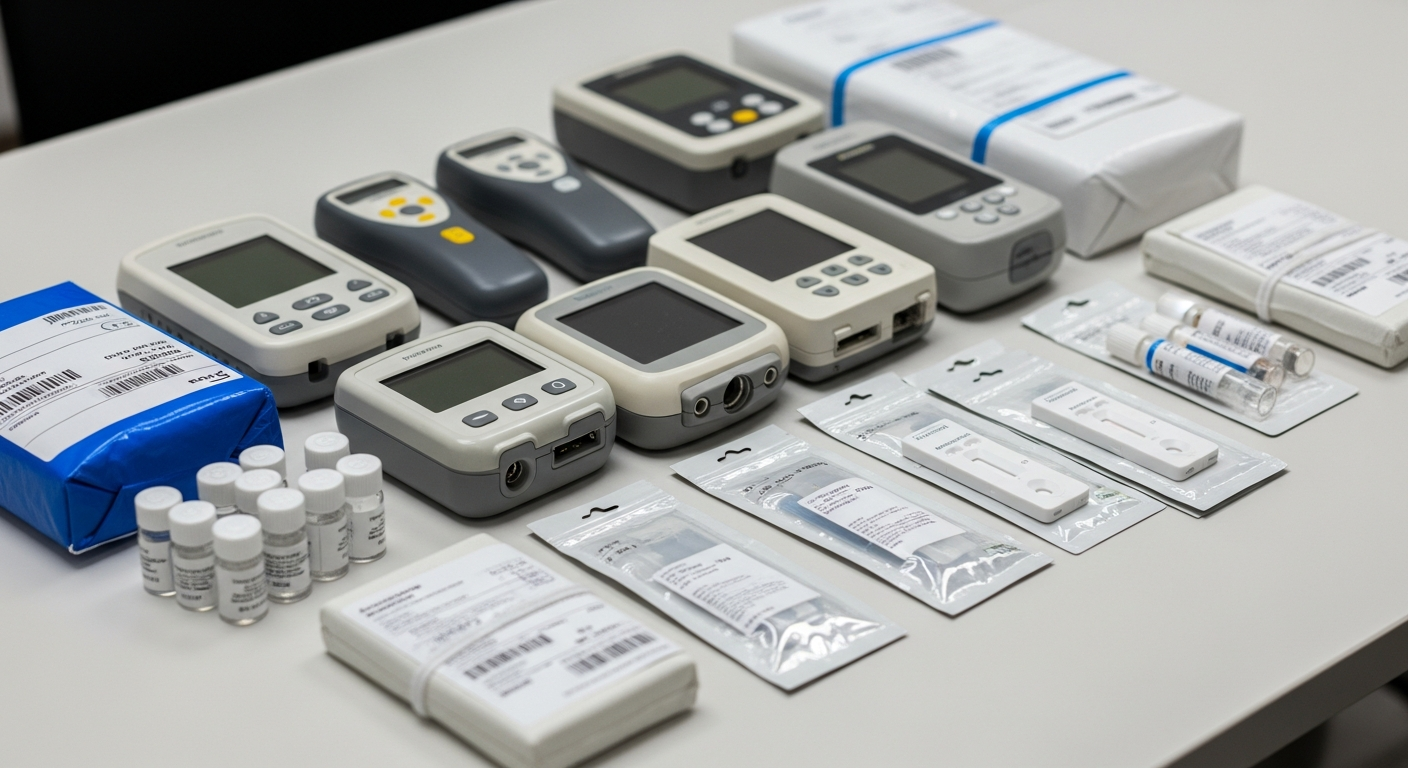
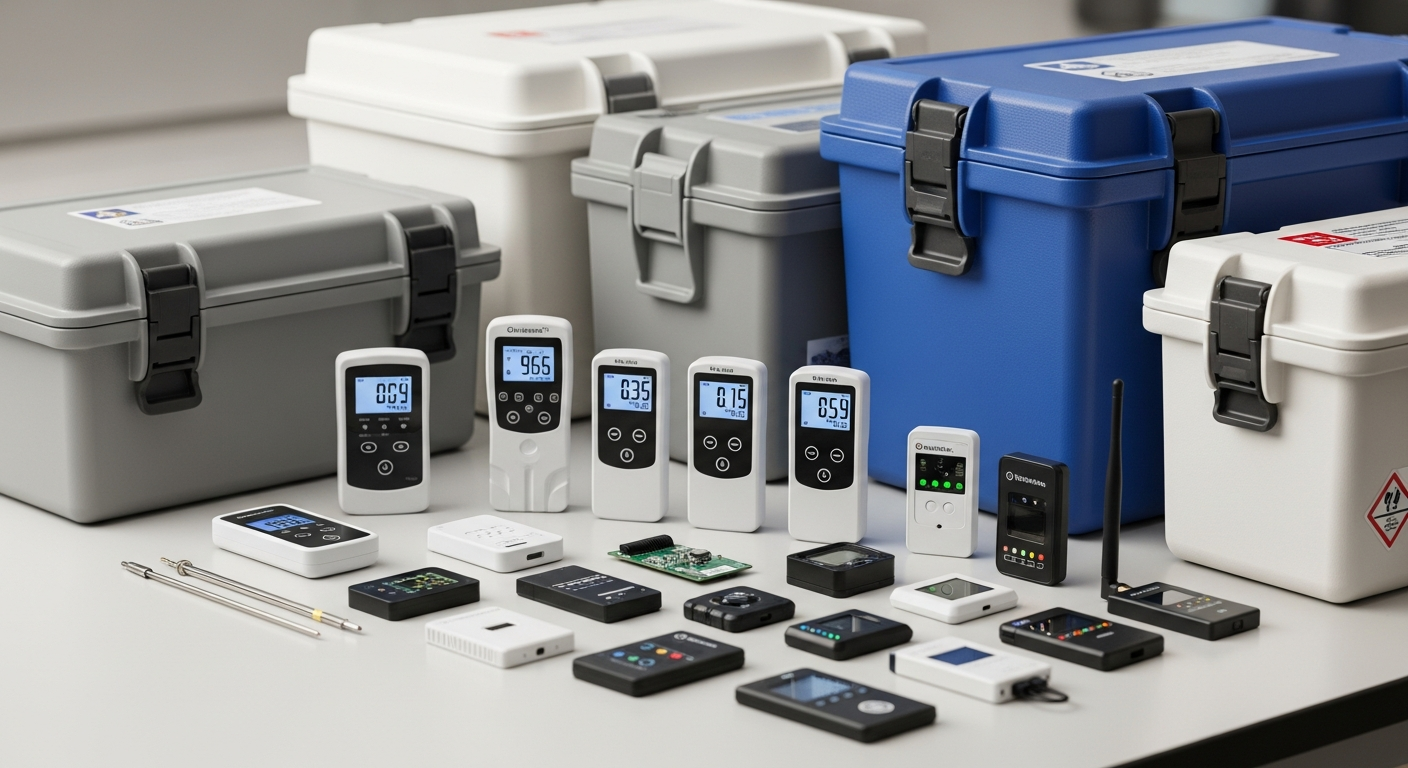
The sensor hardware itself has evolved significantly. Current-generation IoT temperature sensors are approximately the size of a postage stamp, operate on battery power for 12-24 months, and transmit data via Bluetooth Low Energy to courier mobile devices, which relay the data to cloud platforms over cellular networks. This architecture eliminates the need for dedicated cellular connectivity in each sensor, reducing per-unit costs while maintaining continuous data transmission. More advanced deployments use LoRaWAN or NB-IoT protocols that enable sensors to transmit directly to cloud gateways without intermediary devices, providing monitoring continuity even when specimens are in transit between courier handoffs.
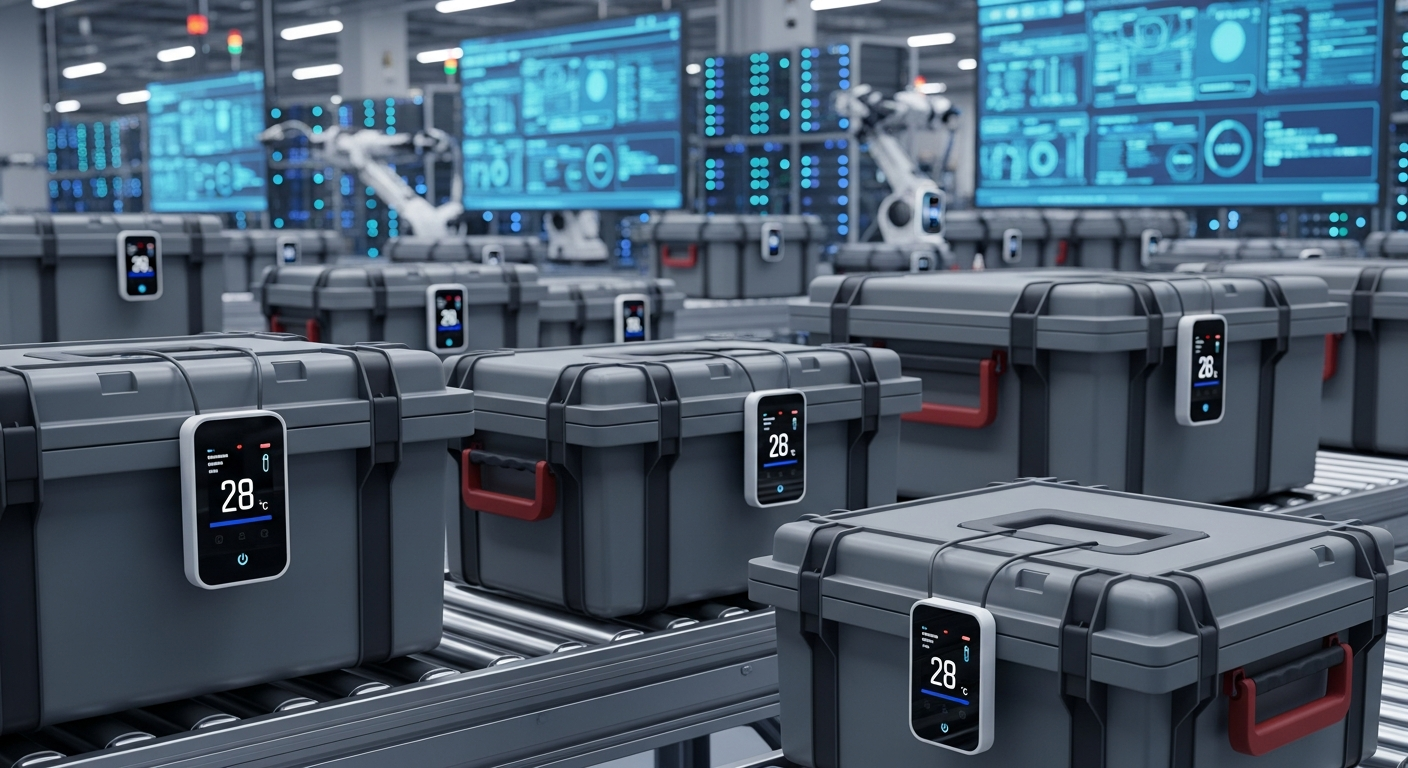
The integration of IoT sensor data with AI dispatch platforms creates a closed-loop system where environmental excursions trigger automated responses. When a temperature sensor detects a reading outside the acceptable range for the material being transported, the system can automatically alert the dispatcher, notify the receiving facility, reroute the courier to the nearest appropriate facility, or escalate to a supervisor, all within seconds of the excursion detection. This automated response capability transforms cold chain monitoring from a retrospective documentation exercise into a proactive intervention system.
IoT Sensor Network Components and Capabilities:
- Multi-parameter sensors tracking temperature, humidity, vibration, light exposure, and orientation simultaneously
- BLE, LoRaWAN, and NB-IoT transmission protocols providing continuous data relay without dedicated cellular plans
- Cloud-based data aggregation platforms with automated excursion detection and alerting
- Integration with dispatch AI for automated rerouting and escalation when environmental thresholds are breached
- Historical environmental data archiving for regulatory compliance documentation and quality trend analysis
3. Blockchain, Digital Chain of Custody, and Regulatory Technology Compliance
The regulatory landscape governing medical courier operations has grown increasingly complex, and the technology required to maintain compliance has evolved accordingly. HIPAA, OSHA, DOT, CLIA, CAP, and state-specific regulations each impose distinct documentation, handling, and reporting requirements on healthcare logistics operations. Meeting these requirements through manual processes is no longer viable at scale. Regulatory technology, or RegTech, has become an essential component of any medical courier service operating in the current environment.
Blockchain technology has emerged as a particularly compelling solution for chain of custody documentation in medical specimen and pharmaceutical transport. The fundamental value proposition of blockchain in this context is immutability: once a handoff event, temperature reading, or condition assessment is recorded on a blockchain ledger, it cannot be retroactively altered or deleted. This immutability directly addresses the evidentiary requirements of chain of custody, providing a tamper-proof record that satisfies regulatory auditors and can withstand legal scrutiny.
In practice, blockchain-based chain of custody systems record each event in the specimen’s journey as a discrete transaction on a distributed ledger. The courier’s pickup scan, the GPS coordinates at the time of pickup, the temperature reading from the IoT sensor, the electronic signature of the releasing clinician, and the timestamp of each event are all recorded as an immutable block. At delivery, the receiving facility’s acceptance scan, condition assessment, and accessioning confirmation are added to the chain. The resulting record provides complete, auditable, tamper-proof traceability from collection to analysis.
For HIPAA and OSHA compliance, advanced courier platforms now implement role-based access controls, end-to-end encryption for all transmitted data, and automated audit logging that captures every system interaction involving protected health information. The HIPAA Security Rule requires covered entities and their business associates to implement administrative, physical, and technical safeguards for electronic protected health information. Modern medical courier technology platforms are designed from the ground up to satisfy these requirements, with security architectures that undergo regular third-party penetration testing and compliance audits.
Electronic logging devices (ELDs), mandated by the Federal Motor Carrier Safety Administration for commercial motor vehicles, have been adapted for medical courier fleets to provide automated hours-of-service tracking, vehicle inspection documentation, and driver qualification file management. While medical courier vehicles are often exempt from ELD requirements based on vehicle weight classifications, forward-thinking operators voluntarily implement electronic logging systems to improve operational visibility and demonstrate compliance commitment during client audits.
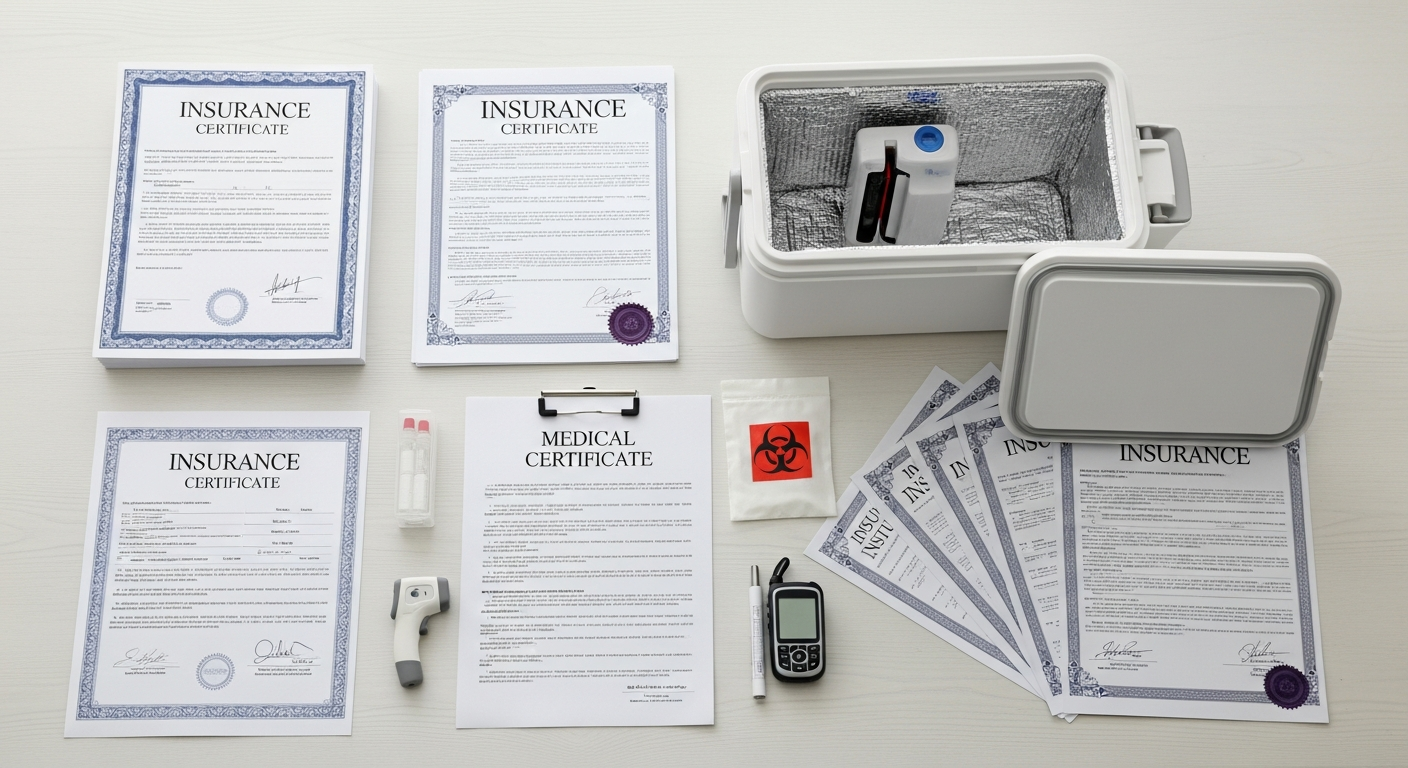
The OSHA and DOT compliance requirements for medical couriers extend to hazardous materials handling documentation, driver training records, vehicle maintenance logs, and incident reporting. Technology platforms that automate the capture and organization of this documentation reduce compliance burden while simultaneously improving compliance quality. Automated reminders for driver certification renewals, vehicle inspection schedules, and training refresher deadlines eliminate the human error that causes compliance gaps in manually managed operations.
Regulatory Technology Infrastructure:
- Blockchain-based chain of custody providing immutable, tamper-proof records for every specimen handoff and transport event
- HIPAA-compliant data architecture with role-based access controls, end-to-end encryption, and automated audit logging
- Electronic logging integration for hours-of-service, vehicle inspection, and driver qualification documentation
- Automated compliance monitoring with proactive alerts for certification expirations, training requirements, and regulatory updates
- Audit-ready report generation that compiles compliance documentation on demand for regulatory inspectors and client reviews
4. Predictive Analytics, Machine Learning, and Operational Intelligence
The volume of data generated by modern medical courier operations, including GPS coordinates, temperature readings, delivery timestamps, exception events, client order patterns, and driver performance metrics, creates an extraordinarily rich dataset for predictive analytics. Advanced courier platforms now deploy machine learning models against this data to generate operational intelligence that drives proactive decision-making rather than reactive problem-solving.
Demand forecasting models analyze historical order patterns by client, facility, day of week, time of day, and seasonal trends to predict future pickup volumes with increasing accuracy. These predictions enable courier operations to pre-position drivers in anticipation of demand rather than responding to requests after they arrive. For healthcare facilities with predictable specimen collection patterns, such as laboratory draw stations that generate peak volumes between 8:00 and 10:00 AM, predictive positioning ensures that couriers are available when specimens are ready, minimizing the wait time that degrades specimen quality.
Anomaly detection algorithms continuously monitor operational data streams for patterns that deviate from established baselines. A sudden increase in specimen rejection rates from a particular facility, a gradual increase in delivery times on a specific route, or an unusual pattern of temperature excursions in a particular vehicle all trigger automated investigations that identify the root cause before it escalates into a systemic problem. This capability transforms quality management from periodic retrospective review into continuous real-time surveillance.
The application of AI in healthcare logistics extends to predictive maintenance for transport equipment. Machine learning models trained on vehicle telemetry data can predict mechanical failures before they occur, enabling preventive maintenance that avoids in-route breakdowns. For temperature-controlled transport vehicles, predictive analytics can identify refrigeration system degradation before it results in a cold chain breach, preventing specimen and product losses that would otherwise go undetected until the point of delivery.
Natural language processing (NLP) models are being deployed to analyze unstructured data from driver notes, client communications, and incident reports. These models extract actionable insights from text data that would otherwise require manual review, identifying recurring themes in service issues, client concerns, and operational challenges. The integration of NLP-derived insights with structured operational data provides a comprehensive intelligence picture that informs strategic decision-making at every level of the organization.
The cost impact of predictive analytics in medical courier operations is significant. Industry benchmarks suggest that predictive routing reduces fuel costs by 12-20%, predictive demand modeling reduces idle courier time by 15-25%, and predictive quality monitoring reduces pre-analytical error rates by 8-15%. For a mid-size medical courier operation, these improvements can represent annual cost savings of $200,000-$500,000 while simultaneously improving service quality metrics.
Predictive Analytics Applications:
- Demand forecasting models that predict pickup volumes by facility, time, and day to enable proactive courier positioning
- Anomaly detection algorithms that identify deviations in rejection rates, delivery times, and temperature compliance in real time
- Predictive maintenance models that forecast vehicle and refrigeration equipment failures before they cause in-route breakdowns
- Natural language processing of driver notes and incident reports to extract actionable operational insights
- Client-specific service optimization models that tailor routing, scheduling, and handling protocols to each healthcare facility’s patterns
5. Emerging Technologies: Drones, Autonomous Vehicles, and the Next Frontier
While AI dispatch, IoT monitoring, and predictive analytics represent the current state of advanced medical courier technology, several emerging technologies are poised to further transform healthcare logistics within the next three to five years. These technologies are at various stages of development and regulatory approval, but their potential impact on medical courier operations is significant enough to warrant strategic attention from healthcare logistics leaders.
Drone delivery of medical materials has moved beyond proof-of-concept into limited operational deployment. The Federal Aviation Administration has granted Part 135 air carrier certifications to several drone delivery operators, enabling commercial medical delivery operations in approved airspaces. Current drone delivery use cases in healthcare focus on time-critical, lightweight payloads: laboratory specimens, blood products, medications, and diagnostic supplies. Zipline, the most operationally mature medical drone operator, has completed over 1 million commercial deliveries globally, with operations now active in multiple U.S. states serving hospital systems and blood banks.
The operational advantages of drone delivery for medical materials are significant in specific use cases. Drones bypass road traffic entirely, providing consistent delivery times regardless of surface congestion. For hospital campuses spanning multiple buildings, inter-facility drone transport can reduce specimen transit times from 20-30 minutes by vehicle to 3-5 minutes by air. For rural healthcare facilities located far from reference laboratories, drone delivery can reduce turnaround times by hours, directly improving diagnostic speed and patient care timelines.
However, drone delivery faces substantial limitations that will constrain its applicability in medical courier operations for the foreseeable future. Payload capacity is limited, typically to 3-5 pounds for current platforms. Weather sensitivity restricts operations during high winds, heavy precipitation, and low visibility conditions. Regulatory restrictions on beyond-visual-line-of-sight operations limit range and routing flexibility. And the infrastructure requirements for launch and landing sites at healthcare facilities require capital investment and operational coordination that many facilities are not yet prepared to support.
Autonomous ground vehicles represent another emerging technology with relevance to medical courier operations. Several companies are developing purpose-built autonomous delivery vehicles designed for healthcare logistics, incorporating temperature-controlled compartments, secure access controls, and IoT sensor integration. These vehicles operate on predefined routes, typically on hospital campuses or between facilities in close geographic proximity, where the controlled environment reduces the autonomous driving complexity.
The autonomous vehicle technology most likely to impact medical courier operations in the near term is not fully autonomous driving but rather advanced driver assistance systems (ADAS) that enhance human-driven courier operations. Lane departure warning, adaptive cruise control, collision avoidance, and fatigue detection systems improve safety for couriers who drive extended routes, particularly during overnight shifts when fatigue risk is highest. For emergency medical courier services operating in high-pressure, time-critical scenarios, these safety systems reduce accident risk while maintaining rapid response capabilities.
Advanced computer vision systems are being integrated into courier operations for automated specimen condition assessment at pickup and delivery. These systems use trained image recognition models to evaluate specimen packaging integrity, label readability, container seal condition, and visible signs of temperature compromise or physical damage. By automating the condition assessment process, computer vision reduces the subjectivity and variability inherent in manual visual inspections, providing consistent, documented quality assessments at every handoff point.
Digital twin technology, which creates virtual replicas of physical logistics networks, is enabling medical courier operations to simulate and optimize their networks without disrupting live operations. A digital twin of a courier operation incorporates facility locations, route networks, vehicle fleet specifications, driver schedules, client order patterns, and environmental variables to create a simulation environment where operational changes can be tested and optimized before implementation. This capability is particularly valuable for healthcare organizations evaluating network redesigns, fleet expansions, or new facility integrations.
Emerging Technology Readiness Assessment:
- Medical drone delivery: Limited operational deployment; viable for lightweight, time-critical payloads in approved airspaces; 3-5 year horizon for broader adoption
- Autonomous delivery vehicles: Campus and short-route deployment in controlled environments; 5-7 year horizon for broader urban operations
- Advanced driver assistance systems: Available now and actively deployed for courier safety enhancement and fatigue reduction
- Computer vision condition assessment: Pilot deployments underway; 1-3 year horizon for widespread integration into courier workflows
- Digital twin simulation: Enterprise adoption in progress among large logistics networks; 2-4 year horizon for mid-market medical courier adoption
Key Takeaways and Market Outlook
The convergence of AI, IoT, blockchain, predictive analytics, and emerging autonomous technologies is creating a fundamentally new operating model for medical courier services. Operations that invest in these technologies today are building competitive advantages that will compound over time as their data assets grow, their algorithms improve, and their client integrations deepen. Operations that delay technology adoption risk falling behind not just in operational efficiency, but in their ability to meet the increasingly stringent regulatory and quality requirements that healthcare clients demand.
The market trajectory is clear. Healthcare organizations are consolidating their logistics partnerships around fewer, more capable providers who can deliver the technology integration, data transparency, and compliance documentation that modern healthcare operations require. The era of selecting a medical courier based primarily on price and availability is giving way to an evaluation framework that prioritizes technological capability, data security infrastructure, regulatory compliance systems, and the analytical insights that only technology-enabled operations can provide.
For healthcare logistics leaders evaluating their courier partnerships, the technology assessment framework should encompass five critical dimensions: dispatch intelligence (AI optimization vs. manual routing), environmental monitoring (continuous IoT sensing vs. passive indicators), chain of custody integrity (blockchain-verified vs. paper-based), analytical capability (predictive modeling vs. retrospective reporting), and integration depth (API-connected platforms vs. standalone systems). The carGO Health platform has been engineered to deliver advanced capabilities across each of these dimensions, reflecting the belief that technology leadership and operational excellence are inseparable in modern healthcare logistics.
The organizations that will lead healthcare logistics through the next decade are those that treat technology not as a support function but as the operational foundation upon which every delivery, every compliance record, and every client relationship is built. The data presented in this white paper demonstrates that the return on technology investment in medical courier operations is measurable, substantial, and accelerating. The question for healthcare organizations is not whether to prioritize technology in their logistics partnerships, but how quickly they can transition to partners whose technology infrastructure matches the criticality of the materials they transport.
To explore how carGO Health’s technology platform can transform your healthcare logistics operations with AI-powered dispatch, real-time IoT monitoring, and comprehensive compliance automation, request a demo and speak with our team about your organization’s specific requirements.
Frequently Asked Questions
How does AI-powered dispatch improve medical courier delivery times?
AI-powered dispatch systems use machine learning algorithms to optimize routes in real time by analyzing traffic conditions, weather, courier proximity, specimen stability windows, and delivery priority levels simultaneously. These systems continuously recalculate optimal routes as conditions change and can dynamically rebalance courier workloads when STAT requests arrive. Industry data shows that AI-optimized dispatch reduces average delivery times by 18-25% compared to manually dispatched operations, with the improvement directly correlating to better specimen viability rates.
What role do IoT sensors play in medical courier cold chain monitoring?
IoT sensors provide continuous, real-time monitoring of transport conditions including temperature, humidity, vibration, light exposure, and orientation. Unlike passive temperature indicators that only confirm threshold breaches after the fact, IoT sensors transmit data continuously to cloud platforms via Bluetooth Low Energy, LoRaWAN, or NB-IoT protocols. When integrated with AI dispatch systems, IoT sensors enable automated responses to environmental excursions, such as rerouting a courier or alerting the receiving facility, within seconds of detection.
How does blockchain technology improve chain of custody in medical transport?
Blockchain creates an immutable, tamper-proof ledger of every event in a specimen’s transport journey. Each handoff, temperature reading, GPS coordinate, electronic signature, and condition assessment is recorded as a discrete transaction that cannot be retroactively altered or deleted. This immutability directly satisfies the evidentiary requirements of chain of custody for regulatory audits and legal proceedings, providing a level of documentation integrity that traditional digital or paper-based systems cannot match.
Are medical delivery drones currently operational in the United States?
Yes, medical delivery drones are in limited operational deployment in the United States. The FAA has granted Part 135 air carrier certifications to several operators for commercial medical deliveries. Current use cases focus on lightweight, time-critical payloads such as laboratory specimens, blood products, and medications. However, drones face significant constraints including payload limits of 3-5 pounds, weather sensitivity, regulatory airspace restrictions, and infrastructure requirements at healthcare facilities that will limit broader adoption for the next three to five years.
What should healthcare organizations look for when evaluating medical courier technology?
Healthcare organizations should evaluate medical courier technology across five critical dimensions: dispatch intelligence (AI-optimized routing versus manual dispatch), environmental monitoring (continuous IoT sensing versus passive indicators), chain of custody integrity (blockchain-verified versus paper-based documentation), analytical capability (predictive modeling versus retrospective reporting), and integration depth (API-connected platforms versus standalone systems). Additionally, the platform’s HIPAA compliance architecture, data security certifications, and regulatory documentation capabilities should be thoroughly assessed.
Related Reading
- Comprehensive Guide to Medical Courier Services
- Why Hospitals Outsource Medical Courier Operations
- STAT Medical Courier Service: Emergency Response Standards
- Medical Specimen Transport: Protocols and Compliance
- HIPAA Compliant Medical Courier: What to Look For
- Get a Quote — carGO Health Medical Courier Services
Related Resources