Blood Bank Courier Services: Safe Transport of Blood Products and Components
Updated April 2026 — reviewed and refreshed by carGO Health editorial team.
Blood products are among the most time-sensitive and condition-critical materials in all of healthcare logistics. A unit of red blood cells must remain between 1 and 6 degrees Celsius throughout transport. Platelets must be maintained at room temperature with continuous gentle agitation. Fresh frozen plasma must stay at -18 degrees Celsius or colder until it reaches the transfusion facility. Cryoprecipitate requires the same frozen conditions as plasma. Each of these products has a finite viability window that begins the moment it leaves the blood bank and ends when it is either transfused into a patient or irreversibly compromised by a transport failure. According to the AABB (formerly the American Association of Blood Banks), an estimated 5-8% of collected blood products in the United States are ultimately wasted, with transport-related temperature excursions and time limit violations contributing significantly to that loss. For hospitals, trauma centers, and surgical programs that depend on a reliable blood supply, the quality of their blood courier services is not a logistical convenience. It is a direct determinant of patient outcomes and transfusion safety.
This guide provides a comprehensive examination of what specialized medical courier services must deliver when transporting blood products and components, covering the specific handling requirements for each blood product type, the temperature and time constraints that govern safe transport, the regulatory framework that blood bank couriers must satisfy, and the technology infrastructure required to maintain compliance and protect product integrity from blood bank to bedside.
1. Blood Products and Components: Transport Requirements by Type
Blood bank logistics is not a single transport challenge. It is a collection of distinct transport challenges, each with unique temperature requirements, time constraints, handling protocols, and regulatory documentation needs. A medical courier transporting blood products must understand and accommodate these differences simultaneously, often carrying multiple product types in a single route with different environmental requirements for each.
Whole Blood
Whole blood, collected and not yet separated into components, must be transported at 1-10 degrees Celsius and processed into components within 8 hours of collection if intended for platelet production, or within 24 hours for other components. Whole blood transport is most common in trauma and military medicine contexts, and increasingly in civilian emergency medical services that carry whole blood for field transfusion. Transport containers must provide consistent cooling without direct ice contact that could cause localized freezing and hemolysis.
Red Blood Cells (Packed RBCs)
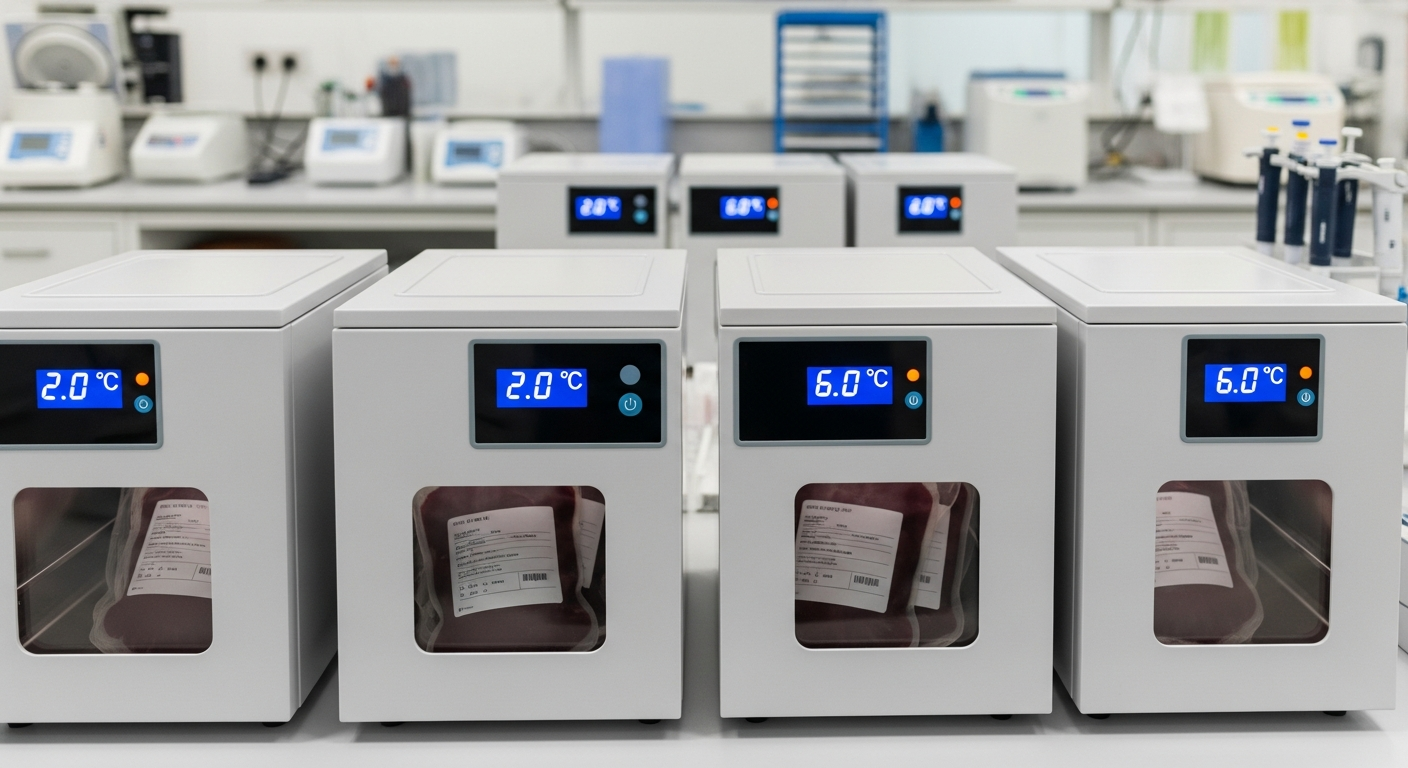
Packed red blood cells, the most commonly transfused blood component, must be maintained at 1-6 degrees Celsius throughout transport and storage. RBCs have a maximum shelf life of 42 days when properly refrigerated, but once removed from controlled storage for transport, they must be transfused within a defined timeframe. The FDA’s Center for Biologics Evaluation and Research requires that RBC units not be out of controlled temperature storage for more than 30 minutes unless transported in a validated cold chain system. If an RBC unit exceeds 10 degrees Celsius at any point during transport, it must be discarded. This zero-tolerance temperature threshold makes cold chain logistics essential for every RBC transport.
Platelets
Platelets present the most operationally complex transport challenge among blood components. They must be stored and transported at 20-24 degrees Celsius, which is room temperature, and they require continuous gentle agitation to prevent aggregation that renders them clinically ineffective. Platelets have the shortest shelf life of any standard blood component, just 5 days from collection, and once issued for transfusion, they are subject to a 4-hour transfusion window. Platelet transport containers must maintain room temperature without refrigeration while providing the agitation environment that preserves platelet function. Any courier transporting platelets must be trained in the specific handling protocols that distinguish platelet logistics from all other blood product transport.
Fresh Frozen Plasma (FFP)
Fresh frozen plasma must be maintained at -18 degrees Celsius or colder during transport and storage. Once thawed for clinical use, FFP must be transfused within 24 hours if maintained at 1-6 degrees Celsius after thawing. Transport of frozen plasma typically requires dry ice or mechanical freezer transport systems that maintain the deep-freeze temperatures required. Couriers must be trained in hazardous material handling protocols when using dry ice, as dry ice is classified as a hazardous material under DOT regulations and requires proper labeling, ventilation, and documentation during transport.
Cryoprecipitate
Cryoprecipitate, derived from plasma and rich in fibrinogen and clotting factors, requires the same frozen transport conditions as FFP: -18 degrees Celsius or colder. Once thawed, cryoprecipitate has an even shorter use window than FFP, requiring transfusion within 6 hours if individual units are maintained at 20-24 degrees Celsius, or within 4 hours if pooled. The time criticality of cryoprecipitate transport is often acute, as it is frequently ordered for emergency situations involving massive hemorrhage or disseminated intravascular coagulation where delays directly threaten patient survival.
Transport Temperature Requirements Summary:
- Whole blood: 1-10°C, process within 8-24 hours depending on intended component separation
- Packed RBCs: 1-6°C, discard if temperature exceeds 10°C at any point during transport
- Platelets: 20-24°C with continuous gentle agitation, 5-day shelf life, 4-hour transfusion window once issued
- Fresh frozen plasma: -18°C or colder, transfuse within 24 hours once thawed
- Cryoprecipitate: -18°C or colder, transfuse within 4-6 hours once thawed depending on pooling status
2. Time Constraints and the Cost of Blood Product Waste
The time constraints governing blood product transport are not arbitrary regulatory impositions. They are clinically derived limits that directly reflect the biological degradation patterns of each component. When these time constraints are violated, the consequences are both clinical and financial.
From a clinical perspective, a transfusion of degraded blood products can cause adverse reactions ranging from febrile non-hemolytic transfusion reactions to acute hemolytic reactions that are immediately life-threatening. The CDC’s National Healthcare Safety Network hemovigilance data shows that storage and transport conditions are contributing factors in a meaningful percentage of reported transfusion reactions. Blood products that experience temperature excursions may develop bacterial contamination, hemolysis, or loss of functional activity that is not visually apparent, making compliance with transport conditions the primary safeguard against these risks.
From a financial perspective, blood product waste represents a significant cost burden. The average cost of a single unit of packed red blood cells, including collection, testing, processing, and storage, ranges from $200 to $300. Platelet units, which are more resource-intensive to produce and have shorter shelf lives, cost $500 to $600 per unit. A hospital system that loses even 2-3% of its blood inventory to transport-related waste is absorbing tens of thousands of dollars in annual losses that are entirely preventable with proper courier services.
The broader supply impact of blood product waste compounds the financial cost. The American Red Cross reports that blood donations have declined in recent years, creating chronic supply pressure that makes every collected unit more valuable. When a unit of blood is wasted due to a transport failure, the loss extends beyond the financial cost to the healthcare organization. It represents a donated unit that cannot be replaced quickly, potentially contributing to surgical delays, transfusion shortages, or emergency supply crises that affect patient care across the system.
For emergency medical courier services handling blood products, the time constraints create an operational framework where speed must be balanced with condition control. Rushing a delivery at the expense of temperature maintenance defeats the purpose of rapid transport. The most effective blood bank courier operations use AI-powered dispatch to optimize both speed and environmental compliance simultaneously, ensuring that deliveries arrive within time windows without compromising the temperature or handling conditions that preserve product integrity.
3. Regulatory Framework for Blood Product Transport
Blood product transport is subject to overlapping regulatory oversight from federal, state, and accreditation bodies, creating a compliance landscape that requires specialized knowledge and systematic documentation.
The FDA regulates blood products as biological products under 21 CFR Parts 600-680, imposing requirements on collection, testing, processing, storage, and distribution that extend to the transport phase. Blood establishments must validate their transport procedures, including the courier services they use, to demonstrate that products maintain required conditions throughout the distribution chain. FDA inspectors routinely review transport validation records during facility inspections, and transport-related deficiencies are among the most commonly cited findings in blood bank inspection reports.
AABB Standards for Blood Banks and Transfusion Services, the primary accreditation framework for blood banking operations in the United States, require that blood products be transported under conditions that maintain their safety, purity, potency, and efficacy. AABB Standard 5.1.8A specifically requires that facilities validate transport containers and procedures, monitor transport temperatures, and document any deviations from established protocols. For healthcare organizations seeking or maintaining AABB accreditation, the performance of their blood courier services is directly relevant to their accreditation status.
State health department regulations add jurisdictional requirements that may exceed federal standards. Some states require specific licensing for blood product transport, impose additional documentation requirements, or mandate reporting of transport-related product losses. A comprehensive medical courier service operating across multiple states must maintain compliance with each jurisdiction’s specific requirements, a challenge that favors operators with dedicated compliance infrastructure and regulatory expertise.
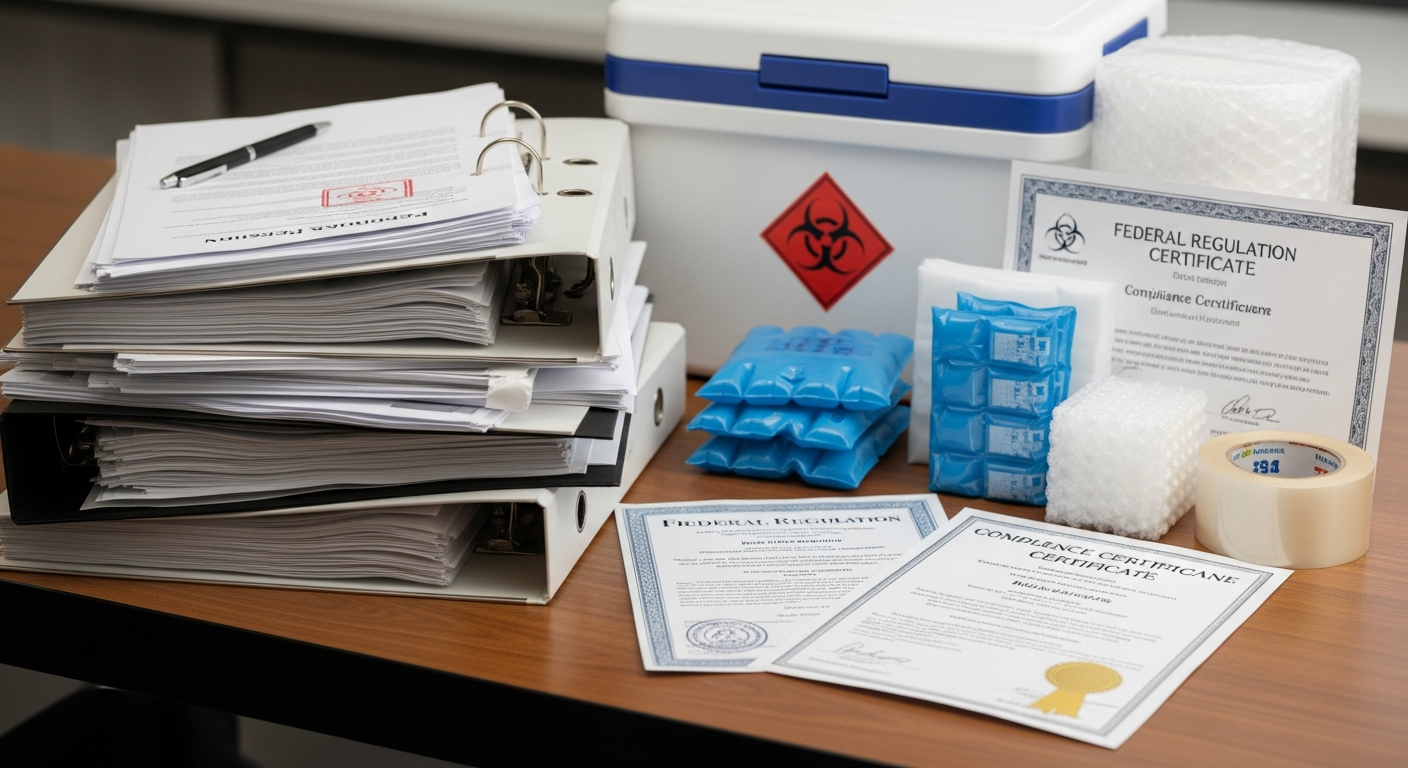
DOT regulations apply when blood product transport involves hazardous materials, specifically dry ice used for frozen product transport. Dry ice is classified as a Class 9 miscellaneous hazardous material under 49 CFR Part 173, requiring proper UN3373 packaging, labeling, driver training, and shipping documentation. Couriers who transport frozen blood products using dry ice must hold current DOT hazardous materials training certification, and the vehicles must be properly ventilated to prevent carbon dioxide accumulation. OSHA and DOT compliance in this context is not optional; it is a safety requirement that protects both the courier and the product.
Regulatory Compliance Requirements:
- FDA 21 CFR Parts 600-680: Transport validation, condition maintenance, and documentation for biological products
- AABB Standards: Container validation, temperature monitoring, deviation documentation, and transport SOPs
- State health departments: Jurisdiction-specific licensing, reporting, and documentation requirements
- DOT 49 CFR Part 173: Hazardous materials classification, packaging, labeling, and driver training for dry ice transport
- HIPAA: Protection of patient information associated with blood product orders, crossmatch records, and transfusion documentation
4. Technology and Infrastructure for Blood Bank Courier Operations
The technology infrastructure required for blood bank courier services must address the unique combination of time sensitivity, temperature precision, and regulatory documentation that blood product transport demands. General-purpose delivery technology is insufficient. The systems must be purpose-built for healthcare materials that have zero tolerance for environmental or procedural failures.
Validated transport containers are the physical foundation of blood product logistics. Each container type must be validated through documented testing to demonstrate that it maintains the required temperature range for the intended transport duration under worst-case environmental conditions. Validation protocols typically test containers at both temperature extremes (summer heat and winter cold), measure internal temperature profiles at multiple points within the container, and establish maximum transport durations for each product type and container configuration. These validation records must be maintained and available for regulatory inspection.
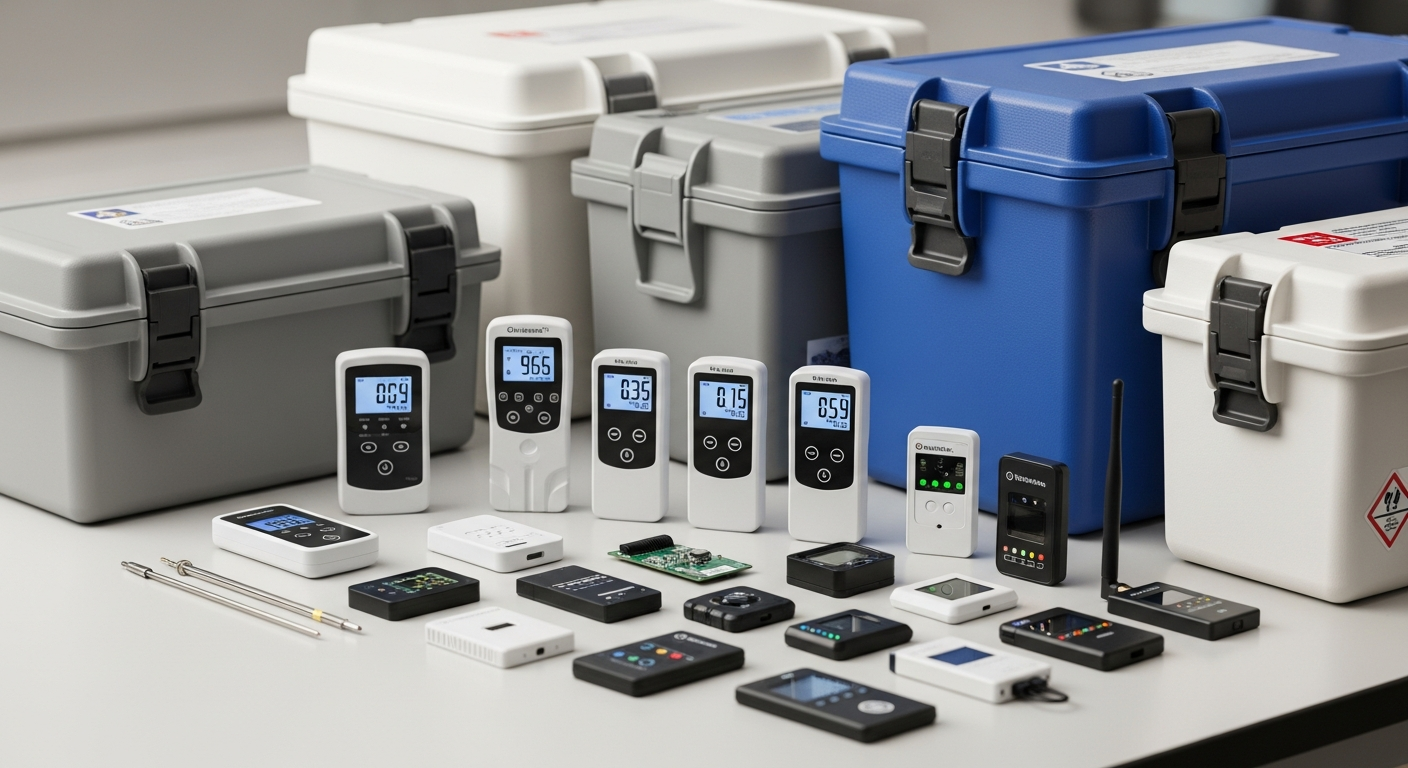
Continuous temperature monitoring via real-time tracking systems provides the environmental surveillance that blood product transport requires. IoT-enabled temperature sensors transmit readings at configurable intervals throughout transit, feeding data to cloud platforms that compare readings against product-specific thresholds in real time. When a temperature reading approaches or exceeds the acceptable range, automated alerts notify the dispatcher, the courier, and the receiving blood bank simultaneously, enabling intervention before the product is compromised.
Digital chain of custody systems for blood products must capture unit identification (donation number, product code, ABO/Rh type), release authorization from the issuing blood bank, pickup condition assessment, continuous temperature and location documentation during transit, and delivery confirmation with condition assessment at the receiving facility. This documentation chain must be instantaneously retrievable for traceability queries, product recalls, or transfusion reaction investigations.
Integration between the courier platform and hospital blood bank information systems (BBIS) enables automated order processing, real-time status updates, and electronic delivery confirmation that eliminates manual data entry at both ends of the transport. For high-volume blood bank operations, this integration reduces administrative overhead, accelerates product availability after delivery, and provides the data infrastructure for continuous quality monitoring.
Blood Bank Courier Technology Requirements:
- Validated transport containers with documented performance data for each blood product type and environmental condition
- Continuous IoT temperature monitoring with real-time alerting when readings approach product-specific thresholds
- Digital chain of custody capturing unit identification, authorization, condition, temperature, location, and delivery confirmation
- Blood bank information system integration for automated order processing and electronic delivery confirmation
- Audit trail and traceability system supporting product recalls, reaction investigations, and regulatory inspections
5. Selecting a Blood Bank Courier Partner: Evaluation Criteria
Selecting a courier partner for blood bank logistics requires evaluation criteria that go significantly beyond the standard metrics used for general delivery services. The consequences of a blood product transport failure, including wasted product, transfusion delays, adverse patient events, and regulatory citations, demand a rigorous assessment of the courier’s specialized capabilities.
First, evaluate the courier’s blood product handling training and certification program. Couriers handling blood products should receive specific training on the temperature requirements, time constraints, and handling protocols for each product type. This training should be documented, refreshed regularly, and tested through competency assessments. General courier training that does not specifically address blood product logistics is insufficient for this application.
Second, assess the courier’s transport container validation documentation. The courier should be able to provide validation data demonstrating that their containers maintain required temperatures for each blood product type under the transport durations and environmental conditions relevant to your service area. This validation should be conducted according to recognized methodologies and repeated when containers are modified or replaced.
Third, evaluate the courier’s temperature monitoring and alerting infrastructure. Continuous, real-time temperature monitoring with automated alerting is the minimum standard for blood product transport. Couriers that rely on passive temperature indicators or post-delivery temperature checks cannot provide the proactive intervention capability that blood product logistics requires. The technology platform should provide both courier-facing and client-facing visibility into temperature data throughout transit.
Fourth, review the courier’s emergency response and STAT delivery capabilities. Blood product transport frequently involves urgent, time-critical requests, particularly for trauma centers, surgical programs, and emergency departments that need specific blood types or components on short notice. The courier must demonstrate the ability to respond to emergency requests 24/7/365 with guaranteed response times that align with clinical urgency. STAT delivery capabilities should be supported by dedicated on-call couriers, not repurposed from scheduled routes.
Fifth, confirm the courier’s regulatory compliance posture. Request documentation of FDA awareness training, AABB standard familiarity, DOT hazardous materials certifications, HIPAA business associate agreements, and any state-specific licenses required for blood product transport in your jurisdiction. A HIPAA-compliant medical courier with documented blood product competency provides the compliance foundation that blood bank operations require.
Blood Bank Courier Evaluation Checklist:
- Product-specific courier training with documented competency assessments for each blood component type
- Validated transport containers with temperature performance data under worst-case environmental conditions
- Continuous real-time temperature monitoring with automated excursion alerting and documented response protocols
- 24/7/365 STAT delivery capability with guaranteed response times and dedicated emergency courier resources
- Complete regulatory compliance documentation including FDA, AABB, DOT, HIPAA, and state-specific certifications
Key Takeaways
Blood bank courier services require a level of specialization, technology infrastructure, and regulatory expertise that general delivery providers cannot match. Each blood product type has distinct temperature requirements, time constraints, and handling protocols that must be understood, trained for, and systematically documented throughout every transport. The financial cost of blood product waste and the clinical risk of transfusing compromised products make the selection of a qualified blood bank courier partner one of the most consequential logistics decisions a healthcare organization can make.
carGO Health provides specialized blood product transport services with validated cold chain systems, continuous real-time temperature monitoring, digital chain of custody documentation, and 24/7/365 STAT delivery capabilities across the Northeast. To discuss your blood bank courier requirements and see how our technology platform protects every unit in transit, request a demo today.
Frequently Asked Questions
What temperature must red blood cells be maintained at during transport?
Packed red blood cells must be maintained at 1-6 degrees Celsius throughout transport. If the temperature of an RBC unit exceeds 10 degrees Celsius at any point during transport, the unit must be discarded. This zero-tolerance threshold requires validated cold chain transport containers and continuous temperature monitoring to ensure compliance from the blood bank to the receiving facility.
Why do platelets require different transport conditions than other blood products?
Platelets must be stored and transported at 20-24 degrees Celsius, which is room temperature, unlike most blood products that require refrigeration or freezing. Additionally, platelets require continuous gentle agitation during storage and transport to prevent aggregation that renders them clinically ineffective. Platelets also have the shortest shelf life of standard blood components at just 5 days, making rapid and reliable transport essential.
What regulations govern blood product courier services?
Blood product transport is regulated by the FDA under 21 CFR Parts 600-680, which require validated transport procedures and condition maintenance documentation. AABB accreditation standards require container validation, temperature monitoring, and deviation reporting. DOT regulations apply when dry ice is used for frozen product transport. State health departments may impose additional licensing and reporting requirements, and HIPAA governs the protection of associated patient information.
How much does blood product waste cost healthcare organizations?
A single unit of packed red blood cells costs $200-$300 to collect, test, process, and store. Platelet units cost $500-$600 per unit. Healthcare organizations that lose even 2-3% of their blood inventory to transport-related waste face tens of thousands of dollars in annual losses. Beyond the direct financial cost, wasted blood products contribute to supply shortages that can affect surgical scheduling and emergency care capacity.
What should hospitals look for in a blood bank courier service?
Hospitals should evaluate blood bank courier services on five critical criteria: product-specific courier training and competency documentation, validated transport containers with temperature performance data, continuous real-time temperature monitoring with automated alerting, 24/7/365 STAT delivery capability with guaranteed response times, and complete regulatory compliance documentation covering FDA, AABB, DOT, HIPAA, and applicable state requirements.
Related Reading
- Comprehensive Guide to Medical Courier Services
- Why Hospitals Outsource Medical Courier Operations
- STAT Medical Courier Service: Emergency Response Standards
- Medical Specimen Transport: Protocols and Compliance
- HIPAA Compliant Medical Courier: What to Look For
- Get a Quote — carGO Health Medical Courier Services
Related Resources