Vaccine Delivery Logistics: Cold Chain Rules, Excursions and Receiving

A tray of prefilled influenza syringes that spent twenty minutes against a frozen gel pack looks exactly like one that did not. Freeze damage to an aluminum-adjuvanted vaccine is invisible, irreversible and discovered, if at all, when a clinic reads the data logger. That is the central fact of vaccine delivery logistics: the product cannot be inspected for quality on arrival, so the transport process has to be controlled and documented well enough for the receiving clinic to trust it. The courier leg between a pharmacy or distributor and the clinics that administer doses is where that control is most often lost.
This guide covers the three temperature tiers vaccines travel in, how to pack a container and configure its data logger according to the CDC storage and handling toolkit, how excursion decisions are made and recorded, how pharmacy-to-clinic runs and clinic receiving should work, and how to plan for the influenza season rush from September through December.
1. Vaccine Delivery Logistics Starts With the Three Temperature Tiers
The CDC Vaccine Storage and Handling Toolkit is the reference every provider enrolled in a public vaccine program is expected to follow, and it defines the tiers. Refrigerated vaccines are stored and transported at 2 to 8 degrees Celsius, with 5 as the target. That tier holds most of the schedule: inactivated influenza, Tdap and DTaP, hepatitis A and B, HPV, pneumococcal and meningococcal conjugates, adult RSV products and mRNA COVID-19 vaccines once thawed, for the period their inserts allow. Frozen vaccines are stored between minus 50 and minus 15 degrees Celsius; varicella-containing products live here, and MMR may sit in either tier. Ultra-cold storage, roughly minus 90 to minus 60 degrees Celsius, applies to certain mRNA products before they are thawed.
The tiers are not interchangeable. Refrigerated vaccines must never freeze; the aluminum adjuvant in hepatitis B, DTaP, Tdap, HPV and pneumococcal conjugate vaccines aggregates when frozen and the dose loses potency with no visible change. Frozen vaccines lose potency when they warm. Diluents travel at room temperature or refrigerated, never frozen. The FDA fixes storage conditions in each product’s package insert, which governs any product-specific allowance. For a courier the tiers map onto equipment: insulated containers with conditioned coolant and a buffered logger on the refrigerated medical courier tier, portable freezer units for the frozen tier, and the manufacturer’s thermal shipper replenished with dry ice for ultra-cold, covered on our dry ice medical shipping page. Tiers never share a container.
Tier rules that prevent silent potency loss:
- Refrigerated: 2 to 8 degrees Celsius, target 5, never in contact with frozen coolant
- Frozen: minus 50 to minus 15 degrees Celsius for varicella-containing vaccines; MMR in either tier
- Ultra-cold: minus 90 to minus 60 degrees Celsius in the manufacturer’s shipper, per the insert
- Diluents room temperature or refrigerated, never frozen; one tier per container, named on the order
2. Packing for Transport: Containers, Coolants and Data Loggers
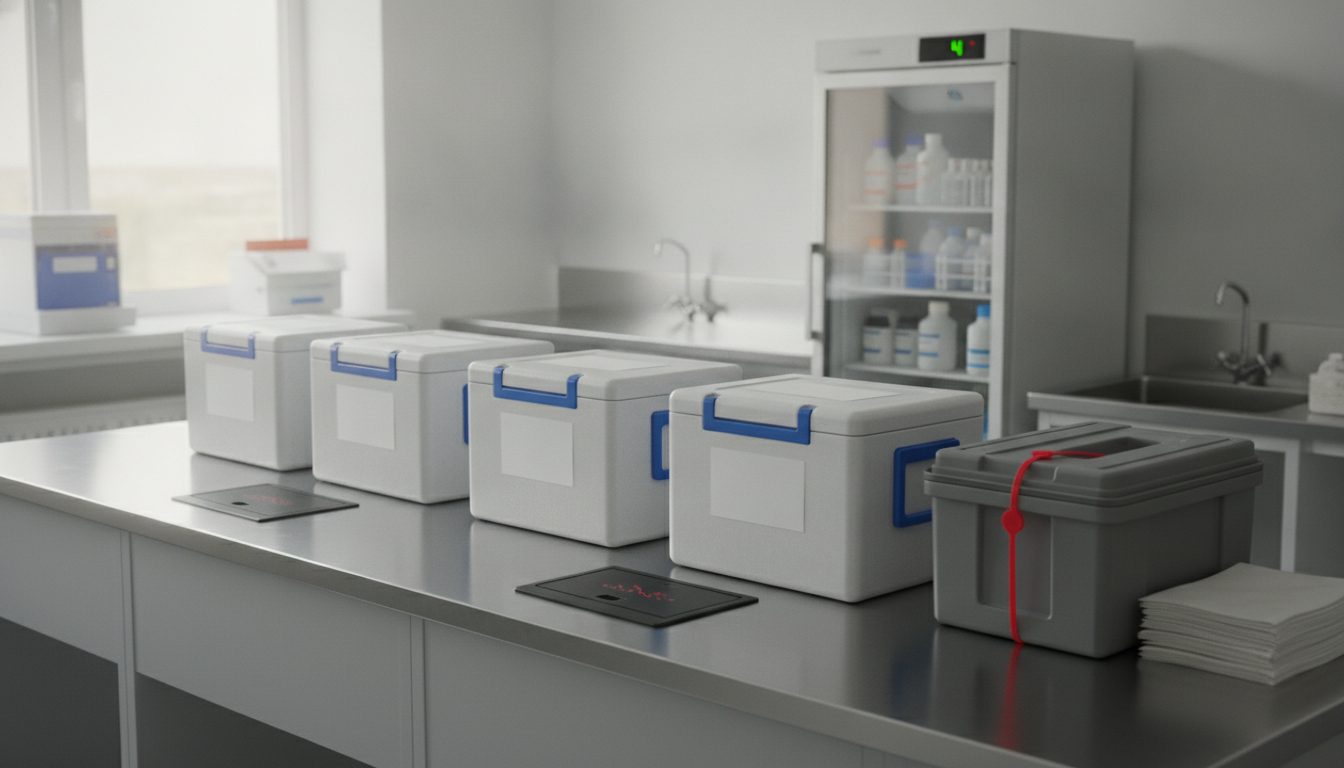
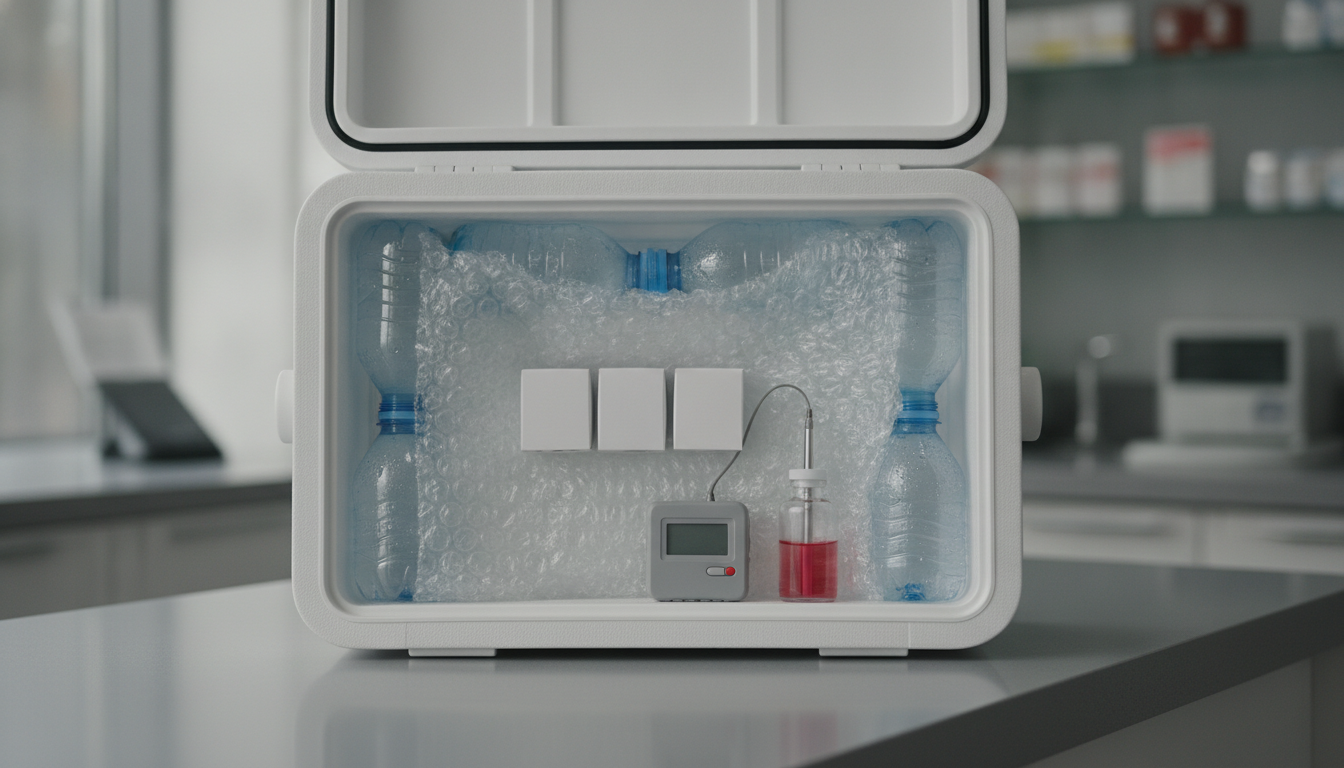
CDC’s toolkit prefers portable vaccine refrigerators or freezers for transport and accepts a qualified container and packout, a system tested by its manufacturer to hold temperature for a defined time, as the next option. A hard-sided insulated cooler with conditioned coolant is the emergency alternative, and the toolkit is specific about packing it. Frozen water bottles are conditioned at room temperature until the ice begins to melt and the surface sweats, bringing it to about 0 degrees Celsius so it cannot freeze the vaccine. Bubble wrap or similar insulation separates coolant from vaccine on every side; the vaccine sits in the center in its original packaging with the logger’s buffered probe beside it. Frozen gel packs against the product are the most common cause of freeze excursions in transit.
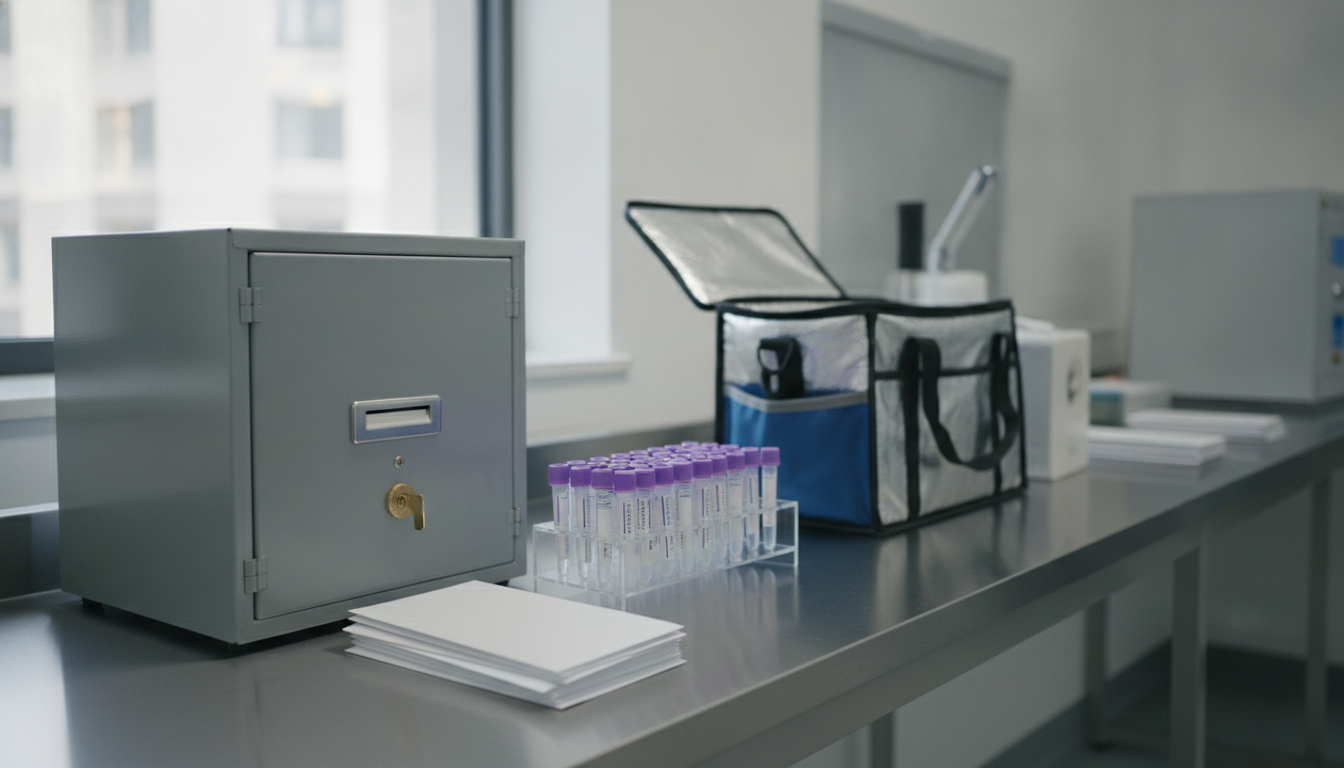
The data logger is what makes the delivery trustworthy. The toolkit calls for a digital data logger with a detachable probe buffered in glycol or glass beads, accuracy of plus or minus 0.5 degrees Celsius, a minimum and maximum display, a logging interval of 30 minutes or less and a current Certificate of Calibration Testing. It starts before the container closes, and the clinic reads its minimum and maximum before unpacking; our guide to temperature monitoring with IoT in medical courier operations describes the step up to a live feed that alarms in transit. Dry ice is not used for varicella-containing frozen vaccines, because it can drive them below minus 50 degrees Celsius. Transport is short: the toolkit’s packout guidance assumes a few hours and treats roughly eight hours, including unpacking, as the outside limit. Our guide to cold chain logistics in healthcare covers the general discipline.
Packout checklist for a refrigerated vaccine run:
- Portable vaccine refrigerator or qualified container first; insulated cooler only as the fallback
- Conditioned water bottles sweating at about 0 degrees Celsius, with an insulating barrier on every side
- Buffered digital data logger started before closing, minimum and maximum read on arrival
- Climate-controlled cabin, container closed until the clinic opens it, total time measured in hours
3. Excursion Decisions: What to Record and Who Decides
An excursion is any logger reading outside the tier’s range, however brief. The decision about what it means belongs to the manufacturer and, for publicly purchased vaccine, to the state or local immunization program, not to the courier or the receiving nurse. The toolkit lays out the sequence: label the vaccine “do not use,” keep it in proper storage, never discard it, and gather the facts: date and time, duration out of range, the minimum or maximum reached, the logger file, the room or vehicle conditions, the inventory by product, lot and dose count, and the actions taken. The manufacturer reviews the data against its stability studies and returns a determination: use, use with a shortened expiration, or discard.
Excursions accumulate. Two brief excursions at different points can together exceed a lot’s stability budget, which is why manufacturers ask for the full excursion history and clinics keep a running log per lot. The World Health Organization publishes vaccine temperature sensitivity data and field methods such as the shake test for freeze damage; in United States practice, CDC’s guidance is to treat any freeze reading on a refrigerated vaccine as an excursion requiring the manufacturer’s determination. The courier’s contribution is evidence: a logger file with timestamps, geofenced photos of the sealed container at pickup and delivery, the receiver’s e-signature and the route duration, which separate a transit excursion from one before packing or after receipt. The medical courier proof of delivery page describes that record set.
Excursion record that the manufacturer will ask for:
- Date, time and duration out of range, with the minimum or maximum temperature reached
- The logger file and the room, container or vehicle conditions at the time
- Inventory by product, lot number, expiration and dose count, with prior excursion history for the lot
- Actions taken, who was contacted, the determination received and who signed off
4. Pharmacy-to-Clinic Runs and the Receiving Procedure
Most vaccine courier work is redistribution: a health system’s central pharmacy to its ambulatory practices, a community pharmacy to a long-term care facility for an on-site clinic, a hospital pharmacy to employee health, a county health department to school-based or mobile clinics. State immunization programs regulate redistribution of publicly purchased vaccine and generally require a documented transport with a logger and a transfer record, so the run produces paperwork as well as a delivery. Our medical courier service for pharmacies page covers the pharmacy side, and our guide to pharmaceutical courier compliance and cold chain covers the regulatory framing.
The receiving procedure is where runs succeed or fail, and it should be written down at every clinic. Delivery windows must match staffing, since a shipment arriving at a lunch closure sits in a cooler past the packout’s limit. The receiver opens the container immediately, reads the logger’s minimum and maximum, checks contents against the packing slip by product, lot and count, signs, places the vaccine in the storage unit within minutes and logs the receipt with time and temperature. An excursion means quarantine. Nothing is left unattended at a front desk. A health system pharmacy in Westchester County, for example, supplies a dozen primary care and pediatric sites across the county and into the Bronx with weekly refrigerated replenishment, delivered in the first hour of each clinic’s day, as described on our Westchester medical courier service page; long-term care facility deliveries follow the same pattern ahead of each on-site clinic day.
Clinic receiving procedure, step by step:
- Delivery window inside staffed hours, never at a lunch closure or within 15 minutes of closing
- Container opened at once; logger minimum and maximum read before anything is unpacked
- Contents checked against the packing slip by product, lot and dose count; e-signature captured
- Vaccine in the storage unit within minutes; any excursion quarantined and labeled “do not use”
5. Flu Season: Vaccine Delivery Logistics From September Through December
The CDC influenza program recommends annual vaccination for nearly everyone six months and older, ideally by the end of October, and manufacturers begin shipping in late summer. The result is a predictable surge: distributors release product in waves from August, clinics receive initial allocations in September, demand peaks through October and early November with workplace and school clinics, and a tail of top-ups continues into January. Updated COVID-19 formulations and RSV products for older adults arrive in the same window, all refrigerated, and a pharmacy’s outbound volume can multiply for eight to ten weeks.
Planning the season is a scheduling exercise. Each clinic’s expected dose count by week, from the previous two seasons and current pre-booking, sets a replenishment cadence: weekly for small practices, twice weekly for high-volume sites, daily during a mass clinic. Prefilled syringes are bulky relative to vials, so container capacity, not dose count, often limits a run. Scheduled routes carry the predictable replenishment; on-demand service carries the mid-day stockout, where a floating driver network pays for itself. Season-end returns to the distributor and a site-by-site review of logger records close the plan. carGO Health runs the full pattern on one platform, described on our biologics cold chain transport page: refrigerated, frozen and dry ice tiers per order, scheduled routes and on-demand service, real-time GPS tracking, geofenced photo proof with e-signature and 24/7/365 dispatch across ten Northeast states.
Season planning steps for vaccine delivery:
- Forecast each clinic’s dose count by week from the prior two seasons and current pre-bookings
- Set replenishment cadence per site and size containers by carton volume, not dose count
- Deliver in the first hour of the clinic day; hold on-demand capacity for mid-day stockouts
- Schedule the season-end returns run and review logger and excursion data by site
Key Takeaways
Vaccine delivery logistics is a documentation discipline wrapped around three temperature tiers. The product cannot be judged by inspection, so the packout, the logger, the receiving procedure and the excursion record are what make a dose trustworthy when it reaches the syringe.
- Three tiers, never mixed: refrigerated at 2 to 8 degrees Celsius, frozen at minus 50 to minus 15, ultra-cold at minus 90 to minus 60
- Pack per the CDC toolkit: conditioned water bottles, an insulating barrier, a buffered logger beside the product, hours not days
- Freezing is the most damaging and least visible excursion for adjuvanted vaccines; frozen gel packs against product cause most of it
- Excursions are decided by the manufacturer and the immunization program on a documented record; quarantine first, never discard
- Plan flu season by dose count per week per site, with scheduled replenishment and on-demand stockout coverage
If your pharmacy or health system is building a redistribution program, preparing for influenza season or chasing excursions it cannot trace, see a demo of the carGO Health platform to learn how temperature tiers, logger records and signed clinic receiving are configured for vaccine delivery logistics.
Frequently Asked Questions
What temperature should vaccines be kept at during delivery?
Refrigerated vaccines, which include most of the schedule, travel at 2 to 8 degrees Celsius with 5 as the target. Varicella-containing frozen vaccines travel between minus 50 and minus 15 degrees Celsius. Certain mRNA products in long-term storage travel ultra-cold, roughly minus 90 to minus 60 degrees Celsius, in the manufacturer’s shipper. The package insert is the final authority for each product.
How should vaccines be packed for transport to a clinic?
CDC’s toolkit prefers a portable vaccine refrigerator or a qualified container and packout. If an insulated cooler is used, pack conditioned frozen water bottles that have begun to sweat, separate them from the vaccine with an insulating barrier on all sides, place the vaccine in the center in its original packaging with a buffered digital data logger beside it, and keep the container closed until arrival.
What happens when a vaccine shipment has a temperature excursion?
The vaccine is labeled “do not use,” kept in proper storage and not discarded. The clinic records the date, time, duration, temperatures reached, logger file, inventory by lot and prior excursion history, then contacts the manufacturer and, for publicly purchased vaccine, the immunization program. The manufacturer determines whether the doses remain usable, need a shortened expiration or must be discarded.
Can frozen gel packs be used to transport refrigerated vaccines?
Not in contact with the product. Frozen packs against vaccine cartons are the most common cause of freeze damage, which permanently destroys aluminum-adjuvanted vaccines without any visible change. CDC’s toolkit calls for conditioned frozen water bottles, left out until they sweat, separated from the vaccine by an insulating layer, with a buffered data logger confirming the product stayed between 2 and 8 degrees Celsius.
How should a pharmacy plan vaccine deliveries for flu season?
Forecast each clinic’s weekly dose count from the previous two seasons and current pre-bookings, set a replenishment cadence per site, size containers by carton volume rather than dose count, deliver in the first hour of the clinic day and hold on-demand capacity for mid-day stockouts. Include COVID-19 and RSV products in the same refrigerated runs and schedule the season-end returns.
Related Resources