Newborn Screening and Pediatric Specimen Transport: Dried Blood Spots and Time Limits
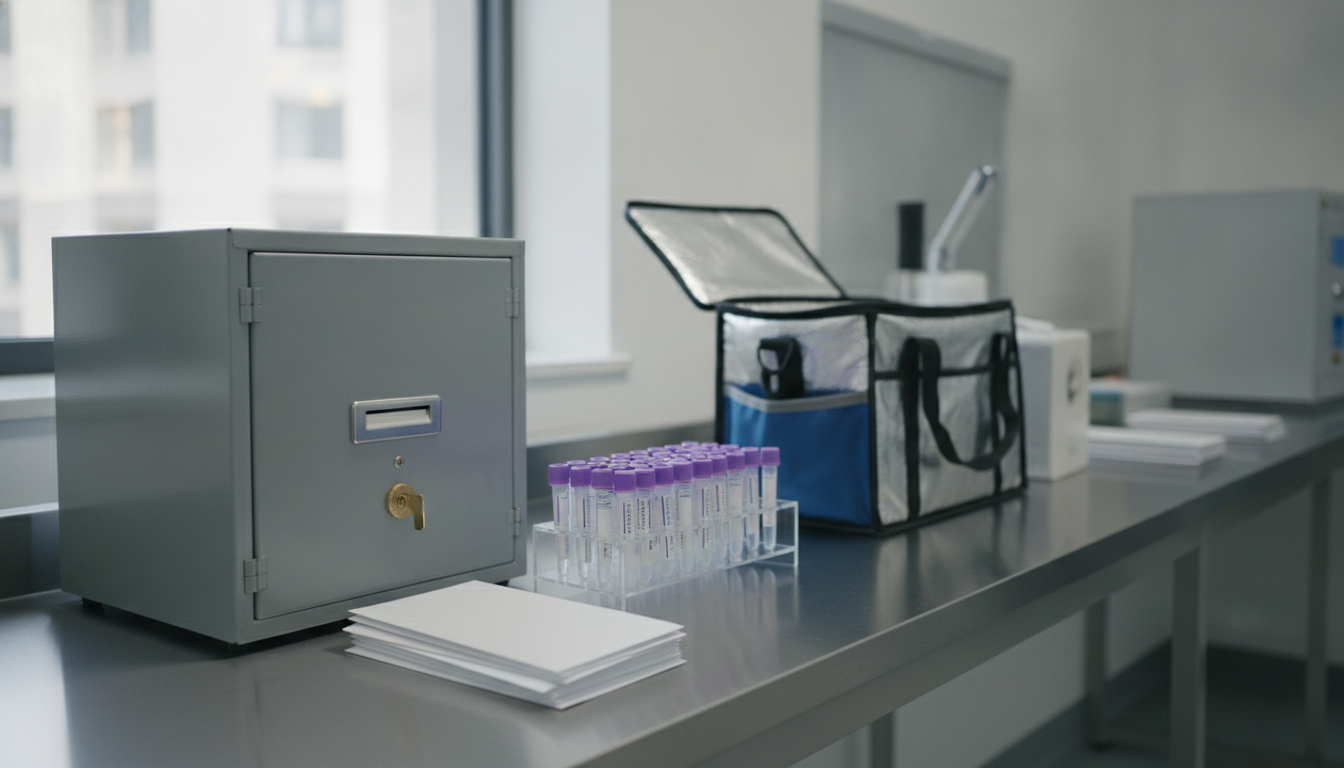
Five circles of dried blood on a filter paper card, collected from a heel stick between 24 and 48 hours after birth, are the entire basis for detecting dozens of conditions that are treatable only if found in the first days of life. The card does not look urgent. It is not refrigerated, it is not fragile, and it fits in an envelope. Yet newborn screening specimen transport is one of the most time-sensitive legs in laboratory logistics, because a card that leaves the hospital a day late can push a critical result past the point where treatment prevents harm.
This guide is for hospital laboratory managers, nursery and NICU leaders and the logistics staff who design their pickups. It covers why the 24-hour dispatch expectation exists, how dried blood spot cards are dried and packaged so the laboratory can test them, what state programs and their laboratories require, how pediatric microtainers and other low-volume specimens travel alongside the cards, and how to design a seven-day nursery pickup that holds the clock.
1. Why Newborn Screening Specimen Transport Runs on a 24-Hour Clock
Every state screens newborns for a panel of conditions, and most follow the Recommended Uniform Screening Panel maintained by the federal advisory committee on heritable disorders at HRSA. Several conditions on that panel, including some organic acid, fatty acid oxidation and urea cycle disorders, galactosemia and congenital adrenal hyperplasia, can cause metabolic crisis in the first week of life. For those, the result has to reach a clinician before symptoms appear.
That is why the committee’s timeliness goals are written backward from the infant’s age: specimens collected at 24 to 48 hours, received by the screening laboratory within 24 hours of collection, time-critical results reported by about five days of life and all results by about seven days. The transport leg sits between collection and receipt, and it is the leg the hospital controls. A card collected Saturday morning that waits for a Monday pickup has spent most of its window in a drawer.
The laboratory side runs on batches. Screening laboratories accession cards on arrival and run them through punching, extraction and multiple assay platforms on a daily schedule, so a card that arrives after the day’s cutoff joins the next day’s run. Pickup windows should be set backward from that cutoff, not forward from nursery convenience, the same logic our guide to lab sample pickup and delivery applies to any batched laboratory.
The clock a hospital is responsible for:
- Collection at 24 to 48 hours of life, before discharge or transfer
- Drying for about three to four hours before the card is packaged
- Dispatch within 24 hours of collection, every day of the week
- Arrival before the screening laboratory’s daily accessioning cutoff
- A record of collection, dispatch and receipt times for every card
2. Dried Blood Spot Cards: Collection, Drying and Packaging for Transit
The collection device is a filter paper card with printed circles, each of which must be filled by a single large drop of capillary blood applied to one side and allowed to soak through. The CLSI standard for dried blood spot collection, CLSI NBS01, is the reference most state programs cite. Layering drops, touching the circles, squeezing the heel, or applying blood to both sides produces a card the laboratory cannot punch uniformly, and an unsatisfactory specimen means a recollection from an infant who may already have gone home.
Drying is the step transport depends on. Cards dry horizontally on a rack at room temperature, about 15 to 25 degrees Celsius, for roughly three to four hours, away from direct sunlight, heat sources and anything that touches the spots. A card packaged damp sticks to its envelope, grows bacteria and gives falsely low values on several assays. Heat is the other enemy: enzyme-based assays and the DNA-based screen for severe combined immunodeficiency lose signal when cards sit in a hot vehicle. The CDC Newborn Screening Quality Assurance Program publishes guidance on card handling and storage that programs and hospitals follow.
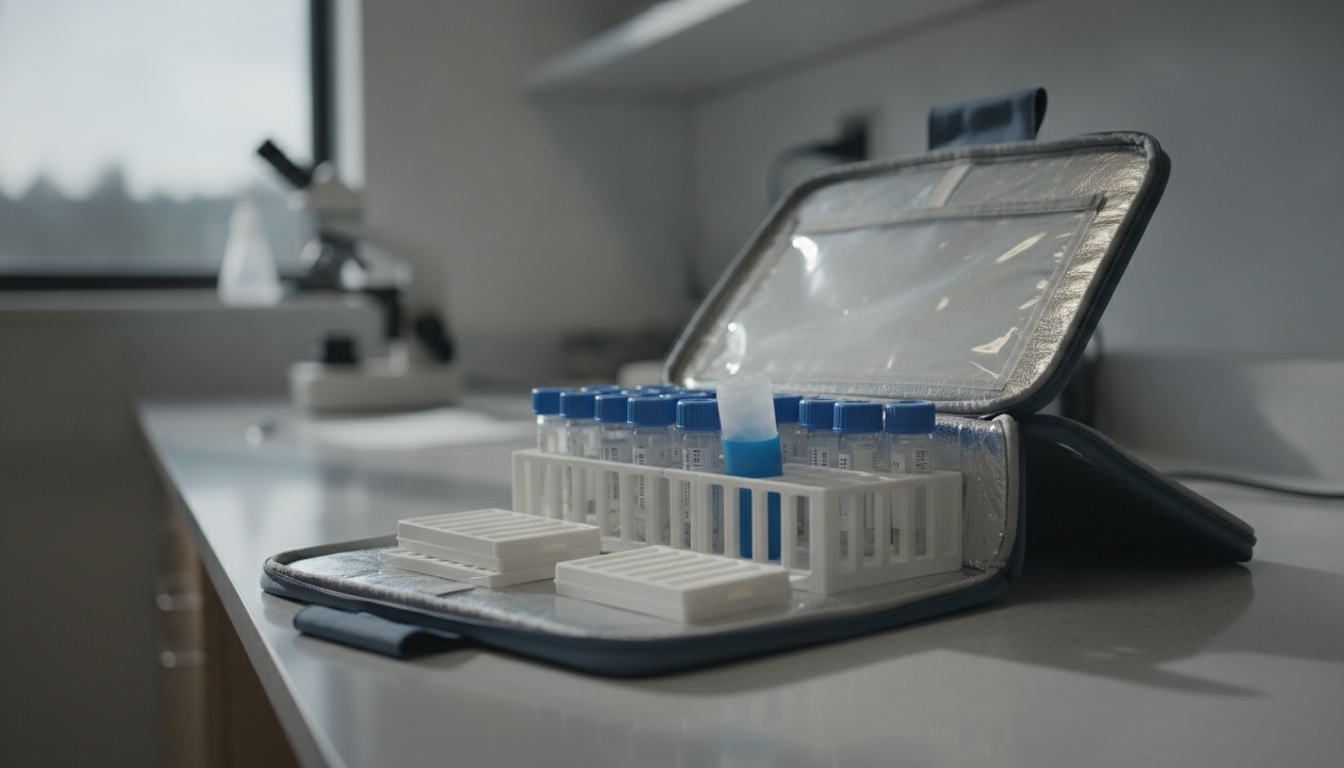
Packaging is deliberately simple. Dried cards go into the program’s paper envelope or mailer with the protective flap closed over the spots, never into a sealed plastic bag unless the program specifies a bag with desiccant, because trapped humidity degrades analytes. Cards from different infants are not stacked spot to spot. In transit they ride ambient, in an insulated tote that shields them from vehicle heat in summer and cabin cold in winter, as described on our ambient medical transport page.
Card handling rules from nursery to envelope:
- Fill each circle with one drop applied to one side; no layering, no touching the spots
- Dry flat for three to four hours at room temperature, away from heat and sunlight
- Package in the program’s paper envelope; no sealed plastic without desiccant
- Keep cards ambient and shielded from vehicle heat; do not refrigerate unless the program instructs
- Confirm two identifiers, collection date and time, and birth weight fields before the envelope closes
3. State Program Rules and the Receiving Laboratory
Newborn screening is a state public health program, and each state sets its own rules for which hospitals submit, what the card must contain, how it is transported and how fast. The receiving laboratory is usually the state public health laboratory or a laboratory under contract to the program, and in the Northeast that can mean a card from a hospital in Connecticut, New Jersey or the Hudson Valley traveling to a single in-state destination every day. Programs publish specimen acceptance criteria, and many publish courier or mailing instructions along with prepaid materials.
The hospital’s obligation does not end when the card leaves. Programs track transit time from collection to receipt by submitter, report unsatisfactory specimen rates back to hospitals, and expect a recollection when a card is rejected for insufficient quantity, layering, contamination, missing information or age. A card that arrives many days after collection may be refused as too old. Studies indexed by the National Library of Medicine have reported that transport delay is among the most common and most fixable causes of late newborn screening results, and that hospitals using daily courier dispatch, including weekends, cut transit time substantially compared with mail.
Where the program’s own pickup is not daily, or does not run on weekends, the hospital fills the gap with its own courier arrangement, and the same vehicle usually carries the hospital’s send-out specimens to its reference laboratory. The regulatory setting for those specimens, from CLIA to packaging rules, is summarized in our specimen transport regulations 2026 white paper. Dried blood spot cards are generally treated as exempt human specimens for transport purposes, but the program’s instructions govern.
What to confirm with your state program:
- The laboratory’s receiving hours, weekend coverage and daily accessioning cutoff
- Whether the program provides courier pickup, prepaid mailers or neither, and on which days
- Specimen rejection criteria and the age limit after which cards are refused
- How transit-time and unsatisfactory-specimen reports reach the hospital, and how often
- Second-screen requirements and the timing for infants in the NICU or transfused before collection
4. Pediatric Microtainers and Other Low-Volume Specimens
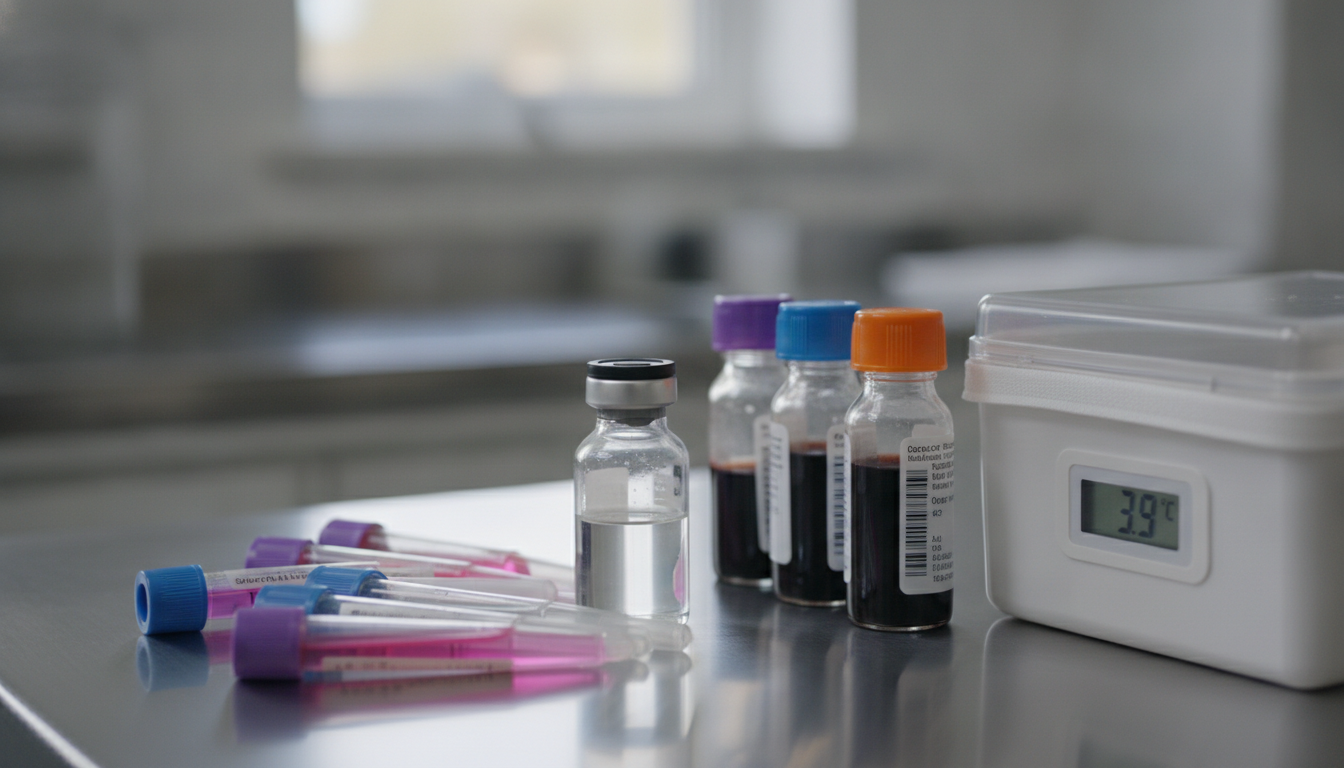
The same nursery and NICU that produce screening cards produce the smallest liquid specimens a courier will ever carry. Capillary microtainers hold roughly 250 to 500 microliters, drawn by heel stick in infants under a year old and by finger stick after that, because an infant’s total blood volume limits how much can be taken for testing in a day. A short-draw tube with the wrong additive ratio, a tube not inverted enough times, or a tube that sat on its side gives a clotted or hemolyzed sample, and the recollection is another heel stick on a patient who cannot spare the blood.
Transport rules follow the analyte, not the tube size. Most pediatric chemistry and hematology microtainers travel ambient or at 2 to 8 degrees Celsius exactly as adult tubes do, upright in a rack inside a sealed bag. Two exceptions matter in nurseries. Bilirubin is light sensitive, so microtainers for neonatal bilirubin are wrapped or placed in amber sleeves. Capillary blood gases travel on an ice slurry and move as STAT orders because the analytes change within minutes. The small tubes also have less room for labels, which makes two identifiers and per-patient bagging the only reliable defense against a mix-up.
Microtainers and cards often leave the nursery together but should not be packed together: the cards ride dry and ambient in their envelope, the tubes in a specimen bag with absorbent, each with its own line on the manifest. Our guides to pre-analytical errors in specimen handling and reducing specimen rejection rates through transport quality cover the handling faults that show up at accessioning.
Handling rules for pediatric low-volume specimens:
- Fill microtainers to the line, invert as the manufacturer directs, and keep them upright in a rack
- Protect neonatal bilirubin tubes from light with amber sleeves or foil
- Send capillary blood gases on an ice slurry as STAT orders
- Two identifiers on every tube and one bag per patient, with the card in its own envelope
- Separate manifest lines for cards, ambient tubes, refrigerated tubes and STAT items
5. Designing the Hospital Nursery Pickup
A nursery pickup is designed around two fixed times: the collection window and the laboratory cutoff. Cards collected during morning rounds at 24 to 48 hours of life are dry by early afternoon, so a daily pickup between about 1:00pm and 3:00pm clears nearly every card collected that day and reaches an in-state laboratory before close. Births do not stop on Saturday, so the pickup runs seven days a week, including holidays, and the hospital’s courier contract should say so explicitly rather than assuming weekend coverage. Our scheduled medical courier routes page describes how a fixed-window daily stop is configured, and the 24/7 medical courier page covers the weekend and holiday operation behind it.
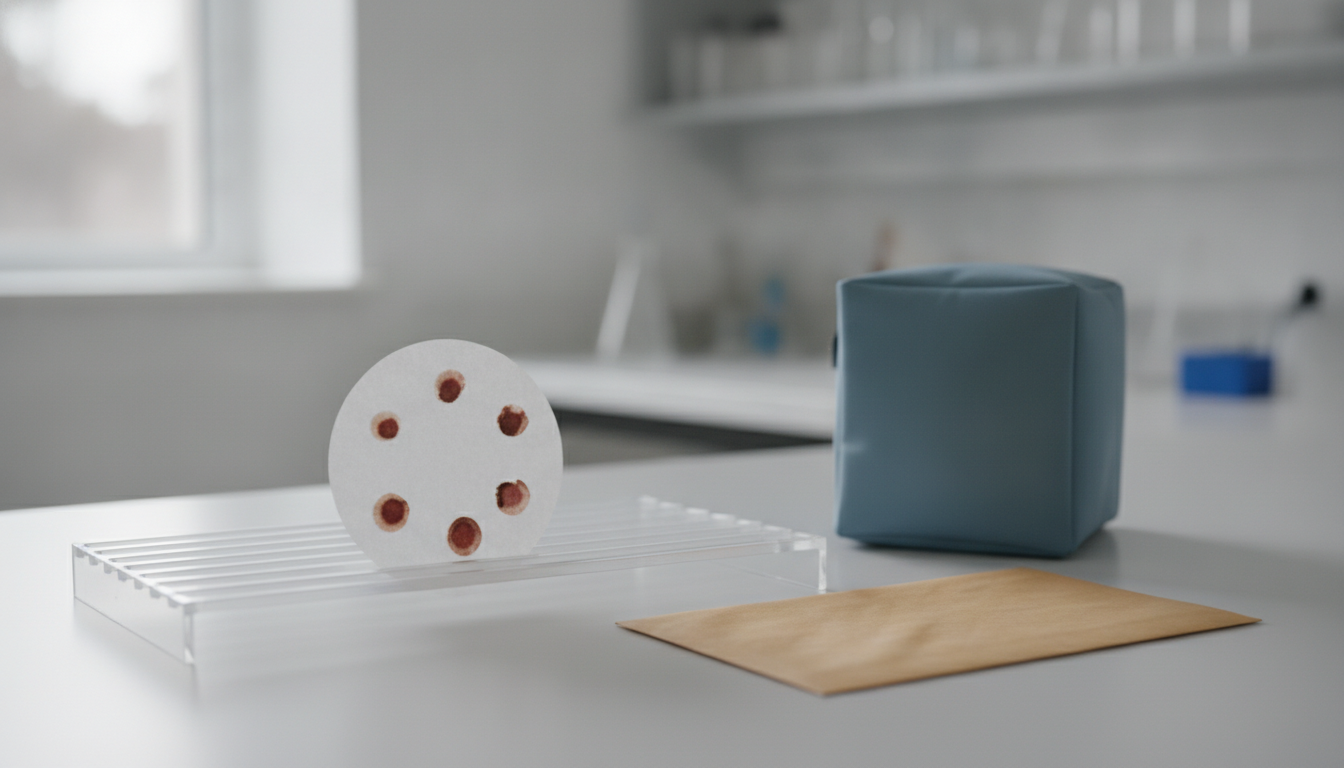
Inside the hospital, the pickup point should be one place: a labeled, locked drop box or a laboratory send-out bench where the nursery, NICU and postpartum units deliver their envelopes by a posted time. The courier collects from that single point, counts envelopes against the manifest the laboratory prints, and photographs the sealed bundle at pickup and at delivery with geofence confirmation, so the hospital holds a timestamped record of when each day’s cards left and arrived. A birthing hospital in the Hudson Valley sending cards to the state program laboratory each afternoon can run exactly this way; the regional coverage is on our Hudson Valley medical courier service page.
For health systems with several birthing hospitals, the design extends to a route that sweeps each nursery in sequence and consolidates at the facility closest to the laboratory, with the late-collected cards from a NICU or a transfer picked up on demand so they do not wait a day. The broader interfacility model is described in our guide to hospital courier services for health systems and on the medical courier service for hospitals page. Whatever the configuration, the hospital should receive a monthly report of collection-to-dispatch and dispatch-to-receipt intervals by unit, because the program will be measuring the same thing.
Nursery pickup design checklist:
- One pickup point, a posted drop deadline, and a daily afternoon window set from the laboratory cutoff
- Seven-day coverage written into the courier agreement, holidays included
- Envelope count against a printed manifest, with geofenced photos at pickup and delivery
- An on-demand option for late NICU collections and transfers
- Monthly interval reporting by unit, reconciled against the state program’s transit-time reports
Key Takeaways
Newborn screening specimen transport is a scheduling discipline wrapped around a simple specimen: dry the card, keep it ambient and out of the heat, dispatch it within 24 hours every day of the week, and keep a record that matches what the state program measures.
- Collect at 24 to 48 hours of life, dry flat for three to four hours, dispatch within 24 hours
- Paper envelopes, no sealed plastic without desiccant, ambient in an insulated tote, never a hot vehicle
- Confirm the program’s cutoff, weekend coverage, rejection criteria and reporting before designing the pickup
- Pediatric microtainers travel by analyte: upright, light-protected for bilirubin, STAT on ice slurry for blood gases
- One pickup point, a seven-day afternoon window and interval reporting by unit
If your hospital or health system is tightening newborn screening transit times or adding weekend nursery pickups, schedule a demo of the carGO Health platform to see how a seven-day scheduled stop, on-demand NICU pickups and interval reporting are configured for one account.
Frequently Asked Questions
How soon must newborn screening specimens be sent to the laboratory?
Federal advisory committee goals call for cards to be collected at 24 to 48 hours of life and received by the screening laboratory within 24 hours of collection, so that time-critical results are reported by about five days of life and all results by about seven. In practice that means a daily pickup, including weekends and holidays, timed after the cards have dried.
How long do dried blood spot cards need to dry before transport?
About three to four hours, laid flat on a rack at room temperature, roughly 15 to 25 degrees Celsius, away from direct sunlight, heaters and anything touching the spots. Cards must not be dried with heat or stacked while wet. A card packaged before it is dry can stick, grow bacteria and give unreliable results on several assays.
Should newborn screening cards be refrigerated during transport?
No, unless the state program specifically instructs it. Dried cards travel ambient in the program’s paper envelope, inside an insulated tote that shields them from vehicle heat and cold. They should not be sealed in plastic bags without desiccant, because trapped humidity degrades analytes, and they should never sit in a hot vehicle, which damages enzyme and DNA-based screens.
Why are newborn screening specimens rejected?
The common reasons are insufficient blood to fill the circles, layered or clotted spots, blood applied to both sides, contamination from touching or from wet alcohol, cards packaged before drying, missing identifiers or collection time, and cards that arrive too many days after collection. Each rejection means a recollection from an infant who may already be home.
How should a hospital schedule newborn screening pickups on weekends and holidays?
Exactly as on weekdays: one pickup point, a posted drop deadline, and a daily afternoon window that follows the drying period and precedes the laboratory’s cutoff. Seven-day coverage should be written into the courier agreement, with an on-demand option for late NICU collections, and the courier’s pickup and delivery timestamps should be reconciled monthly with the program’s transit-time reports.
Related Resources