Cytology Specimen Transport: Liquid-Based Vials, Slides and Aspirates
A cervical screening vial, a tray of alcohol-fixed smears from a thyroid aspiration and a 500 mL container of pleural fluid are all cytology, and none of them travel the same way. The vial is stable for weeks but must not freeze or leak. The slides are stable once fixed but shatter. The fluid is unfixed, living material on a clock measured in hours. Cytology specimen transport is the problem of carrying three different states of one discipline to a laboratory whose diagnosis rests on cell morphology that cannot be recovered once it is lost.
This guide is for cytology laboratory managers, pathology practice administrators and the clinic and hospital logistics teams that send them work. It covers liquid-based cytology vials, smear slide fixation and carriers, fine-needle aspiration specimens and the rinses that must travel cold, non-gynecologic fluids and their time limits, and the leak prevention, identity and turnaround practices that keep a cytology program on schedule.
1. Liquid-Based Cytology Vials: Preservative, Temperature and Caps
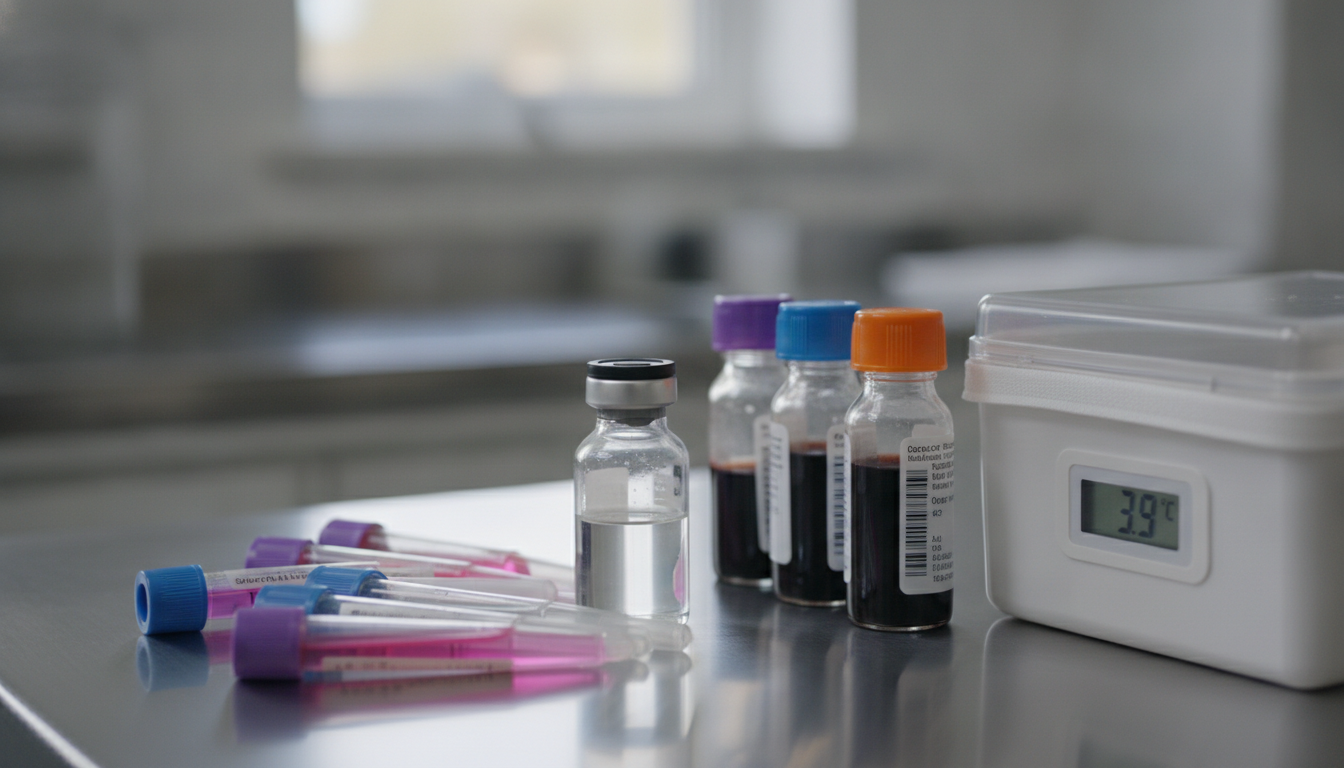
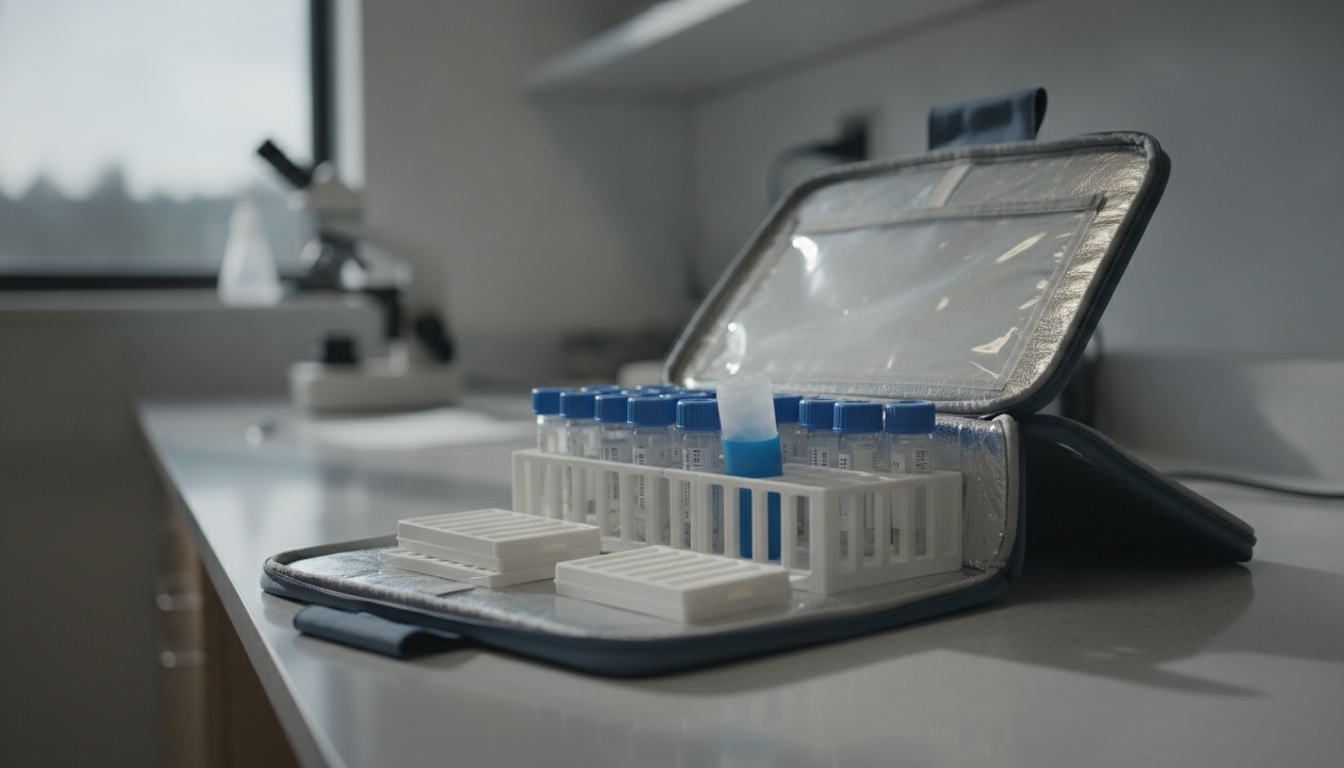
Liquid-based cytology collects cells into a vial of alcohol-based preservative, methanol-based in some systems and ethanol-based in others, which fixes the cells on contact and keeps them for weeks. Manufacturer labeling for the common systems puts storage at controlled room temperature, roughly 15 to 30 degrees Celsius, and specimen stability at several weeks, so time is rarely the problem. Temperature extremes are. A vial that freezes loses morphology to ice damage, and a vial left in a cabin above 30 degrees Celsius for an afternoon drifts outside its labeled range. Both are avoided with an insulated ambient tote; our ambient medical transport page describes the conditioned packs that hold it.
The vial also carries the molecular test. Human papillomavirus testing and other assays are run from the same preservative, and a laboratory that receives a half-empty vial cannot co-test. The cap is the leak point: it must be tightened to the torque line marked on the vial, with threads wiped clean, because preservative on the threads wicks out under vibration. The preservative itself is flammable; small patient vials typically travel under the excepted or limited quantity provisions of the PHMSA hazardous materials regulations, and the laboratory’s packaging instruction should state how many vials per package, upright, with absorbent. Our pathology specimen transport page covers how vials ride alongside formalin containers on the same route.
Vial handling rules:
- Controlled room temperature, roughly 15 to 30 degrees Celsius; never frozen, never left in an unconditioned cabin
- Cap tightened to the torque line, threads clean, vial upright in a rack inside a sealed bag with absorbent
- Full volume preserved for co-testing; a leaking vial is a lost molecular result
- Packaged per the laboratory’s instruction for flammable preservative, with the vial count on the manifest
2. Smear Slides: Fixation, Carriers and Breakage
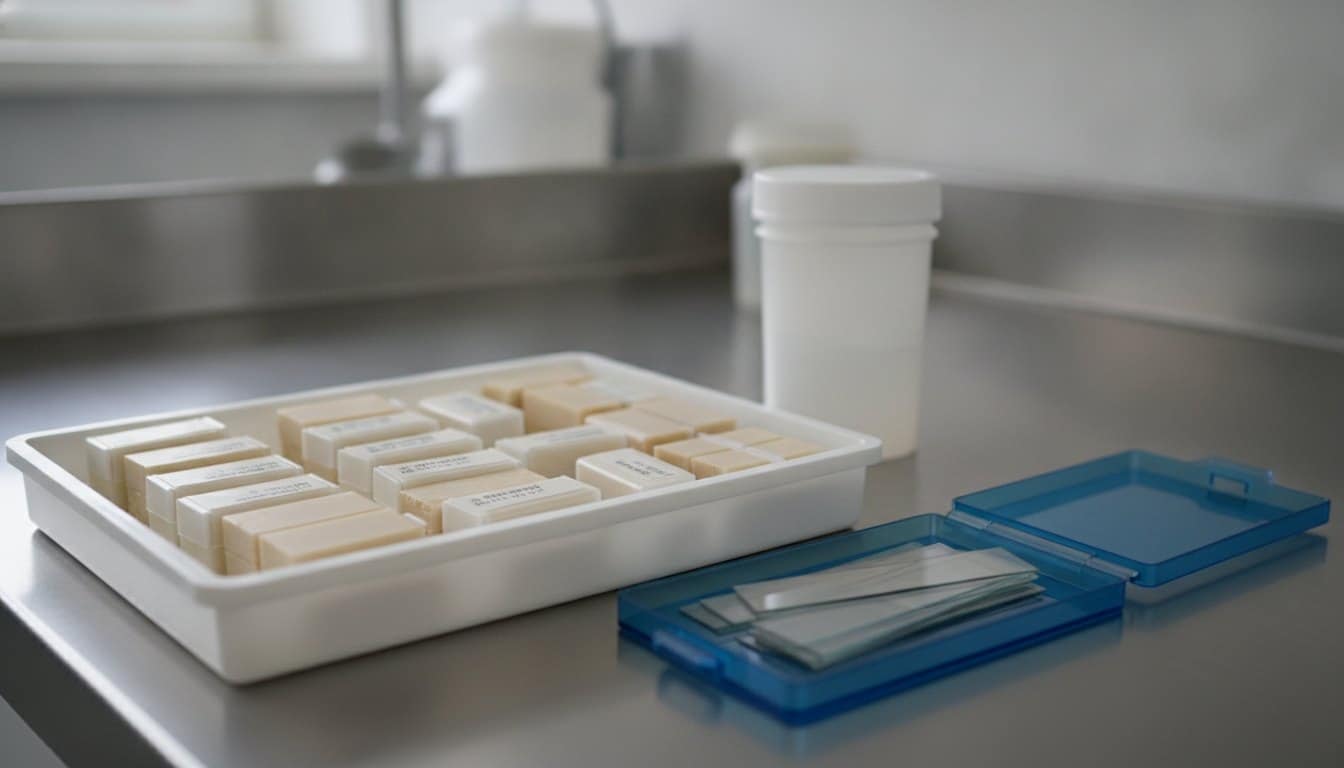
Conventional smears exist in two fixation states and they must not be confused. Alcohol-fixed smears are sprayed or immersed in fixative within seconds of preparation for Papanicolaou staining; air-dried smears are left unfixed for Romanowsky-type stains. Once fixed and dry, a slide is stable for days at ambient temperature, and an air-dried smear is stable as long as it stays dry. Labels go on the frosted end in pencil or solvent-resistant marker with two patient identifiers, because ordinary ink dissolves in alcohol, and a slide that arrives unreadable is a rejected specimen, as our guide to pathology and dermatopathology specimen transport explains for tissue and slides alike.
Breakage is the transport failure. Slides travel in rigid plastic mailers that slot each slide individually, never stacked loose in a folder, and spray-fixed slides must be fully dry before the mailer closes or they bond to each other. Slides immersed in jars of alcohol are a liquid shipment with leak and flammability problems, so dry fixed slides in mailers are preferred whenever the laboratory allows it. One patient per mailer, the mailer sealed in a bag with its requisition, and the mailer count on the manifest. Temperature is forgiving, but a cold slide carried into a warm laboratory fogs with condensation, so mailers stay inside the tote until accessioning.
Slide transport checklist:
- Fixation state confirmed and marked on the requisition: alcohol-fixed or air-dried
- Pencil or solvent-resistant labels with two identifiers on the frosted end
- Rigid slotted mailers, one patient per mailer, dry before closing, inside a sealed bag
- No loose slides in cardboard folders and no jars of alcohol unless the laboratory requires them
3. Fine-Needle Aspirates: Smears, Rinses and the Cold Tier
A fine-needle aspiration of a thyroid nodule, lymph node, salivary gland, breast mass or, through endoscopic ultrasound, a pancreatic lesion produces a set of specimens from one procedure: air-dried smears, alcohol-fixed smears and a needle rinse. Rapid on-site evaluation at the clinic may confirm adequacy before the patient leaves, but the diagnosis is made at the laboratory, often with a cell block prepared from the rinse and immunostains run on it. The rinse is where the handling splits. A rinse into alcohol-based preservative is an ambient specimen. A rinse into saline, balanced salt solution or a cell culture medium when lymphoma is suspected is unfixed and must travel at 2 to 8 degrees Celsius, reaching the laboratory the same day and, for flow cytometry, generally within 24 hours while the cells are still viable.
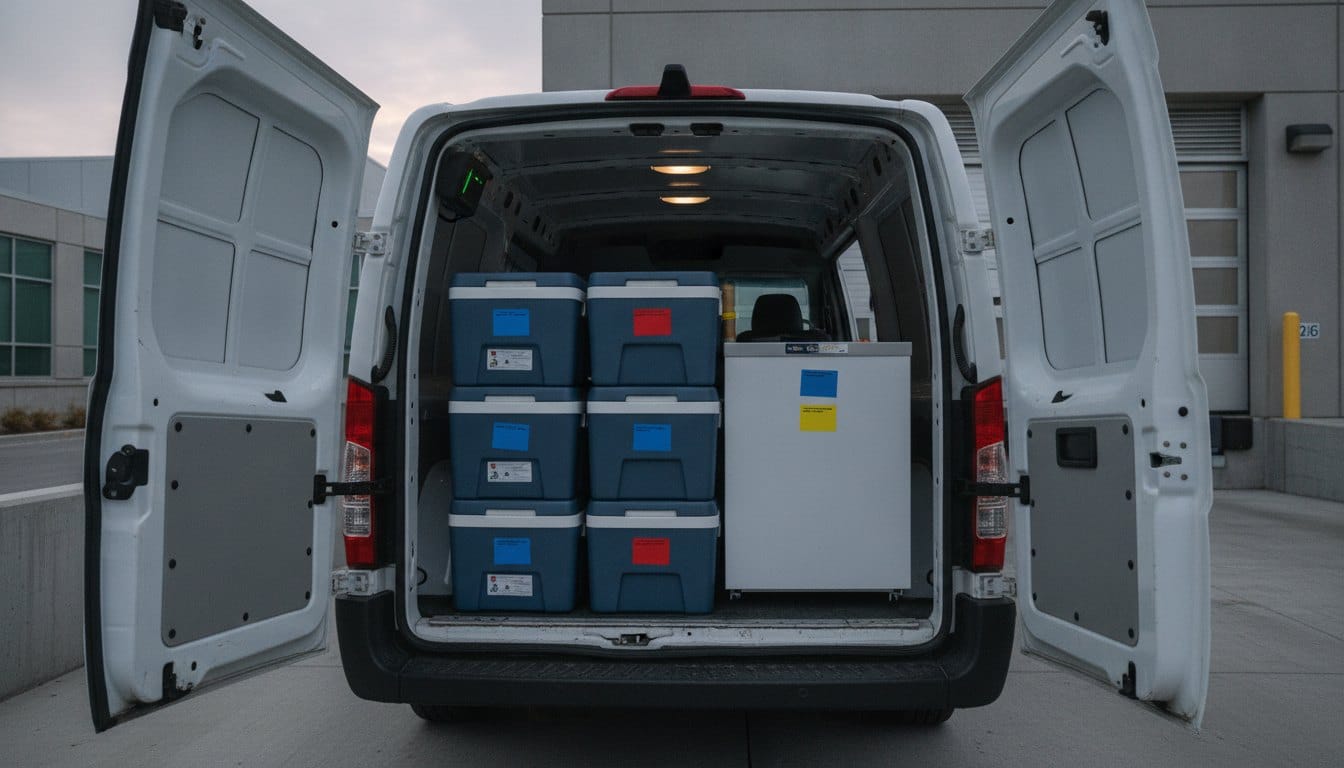
One patient visit can therefore produce an ambient slide mailer and a refrigerated tube, two tiers under one requisition. The portal order lists both containers, the pickup photo shows both, and the refrigerated tube rides in the cold tote with a barrier between gel pack and tube; our refrigerated medical courier page describes that packing. Timing follows the clinic: aspiration sessions run in the morning, the laboratory wants the rinse processed the same day, and a clinic in Westchester County sending to a laboratory in the city needs a mid-afternoon pickup rather than the end-of-day sweep. Our chain of custody courier page explains how the split specimen is reconciled at accessioning.
FNA handling rules:
- Smears in a rigid mailer at ambient; preservative rinses at ambient; saline and culture-medium rinses at 2 to 8 degrees Celsius
- Flow cytometry rinses delivered the same day and within 24 hours
- Both containers on one order, both in the pickup photo, tier marked on each
- Pickup timed to the aspiration session, not to the clinic’s closing time
4. Non-Gynecologic Fluids and the Clock to the Bench
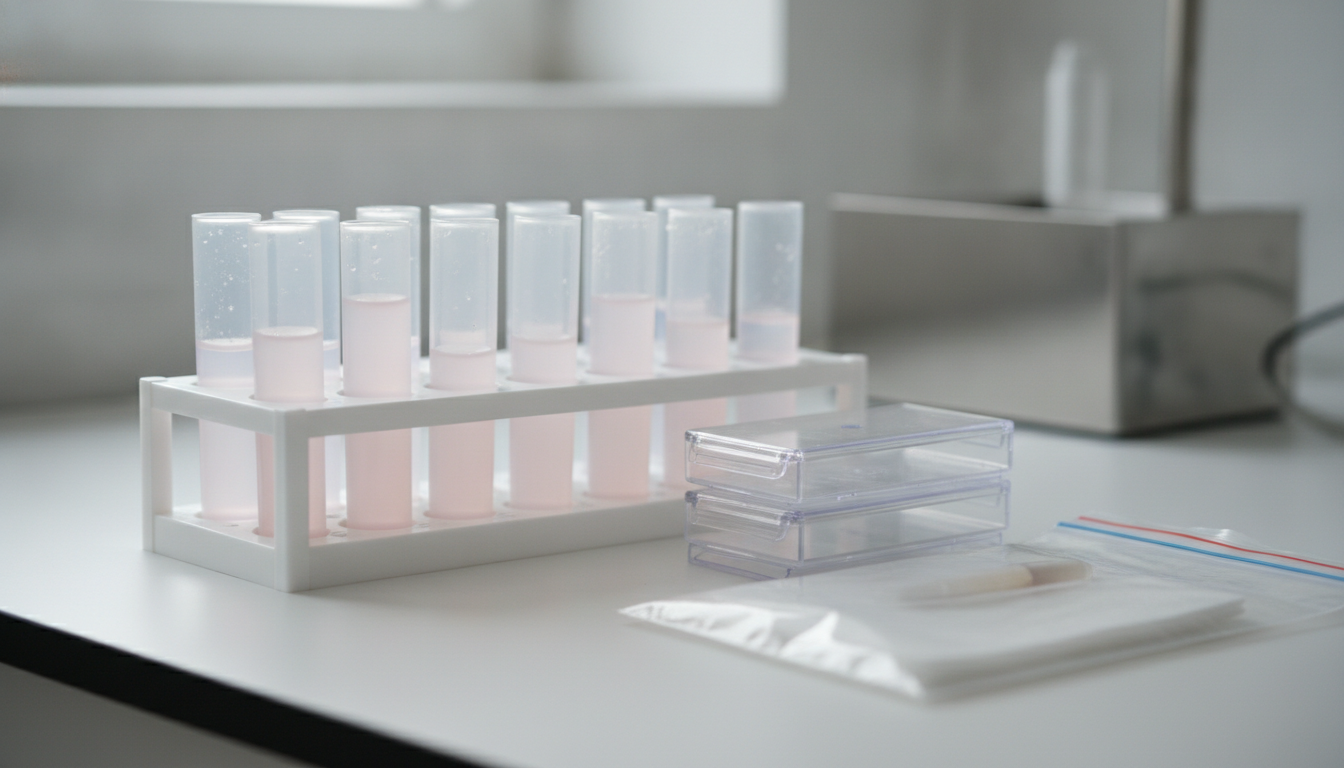
Urine, pleural, peritoneal and pericardial fluids, cerebrospinal fluid, bronchial washings and lavage, and sputum arrive unfixed, and unfixed cells degenerate. Most laboratories want these processed within a couple of hours of collection, or refrigerated at 2 to 8 degrees Celsius and processed within 24 hours. Cerebrospinal fluid is the most fragile; cells lyse within hours, so it is processed the same day and many laboratories ask for it within an hour. Voided urine degenerates quickly and is refrigerated promptly. Some laboratories ask the clinic to add an equal volume of alcohol fixative to fluids; that is done only on the laboratory’s instruction, because fixative changes how the specimen is handled and what ancillary tests remain possible.
Volume creates the second problem. A liter container of ascitic fluid leaks if overfilled or snap-capped, so fluids travel in screw-cap containers filled with headspace, upright, in a sealed bag with absorbent sized to the whole volume. A fluid that is also going to microbiology and chemistry is split at the collection site into separate labeled containers, never in transit. Hospital inpatient fluids ride scheduled runs several times a day with a STAT overlay; outpatient urine cytology rides routes in the refrigerated tote. Our lab sample pickup and delivery page covers how both modes are set up for one laboratory, and our guide to reducing specimen rejection rates covers what the laboratory sees when they fail.
Fluid time and temperature limits:
- Processed within about 2 hours of collection, or refrigerated at 2 to 8 degrees Celsius and processed within 24 hours
- Cerebrospinal fluid the same day, ideally within the hour; voided urine refrigerated promptly
- Fixative added only on the laboratory’s written instruction
- Screw-cap containers with headspace, upright, absorbent for the full volume, split for other departments at the site
5. Leak Prevention, Identity and Turnaround in Cytology Specimen Transport
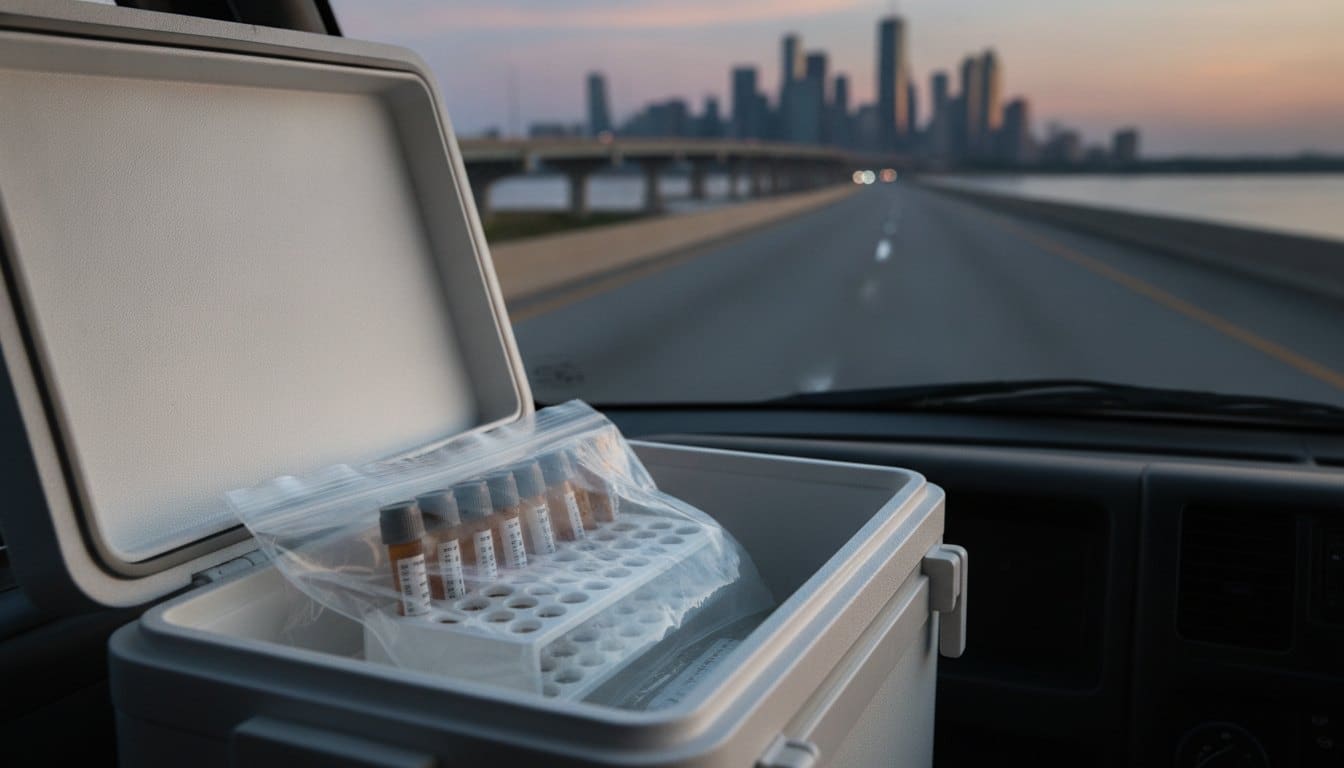
Cytology specimens are patient specimens under UN 3373 and travel as Category B: leak-proof primary, absorbent, leak-proof secondary bag and rigid outer. The weak points are specific. Vials loosen under vibration, so racks hold them upright and the cap is checked at pickup. Large fluid containers get a wrap of sealing film around the lid. Slide mailers crack when they ride loose, so they go in a box inside the tote. Identity is two identifiers on every vial, slide and container, matched to a requisition sealed in the same bag, counted at pickup against the manifest and photographed inside a geofence; our guide to hazardous materials and UN 3373 packaging covers the regulatory framework.
Turnaround is where transport becomes visible to the clinician. Cytology is regulated under the CLIA rules at 42 CFR 493.1274 administered by CMS, and accreditation checklists from the College of American Pathologists ask laboratories to define acceptance criteria and monitor turnaround. Laboratories set turnaround targets in working days, and a specimen that arrives after the day’s processing run loses one of them, so pickup windows are set backward from the preparation cutoff rather than forward from clinic convenience. Studies indexed by the National Library of Medicine consistently place most laboratory errors in the pre-analytical phase. carGO Health runs ambient and refrigerated tiers on one route with 24/7 dispatch, geofenced photo proof and e-signature at accessioning, configured per practice as described on our medical courier service for dermatology and pathology page.
Program design for a cytology laboratory:
- Pickup windows set backward from the preparation cutoff, with a same-day mode for FNA sessions
- Ambient and refrigerated totes on every route, tier marked on each container and order
- Vial, mailer and container counts reconciled at pickup and at accessioning, with photo proof
- Rejection and leak events reviewed monthly by sending site, so collection practice is fixed at the source
Key Takeaways
Cytology specimen transport is three handling problems under one discipline: vials that must not freeze or leak, slides that must not break, and unfixed fluids and rinses that must reach the bench cold and fast. Specify the tier per container, bag per patient, and set pickups by the laboratory’s cutoff.
- Liquid-based vials ride ambient at roughly 15 to 30 degrees Celsius, capped to the torque line, upright, never frozen
- Fixed smears travel dry in rigid slotted mailers, one patient per mailer, labeled in pencil or solvent-resistant marker
- Saline and culture-medium FNA rinses travel at 2 to 8 degrees Celsius and arrive the same day
- Unfixed fluids are processed within about 2 hours or refrigerated and processed within 24 hours
- Category B packaging, two identifiers, manifest counts and geofenced photos at both ends
If your cytology laboratory is onboarding new sending sites or losing specimens to leaks and late arrivals, schedule a demo of the carGO Health platform to see how tiers, FNA same-day pickups and cutoff-based routes are configured.
Frequently Asked Questions
Do liquid-based cytology vials need to be refrigerated?
No. Liquid-based cytology vials contain an alcohol-based preservative and are stored and transported at controlled room temperature, roughly 15 to 30 degrees Celsius per manufacturer labeling, where the specimen is stable for weeks. They must not freeze, because ice damages cell morphology, and they should not sit in a hot vehicle cabin. An insulated ambient tote handles both.
How should cytology slides be packaged for transport?
In rigid plastic mailers that slot each slide individually, one patient per mailer, with the fixation state noted on the requisition and labels written in pencil or solvent-resistant marker on the frosted end. Spray-fixed slides must be dry before the mailer closes. The mailer is sealed in a bag with the requisition and boxed inside the tote so it cannot ride loose.
How are fine-needle aspiration specimens transported?
As a set: air-dried and alcohol-fixed smears in a mailer at ambient temperature, plus a needle rinse. A rinse in alcohol-based preservative travels ambient; a rinse in saline, balanced salt solution or cell culture medium is unfixed and travels at 2 to 8 degrees Celsius, arriving the same day and within 24 hours for flow cytometry. Both containers go on one order.
How quickly must body fluids for cytology reach the laboratory?
Unfixed fluids such as pleural, peritoneal and bronchial specimens should be processed within about 2 hours of collection, or refrigerated at 2 to 8 degrees Celsius and processed within 24 hours. Cerebrospinal fluid is processed the same day, ideally within an hour. Fixative is added only when the laboratory instructs it, because it changes handling and ancillary testing.
What causes cytology specimens to be rejected on arrival?
Leaking or loosely capped vials, broken or unlabeled slides, ink labels dissolved by alcohol, slides stuck together from closing a mailer while wet, unfixed fluids that arrived warm or late, and mismatches between the container and the requisition. Each is visible at pickup, which is why a count, a cap check and a photo at the collection site prevent most of them.
Related Resources