Toxicology Specimen Transport: Forensic vs Clinical Chain of Custody

A urine collection sealed in front of a donor at an occupational health clinic in central Pennsylvania and a gray-top tube drawn from an overdose patient in a Bronx emergency department are both toxicology specimens, and they move under different rules. The first may end a commercial driver’s career or be argued over in an arbitration hearing a year later, so every handoff must be documented and every seal intact on arrival. The second is needed within the hour, and nobody will ever ask who carried it. Sound toxicology specimen transport begins with knowing which of the two you are moving.
This guide separates forensic from clinical toxicology at the transport leg: what a custody and control form and a tamper seal actually control, how split specimens and the DOT rules in 49 CFR Part 40 shape collection and shipping, which temperature tier each specimen type needs, and how to design pickups so the documentation survives a challenge.
1. Forensic Versus Clinical Toxicology: What the Result Will Be Used For
The distinction is not the analyte or the matrix. The same urine can be screened for amphetamines, cocaine metabolite, opioids, phencyclidine and marijuana metabolite in either setting. What changes is who relies on the result and whether anyone has an incentive to dispute it. A clinical result guides treatment: an acetaminophen level in an emergency department, a screen before a pain management prescription is renewed. A forensic result supports an action against a person: a return-to-duty decision, a termination, a custody finding. It has to survive cross-examination, which means a chain of custody from the moment of collection, a specimen that can be retested independently and a laboratory inspected for that purpose.
Federal workplace programs run on two linked frameworks. The HHS Mandatory Guidelines for Federal Workplace Drug Testing Programs, administered through the Substance Abuse and Mental Health Services Administration, set the analytes, cutoffs and laboratory certification under the National Laboratory Certification Program. The DOT rules in 49 CFR Part 40 apply those guidelines to safety-sensitive transportation employees and spell out collection, shipping and review in detail. Laboratories outside federal programs demonstrate the same model through forensic drug testing accreditation from the College of American Pathologists. Clinical toxicology is governed by CLIA and ordinary identification rules: a requisition and two patient identifiers, no custody form. The gray zone, pain management compliance testing and hospital post-accident collections, starts clinical and ends up in front of a lawyer. If a result could be used against a person, collect it as forensic from the start; a chain of custody cannot be reconstructed afterward.
What makes a toxicology specimen forensic:
- A custody and control form started at collection, with every transfer signed and dated
- Tamper-evident seals over each bottle, initialed by the donor and dated by the collector
- A split specimen available for independent retesting at a second certified laboratory
- Testing at a laboratory certified for forensic work, with Medical Review Officer verification before the employer sees a result
2. Custody and Control Forms, Tamper Seals and the Courier’s Place in Them
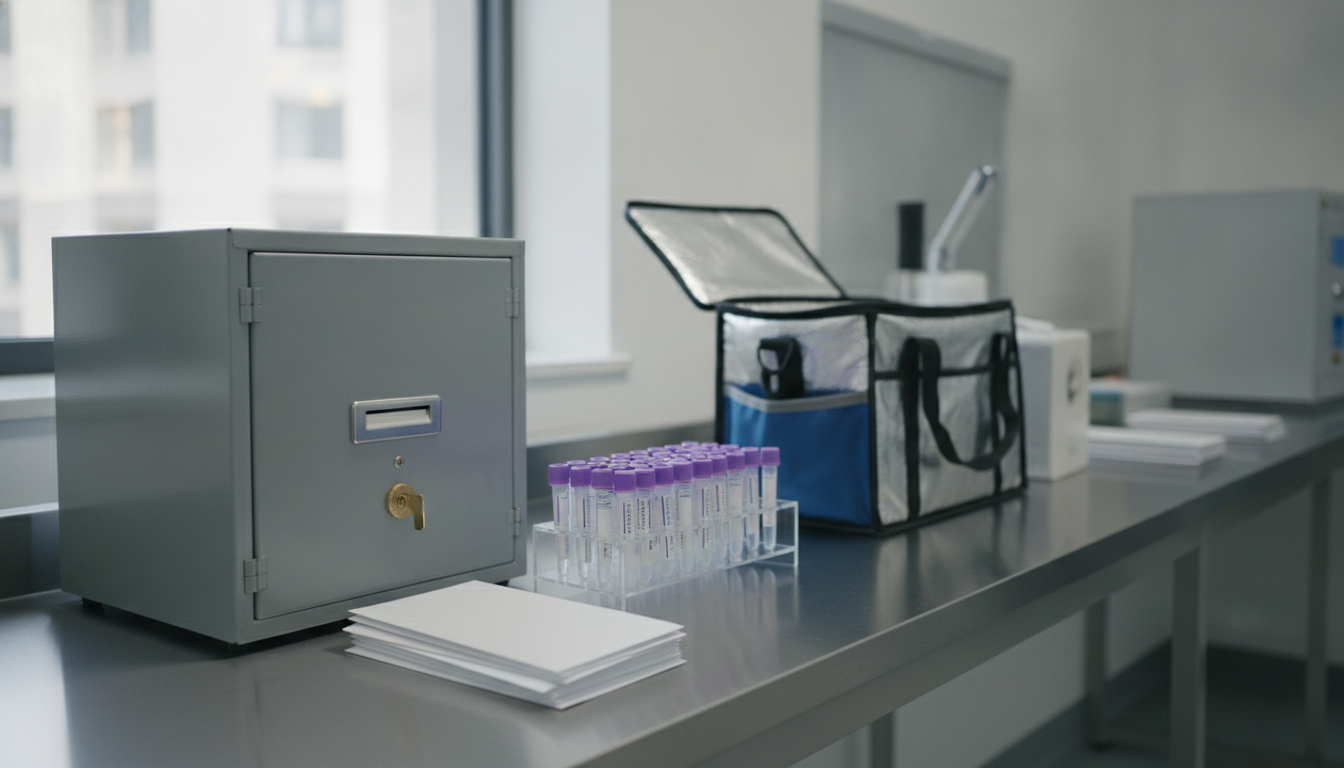
The Federal Drug Testing Custody and Control Form, the CCF, is a multi-part document keyed to a unique specimen identification number preprinted on the form and on the bottle seals. The collector records the collection, reads the specimen temperature, notes whether it was observed and signs a certification; the donor signs a separate certification and initials the seals. The chain-of-custody block is completed each time the specimen changes hands under the collector’s control. The laboratory copy travels with the specimen; other copies go to the Medical Review Officer, the employer and the donor. Electronic CCFs follow the same structure.
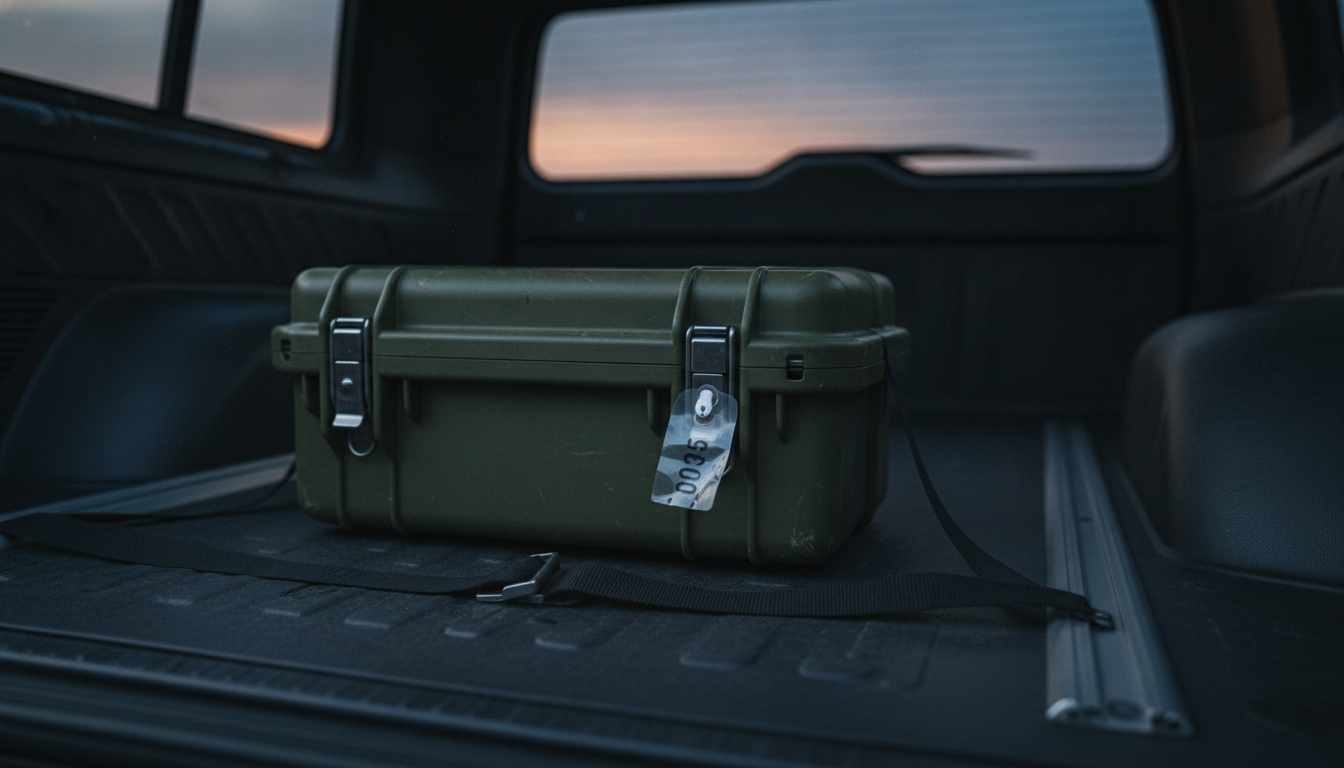
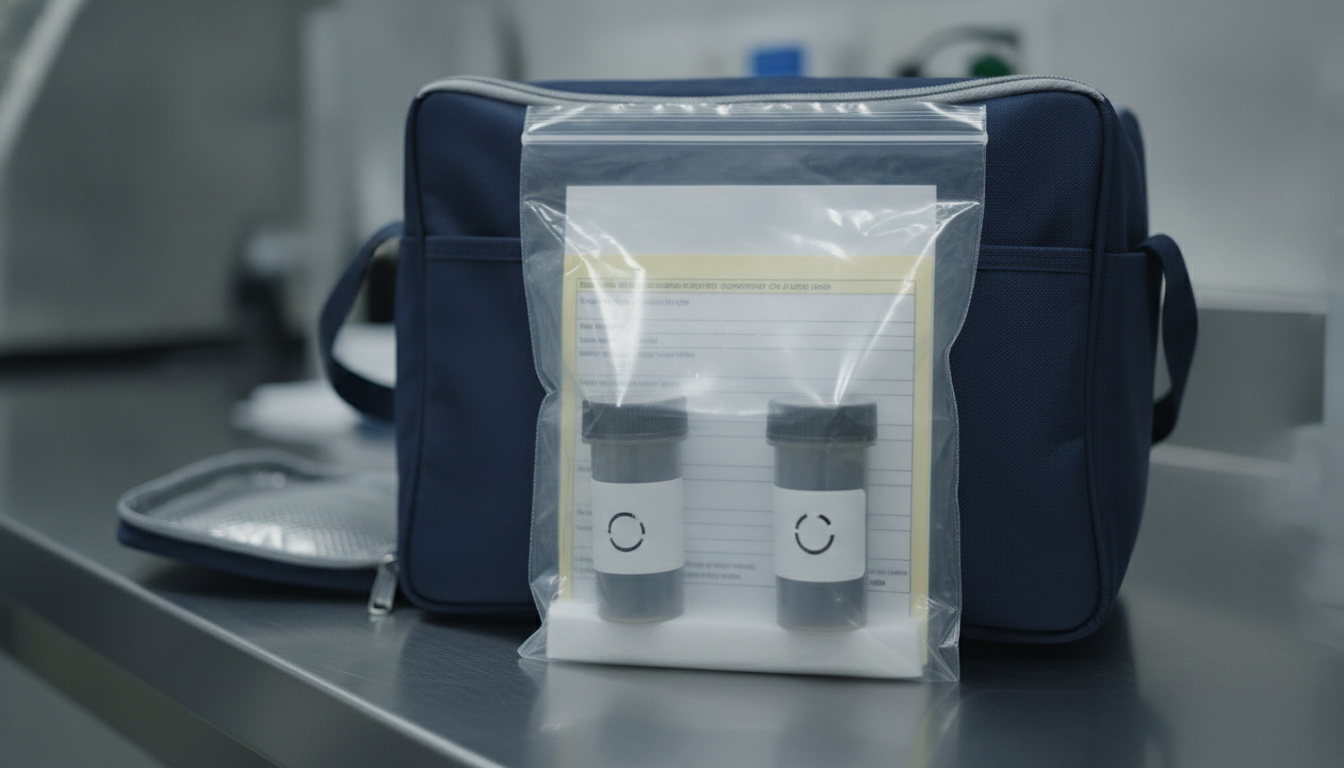
Part 40 is explicit about the courier. Once the bottles are sealed, placed in a leak-resistant bag with absorbent material and the laboratory copy of the CCF in a separate pouch, and the shipping container is sealed so that tampering would be evident, the package is a closed unit. Couriers, express carriers and postal personnel are not required to sign the CCF or document chain of custody during transit; the sealed container is the control, inspected at accessioning before any seal is broken. The courier record therefore proves something different: that the package moved, unopened, from collection site to laboratory in a known interval through known handlers. Our guide to chain of custody in medical specimen transport describes those mechanics, and the chain-of-custody courier service page shows the geofenced pickup photo and delivery e-signature that produce them.
Laboratory rejection points that transport can cause or prevent:
- Specimen ID on the bottle seal does not match the CCF because the wrong bag was sealed with the wrong form
- Bottle seal broken, missing or showing evidence of tampering on receipt
- Package opened in transit for consolidation or inspection, which breaks the sealed-container control
- Laboratory copy of the CCF missing because it was packed loose rather than in the document pouch
3. Split Specimens, Volumes and the Part 40 Collection Rules
Part 40 requires a split specimen for every DOT urine collection. The donor provides at least 45 mL; the collector pours at least 30 mL into Bottle A and at least 15 mL into Bottle B and seals both in the donor’s presence. Both bottles ship together to the same laboratory. Bottle A is tested; Bottle B is held frozen and tested at a different HHS-certified laboratory only if the donor requests it within 72 hours of being notified of a verified positive, adulterated or substituted result. Within four minutes of collection the collector reads the temperature strip; the acceptable range is 32 to 38 degrees Celsius, and a reading outside it triggers a second, directly observed collection.
The collector must ship specimens to the laboratory as quickly as possible, within 24 hours or during the next business day. That clause sets a collection site’s pickup schedule: a site collecting through 5:00pm needs an evening pickup or a reliable next-morning one, with overnight specimens held in a secure, access-controlled location. DOT amended Part 40 in 2023 to permit oral fluid once laboratories are certified by HHS for it; oral fluid collections also produce a split in two sealed tubes. Non-DOT programs add hair, roughly 100 milligrams cut close to the scalp and sealed in foil. Whatever the matrix, both halves of the split travel together, sealed and unopened.
Part 40 numbers worth building a pickup schedule around:
- 45 mL minimum collection, split into at least 30 mL for Bottle A and 15 mL for Bottle B
- Temperature read within 4 minutes, acceptable range 32 to 38 degrees Celsius
- Shipment within 24 hours or the next business day; 72 hours for the donor to request a Bottle B test
- Positive, adulterated and substituted specimens held frozen by the laboratory for at least one year
4. Temperature and Stability in Toxicology Specimen Transport
Forensic urine does not require refrigeration in transit; the Part 40 model assumes ambient shipment. That is not tolerance for heat. Cocaine hydrolyzes to benzoylecgonine, 6-acetylmorphine, the metabolite that distinguishes heroin from other opioids, hydrolyzes to morphine, and the carboxy metabolite of THC adsorbs to container walls over time. In a glucose-containing urine with microbial contamination, fermentation can produce ethanol that was never in the donor. Laboratories refrigerate on receipt and freeze for storage, and the courier’s job is to keep the package out of a hot cabin and deliver it within hours on the ambient transport tier of 15 to 25 degrees Celsius.
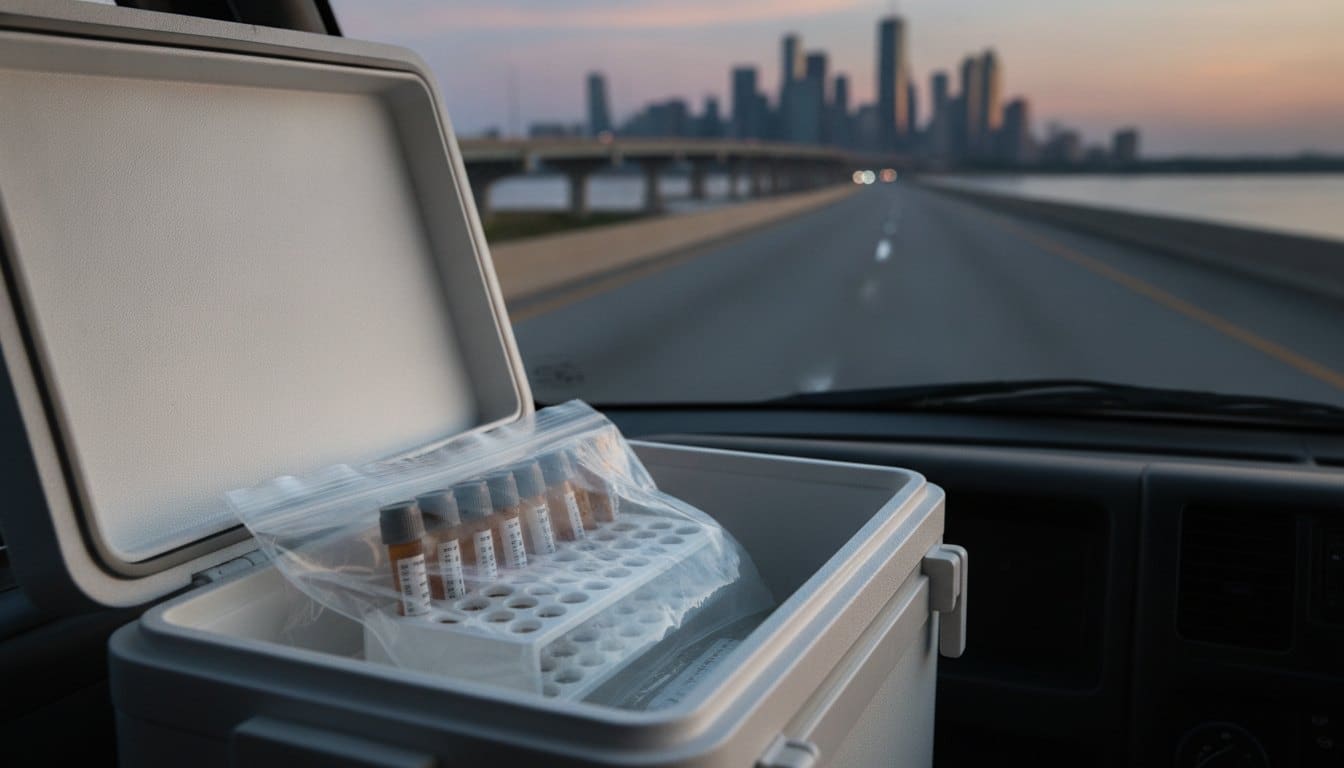
Clinical toxicology is mostly a refrigerated discipline. Whole blood for ethanol is drawn into a gray-top tube containing sodium fluoride and potassium oxalate, filled to minimize headspace, kept capped and moved at 2 to 8 degrees Celsius; fluoride stops glycolysis and microbial ethanol production. Serum levels for acetaminophen, salicylate, digoxin and lithium are STAT in the emergency setting and travel ambient under a short window or refrigerated beyond it. Clinical urine screens should be refrigerated if not tested within a few hours, on a refrigerated medical courier tier. Guidance published by CLSI supports those practices; the receiving laboratory’s stability table is the controlling document. One tier per tote, nothing mixed, is the rule our guide to reducing specimen rejection rates through transport quality expands on.
Temperature by toxicology specimen type:
- DOT and workplace urine: ambient, protected from heat, delivered within hours
- Oral fluid and hair: ambient, per the collection device insert
- Whole blood ethanol in gray-top tubes: 2 to 8 degrees Celsius, full draw, capped
- Serum drug levels and clinical urine screens: refrigerated unless tested within a short STAT window
- Referral aliquots for mass spectrometry confirmation: frozen when the receiving laboratory specifies
5. Designing the Pickup Network for Collection Sites and Laboratories
Forensic volume comes from a dispersed network: occupational health clinics, employer sites, third-party administrator collection sites and emergency departments doing post-accident collections. Each produces a few sealed packages a day with a hard Part 40 shipping clock, so routes are designed backward from it. Sites that close early take a fixed late-afternoon pickup; sites with overnight post-accident collections, which FMCSA rules require within hours of the event, need an on-demand option through 24/7 medical courier dispatch. The record is built to be produced on request: a geofenced photo of each sealed package at pickup, a delivery timestamp and an e-signature by accessioning staff, as described on the medical courier proof of delivery page. The HIPAA-compliant courier page covers the privacy obligations around results the courier never sees.
Clinical toxicology rides on the laboratory’s ordinary STAT and route service; a STAT medical courier run for an emergency department ethanol level is a refrigerated delivery with a tight clock. A collection network across northern New Jersey feeding an HHS-certified laboratory in eastern Pennsylvania, for example, runs one consolidated afternoon sweep with on-demand night coverage for post-accident collections, as described on our northern New Jersey medical courier service page. carGO Health supports that design on one platform, described on the medical courier service for laboratories page: portal orders in under a minute, AI-assisted dispatch, real-time GPS tracking, geofenced photo proof at both ends and chain-of-custody records across ten Northeast states.
Pickup design checklist for toxicology programs:
- Set each site’s pickup time from the Part 40 shipping clock and the laboratory’s accessioning cutoff
- Accept only sealed, bagged packages with the CCF in the document pouch
- Photograph each package at pickup; never open or consolidate packages in transit
- Provide an on-demand option for post-accident and after-hours collections
- Keep forensic packages ambient and clinical bloods refrigerated in separate totes
Key Takeaways
Toxicology specimen transport splits into two disciplines. Forensic specimens travel as sealed, documented units under the CCF, with the courier’s record proving the package moved intact; clinical specimens travel under ordinary laboratory rules with temperature as the main concern. Decide which you are running before the first collection.
- Forensic means a custody and control form, tamper seals, a split specimen and a certified laboratory; clinical means a requisition and two identifiers
- Under Part 40 the courier does not sign the CCF; the sealed container is the control and the courier record proves it stayed sealed
- Build pickup schedules around the 24-hour or next-business-day shipping rule and the laboratory’s cutoff
- Forensic urine travels ambient and away from heat; whole blood ethanol and most clinical specimens travel at 2 to 8 degrees Celsius
If your laboratory is onboarding collection sites or losing forensic specimens to seal and documentation rejections, schedule a demo of the carGO Health platform to see how sealed-package pickups, photo proof and chain-of-custody records are configured for toxicology work.
Frequently Asked Questions
What is the difference between forensic and clinical toxicology specimen transport?
Forensic specimens may be used in an employment, legal or custody decision, so they travel under a custody and control form with tamper-evident seals, a split specimen and documented handoffs to a laboratory certified for forensic drug testing. Clinical specimens support treatment and travel under ordinary laboratory identification rules, with temperature control as the main transport concern.
Does a courier have to sign the DOT custody and control form?
No. Under 49 CFR Part 40, couriers, express carriers and postal personnel are not required to sign the CCF or document chain of custody for the package in transit. The sealed, tamper-evident shipping container is the control, and the courier’s own record of pickup photos, timestamps and the delivery e-signature proves the package moved unopened.
How much urine is required for a DOT split specimen collection?
At least 45 mL. The collector pours at least 30 mL into Bottle A, the primary specimen, and at least 15 mL into Bottle B, the split, then seals both in the donor’s presence. Both ship together to the same HHS-certified laboratory. Bottle B is tested at a second laboratory only if the donor requests it within 72 hours of a verified positive result.
Do drug testing specimens need to be refrigerated during transport?
Forensic urine for DOT and workplace programs ships ambient, protected from heat, and is refrigerated by the laboratory on receipt. Clinical toxicology specimens usually do need cold: whole blood ethanol in fluoride-preserved gray-top tubes and most clinical urine screens travel at 2 to 8 degrees Celsius, and referral aliquots for confirmation testing are often frozen.
How quickly must a DOT drug test specimen be shipped to the laboratory?
Part 40 requires the collector to ship specimens as quickly as possible, and in any case within 24 hours or during the next business day. Specimens awaiting pickup must be kept secure and access-controlled. That requirement anchors a collection site’s courier schedule and justifies an on-demand option for after-hours and post-accident collections.
Related Resources