Specialty Pharmacy Delivery Logistics: Cold Chain, Signatures and Patient Scheduling
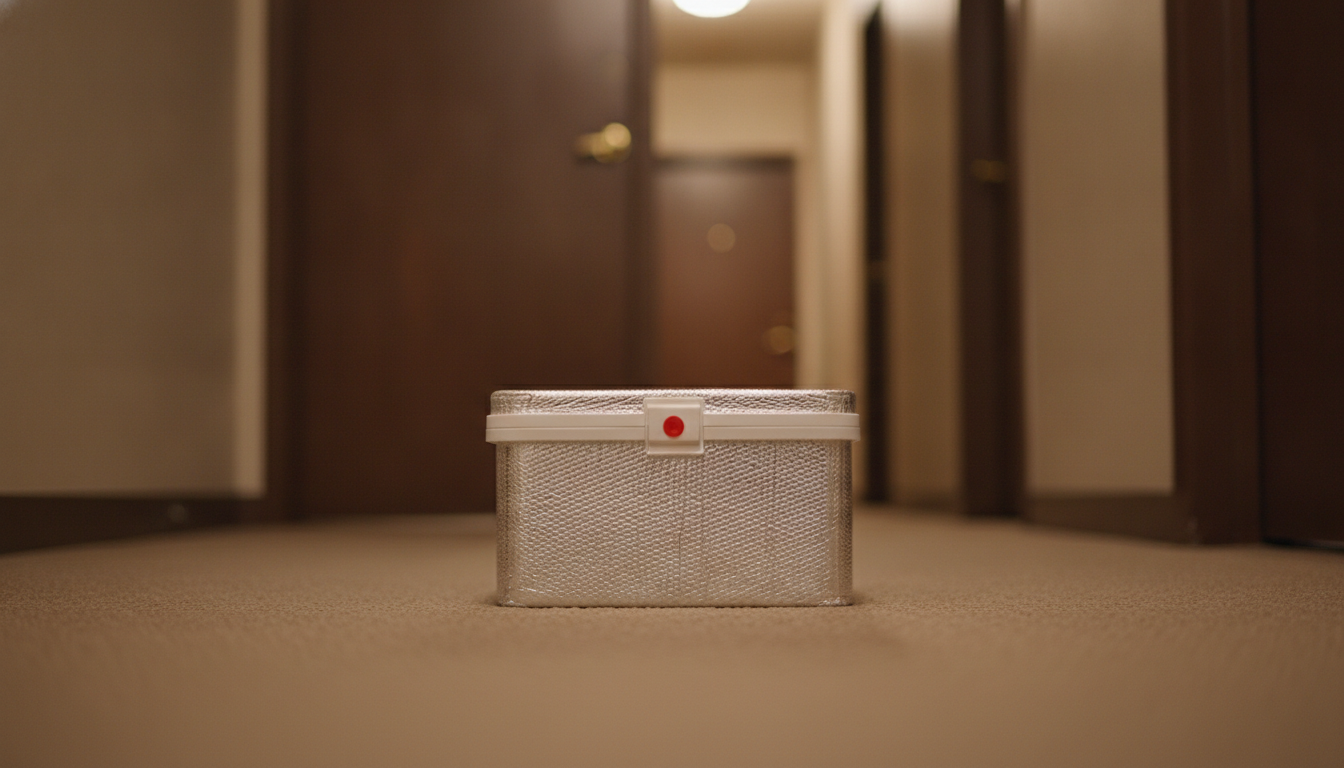
A single carton leaving a specialty pharmacy can hold a month of a monoclonal antibody, a week of hemophilia factor or a course of an oral oncolytic. It must arrive at a patient’s apartment or an infusion clinic inside a two-hour window, at 2 to 8 degrees Celsius, into the hands of an adult who signs for it, with nothing on the outside of the box that tells a neighbor what is inside. Specialty pharmacy delivery is the part of pharmacy operations where cold chain, consent, scheduling and privacy all have to work at the same doorstep at the same moment.
This guide is for specialty and infusion pharmacy operations leads and the clinics they supply. It covers what sets these shipments apart from retail prescriptions, how biologics are packaged for the last mile, what adult-signature and release rules look like in practice, how to schedule around patients and recover a missed delivery without losing the drug, and how to keep protected health information off the doorstep and inside the clinic chain of custody.
1. What Makes Specialty Pharmacy Delivery Different
Specialty drugs are defined less by chemistry than by handling: biologics and other high-cost therapies that need refrigeration, patient training, prior authorization and refill coordination. Many are distributed through limited networks, so the dispensing pharmacy may be an hour or more from the patient and the courier leg replaces the pharmacy counter entirely. A missed delivery is not an inconvenience; it is a missed dose in a cycle that may run every two or four weeks.
The product mix drives the handling rules. Monoclonal antibodies, enzyme replacement therapies, insulin analogs and most self-injectable pens are labeled for 2 to 8 degrees Celsius with a short permitted excursion at room temperature that the pharmacist, not the courier, is entitled to interpret. Oral oncolytics and many immunomodulators travel at controlled room temperature, roughly 20 to 25 degrees Celsius. Frozen and cryogenic therapies are a different operating model, described in our guide to pharmaceutical courier services, compliance and cold chain.
The destinations split into two flows with different receiving rules. Patient homes need a confirmed adult, a signature and discretion. Clinics and infusion centers need a receiving pharmacist or nurse, an intact seal, and a custody record that ties the patient-specific carton to the appointment it was dispensed for. The medical courier service for pharmacies page describes how both flows run on one account.
What distinguishes a specialty shipment from a retail prescription:
- Refrigerated or frozen storage for most products, with pharmacist-governed excursion limits
- Delivery tied to a dosing date, a nurse visit or an infusion appointment
- Adult-signature or documented release required by the pharmacy, payer or manufacturer program
- Patient-specific labeling that carries protected health information and must be shielded
2. Temperature Packaging for Biologics on the Last Mile
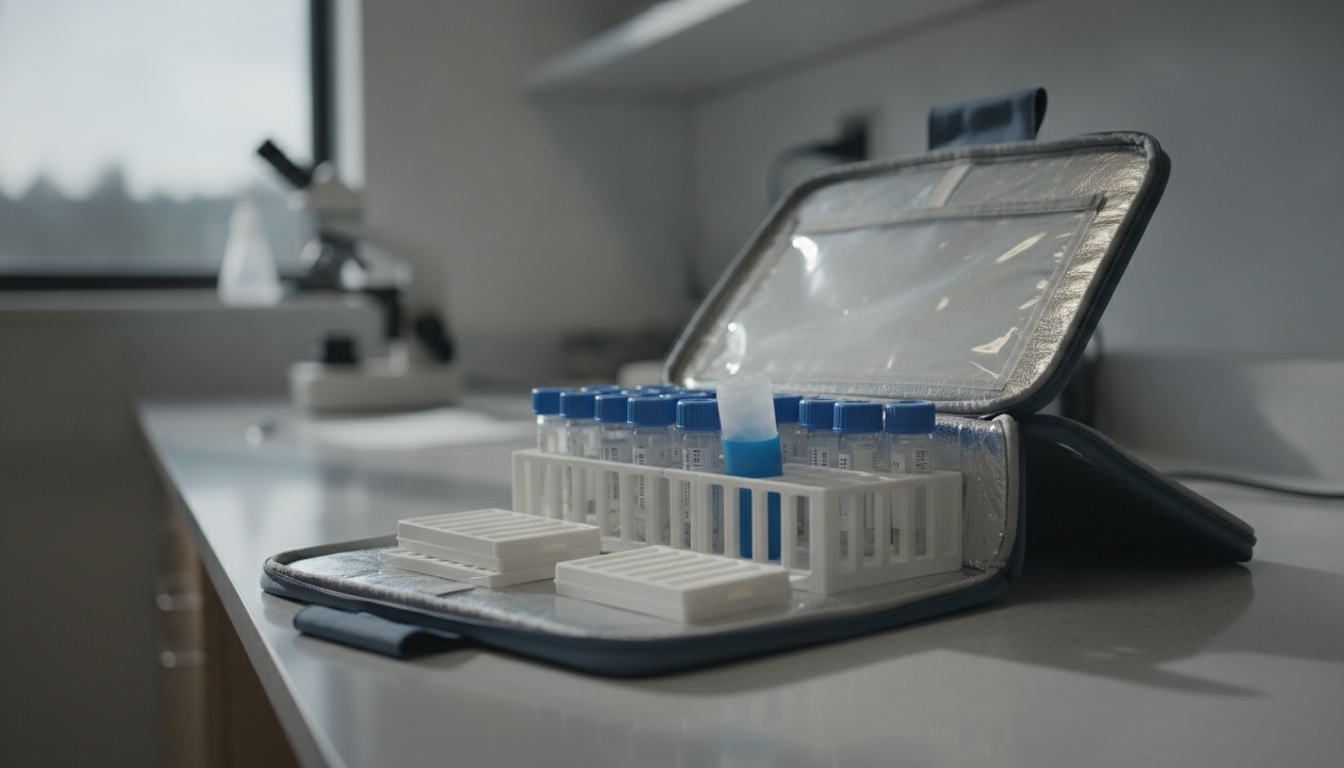
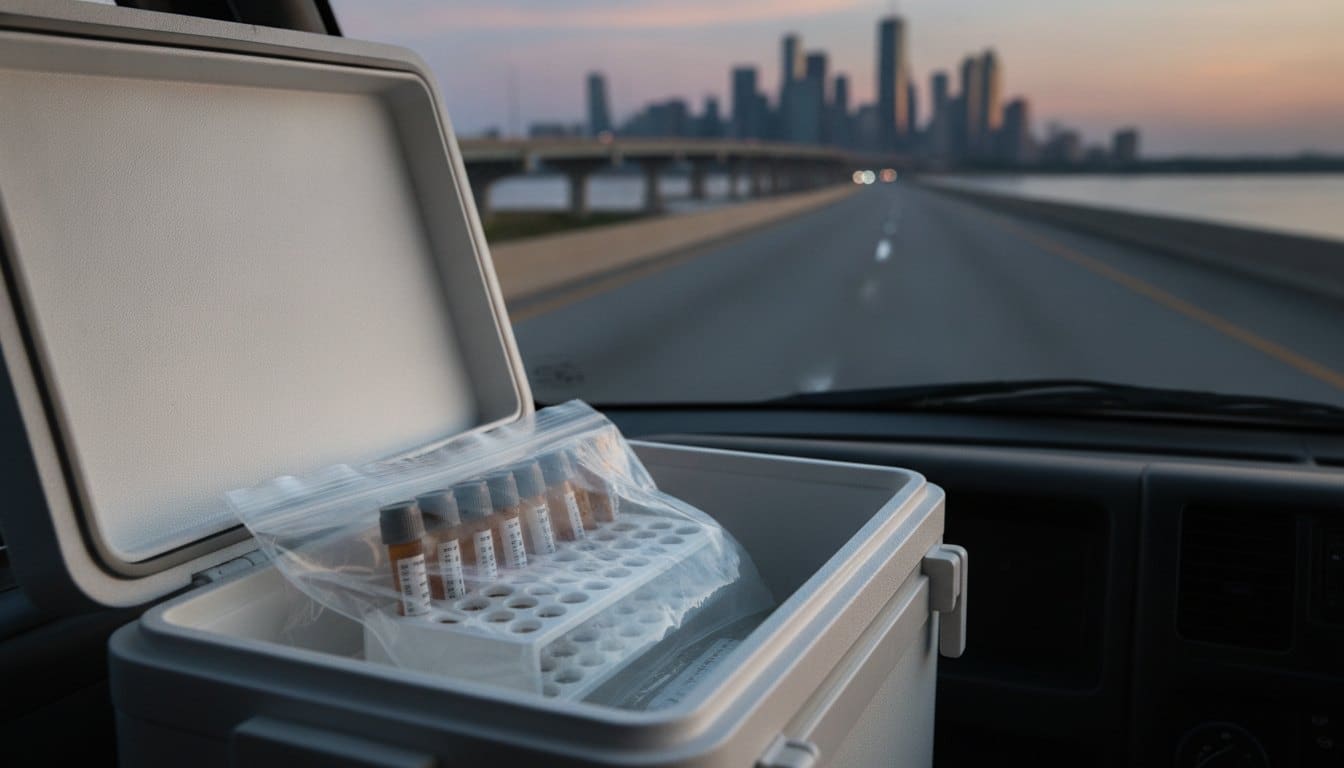
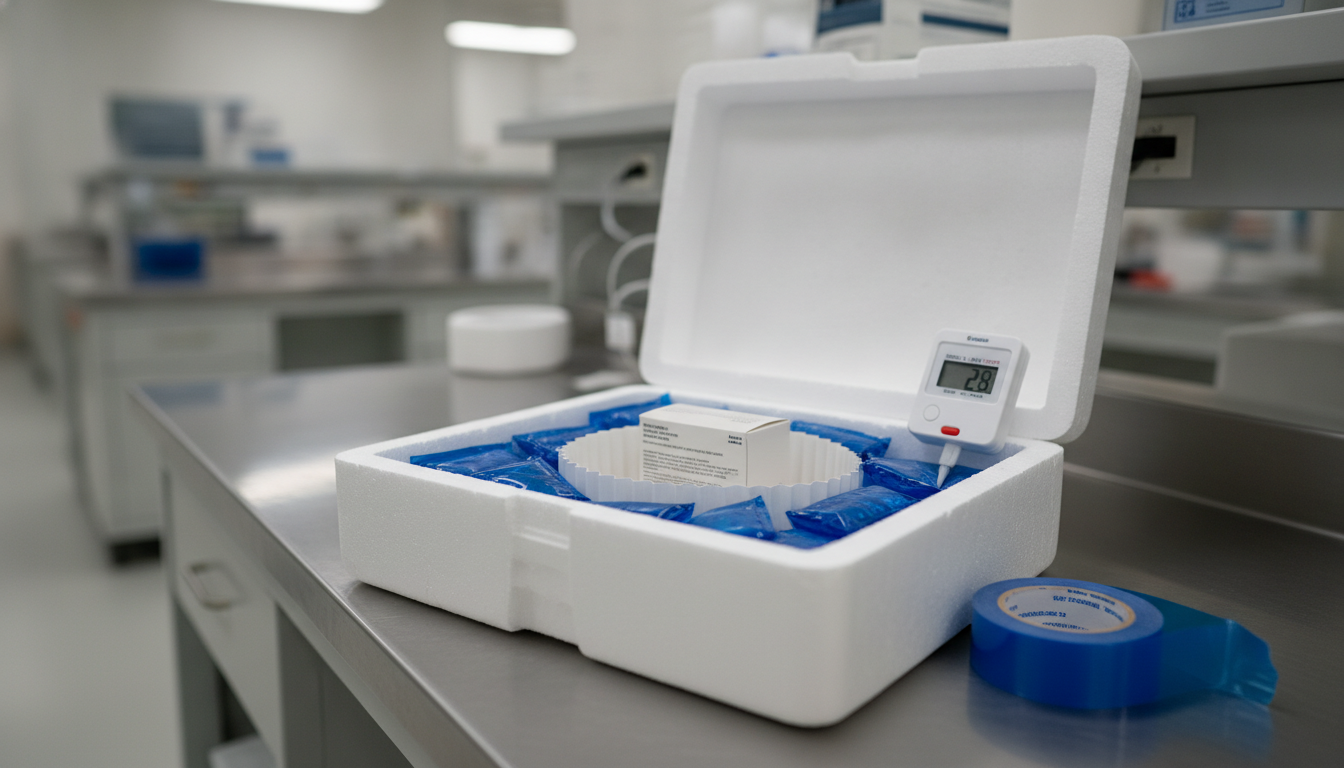
The refrigerated tier is where most specialty pharmacy delivery failures happen, and most are packaging errors. A 2 to 8 degree Celsius pack-out uses an insulated shipper qualified for the expected transit time, gel packs conditioned in a refrigerator rather than a freezer, and a barrier layer so no pack touches the product. A frozen gel pack against a prefilled syringe freezes the drug, and freezing denatures most protein-based biologics permanently. The FDA center for biologics regulates these products, and their labeling specifies both the storage range and the maximum time at room temperature, which the pharmacy should write on the delivery order so the courier knows the clock.
Pack-out configurations change with the season. A summer configuration in Philadelphia, where a parked vehicle cabin can exceed 50 degrees Celsius, needs more refrigerant mass than a January configuration in Vermont, where the product can freeze instead. The CDC vaccine storage and handling toolkit describes the same 2 to 8 degree discipline for vaccines. Our refrigerated medical courier page explains the tier as the courier applies it.
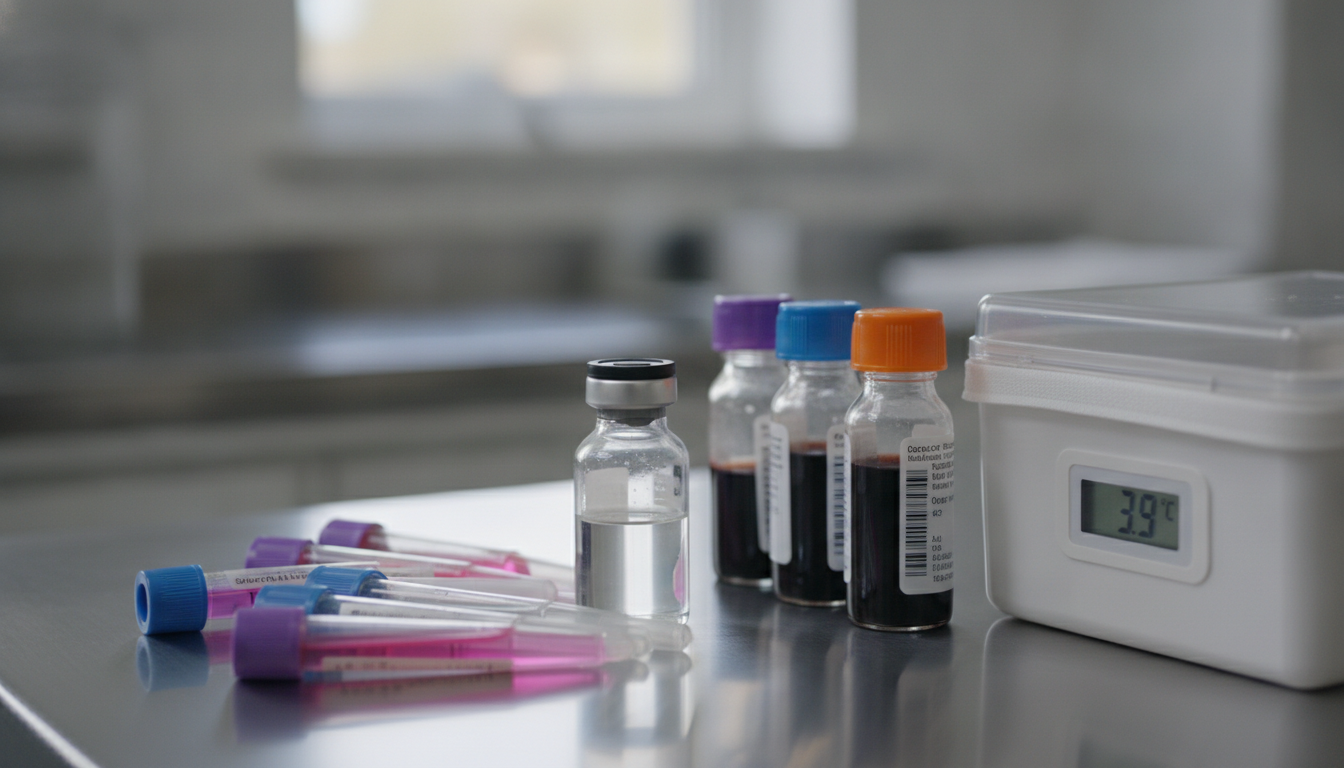
High-value cartons justify a temperature logger inside the shipper. A logger that records every few minutes gives the pharmacist a trace to accept or reject a delivery that ran late. Loggers that transmit in transit let dispatch intervene before the excursion becomes a loss; our guide to temperature monitoring and IoT in medical courier operations covers the device choices.
Packaging rules for refrigerated biologics:
- Condition gel packs at 2 to 8 degrees Celsius; never use frozen packs against a refrigerated product
- Separate packs from the product with a barrier layer and fill voids so nothing shifts
- Match refrigerant mass to the season and the qualified transit time of the shipper
- Write the permitted room-temperature excursion from the label on the order so the courier has a hard deadline
3. Signature Requirements and Identity at the Door
Most specialty programs require an adult signature at delivery. An adult signature means a person who appears to be at least 18 years old signs, by name, on the courier’s device. It does not usually mean identity verification against a document; that is reserved for controlled substances and for pharmacies that write it into the order. The pharmacy should state on each order who may sign: the patient, any adult at the address, or only a named caregiver.
A documented release is the alternative when the patient has told the pharmacy in advance that nobody will be home. A release is a pharmacy decision, recorded before dispatch, that permits leaving the package at a specified location, usually only for room-temperature products or for refrigerated products with enough refrigerant to cover the gap until the patient returns. Without a release on the order, a refrigerated biologic is never left unattended.
The proof-of-delivery record is what makes any of this defensible. It should capture a timestamp, a geofence confirmation that the device was at the address, the signer’s typed name and e-signature, a photo of the sealed carton at the point of handoff, and any release instruction that was applied. Our medical courier proof of delivery page shows the record a pharmacy receives for each order.
Signature and release rules to write into every order:
- Who may sign: patient only, any adult at the address, or a named caregiver
- Whether a release is authorized, where the package may be left, and for which temperature tiers
- Whether a building concierge or front desk may accept on the patient’s behalf
- What the proof-of-delivery record must contain: signature, geofenced photo, timestamp, release note
4. Patient Scheduling and Missed-Delivery Protocols
Scheduling starts with the patient, not the route. The pharmacy confirms a delivery date and a window, usually two to four hours, when the prescription is verified, and notifications the day before and when the driver is en route reduce missed attempts more than any routing change. For home infusion patients, the window should land before the nurse’s visit, which our guide to home health and infusion delivery logistics explains in detail. Hospital discharge fills follow a different clock, covered in our post on hospital discharge medication delivery.
When nobody answers, the protocol has to be decided before the driver is standing at the door. The sequence that protects the product: the driver attempts contact by phone through dispatch, waits a defined grace period, then either reattempts later in the same shift if the shipper’s qualified time allows, or returns the package to the pharmacy. A refrigerated biologic is never left on a step without a release. The return lets a pharmacist read the logger, re-condition the refrigerant and dispatch again, usually the next morning, with the product still usable.
The pharmacy needs to hear about a missed attempt within minutes, not on the next day’s report. Dispatch should push a status with the reason code, the attempt time and the next planned action, and the pharmacist should be able to override, for example by authorizing a release the patient has just agreed to by phone.
A missed-delivery sequence that protects the drug:
- At the door: contact attempt through dispatch, then a defined grace period before the driver leaves
- Reattempt later the same shift only if the shipper’s qualified time covers it
- Otherwise return to the pharmacy for logger review, re-conditioning and re-dispatch
- Status with reason code pushed to the pharmacy immediately, with a pharmacist override path
5. HIPAA on the Doorstep and Inside the Clinic
A courier delivering a specialty drug is a business associate handling protected health information at the most exposed point in the chain: a hallway, a lobby, a front porch. The minimum necessary standard in the HHS HIPAA rules translates into plain operating rules. The driver sees a name and an address, not a drug name or a diagnosis. The outer carton carries no product identification. Nothing about the shipment is discussed with a neighbor, a building employee or anyone other than the authorized signer. Our HIPAA-compliant courier page lists the training and technical safeguards behind those rules.
Apartment buildings add their own handoff problem. A specialty pharmacy on Long Island dispatching across Nassau and Suffolk counties and into Queens will encounter doormen, package rooms and locked lobbies every day; the order must say whether a front desk may accept, and the signature record must name who signed. The local coverage described on our Long Island medical courier service page is built around exactly those building types.
Clinic deliveries follow a different privacy and custody model. In the arrangement often called white bagging, a payer-designated specialty pharmacy dispenses a patient-specific drug and ships it to the clinic or infusion center where it will be administered; the receiving pharmacist or nurse signs, checks the seal and the patient identifiers, and logs the carton against the appointment. Practice guidance from ASHP discusses the verification issues these arrangements create for the receiving site. A courier that treats the clinic drop as a formal receipt, with a signature from a licensed person and a photo of the sealed shipper, closes the custody gap; our white-glove medical delivery page describes that handoff standard.
Privacy rules that hold at the door and the clinic desk:
- Name and address only on the outer label; no drug name, diagnosis or pharmacy program on the carton
- No conversation about the shipment with anyone except the authorized signer
- Front-desk acceptance only when the order permits it, with the acceptor’s name recorded
- Clinic receipts signed by a pharmacist or nurse with seal and identifier checks logged
Key Takeaways
Specialty pharmacy delivery succeeds when the pharmacy writes the handling, signature and release rules onto each order and the courier executes them with a proof-of-delivery record that a pharmacist, a payer and a privacy officer would each accept.
- Pack refrigerated biologics with refrigerator-conditioned packs, a barrier layer and seasonal refrigerant mass
- Require an adult signature with a geofenced photo, or a pharmacy-authorized release recorded before dispatch
- Never leave a refrigerated product unattended; return it for logger review and re-dispatch instead
- Keep protected health information off the carton and out of every doorstep conversation
If your pharmacy is expanding home delivery or supplying infusion clinics and wants to see how signature rules, release instructions and temperature tiers are set per order, request a demo of the carGO Health platform and walk through a refrigerated delivery from order entry to the proof-of-delivery record.
Frequently Asked Questions
What temperature do specialty pharmacy deliveries need?
Most biologics, including monoclonal antibodies, insulin analogs and self-injectable pens, travel at 2 to 8 degrees Celsius in an insulated shipper with refrigerator-conditioned gel packs that never touch the product. Oral specialty drugs usually travel at controlled room temperature, about 20 to 25 degrees Celsius. The product label states the range and the permitted excursion time, which the pharmacist interprets.
Does a specialty pharmacy delivery require a signature?
Usually yes. Most pharmacy, payer and manufacturer programs require an adult signature captured by name on the courier’s device, with a timestamp and a geofenced photo. Leaving a package without a signature is permitted only under a release the pharmacy records on the order before dispatch, and refrigerated products are not released without enough refrigerant to cover the gap.
What happens if a patient is not home for a refrigerated medication delivery?
The driver attempts contact through dispatch, waits a defined grace period, and reattempts later in the shift only if the shipper’s qualified time covers it. Otherwise the package returns to the pharmacy, where a pharmacist reviews the temperature logger, re-conditions the refrigerant and re-dispatches, usually the next morning. The product is never left unattended without a documented release.
How do couriers keep specialty pharmacy deliveries HIPAA compliant?
Through a signed business associate agreement, workforce training, and operating rules built on the minimum necessary standard: the driver sees a name and address only, the outer carton carries no drug name, nothing is discussed with anyone but the authorized signer, and the delivery device is encrypted and shows one order at a time.
What is white bagging in specialty pharmacy delivery?
White bagging is an arrangement in which a payer-designated specialty pharmacy dispenses a patient-specific drug and ships it to the clinic or infusion center that will administer it, rather than the clinic buying and stocking the drug. The courier delivers to a receiving pharmacist or nurse who signs, checks the seal and identifiers, and logs the carton against the patient’s appointment.
Related Resources