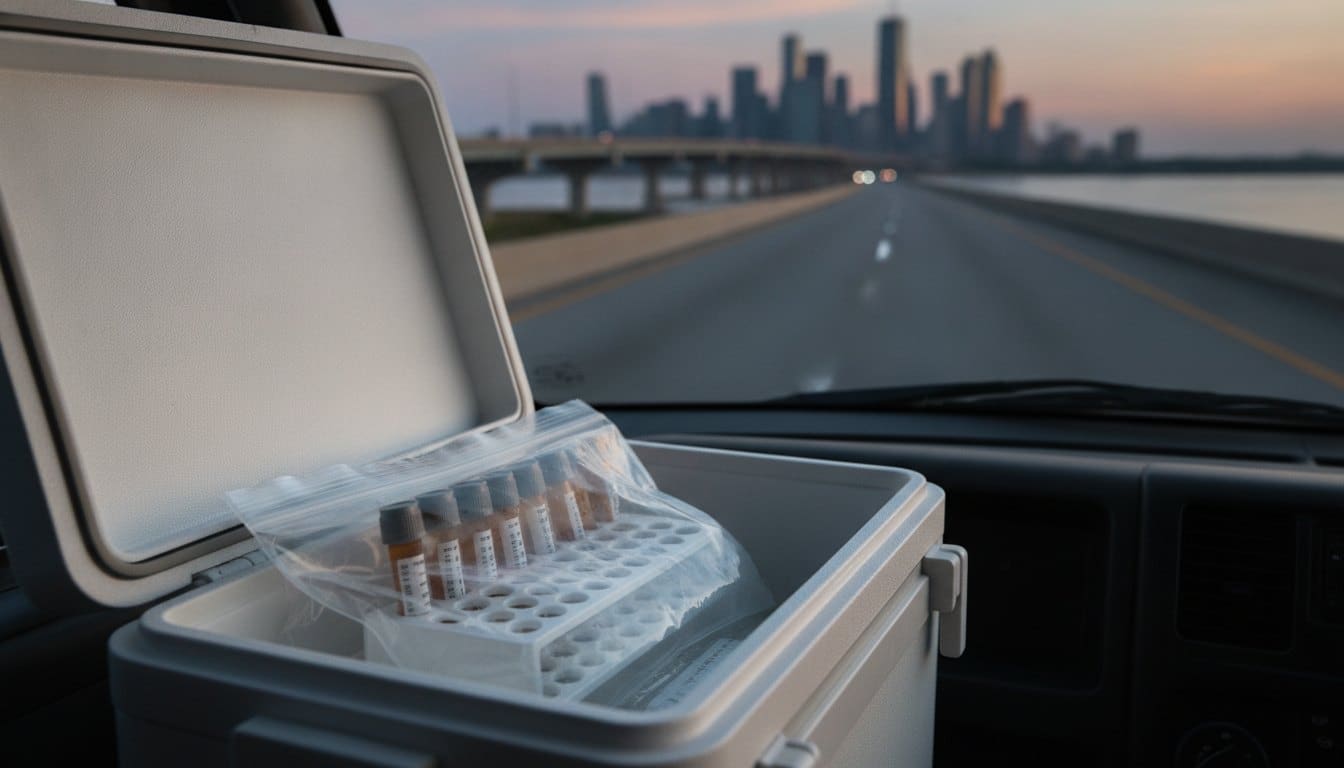
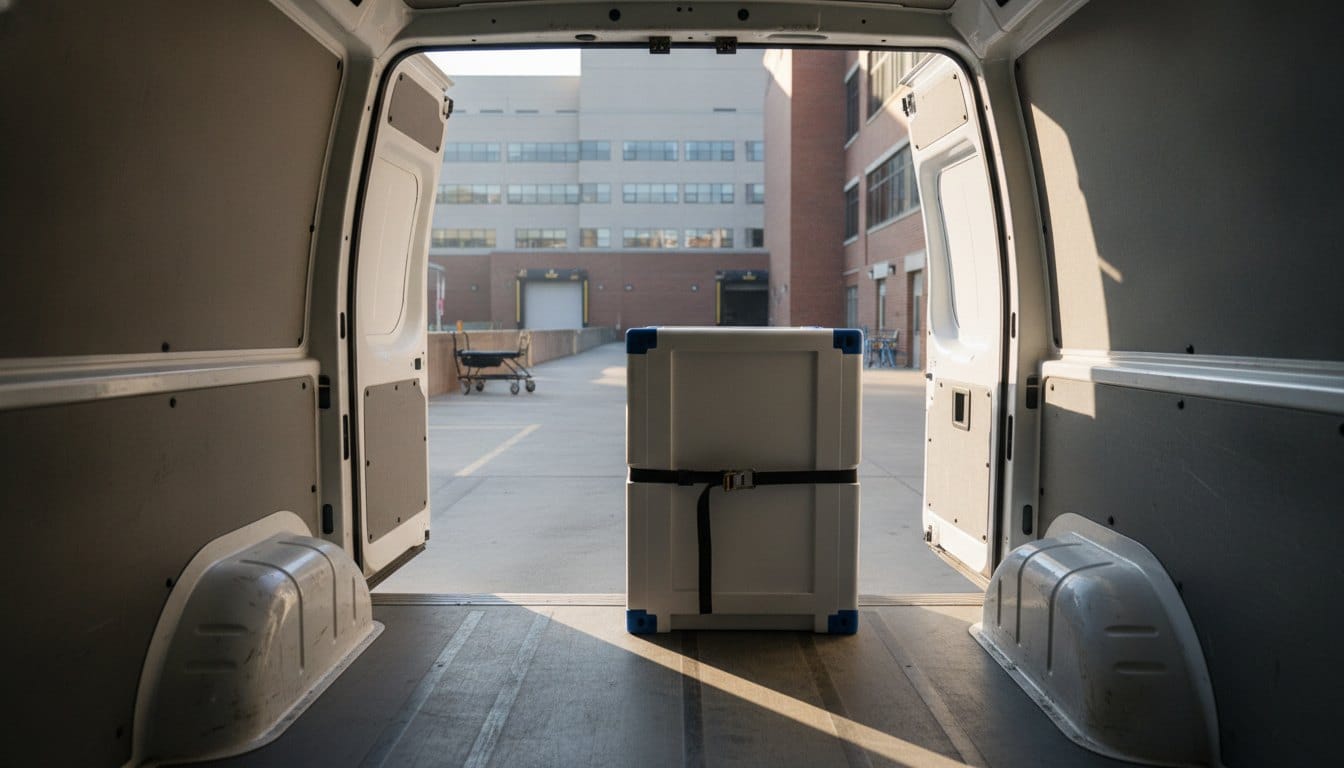
Temperature Monitoring IoT in Medical Courier Vehicles: Real-Time Cold Chain Visibility
For decades, medical couriers relied on chemical temperature indicators, min-max thermometers, and manual temperature logs to verify cold chain integrity. These methods share a critical flaw: they can only tell you what happened after the fact.

1. Why Traditional Temperature Monitoring Falls Short
For decades, medical couriers relied on chemical temperature indicators, min-max thermometers, and manual temperature logs to verify cold chain integrity. These methods share a critical flaw: they can only tell you what happened after the fact.
Chemical indicators change color irreversibly when exposed to temperatures outside their rated range. While useful as a final check at delivery, they provide no information about when the excursion occurred, how long it lasted, or how severe it was.
Manual logging introduces human error and creates gaps in the monitoring record. A courier checking temperatures every 30 minutes misses everything between checks.
These limitations become particularly dangerous for frozen specimens and biologics where even brief excursions can cause irreversible damage.
2. How IoT Sensors Transform Cold Chain Management
Internet of Things (IoT) temperature sensors represent a fundamental shift from reactive to proactive cold chain management. Modern sensors continuously measure and transmit temperature data, creating an unbroken digital record from pickup to delivery.
Key capabilities include:
- Continuous measurement at intervals as frequent as every 10 seconds
- Real-time transmission to cloud-based monitoring platforms
- Automated alerts when temperatures approach or exceed thresholds
- GPS-correlated temperature data showing where excursions occur
- Tamper-evident digital records that satisfy audit requirements
The real power lies in the alert system. When a sensor detects a temperature approaching the excursion threshold, it can simultaneously notify the courier, dispatcher, and facility contacts, creating a window for intervention.
For medical courier operations handling hundreds of temperature-sensitive deliveries daily, IoT monitoring transforms cold chain management into a data-driven, actively managed system.
3. Sensor Types and Placement Strategies
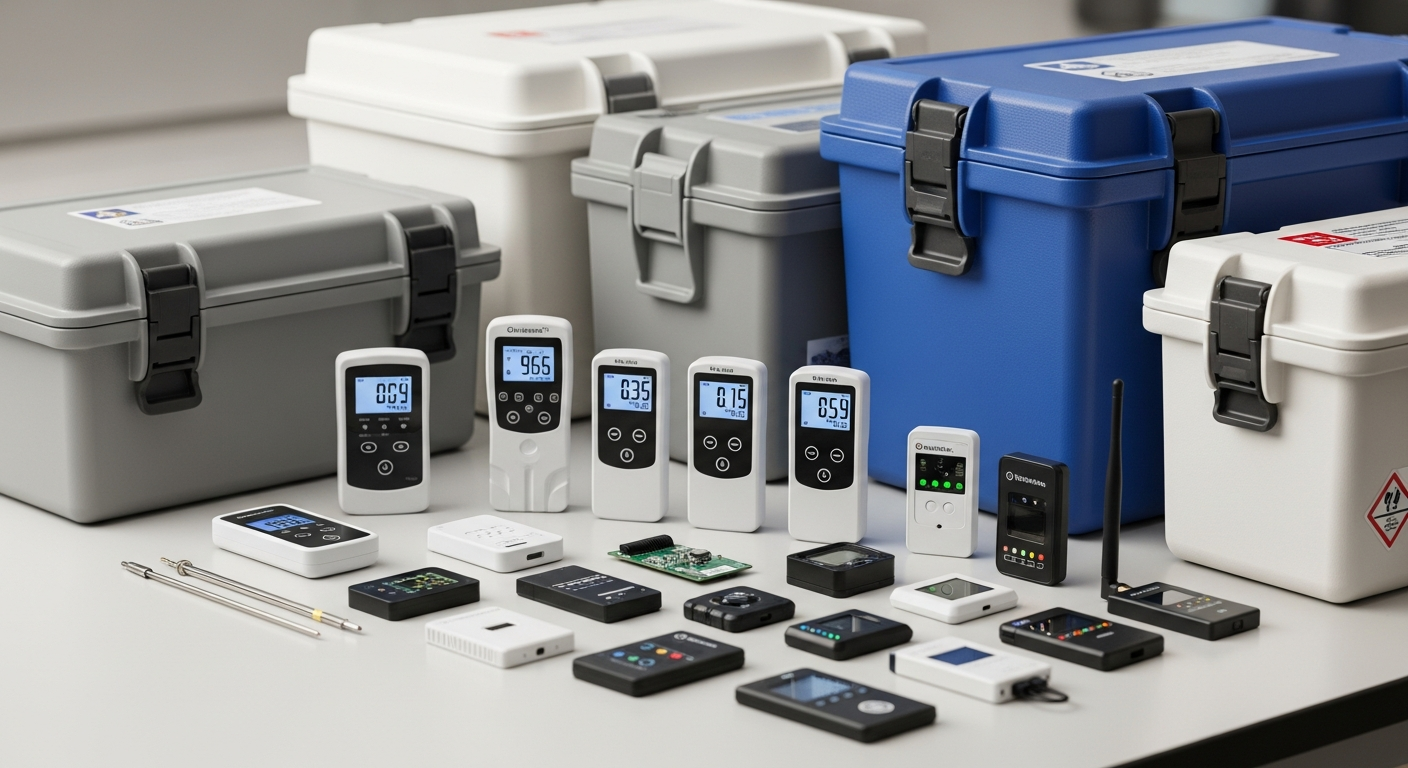
Several sensor technologies are available:
Bluetooth Low Energy (BLE) Sensors: Small, battery-powered devices that transmit to a gateway. Cost-effective with battery life typically exceeding one year.
Cellular-Connected Sensors: Self-contained units with built-in cellular modems. More expensive but simpler to deploy.
NFC Data Loggers: Record data internally and transmit when scanned. Lower cost but no real-time alerts during transit.
Sensor placement significantly affects accuracy. Sensors should be positioned near specimens but not in direct contact with ice packs or container walls.
Vehicle-level monitoring adds another layer, detecting issues like climate control failure before they affect individual containers, protecting refrigerated specimens during transit.
4. Data Analytics and Predictive Cold Chain Management
IoT sensor data streams create opportunities for analysis beyond simple threshold alerting:
Route-based analysis reveals which delivery routes have the highest risk of temperature excursions. A route that consistently shows temperature spikes at a particular stop suggests a process improvement opportunity.
Container performance tracking identifies individual coolers that are degrading. An insulated container that maintained temperature for four hours when new but now shows drift after three hours needs replacement.
Predictive models built on historical data can forecast cold chain risk for specific delivery scenarios, estimating the probability of an excursion and recommending mitigation steps.
This transforms temperature monitoring from a compliance checkbox into a continuous improvement tool.
5. Implementing IoT Monitoring in Your Operation
Deploying IoT temperature monitoring requires planning across technology, operations, and compliance:
Technology Selection: Choose sensors compatible with your specimen types and transport containers. Ensure integration with existing dispatch and tracking systems.
SOPs: Define clear procedures for sensor activation, placement, alert response, and data review.
Alert Configuration: Set pre-excursion warning thresholds. For specimens requiring 2-8 degrees Celsius, a warning at 1 or 9 degrees gives time to intervene.
Compliance Integration: Configure automated reports per CDC and AABB guidelines.
A courier using IoT monitoring demonstrates commitment to specimen integrity beyond minimum compliance. Request a demo to see how technology-driven cold chain management protects specimens from pickup to delivery.
Frequently Asked Questions
How accurate are IoT temperature sensors?
Modern sensors offer accuracy of plus or minus 0.3 to 0.5 degrees Celsius, exceeding requirements for most clinical specimen transport. Sensors should be NIST-traceable calibrated.
What happens when an excursion is detected?
The system alerts the courier, dispatcher, and facility contacts simultaneously. The courier follows predefined protocols including adding coolant, adjusting vehicle climate, or expediting delivery.
How much does IoT monitoring cost?
BLE sensors range from 15 to 50 dollars per unit. Cellular sensors cost 50 to 200 dollars each. Cloud subscriptions run 5 to 20 dollars per sensor per month.
Do IoT records satisfy regulatory requirements?
Yes, continuous tamper-evident digital records generally exceed regulatory requirements. FDA, AABB, and CAP all accept electronic temperature records with proper data integrity and audit trails.
Can IoT work in areas with poor cellular coverage?
BLE sensors work wherever the smartphone gateway has connectivity. Cellular sensors store data locally and transmit when connectivity is restored, ensuring no data loss.
Related Resources