Dedicated Medical Courier Routes vs On-Demand STAT: Which Model Fits
Every laboratory outreach program, hospital network and specialty pharmacy eventually asks the same question: should our courier work run on dedicated medical courier routes, on shared scheduled routes, or on demand as orders come in? The answer sets your cost per stop, the predictability of your analytical cutoffs, and your exposure when volume spikes or a driver is unavailable. Most organizations that get this wrong did not pick a bad model. They picked one model for everything.
This guide covers the three service models, the cost and coverage trade-offs between them, and a practical method for building a hybrid that matches your demand curve. It is written for the logistics manager who has to defend the courier line item to finance while still making a 4:00 PM chemistry cutoff every business day.
1. Three service models, defined by what you are actually buying
A scheduled route is a fixed sequence of stops run at a fixed time, often shared with other clients in the same corridor. You are buying a stop in the sequence, not the vehicle. The courier controls the ordering and may add other work before or after your stops, which is why scheduled medical courier routes carry the lowest cost per pickup and fit predictable daily volume where a 30 to 60 minute arrival window is acceptable.
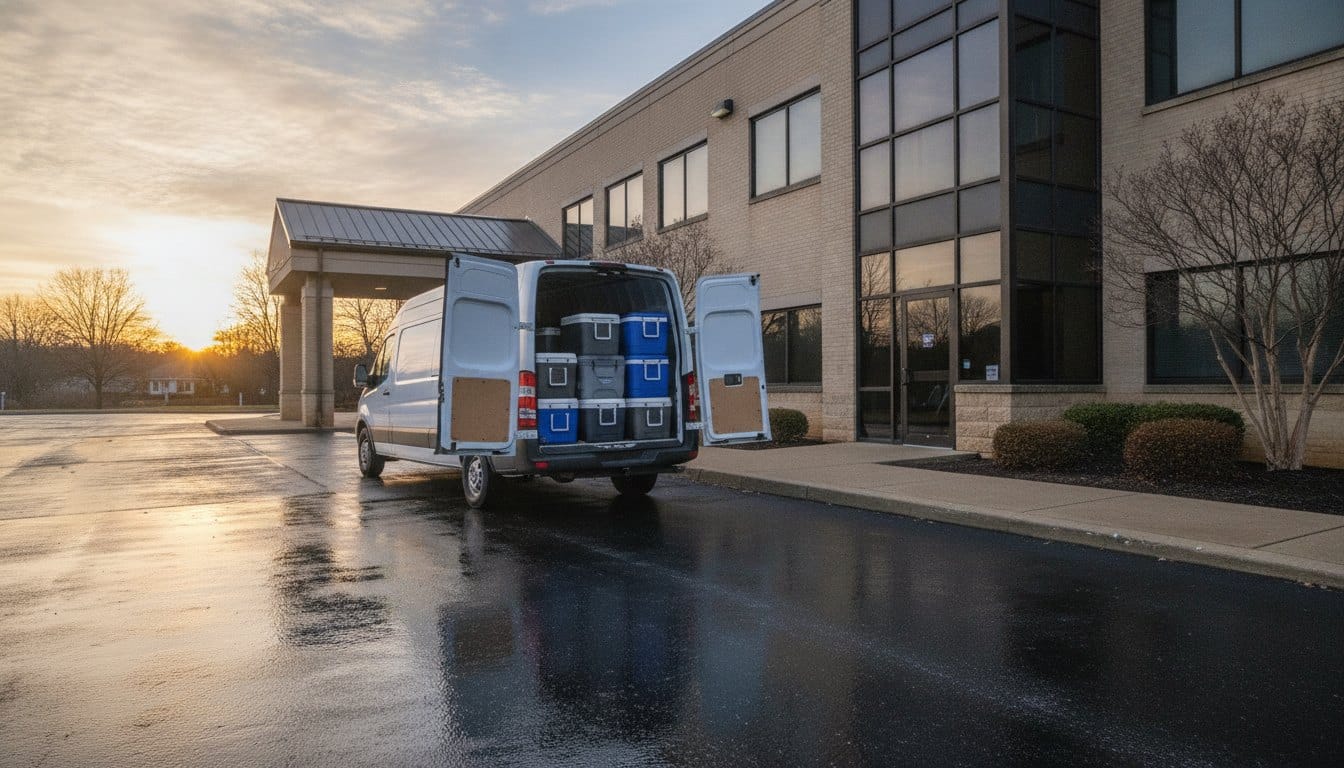
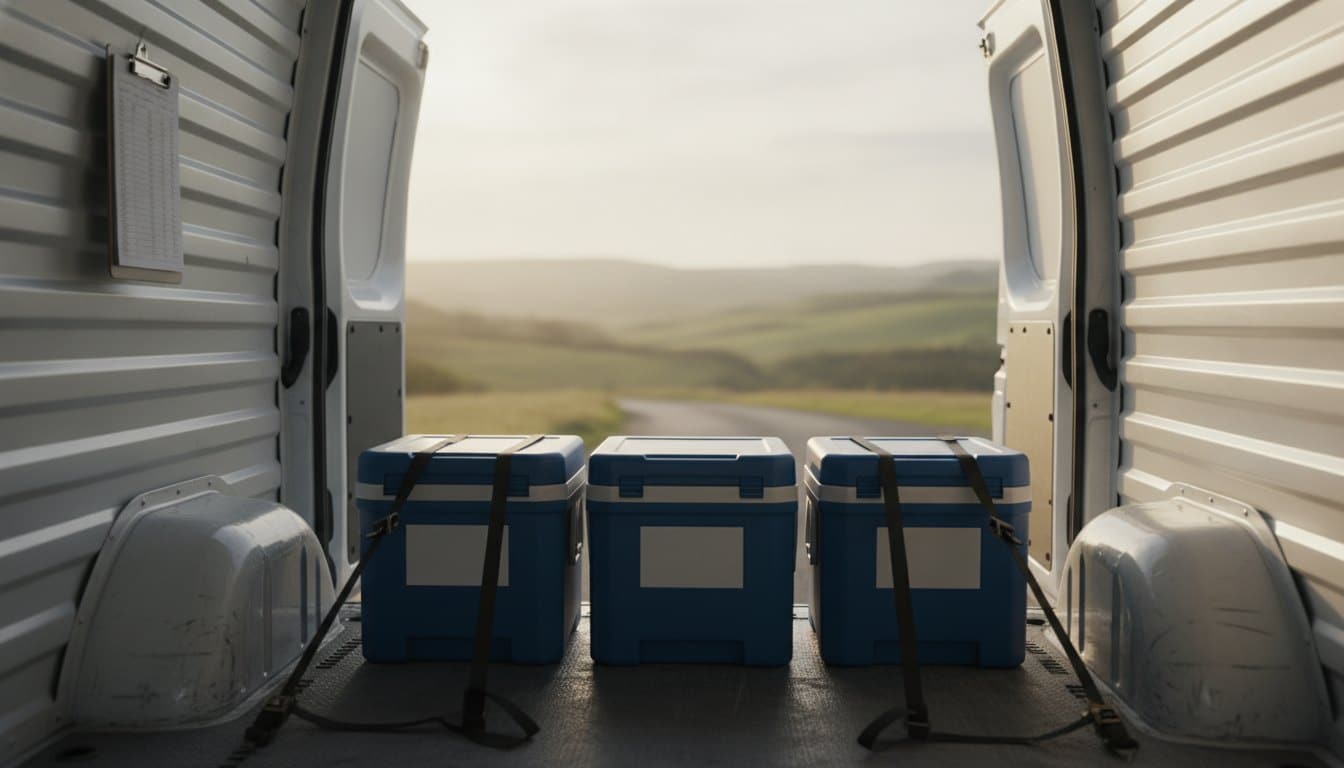
A dedicated route assigns a driver and vehicle exclusively to your work for a defined block: a four-hour morning sweep of fourteen draw stations, or an all-day shuttle between a hospital core laboratory and its satellite campuses. You are buying the time. You set the sequence, the stop windows and the handling rules. Dedicated medical courier routes cost more per hour and less per stop once the block is fully used.
On-demand service is dispatched when you place the order. A STAT medical courier order assigns the nearest available driver immediately for a direct point-to-point run. A same-day order can be batched with other work and delivered inside a longer window, typically by end of day. Either way you are buying a single movement, priced by distance and urgency. The differences between same-day, STAT and scheduled delivery services come down to who controls the clock.
What each model commits the courier to:
- Scheduled route: arrival inside a published window at each fixed stop, with sequence and vehicle capacity controlled by the courier
- Dedicated route: a named driver and vehicle for your block of time, your sequence, no co-mingled work
- On-demand STAT: immediate assignment of the nearest qualified driver and a direct run with no intermediate stops
- On-demand same-day: pickup and delivery inside an agreed window, with batching permitted
- Every model: geofenced photo proof at pickup and delivery, e-signature capture and a chain-of-custody record
2. Where dedicated medical courier routes earn their cost
The economics of a dedicated block are simple: you pay for the hours whether the vehicle leaves full or half empty. The block earns its cost through utilization, measured in stops per hour, and through the sensitivity of what is on board. Consider a reference laboratory in central New Jersey that needs morning specimens on the bench before the first analyzer run. With a dedicated driver, the stop sequence is built backward from that cutoff and locked.
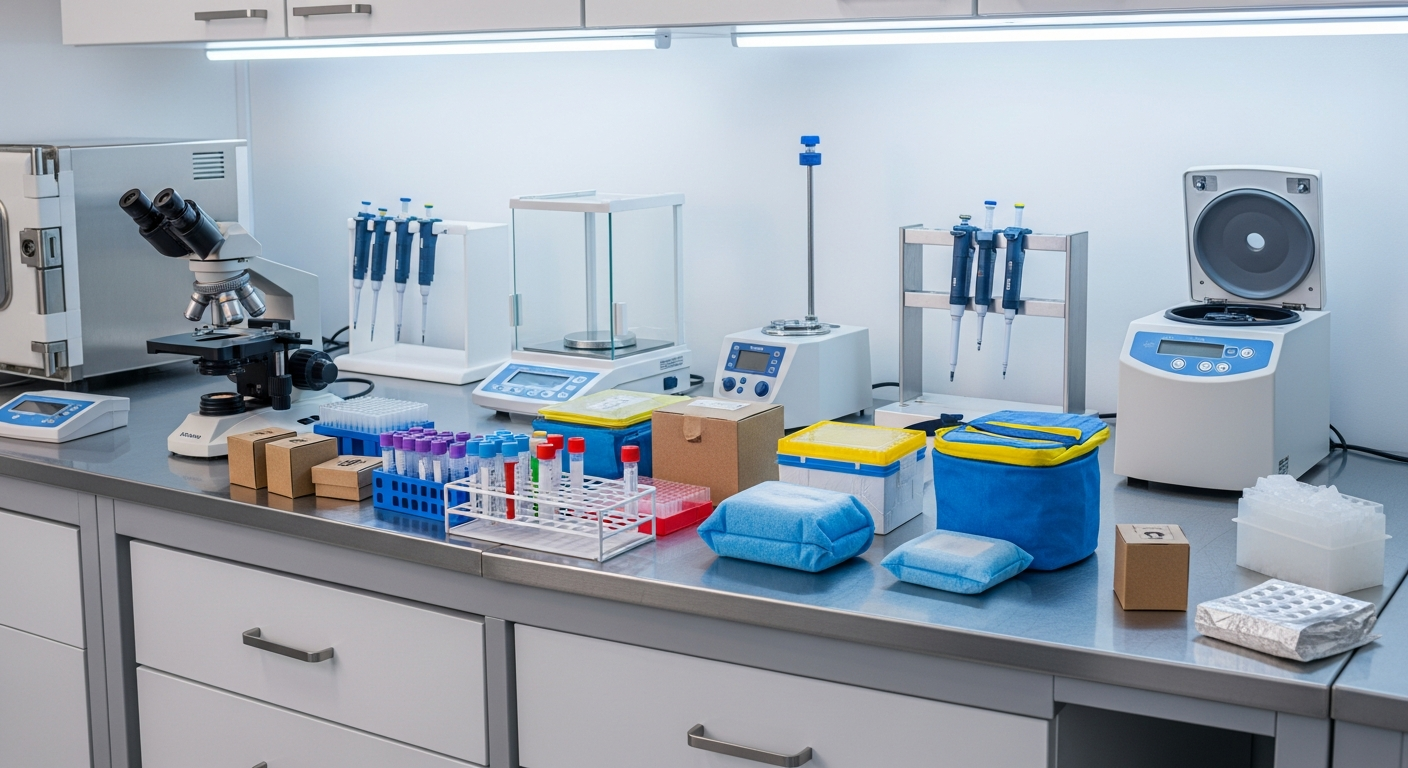
The second benefit is control over handling. When a route carries refrigerated and frozen specimens together, the dedicated driver carries exactly the cooler configuration you specify and never places material from another account next to yours. Laboratory inspection checklists from the College of American Pathologists and the specimen handling guidance in CLSI standard GP44 both expect documented transport conditions, and a dedicated route makes that documentation identical every day.
The third benefit is site familiarity. A driver who runs the same fourteen stops every morning knows which door is unlocked at 6:15 and which refrigerator holds the outreach bin, and that knowledge shortens dwell time at every stop. It is why dedicated routes tend to hold their windows on days when traffic does not cooperate.
Signals that a dedicated route is the right tool:
- Ten or more stops inside a four-hour block, or fewer stops with long dwell times such as multi-refrigerator pickups
- A hard analytical cutoff that the route must be built backward from
- Mixed temperature tiers that require a fixed cooler configuration and a documented loading order
- Sites with access controls, badge escorts or dock appointments that reward a familiar driver
- Volume stable enough that utilization stays high across the whole block
3. When on-demand service is the better tool
On-demand service exists for demand that does not repeat. Its idle cost is zero, and its trade-off is latency: a STAT driver has to reach your dock before the clock starts moving in your favor. How long that takes depends on the density of the courier’s network around your site at that hour. A floating driver network positioned across a region will usually reach an outlying site faster than a static in-house fleet starting every run from the laboratory.
The natural on-demand workload is the add-on test requested after the route has left, the blood product for an unplanned transfusion, the 9:00 PM pickup from an urgent care and the Sunday run to a dialysis center. These are the movements where STAT delivery in healthcare justifies its premium: a direct run, one driver, no other stops.
The failure mode is using on-demand for routine work. If your team places the same order from the same site at the same hour three days a week, you are paying urgency pricing for predictable volume and losing the sequencing benefit of a route. The reverse failure is extending a dedicated route by 45 minutes to reach one outlier that would be cheaper as an occasional on-demand order.
Work that belongs on demand:
- STAT specimens, add-on requests and anything that surfaces after the last route departure
- After-hours, weekend and holiday pickups where a standing route would sit mostly idle
- Geographic outliers that would add 45 minutes or more to a route for a single stop
- Overflow on heavy days when a route reaches its cooler or time capacity
- Early volume from a newly signed site, before its demand pattern is known
4. Designing a hybrid of dedicated medical courier routes and on-demand coverage
Nearly every mature program ends up as a hybrid: the predictable majority of pickups on scheduled or dedicated routes, the variable remainder on demand. Where to draw the line should come from your own order history, not from the current contract. Pull 30 days of orders and map each one by site, requested time and temperature tier. The site-and-hour pairs that recur on most business days are route candidates; everything else is tail.
Build candidate routes backward from your cutoffs, assign each stop a window of 15 to 30 minutes, and decide the overflow rule up front: when a route reaches capacity, does the excess wait for the next loop or trigger an on-demand order automatically? A courier running AI-optimized medical courier routing can insert a new order into a route driver’s sequence when that driver is a few minutes away and hand it to a floating driver when not, which is what keeps a hybrid from degrading into two separate systems. The same discipline applies to the recurring problems in lab outreach program logistics.
Coverage is the part of hybrid design that gets skipped. A dedicated route depends on one driver, and the plan has to say what happens on the morning that driver is out. Ask whether a replacement receives the same stop instructions, gate codes and cooler configuration in the driver app, and where that replacement comes from. The in-house versus outsourced courier comparison usually turns on this point: an in-house fleet has no bench, while a network has one by design.
A 30-day method for sizing the hybrid:
- Export 30 days of orders with site, requested time, temperature tier, pickup time and delivery time
- Group orders by site and hour; any pair that recurs on most business days is route candidate volume
- Build candidate routes backward from analytical cutoffs with stop windows of 15 to 30 minutes
- Separate the remaining orders into true STAT and same-day, because same-day work can often be batched
- Write the overflow, escalation and replacement-driver rules before go-live, then re-run the analysis every quarter
5. Measuring the model and renegotiating it on evidence
Each model needs its own metrics. For dedicated blocks, track utilization in stops per hour and arrival inside each stop window. For scheduled routes, track window adherence by stop and specimens rejected for transport-related reasons such as hemolysis or temperature. For on-demand work, track order-to-pickup and pickup-to-delivery time by region and hour. Our guide to medical courier performance SLAs and KPIs covers the definitions; a hybrid contract should report all three sets side by side.
The evidence for every metric should come from the courier’s system.Real-time medical delivery tracking with geofenced timestamps, photo proof and e-signatures gives you an auditable record of when each stop was reached and the condition of the container. That record is what you hand to a surveyor asking about transport under CLIA requirements for specimen integrity, and it supports the exposure control documentation expected under the OSHA bloodborne pathogens standard.
Renegotiate on the same evidence. When a dedicated block’s utilization drops below the level that justified it, shorten the block or convert its thin end to scheduled stops. When on-demand orders from one site start clustering at the same hour, move them onto a route. Seasonality matters too: winter weather adds transit time to outlying stops, and a respiratory-season peak can exceed what a fixed block absorbs.
Questions to put to the courier at each quarterly review:
- Which route stops caused most of the window misses, and why?
- How many on-demand orders came from sites already on a route, and at what hours?
- What was the median order-to-pickup time for STAT orders in each region?
- How many temperature or handling exceptions were logged, and how was each one closed?
- What changes if the dedicated block is extended by an hour or split in two?
Key Takeaways
Dedicated medical courier routes, scheduled routes and on-demand service are not competing products. They are tools for different shapes of demand, and the programs that run best use all three deliberately.
- Buy time (dedicated) when stop density and cutoff sensitivity are high; buy stops (scheduled) when a shared route meets your windows; buy movements (on-demand) for what varies
- The idle cost of a dedicated block is the price of control; the latency of on-demand is the price of flexibility
- Size the hybrid from 30 days of real order data, not from the shape of the current contract
- Write the overflow, escalation and replacement-driver rules before go-live
- Audit every model with the same evidence: geofenced timestamps, photo proof and chain-of-custody records
If you want to see how a hybrid of dedicated routes and on-demand coverage would map onto your own sites and cutoffs, request a demo of the carGO Health platform and bring 30 days of order history to the call.
Frequently Asked Questions
What is the difference between a dedicated medical courier route and a scheduled route?
A dedicated route assigns one driver and vehicle exclusively to your work for a fixed block of time, with your sequence and your handling rules. A scheduled route sells you a stop in a fixed sequence that may be shared with other clients in the same corridor. Dedicated routes offer more control; scheduled routes offer a lower cost per stop.
How much volume justifies a dedicated medical courier route?
Think in utilization rather than order counts. A dedicated block pays for itself when stop density keeps the driver moving for most of the block, typically ten or more stops in a four-hour window, or when cutoff sensitivity and handling requirements make control more valuable than the idle time you avoid.
Can STAT orders be added to a dedicated route?
Yes, within limits. AI-assisted dispatch can insert a new pickup into a route driver’s sequence when that driver is nearby and the addition will not break downstream stop windows. When it would, the order should go to a floating on-demand driver instead. The insert-or-divert rule belongs in the service agreement.
How do dedicated routes handle mixed temperature specimens?
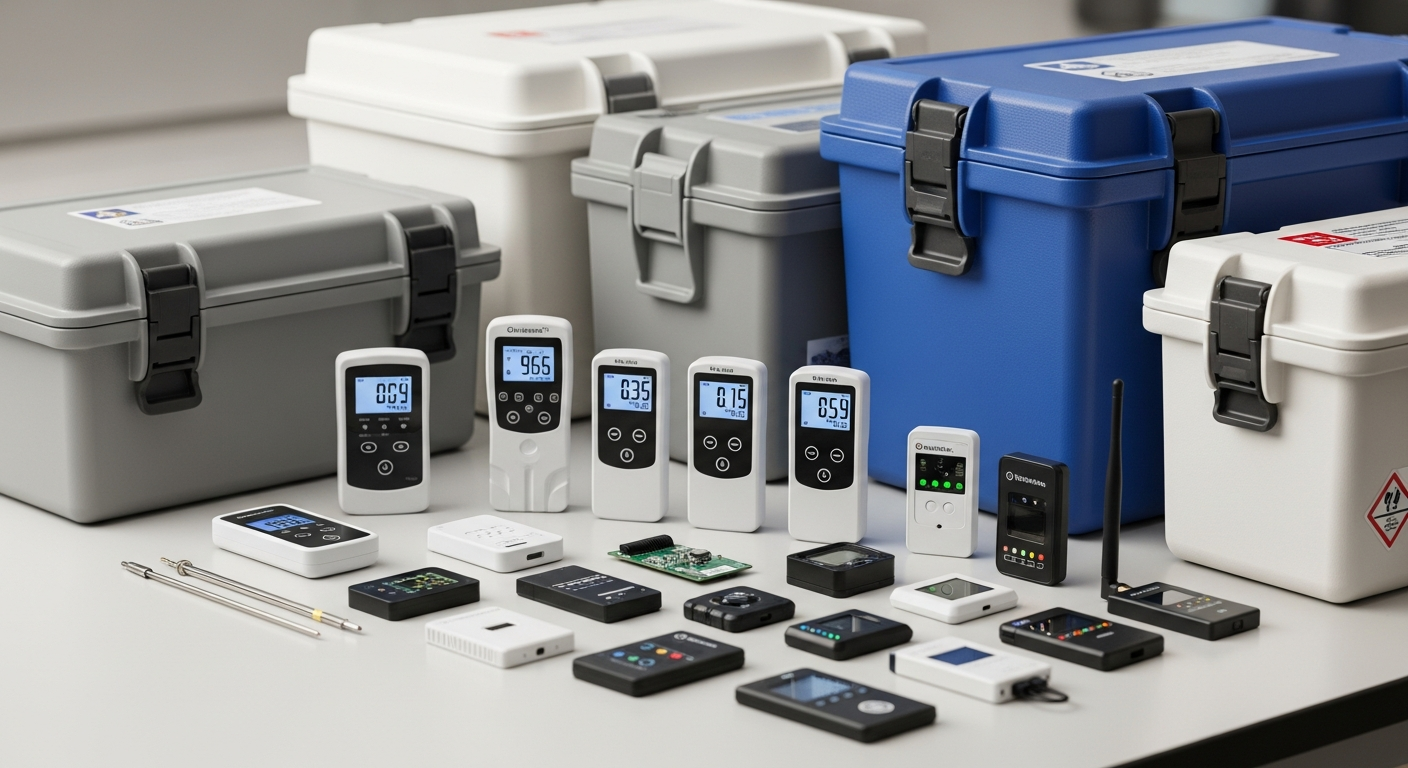
The client specifies a cooler configuration for the block, for example one ambient tote, one refrigerated cooler held at 2 to 8 C with a temperature logger, and one insulated frozen container with dry ice. The driver loads in a documented order at every stop, and the courier’s record captures the configuration for inspection purposes.
How should a laboratory pilot a change in service model?
Start with a single corridor or block of hours rather than the whole program. Run the new model for four weeks alongside the existing arrangement, compare window adherence, rejection rates and cost per stop using courier system data, and only then expand. Keep on-demand coverage in place so the pilot never puts a cutoff at risk.
Related Resources