Lab Outreach Program Logistics: Challenges and Solutions for Clinical Laboratories

Updated April 2026 — reviewed and refreshed by carGO Health editorial team.
A successful lab outreach program depends on far more than simply dispatching couriers to physician offices. Behind every specimen pickup lies a web of logistical variables that can make or break turnaround times, test accuracy, and client satisfaction. For clinical laboratories expanding their outreach footprint across multiple provider locations, the operational complexity grows exponentially with each new collection site, route, and specimen type added to the network.
Understanding these logistics challenges is essential for laboratory directors, outreach coordinators, and operations managers who want to scale their programs without sacrificing quality. From route optimization and temperature control to regulatory compliance and technology integration, the hurdles are real but solvable. This guide breaks down the five most pressing logistics challenges facing lab outreach programs today and outlines practical solutions that leading laboratories are using to overcome them.
1. Route Optimization and Multi-Stop Scheduling Complexity
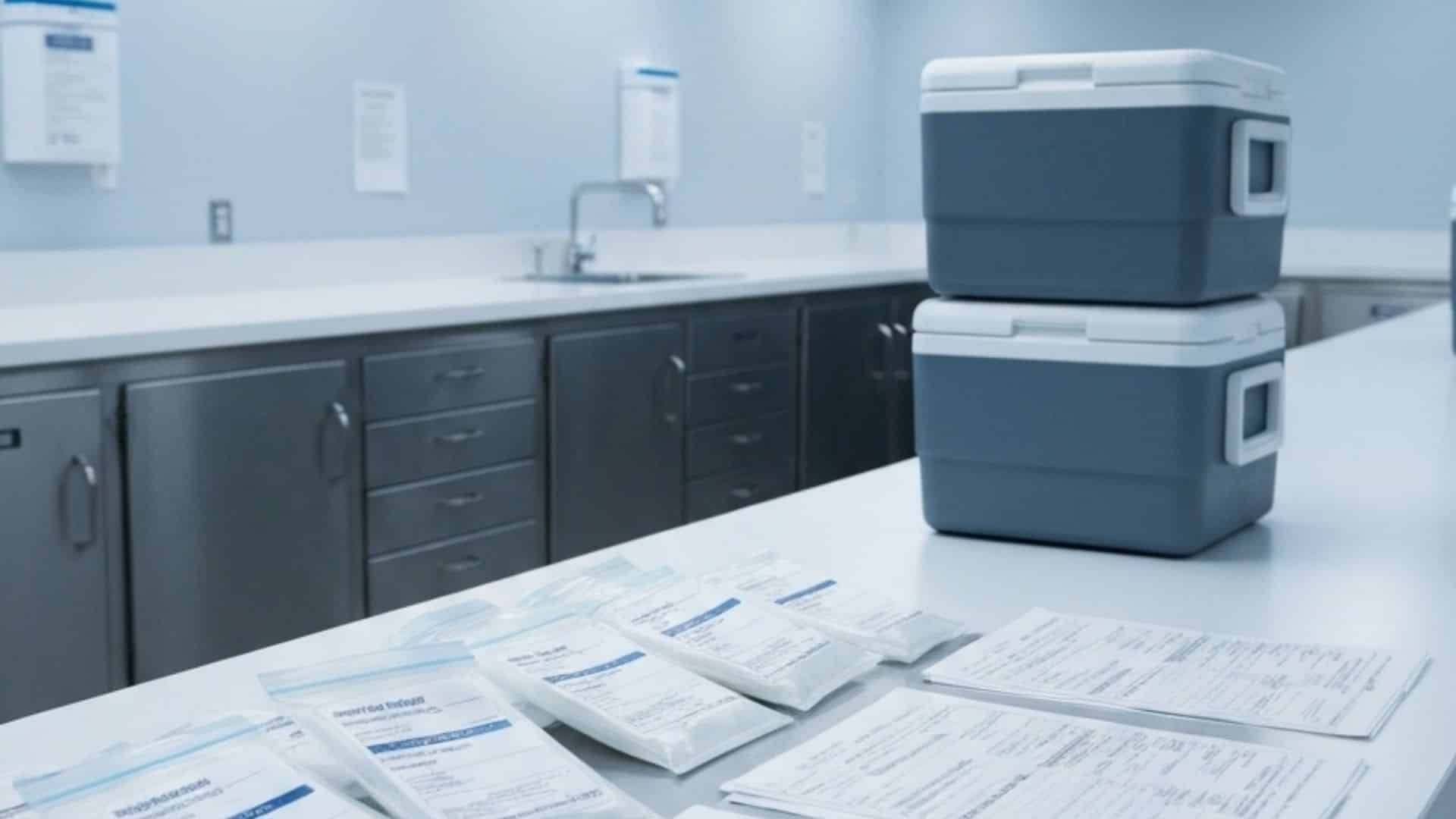
One of the most immediate challenges any lab outreach program encounters is designing efficient pickup routes across dozens or even hundreds of provider locations. Unlike point-to-point deliveries, outreach logistics require multi-stop routing that accounts for varying pickup windows, geographic spread, traffic patterns, and the time-sensitive nature of biological specimens. A route that works perfectly on a Tuesday morning may fall apart on a Friday afternoon due to traffic congestion or a provider running behind schedule.
The scheduling balancing act: Outreach coordinators must balance competing priorities when building scheduled courier routes. Providers want narrow, predictable pickup windows. Laboratories need specimens to arrive within stability limits. Couriers need routes that are physically possible to complete without rushing. When a program serves 50 or more collection sites across a metro area, manual scheduling becomes nearly impossible to manage effectively.
Laboratories that invest in dedicated medical courier routes with AI-powered dispatch technology gain a significant advantage. Intelligent routing algorithms can process real-time variables like traffic data, pickup volumes, and specimen priority levels to generate optimized routes dynamically. At carGO Health, our AI dispatch system manages over 200,000 completed orders across the Northeast corridor, continuously learning from historical data to improve route efficiency.
- Manual route planning breaks down as programs scale beyond 20 to 30 collection sites
- Dynamic routing technology adjusts for real-time traffic, cancellations, and stat pickups
- Provider satisfaction depends on consistent, reliable pickup windows that respect office schedules
- Route density analysis helps laboratories identify underserved areas for strategic expansion
- Backup routing protocols prevent single points of failure when a courier calls out or a vehicle has mechanical issues
2. Specimen Integrity and Temperature Control Across the Collection Network
Maintaining specimen integrity from the moment of collection at a physician’s office to arrival at the laboratory is arguably the highest-stakes challenge in outreach logistics. According to the CDC’s specimen handling guidelines, improper transport conditions are a leading cause of rejected or compromised samples. For outreach programs handling hundreds of specimens daily across varied test panels, the margin for error is razor thin.
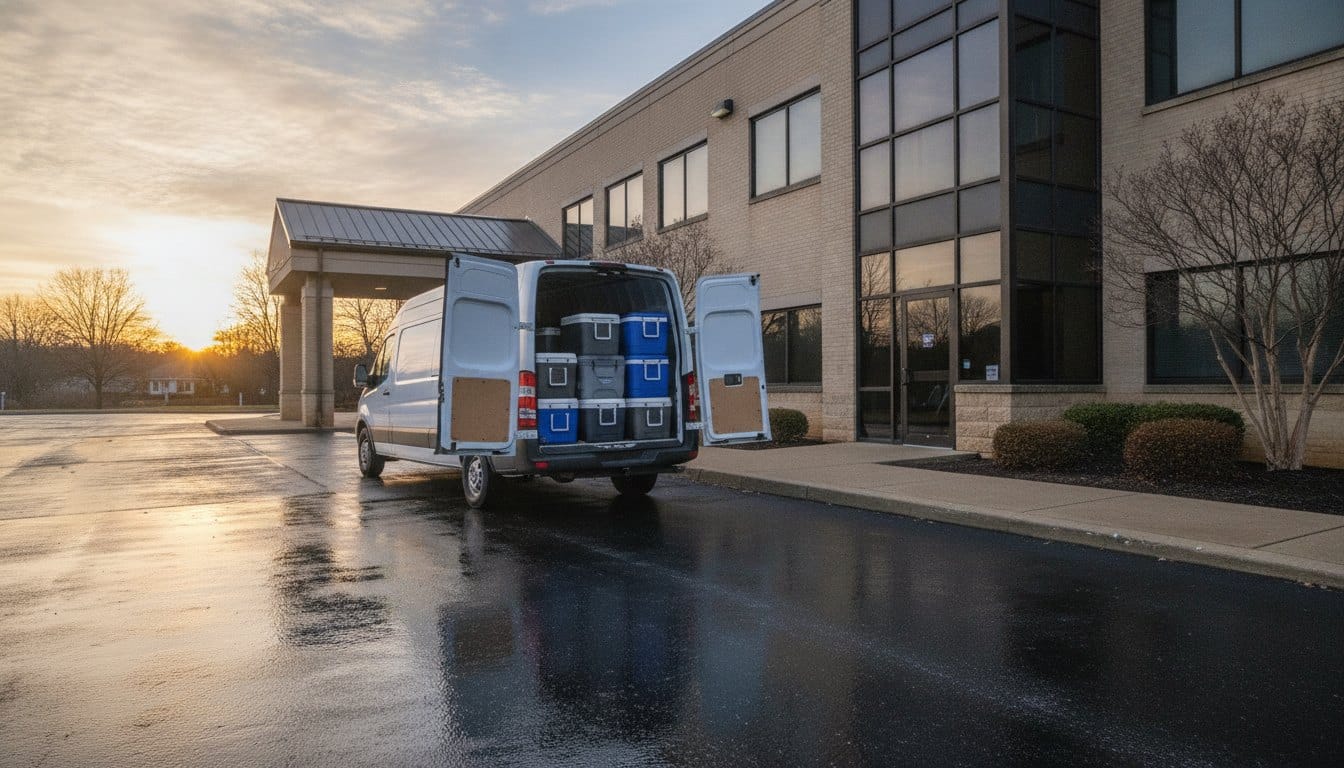
Temperature is the critical variable: Different specimen types require different transport conditions. Whole blood samples typically need room temperature transport, while certain coagulation studies must remain at specific temperature ranges. Frozen specimens, tissue biopsies, and cultures each have their own cold chain logistics requirements. A single courier vehicle on a multi-stop route may carry specimens requiring two or three different temperature zones simultaneously.
The consequences of temperature excursions extend well beyond a single rejected specimen. Pre-analytical errors caused by improper specimen handling account for up to 70% of all laboratory errors, according to research published by the National Institutes of Health. Recollections frustrate patients and providers, damage the laboratory’s reputation, and create real costs in wasted reagents and labor. Purpose-built temperature-controlled medical transport solutions equipped with validated packaging and continuous monitoring eliminate most temperature-related failures.
- Multi-temperature transport requires validated packaging systems for ambient, refrigerated, and frozen specimens
- Continuous temperature monitoring with digital data loggers provides documented proof of compliance
- Courier training on specimen handling protocols is as important as the equipment itself
- Seasonal temperature extremes in the Northeast require adjusted packaging and transport procedures
- Specimen rejection tracking tied to transport conditions helps identify systemic problems early
- Proper centrifugation and aliquoting at collection sites reduces downstream transport sensitivity
3. Chain of Custody Documentation and Regulatory Compliance
Every specimen moving through a lab outreach program must maintain an unbroken chain of custody from collection to analysis. This is not merely a best practice. It is a regulatory requirement under CMS CLIA regulations and CAP accreditation standards. For outreach programs operating across state lines in regions like the Northeast, compliance complexity increases as laboratories must satisfy multiple state regulatory frameworks in addition to federal requirements.
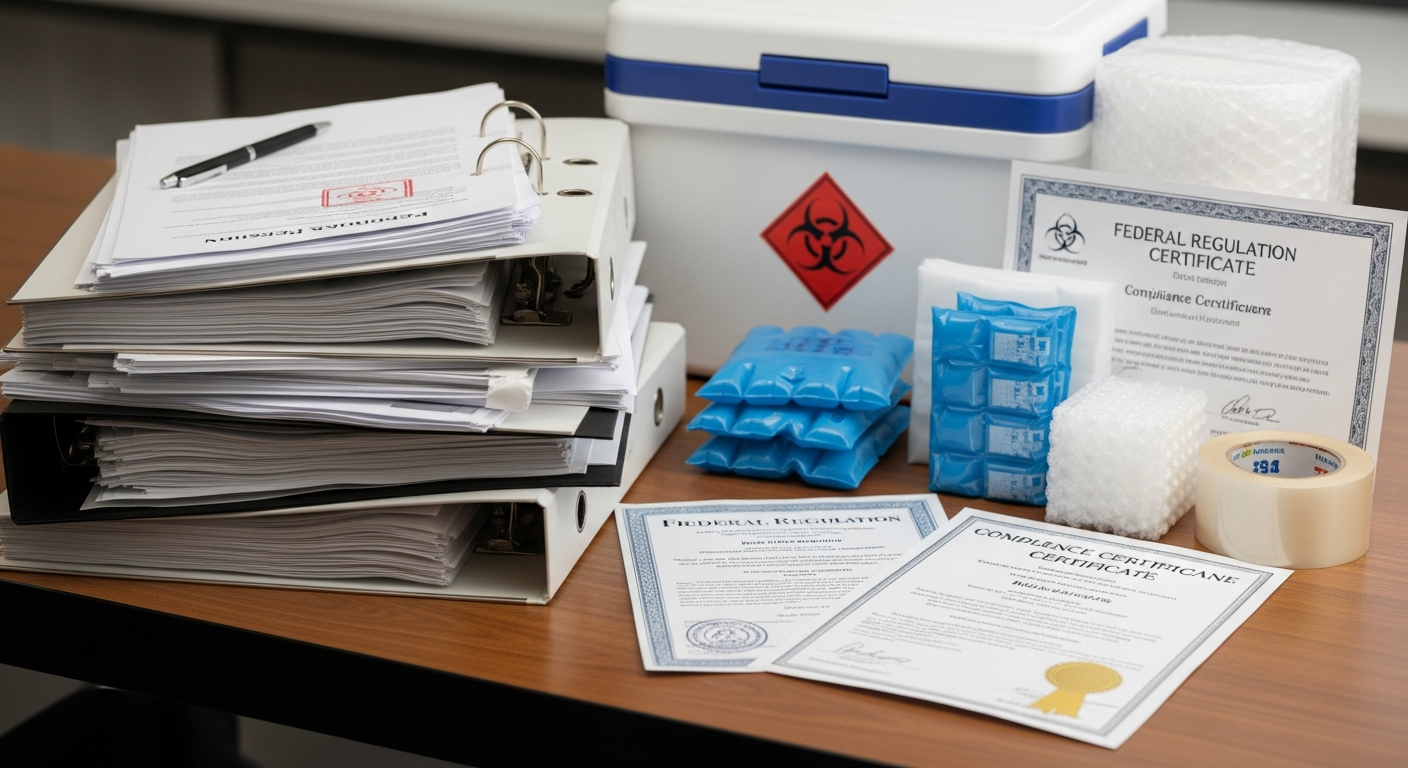
Documentation at every handoff point: A typical outreach specimen may pass through three or four handoff points between collection and testing. Each transfer requires documented identification of the specimen, the person releasing it, the person accepting it, the time, and the condition of the specimen at transfer. Paper-based chain of custody systems are prone to errors, illegible entries, and lost documentation. A reliable chain of custody courier service replaces manual logs with digital capture at every touchpoint, creating an auditable trail that satisfies even the most rigorous inspectors.
Laboratories pursuing or maintaining CLIA and CAP compliant specimen transport must ensure their outreach courier partners understand these standards thoroughly. During CAP inspections, surveyors routinely examine transport documentation, temperature logs, and courier training records. A courier service that treats medical specimens like ordinary packages creates compliance exposure that can jeopardize a laboratory’s accreditation status.
- Digital chain of custody systems with barcode scanning eliminate handwriting errors and lost paperwork
- Timestamped GPS records provide independent verification of pickup and delivery times
- HIPAA-compliant data handling must extend to all courier communications and documentation systems
- Multi-state operations require awareness of varying state laboratory licensure transport requirements
- Regular auditing of courier compliance records should be integrated into laboratory quality assurance programs
4. Scaling Operations While Maintaining Service Quality
Growth is the goal of every lab outreach program, but scaling introduces operational challenges that can erode the service quality that attracted clients in the first place. Adding new provider accounts means adding new stops to existing routes, extending drive times, and potentially pushing pickup windows outside acceptable limits. Without careful planning, a laboratory can find itself in a position where growth actively undermines performance.
The scaling paradox: Laboratories often win new outreach clients by promising superior service, fast turnaround times, and reliable pickups. As the client roster grows, those same service levels become harder to sustain with the existing courier infrastructure. The laboratory must either invest in additional courier capacity before it generates the revenue to support it, or risk degrading service for existing clients. This tension is one of the primary reasons outreach programs plateau or fail to reach profitability. Partnering with a medical courier service specializing in lab outreach allows laboratories to scale their pickup network without the capital investment and management burden of an in-house fleet.
Successful scaling requires a comprehensive approach to medical courier logistics that includes capacity planning, performance benchmarking, and proactive communication with provider offices. carGO Health supports laboratory growth with 24/7/365 operations and a flexible courier network that can absorb volume increases without service degradation. Our 98.9% on-time performance rate demonstrates that scale and quality are not mutually exclusive when the logistics infrastructure is purpose-built for healthcare.
- Capacity planning should project courier needs 6 to 12 months ahead of anticipated growth
- Performance benchmarks for on-time pickups, specimen condition, and turnaround time should be tracked continuously
- Outsourced courier partnerships eliminate the fixed cost burden of maintaining an in-house fleet
- New client onboarding processes should include route impact assessments before commitments are made
- Service level agreements with defined metrics protect both the laboratory and its provider clients
- Regional expansion across states like NY, NJ, CT, MA, and PA requires courier partners with multi-state operational capability
5. Technology Integration and Real-Time Visibility
Modern lab outreach programs generate enormous amounts of operational data, but many laboratories lack the technology to capture, analyze, and act on that information in real time. Provider offices want to know when their courier will arrive. Laboratory managers need to know which specimens are in transit and when they will arrive for processing. Operations teams need performance data to identify bottlenecks and optimize routes. Without integrated technology, these stakeholders operate in the dark.
Visibility drives accountability: Real-time tracking technology transforms the courier pickup from a black box into a transparent, measurable process. When a provider office can see that their courier is 10 minutes away, it reduces anxiety and eliminates unnecessary phone calls to the laboratory. When a lab manager can monitor all active routes on a single dashboard, they can proactively address delays before they impact testing schedules. This level of visibility is not a luxury. It is a competitive necessity for outreach programs competing for provider business.
Integration between courier technology and laboratory information systems creates additional efficiencies. Automated notifications when specimens are picked up allow the lab to begin pre-analytical planning. Digital proof of pickup with timestamps and condition documentation flows directly into quality records. Performance analytics identify which routes consistently meet targets and which need adjustment. The medical specimen transport process becomes a data-rich operation that supports continuous improvement rather than a logistical afterthought.
- Real-time GPS tracking gives providers and laboratory staff visibility into courier location and estimated arrival times
- Automated pickup confirmations and delivery notifications reduce manual communication overhead
- Historical performance data enables evidence-based route optimization and staffing decisions
- Exception alerts for late pickups or temperature excursions allow immediate corrective action
- API integrations between courier platforms and LIS systems streamline specimen accessioning workflows
Key Takeaways
Lab outreach program logistics are complex by nature, but complexity does not have to mean chaos. The five challenges outlined above, including route optimization, specimen integrity, chain of custody compliance, scaling operations, and technology integration, are solvable when laboratories partner with courier services that are purpose-built for healthcare. The key is recognizing that medical specimen transport demands specialized expertise, infrastructure, and technology that general courier services simply do not provide. Laboratories that treat their outreach logistics as a strategic function rather than an operational afterthought consistently outperform their competitors in provider retention, turnaround times, and testing accuracy. If your laboratory is facing any of these outreach logistics challenges, schedule a consultation with carGO Health to learn how our AI-powered dispatch, certified medical couriers, and 24/7/365 operations can strengthen your outreach program across the Northeast.
Frequently Asked Questions
What are the biggest logistics challenges in a lab outreach program?
The most significant challenges include multi-stop route optimization across dispersed provider locations, maintaining specimen integrity through proper temperature control during transport, ensuring unbroken chain of custody documentation at every handoff, scaling operations without degrading service quality, and integrating technology for real-time visibility. Each of these areas requires specialized expertise that goes beyond general courier capabilities.
How does route optimization improve lab outreach efficiency?
Intelligent route optimization uses algorithms and real-time data such as traffic patterns, pickup volumes, and specimen priority levels to design the most efficient multi-stop routes. This reduces drive time between collection sites, ensures couriers arrive within provider-requested windows, and minimizes the total time specimens spend in transit. AI-powered dispatch systems continuously learn from historical performance data to improve routing accuracy over time.
What temperature control measures are needed for specimen transport in outreach programs?
Outreach specimen transport requires validated packaging systems that maintain ambient, refrigerated, and frozen temperature zones simultaneously within a single courier vehicle. Continuous temperature monitoring with digital data loggers documents conditions throughout transport. Courier training on proper specimen handling, seasonal packaging adjustments for extreme weather, and documented standard operating procedures for each specimen type are all essential components of a compliant temperature control program.
Why is chain of custody documentation important for outreach specimens?
Chain of custody documentation is required under CLIA regulations and CAP accreditation standards to ensure specimen identity and integrity from collection through analysis. Every handoff between collection site staff, couriers, and laboratory receiving personnel must be documented with identification, timestamps, and specimen condition. Digital chain of custody systems with barcode scanning and GPS verification provide audit-ready records that satisfy regulatory inspectors and protect the laboratory’s accreditation status.
How can laboratories scale their outreach program without losing service quality?
Laboratories can scale effectively by partnering with specialized medical courier services that have flexible capacity and multi-state operational coverage. This eliminates the capital investment required for in-house fleet expansion. Capacity planning that projects needs 6 to 12 months ahead, performance benchmarking with defined service level agreements, and route impact assessments before onboarding new clients all help ensure that growth strengthens rather than undermines the outreach program.
Healthcare organizations that partner with a proven medical courier service gain the reliability and compliance their operations require.
About the Author
Parth Patel is the Founder and CEO of carGO Health, a specialized medical courier service operating 24/7/365 across the Northeast United States. With firsthand experience in medical courier operations since childhood and over 200,000 deliveries completed, Parth built carGO Health to bring technology, reliability, and accountability to healthcare logistics. Connect with Parth on LinkedIn.
Related Reading
- Comprehensive Guide to Medical Courier Services
- Why Hospitals Outsource Medical Courier Operations
- STAT Medical Courier Service: Emergency Response Standards
- Medical Specimen Transport: Protocols and Compliance
- HIPAA Compliant Medical Courier: What to Look For
- Get a Quote — carGO Health Medical Courier Services
Related Resources