Hospital Discharge Medication Delivery: How Meds-to-Beds Programs Reduce Readmissions
Updated April 2026 — reviewed and refreshed by carGO Health editorial team.
One of the most vulnerable moments in a patient’s healthcare journey is the transition from hospital to home. Studies consistently show that medication non-adherence after discharge is a leading contributor to hospital readmissions, with the Centers for Medicare and Medicaid Services reporting that nearly 20 percent of Medicare patients are readmitted within 30 days. A significant portion of these readmissions are preventable and linked to patients who never filled their discharge prescriptions. Hospital discharge medication delivery programs address this gap by ensuring that patients leave the hospital with their medications in hand, eliminating the pharmacy stop that many patients skip or delay after leaving the facility.
The logistics behind effective discharge medication delivery programs are more complex than simply handing a patient a bag of medications. These programs require coordination between inpatient pharmacy operations, discharge planning teams, outpatient pharmacy fulfillment, and courier logistics to ensure medications are prepared, verified, and delivered to the patient’s bedside before discharge occurs. For health systems operating across multiple campuses, the courier component becomes critical because medications may be filled at a central pharmacy and need to reach patients at satellite facilities within tight discharge windows.
1. The Readmission Problem and Why Discharge Medications Matter
Hospital readmissions cost the U.S. healthcare system billions of dollars annually, and medication-related issues are among the most preventable causes. Research published by the National Institutes of Health has found that up to 50 percent of patients experience a medication error during care transitions, with the discharge period being the highest-risk window. The problem is structural. Patients receive new prescriptions during hospitalization, their existing medications may be adjusted or discontinued, and the instructions for this complex medication regimen are communicated during a period when patients are often fatigued, anxious, and eager to leave.
When patients leave the hospital with a paper prescription and an instruction to fill it at their local pharmacy, the chain breaks almost immediately. Some patients go home and rest before attempting to get to a pharmacy. Others face transportation barriers. Some find that their insurance requires prior authorization for new medications. By the time these obstacles are resolved, the critical window for medication adherence has passed, and the clinical interventions delivered during hospitalization begin to unravel. Bedside medication delivery programs eliminate these barriers by removing the pharmacy trip from the discharge process entirely.
CMS Hospital Readmissions Reduction Program penalties create a direct financial incentive for health systems to invest in discharge medication programs. Hospitals with excess readmissions for conditions including heart failure, pneumonia, and acute myocardial infarction face payment reductions of up to 3 percent of their total Medicare reimbursement. For large health systems, this represents millions of dollars in revenue at risk. Effective discharge medication delivery programs have demonstrated measurable reductions in 30-day readmission rates, making them both a clinical quality initiative and a financial performance strategy.
Impact of Medication Non-Adherence After Discharge:
- Up to 50 percent of patients experience medication errors during the hospital-to-home transition period
- Nearly 20 percent of Medicare patients are readmitted within 30 days of discharge from the hospital
- One in four patients never fills their discharge prescription within the first week after leaving the hospital
- CMS penalties for excess readmissions can reduce Medicare reimbursement by up to 3 percent annually
- Preventable readmissions related to medication issues cost the healthcare system over $17 billion per year
2. How Meds-to-Beds Programs Work in Practice
A meds to beds program is a structured workflow that begins when the discharge order is entered and ends when the patient receives their medications at the bedside before leaving the hospital. The process typically starts with the attending physician entering discharge orders and prescriptions into the electronic health record. The discharge planning team or a pharmacy technician reviews the prescription list, verifies insurance coverage, checks for formulary issues, and initiates the fill process at the hospital’s outpatient pharmacy or a partnered retail pharmacy.
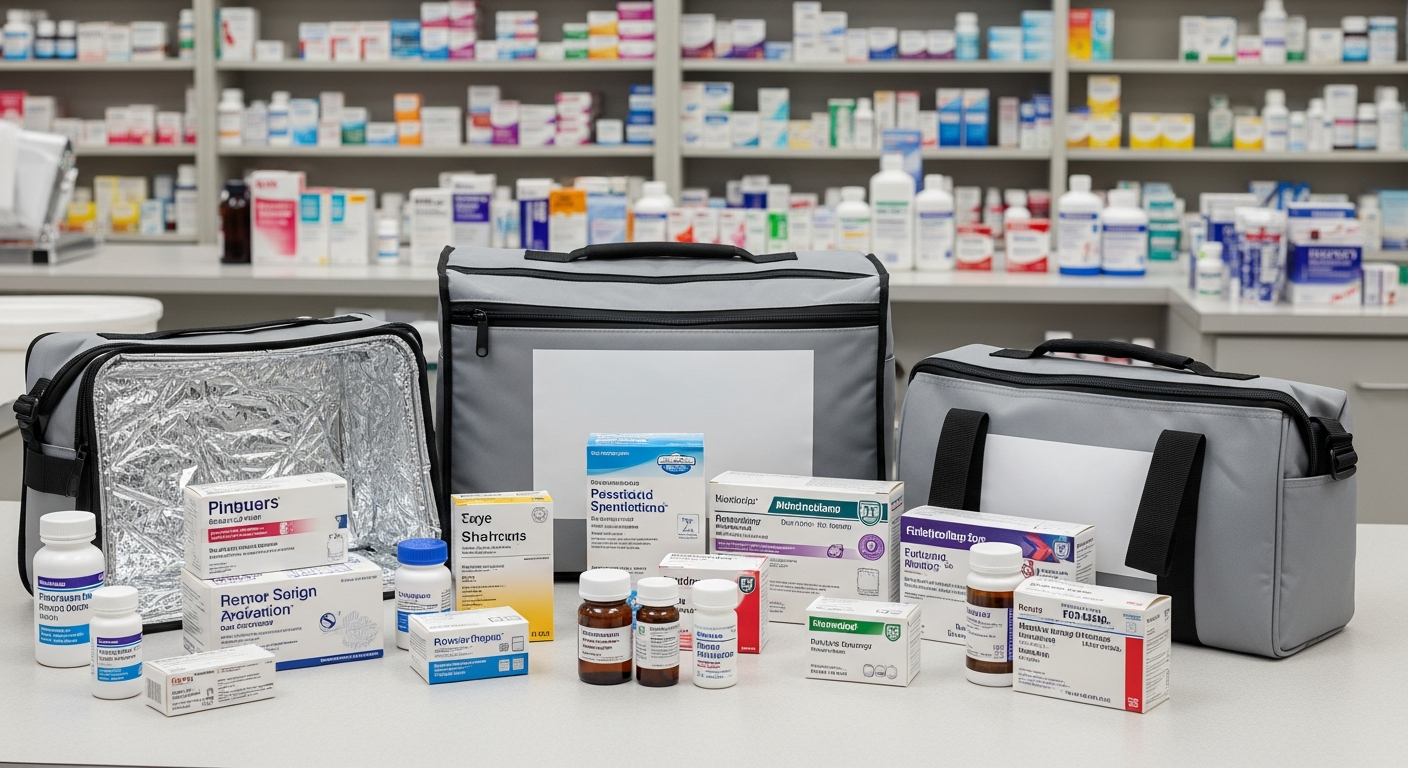
Once medications are prepared, the logistics challenge begins. In a single-campus hospital where the outpatient pharmacy is on-site, a pharmacy technician or internal courier may deliver medications directly to the patient’s floor. But in multi-campus health systems, where the central outpatient pharmacy may be miles from the discharging facility, a medical courier service is required to transport the filled prescriptions from the pharmacy to the patient’s bedside within the discharge timeline. This is where same-day medical delivery capabilities become essential to program success.
The discharge window is tight. Physicians want patients discharged efficiently to free beds for incoming admissions. Patients and families are eager to leave. Insurance and pharmacy processing can introduce delays. A successful meds-to-beds program requires real-time coordination between the pharmacy, the discharge team, and the courier to ensure medications arrive before the patient is ready to leave. Delays that extend the discharge process create bottlenecks that affect bed availability, patient satisfaction scores, and operational throughput.
Meds-to-Beds Program Workflow Steps:
- Discharge order triggers automatic notification to pharmacy team for prescription processing
- Insurance verification and prior authorization completed before medications are filled
- Pharmacist reviews medication list for interactions, duplications, and dosage appropriateness
- Courier dispatched to transport medications from pharmacy to patient’s bedside location
- Bedside counseling provided by pharmacist or nurse before patient leaves the facility
3. The Courier Logistics Behind Discharge Medication Delivery
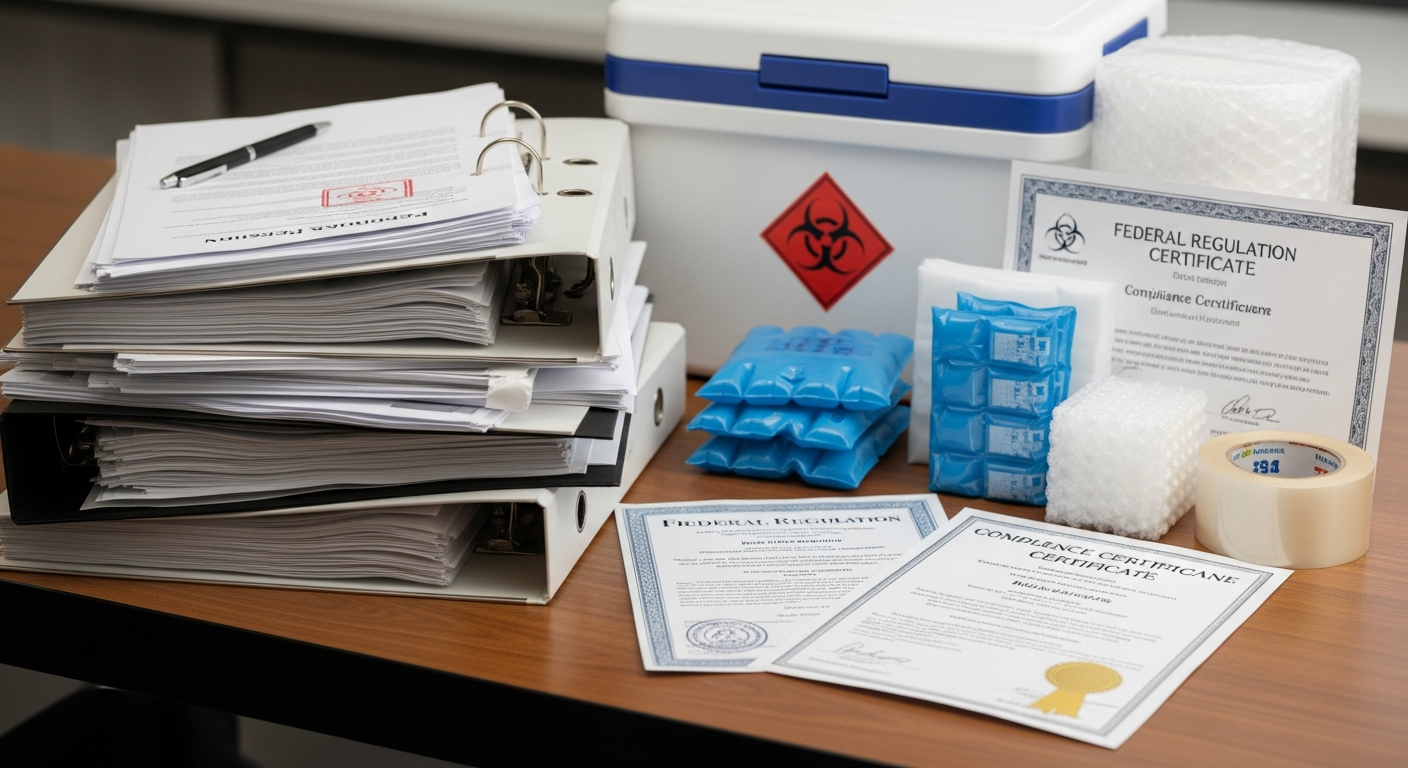
The courier component of a hospital discharge medication delivery program is the operational link that determines whether the program succeeds or fails. Medications must be transported from the filling pharmacy to the discharge facility within a window that is typically measured in hours, not days. The courier must maintain proper handling throughout transit, including temperature control for refrigerated medications, tamper-evident packaging for controlled substances, and chain of custody documentation for every handoff.
For health systems with multiple discharge locations, the logistics become more complex. A central pharmacy filling prescriptions for five hospital campuses needs a courier network that can route deliveries efficiently based on discharge timing, not just geography. A patient being discharged at 11 AM from a satellite campus 20 miles from the central pharmacy needs their medications to arrive before 11 AM. That requires a courier dispatch system that factors in preparation time, travel time, and a buffer for processing delays. AI-powered dispatch technology enables this level of coordination by dynamically routing couriers based on real-time discharge schedules and pharmacy readiness.
Controlled substance delivery adds another layer of complexity. Medications classified under DEA Schedule II through V require documented chain of custody from the pharmacy to the patient or the patient’s designated representative. The courier must collect and deliver these medications with verification protocols that satisfy both state pharmacy board regulations and federal DEA requirements. This is not a task for a general delivery service. It requires HIPAA-compliant couriers with specialized training in pharmaceutical transport and controlled substance handling.
Courier Requirements for Discharge Medication Programs:
- STAT and same-day delivery capability to meet tight discharge window timelines
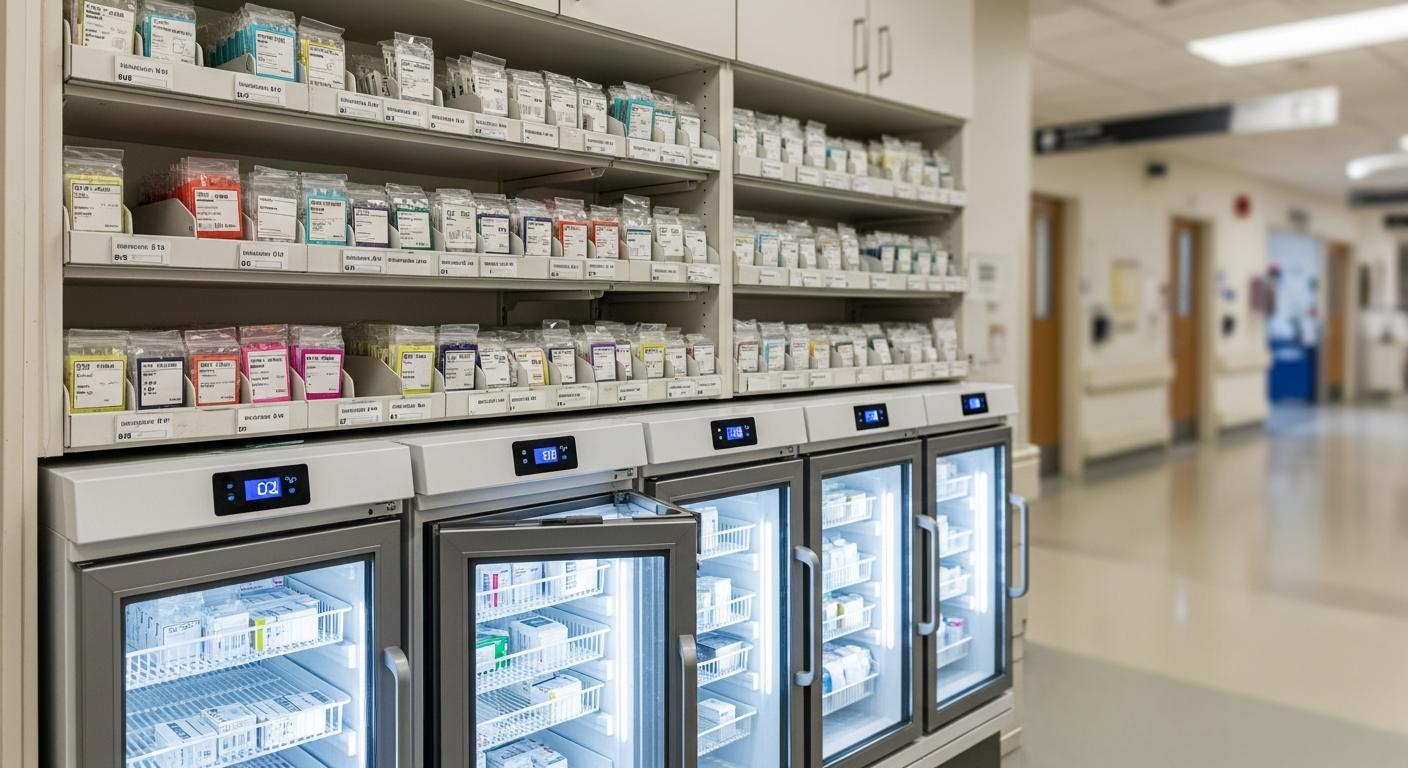
- Temperature-controlled transport for refrigerated medications including biologics and insulin
- Chain of custody documentation with digital signatures at every handoff point
- Controlled substance handling protocols meeting DEA and state pharmacy board requirements
- Real-time tracking visibility so discharge teams can monitor medication delivery status
4. Multi-Campus Health System Challenges and Solutions
Single-hospital meds-to-beds programs are relatively straightforward to implement when the pharmacy and the discharge unit are in the same building. The complexity increases dramatically for multi-site healthcare logistics operations where a health system operates multiple hospitals, ambulatory surgery centers, and outpatient clinics that all generate discharge prescriptions but may not have on-site pharmacy filling capabilities.
In these environments, the central pharmacy becomes a hub that fills prescriptions for patients across the system, and a medical courier network becomes the distribution infrastructure. The challenge is matching pharmacy output timing with discharge timing across multiple facilities that operate on independent schedules. A batch delivery model, where a courier collects all filled prescriptions at set times and delivers them on a route, does not work for discharge medications because discharge timing is unpredictable. Instead, the program requires on-demand courier dispatch that responds to individual discharge events as they occur throughout the day.
The most successful multi-campus programs integrate their pharmacy management system with their courier dispatch platform so that when a prescription is filled and verified, a courier is automatically dispatched without manual coordination. This integration eliminates phone calls between pharmacy staff and dispatch, reduces handoff delays, and creates a trackable workflow where the discharge team can see the real-time status of the medication delivery without calling anyone. At carGO Health, our platform integrates with healthcare facility systems to provide this level of automated coordination, supporting dedicated courier routes and on-demand dispatch across multi-campus health systems.
Multi-Campus Program Solutions:
- Centralized pharmacy hub with courier distribution to all discharge facilities in the health system
- On-demand dispatch triggered by individual discharge events rather than batch delivery schedules
- System integration between pharmacy platforms and courier dispatch for automated coordination
- Real-time tracking dashboards accessible to discharge teams at every facility location
- Flexible courier network that scales with discharge volume fluctuations throughout the day
5. Measuring Program Success and ROI
Healthcare organizations investing in hospital discharge medication delivery programs need to measure outcomes to justify continued investment and identify improvement opportunities. The primary metrics include first-fill adherence rates (the percentage of patients who fill their discharge prescriptions), 30-day readmission rates for target conditions, patient satisfaction scores related to the discharge experience, average time from discharge order to medication delivery, and pharmacy revenue captured through the health system’s outpatient pharmacy rather than lost to external retail pharmacies.
The financial case for these programs is compelling when measured comprehensively. Beyond avoiding CMS readmission penalties, health systems capture pharmacy revenue that would otherwise go to retail competitors. When a patient fills their discharge prescription at an external pharmacy, the health system loses the dispensing revenue and the opportunity for pharmacist counseling at a critical transition point. Meds-to-beds programs route this revenue back to the health system’s own pharmacy operations, often generating enough additional revenue to fully offset the courier and program coordination costs.
Patient experience improvements are equally measurable. HCAHPS survey scores related to discharge communication and care transitions directly affect hospital reimbursement through the CMS Value-Based Purchasing Program. Patients who receive their medications at the bedside with pharmacist counseling consistently report higher satisfaction with their discharge experience. These improved scores translate to real financial impact through Medicare incentive payments. With over 200,000 orders completed, carGO Health has the operational infrastructure to support discharge medication programs that deliver measurable clinical and financial outcomes. Schedule a demo to learn how our platform supports meds-to-beds logistics for health systems of any size.
Key Program Metrics to Track:
- First-fill adherence rate measuring the percentage of discharge prescriptions filled before the patient leaves
- 30-day readmission rate reduction for target conditions compared to pre-program baseline
- Pharmacy revenue capture rate showing prescriptions filled internally versus lost to external pharmacies
- Average medication delivery time from pharmacy fill completion to patient bedside receipt
- HCAHPS discharge communication scores and their trend relative to program implementation date
Key Takeaways
Hospital discharge medication delivery programs directly address one of the most preventable causes of hospital readmissions. By eliminating the gap between discharge and prescription fill, these programs improve medication adherence, reduce readmission penalties, capture pharmacy revenue, and improve patient satisfaction scores. The courier logistics component is essential for multi-campus health systems where medications must be transported from central pharmacies to discharge facilities within tight timelines. If your health system is experiencing readmission rates above target or losing pharmacy revenue to external retailers, a structured meds-to-beds program with specialized medical courier support can deliver measurable improvements. Contact carGO Health to discuss how our courier network supports discharge medication logistics across the Northeast.
Frequently Asked Questions
What is a meds-to-beds program?
A meds-to-beds program is a hospital initiative that delivers discharge prescriptions directly to the patient’s bedside before they leave the facility. The program coordinates between the prescribing physician, insurance verification, pharmacy fulfillment, and courier delivery to ensure patients leave with their medications in hand, eliminating the need to stop at an external pharmacy after discharge.
How does discharge medication delivery reduce hospital readmissions?
Discharge medication delivery reduces readmissions by eliminating the barriers that prevent patients from filling prescriptions after leaving the hospital. When patients receive medications at bedside with pharmacist counseling, they are more likely to start and continue their medication regimen correctly. Studies show that first-fill adherence rates improve significantly with meds-to-beds programs, directly reducing medication-related readmissions.
Can controlled substances be delivered through a meds-to-beds program?
Yes, controlled substances can be delivered through meds-to-beds programs, but they require additional chain of custody documentation, DEA-compliant handling protocols, and verification at the point of delivery. The courier transporting controlled substances must follow state pharmacy board regulations and maintain documented proof of delivery to the authorized recipient.
What type of courier service is needed for discharge medication delivery?
Discharge medication delivery requires a medical courier service with STAT and same-day delivery capability, temperature-controlled transport for refrigerated medications, HIPAA compliance for handling prescription information, chain of custody documentation, and real-time tracking so discharge teams can monitor delivery status. General delivery services lack the pharmaceutical handling training and compliance infrastructure these programs require.
How do multi-campus health systems manage discharge medication logistics?
Multi-campus systems typically operate a central pharmacy hub that fills prescriptions for patients across all facilities, with a medical courier network distributing medications to individual discharge locations. The most effective programs integrate pharmacy management systems with courier dispatch platforms so that courier pickup is triggered automatically when prescriptions are filled, eliminating manual coordination delays.
Related Reading
- Comprehensive Guide to Medical Courier Services
- Why Hospitals Outsource Medical Courier Operations
- STAT Medical Courier Service: Emergency Response Standards
- Medical Specimen Transport: Protocols and Compliance
- HIPAA Compliant Medical Courier: What to Look For
- Get a Quote — carGO Health Medical Courier Services
Related Resources