White Glove Medical Delivery: What It Includes and When to Use It

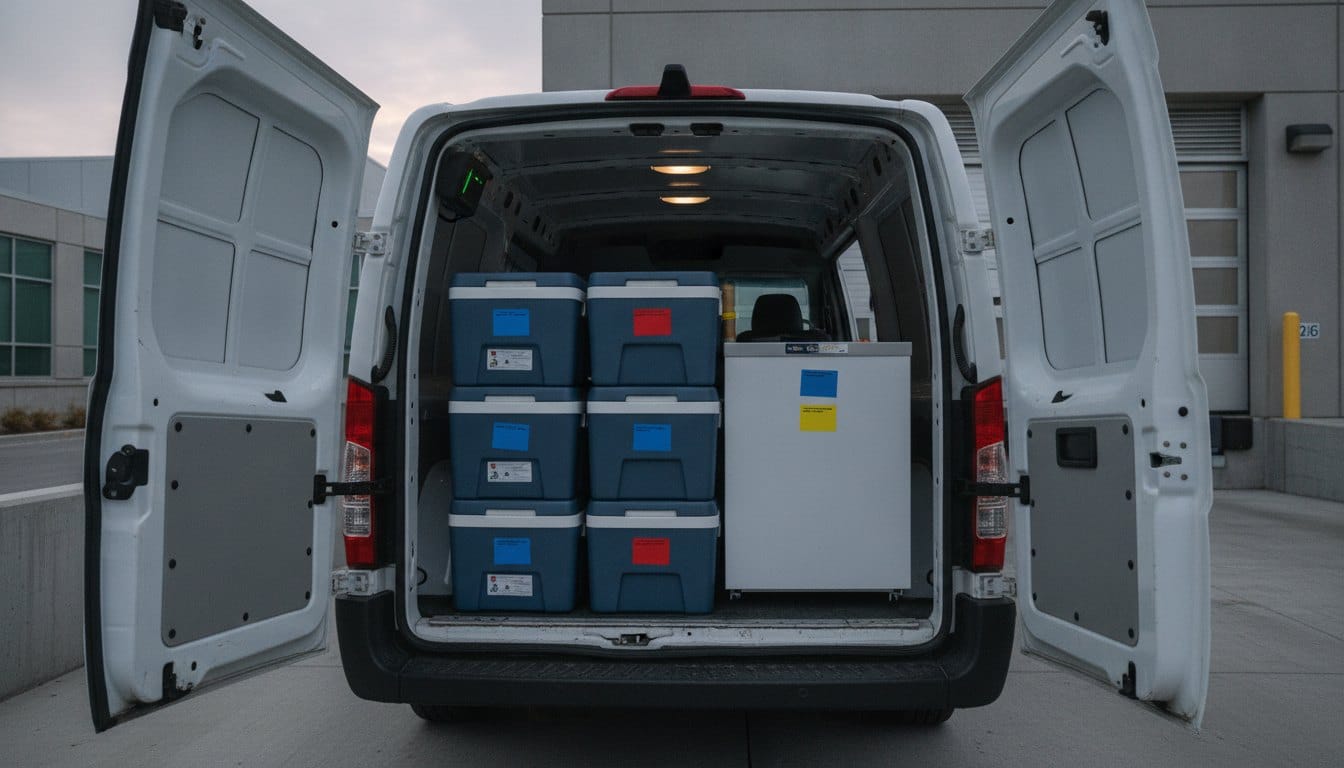
Not every medical delivery is a sealed bag handed across a receiving desk. A benchtop analyzer moving between laboratory sites, a hospital bed going into a patient’s second-floor bedroom, a loaner instrument tray due in sterile processing before a 7:30 am case: these shipments need someone to carry the item to its point of use, unpack it, place it and document its condition. That is the job of white glove medical delivery, a service tier built around inside delivery, controlled handling and scheduled windows rather than speed alone.
This guide covers what the tier includes, which equipment justifies it, how inside delivery and setup work, how windows are coordinated with receiving teams and when standard medical courier service is the better choice. Matching the tier to the shipment avoids paying for handling you do not need while protecting the items that cannot survive a dock drop.

1. What White Glove Medical Delivery Includes
A standard medical courier delivery ends at a threshold: a loading dock, a receiving window, an accessioning bench. The courier hands over a finished package, captures proof of delivery and leaves. White glove medical delivery extends the job past that threshold: the courier carries the item to the room where it will be used, removes the outer packaging, places it, checks basic function when appropriate, clears the debris and records the condition and identity of what was delivered.
Two other features define the tier. Handling: shipments move padded, strapped and upright, often with two people and a stair-climbing hand truck. Time: instead of a deadline, the shipment gets an appointment window agreed with a named recipient, because inside delivery fails if the room is occupied, the elevator is not booked or the signer is off the floor.
Documentation is heavier as well. Beyond the geofenced photo and e-signature carGO Health captures on every delivery, a white glove job records serial numbers, asset tags, photos of the item in position and any crate damage. The white glove medical delivery service page explains how these steps are built into the order, so the driver sees the room number, elevator instructions and setup requirements before arriving.
Core components of a white glove medical delivery:
- Inside delivery to the room, bench or bedside where the item will be used, not the dock or lobby
- Unpacking, removal of crates, pallets and foam, and disposal or return of the debris
- Placement and basic setup: leveling, connecting power, removing transport locks, confirming power-on
- Condition photos, serial number or asset tag capture and an e-signature at the point of placement
2. Equipment, DME and Sensitive Instruments That Justify the Tier
Three categories account for most white glove medical deliveries. The first is capital and clinical equipment moving between facilities: infusion pumps in quantity, portable ultrasound units, benchtop analyzers, centrifuges, microscopes and minus 80 degree Celsius freezers. They are heavy, costly and damaged by tipping or vibration; centrifuge rotor locks, for example, must stay engaged until the unit is level on its final bench. The FDA medical devices program requires a unique device identifier on device labels, which is why serial number capture at delivery matters to biomedical engineering.
The second is durable medical equipment delivered to a patient’s home or a post-acute facility: hospital beds, patient lifts, oxygen concentrators and wheelchairs. A bed frame does not fit through every doorway, and a concentrator has to sit where the tubing reaches the patient. Our guide to home health and infusion delivery logistics covers coordination between the DME supplier, the nursing agency and the courier, and the medical courier service for long-term care facilities page addresses skilled nursing deliveries where receiving staff change by shift.
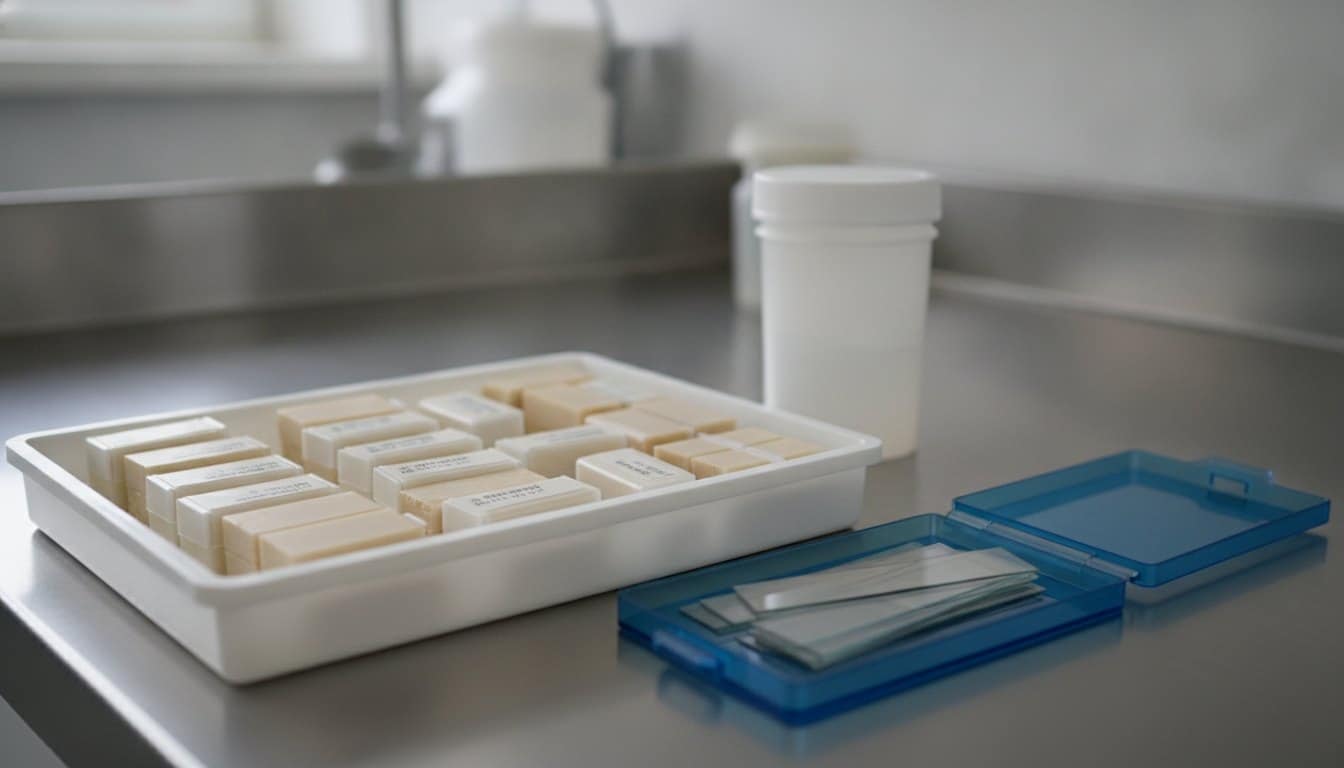
The third is sterile sets and sensitive instrumentation. Surgical instrument trays, loaner implant kits and robotic instruments move between hospitals, surgery centers and third-party sterile processing facilities on tight case schedules, wrapped and sealed. They cannot be stacked, dropped or left at a dock, and the recipient must verify the set against the case list. See our article on surgical instrument transport between hospitals and processing centers for the sterile handling rules and the medical courier service for medical device companies page for demo, loaner and field-replacement flows.
Items that typically require white glove handling:
- Benchtop analyzers, centrifuges, microscopes and sequencers moving between laboratory sites
- Hospital beds, patient lifts, oxygen concentrators and other DME going into homes or care facilities
- Sterile instrument trays, loaner implant sets and robotic instruments tied to a case time
- Demo, trial and field-replacement units from device manufacturers and distributors
3. How Inside Delivery and Setup Work in Practice
Inside delivery succeeds or fails before the vehicle leaves. For anything larger than a hand-carry item, dispatch runs a short site survey by phone or through the customer portal, covering access, elevators, dimensions and building rules. Urban hospitals and office buildings commonly require the delivery company’s certificate of insurance on file before admitting a crew, and a crew turned away at a security desk is a wasted trip and a missed window.
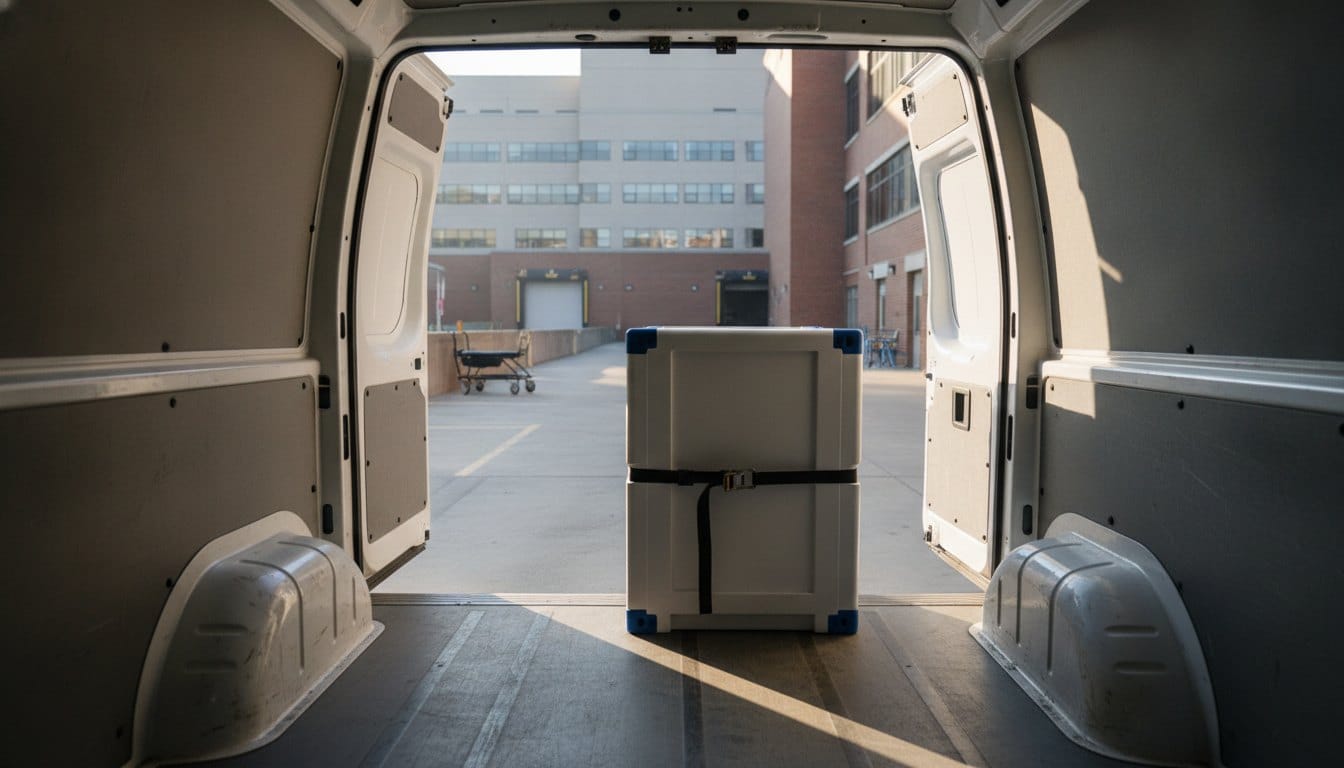
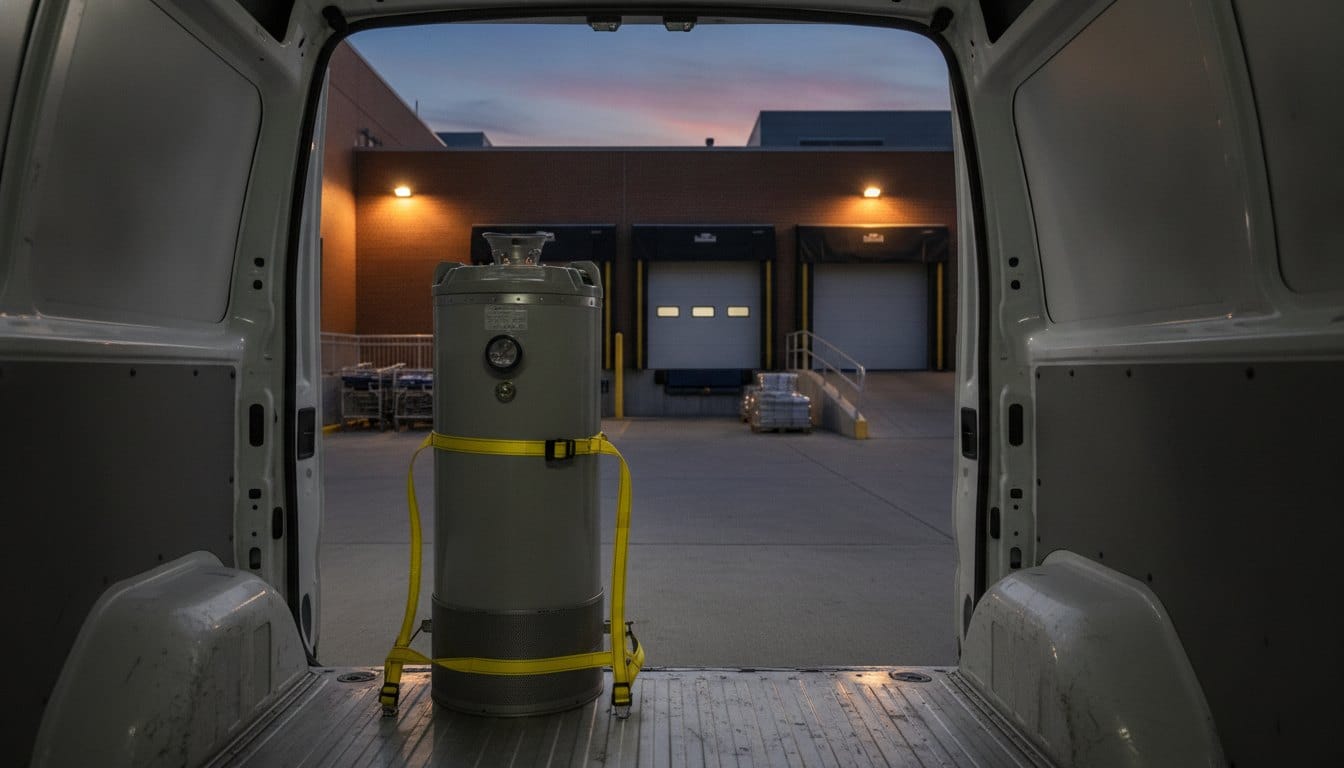
Handling follows the manufacturer’s instructions and the crew’s physical limits. OSHA’s ergonomics guidance on manual material handling is the baseline: anything heavy, bulky or awkward is a two-person or mechanically assisted lift, and stairs are handled with a stair-climbing hand truck. Equipment travels upright and strapped, with blankets and corner protection, and tilt or shock indicators on the crate are photographed before it is opened; a tripped indicator is the recipient’s call to accept or refuse.
Setup has a defined boundary. The crew unpacks, places, levels, removes transport locks, connects power and confirms the unit powers on. It does not perform clinical configuration, calibration, network integration or patient training; those belong to biomedical engineering, the manufacturer’s field service or the DME supplier’s clinician, and the Joint Commission’s environment of care standards expect the facility to inspect and document incoming equipment before clinical use. When the delivery replaces an existing unit, the same crew can remove the old one; see our guide to healthcare reverse logistics and equipment retrieval.
What the site survey should confirm before the vehicle rolls:
- Entrance, floor, room number and the name and phone number of the person receiving
- Freight elevator availability, reservation requirements and interior dimensions
- Crate dimensions and weight against door widths, hallway turns and stair runs
- Manufacturer transport instructions: orientation, transport locks, temperature limits for electronics
4. Scheduled Windows and Receiving Coordination
A white glove medical delivery is booked as an appointment, not a deadline. The window is typically two hours wide and set around the receiving site’s constraints: dock and elevator hours, biomedical team availability, a caregiver’s presence at home, or the surgical schedule a loaner tray has to beat. The crew calls 30 to 60 minutes ahead and the recipient can follow the vehicle on real-time GPS tracking. Recurring movements, such as a weekly instrument-set rotation between a surgery center and a sterile processing facility, belong on scheduled medical courier routes with fixed windows rather than one-off bookings.
Proof of delivery has to satisfy more than the shipper. For DME billed to Medicare, CMS supplier guidance requires a proof of delivery record identifying the beneficiary, the delivery address, the item by description and quantity, the date delivered and the signature of the beneficiary or designee. Because a standard signature capture rarely covers all of these, the order should specify the record’s contents; carGO’s medical courier proof of delivery adds geofenced photos, a timestamp, e-signature and configurable fields for serial numbers and asset tags.
Geography shapes the window too. A skilled nursing facility on eastern Long Island and a laboratory relocation in lower Manhattan both need inside delivery, but one is a 90-minute run with a single receiving contact and the other involves a reserved freight elevator, a security desk and a loading zone legal for twenty minutes. Local knowledge, of the kind described on our Long Island medical courier service page, turns a nominal two-hour window into one that holds.
Elements of a delivery window that actually holds:
- A window set around receiving hours, elevator bookings and staff availability
- A pre-arrival call 30 to 60 minutes out and live tracking visible to the recipient
- A proof of delivery specification agreed in advance: photos, signature, serial numbers, condition notes
- An exception plan for a failed window: secure hold, redelivery next window, or return to shipper
5. When Standard Service Beats White Glove Medical Delivery
Most healthcare shipments do not need white glove handling. Specimens in sealed biohazard bags, prescription orders, medical records, sterile supplies in shelf-ready cartons and anything one person can carry to a receiving desk are standard deliveries. Their risk lives in time and temperature, not placement, and a STAT, same-day or scheduled route service with tracking and proof of delivery covers them; our guide to same-day, STAT and scheduled medical delivery services compares the three.
The decision comes down to four questions. Must the item reach a specific room rather than a receiving point? Does it take two people or mechanical assistance to move safely? Must someone unpack, position or unlock it before it is usable? Does the site need a condition record, serial number or beneficiary signature beyond a standard delivery record? One yes points to white glove; four no answers point to standard service, even for an expensive or fragile item.
Hybrids are common: a laboratory network runs daily specimen routes on scheduled service and books white glove only when an analyzer is installed, and a device distributor ships consumables same-day while reserving inside delivery for capital units. Because carGO operates a floating driver network rather than a fixed in-house fleet, one platform dispatches both tiers; the order form asks for room and setup details only when white glove is selected.
A quick decision test:
- Standard: sealed specimens, medications, records, kits and cartons that a receiving desk can accept as-is
- Standard with handling notes: fragile but boxed items the recipient will unpack, such as probes or reagents
- White glove: anything that must be placed in a specific room, moved by two people or set up before use
- White glove: DME going into a home, where the delivery record must meet payer documentation rules
Key Takeaways
White glove medical delivery is defined by what happens after the threshold: inside delivery, unpacking, placement, basic setup and detailed documentation, all inside a scheduled window. It exists for equipment, DME and sensitive instruments, and it is the wrong tool for the sealed bags and cartons that make up most healthcare volume.
- Book white glove service for items that must reach a specific room, need two-person handling or require setup before use
- Run a site survey first: floor, elevator, door widths, dock hours, certificate of insurance and manufacturer transport rules
- Specify the proof of delivery content in advance, especially for Medicare DME and serialized devices
- Use standard STAT, same-day or scheduled service for everything else, combining tiers on one platform
If your facility is planning an equipment move, a DME program or a recurring instrument rotation, request a demo of the carGO Health platform and walk through a live white glove order with our team.
Frequently Asked Questions
What is white glove medical delivery?
White glove medical delivery is a service tier in which the courier carries equipment or instruments to the room where they will be used, unpacks and places them, performs basic setup such as leveling and power-on, removes packaging debris and records serial numbers, condition photos and an e-signature, all inside a scheduled appointment window.
How is white glove different from standard medical courier delivery?
Standard medical courier delivery ends at a receiving point such as a dock, desk or accessioning bench, with photo proof and a signature. White glove delivery continues to inside placement, unpacking and setup, usually with two-person handling and heavier documentation. Standard suits specimens, medications and cartons; white glove suits equipment, DME and sterile instrument sets.
Does white glove delivery include equipment setup?
It includes basic setup: positioning, leveling, removing transport locks, connecting power and confirming the unit powers on. It does not include clinical configuration, calibration, network integration or patient training, which remain with biomedical engineering, the manufacturer’s field service or the DME supplier’s clinician. The order should state where the courier’s role ends.
How far in advance should a white glove medical delivery be scheduled?
Allow enough lead time for a site survey and any building requirements: typically one to three business days for a single unit, longer for multi-unit moves that need a reserved freight elevator or a certificate of insurance on file. Urgent inside deliveries, such as a loaner instrument set for a next-morning case, can be arranged faster when receiving details are already known.
Is white glove delivery required for durable medical equipment?
No regulation mandates a delivery tier, but DME going into a patient’s home usually needs inside placement, assembly of items like beds and lifts, and a proof of delivery record that meets payer documentation rules. Those practical requirements are what white glove service is built for, so most DME suppliers use it for equipment and ship supplies on standard service.
Related Resources