Microbiology Specimen Transport: Swabs, Cultures and Time to Plating
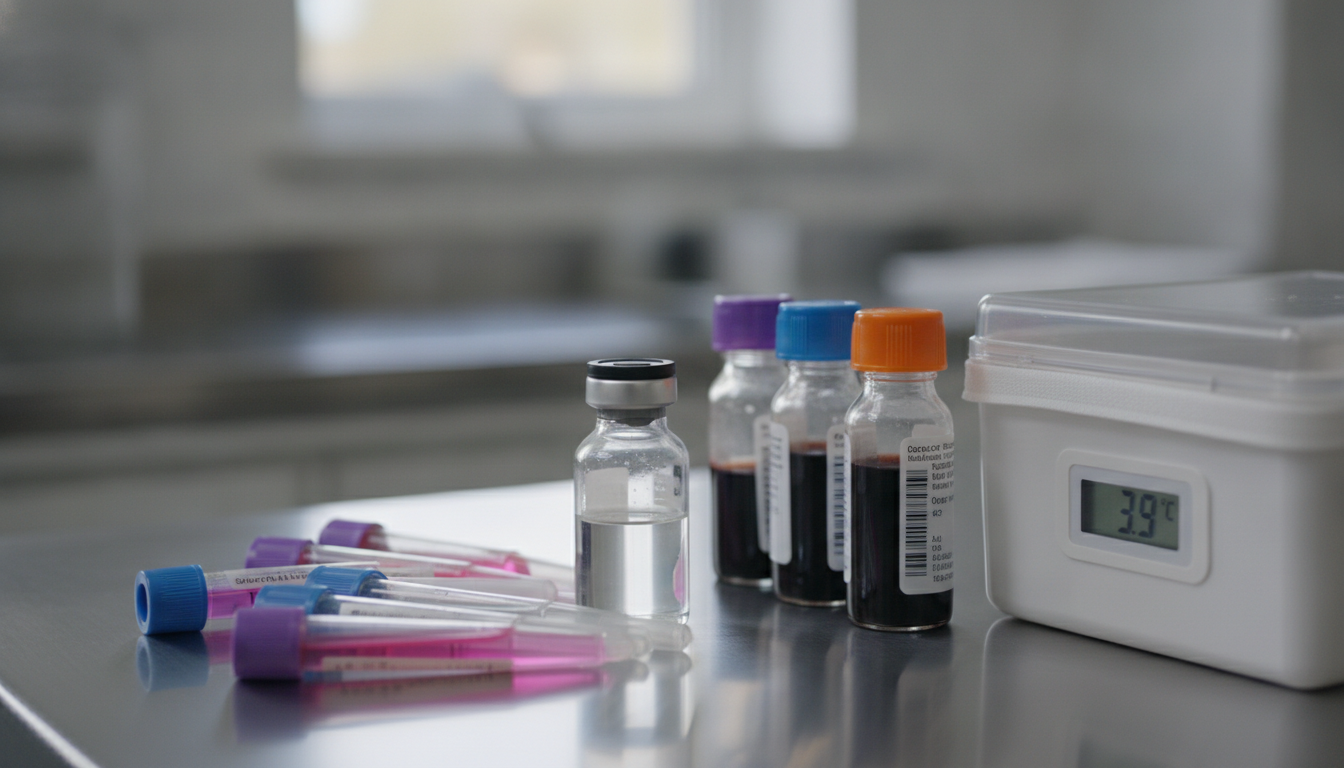
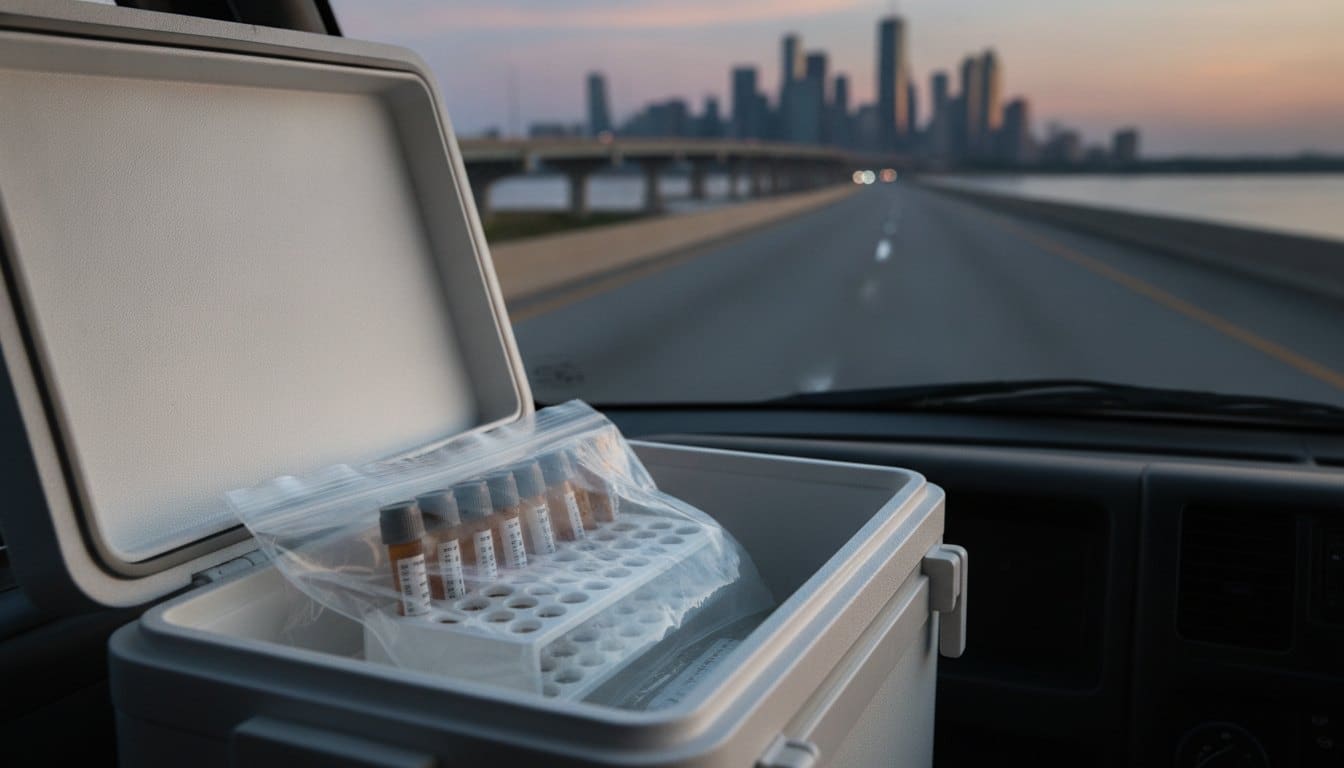
A urine culture that sits unrefrigerated for six hours grows contaminants to a colony count that looks like infection. A blood culture bottle chilled in a cooler on the way to the laboratory may never flag positive. A swab for Neisseria gonorrhoeae that spends a winter afternoon in a cold vehicle arrives sterile. Microbiology specimen transport differs from chemistry transport in one essential way: the analyte is alive. The courier is protecting its survival and, at the same time, suppressing everything else in the container until the specimen reaches a plate.
This guide is for laboratory directors, microbiology supervisors and the logistics managers who design pickup schedules for them. It covers transport media and what each protects, temperature by specimen type, the time limits that govern urine, stool, blood cultures and cerebrospinal fluid, anaerobic and tissue specimens, and the packaging and rejection criteria that decide whether a specimen is plated or discarded.
1. Transport Media and What Each One Protects
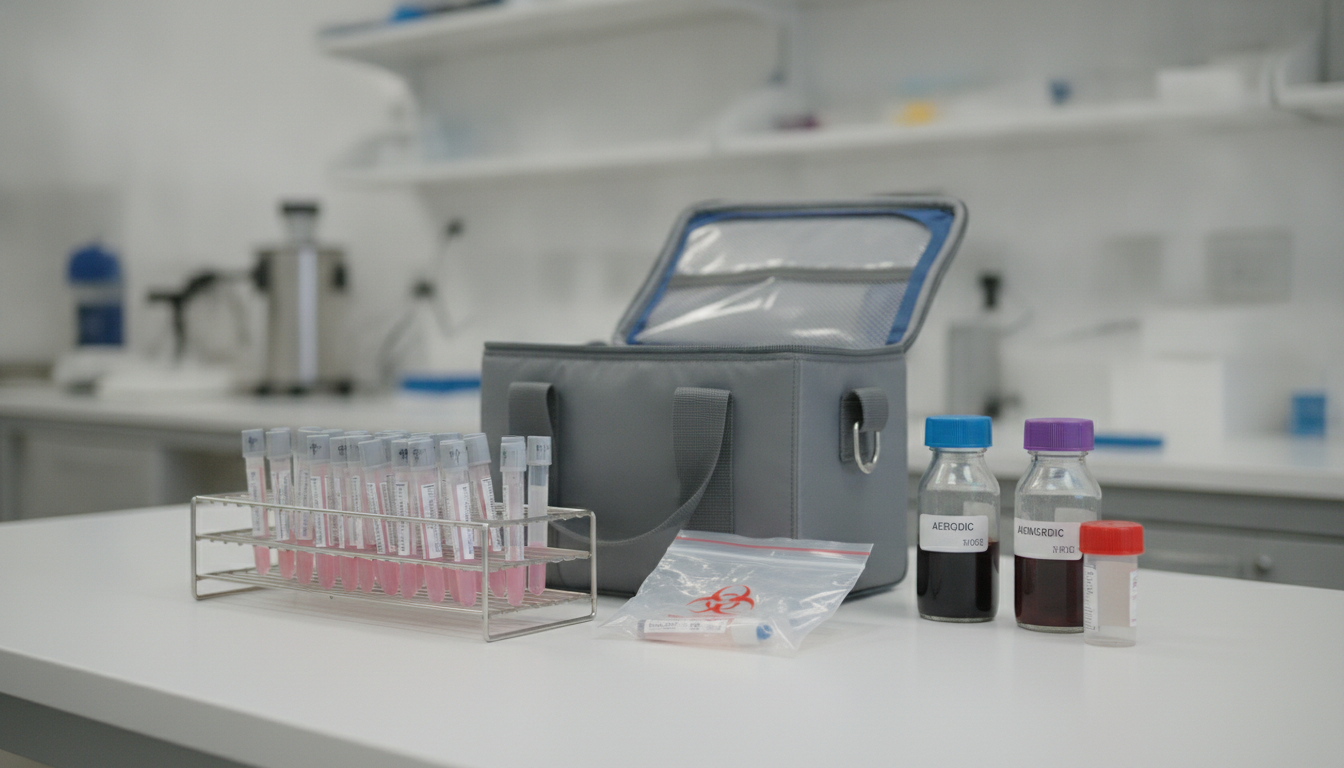
A transport medium is a holding environment, not a growth medium. Non-nutritive swab media in Amies or Stuart formulations keep organisms viable without letting them multiply, in a gel or, increasingly, a liquid formulation paired with a flocked swab that releases more of the sample and serves both culture and molecular testing. Cary-Blair medium is the standard for stool destined for enteric culture. Viral transport medium is buffered, contains protein and antimicrobials, and keeps viruses viable for molecular and culture work. Anaerobic transport systems are oxygen-free vials or tubes with a reducing agent and an indicator that changes color if air enters. Blood culture bottles are their own medium, broth under vacuum in aerobic and anaerobic pairs. Boric acid tubes preserve urine for culture at room temperature by holding bacterial counts steady.
Every medium has an expiry date and a storage condition, and manufacturers validate viability against CLSI standard M40, Quality Control of Microbiological Transport Systems, which measures how well a device keeps organisms alive over time and temperature. The laboratory’s collection manual translates that validation into which device goes with which source. A pickup checklist catches the mismatches that drive rejection: a dry swab with no medium, stool in a plain cup when the request is an enteric culture, a tube past its expiry, a bottle with no label. Our medical specimen transport page describes how those checks fit into a pickup, and the medical courier service for laboratories page covers the account setup behind them.
Media and the specimens they carry:
- Amies or Stuart swab media, gel or liquid: throat, wound, nasal, genital and ear swabs for bacterial culture
- Cary-Blair: stool for Salmonella, Shigella, Campylobacter and other enteric pathogens, stable for about 72 hours
- Viral transport medium: respiratory and lesion swabs for viral culture and molecular testing, kept at 2 to 8 degrees Celsius
- Anaerobic transport vials: aspirates and tissue for anaerobic culture, held at room temperature
- Blood culture bottles and boric acid urine tubes: self-contained, room temperature, never refrigerated
2. Temperature by Specimen Type in Microbiology Specimen Transport
Microbiology has two temperature bins, and the wrong one kills the result. Room temperature, roughly 20 to 25 degrees Celsius, is for anything that carries a cold-sensitive organism: blood culture bottles, cerebrospinal fluid for bacterial culture, genital swabs for Neisseria gonorrhoeae, anaerobic specimens, tissue, synovial fluid and most swabs in transport medium. Neisseria species, Haemophilus influenzae and Streptococcus pneumoniae lose viability on refrigeration, and a chilled cerebrospinal fluid can turn a meningitis culture negative.
Refrigeration at 2 to 8 degrees Celsius is for specimens where the problem is overgrowth rather than death: unpreserved urine, stool without preservative when delivery will be delayed, sputum and other lower respiratory specimens, catheter tips, and anything in viral transport medium. The practical consequence is two totes on every microbiology route, one ambient and one refrigerated, labeled by tier, with the collection site sorting at the bench so the courier never guesses. Guidance from the Centers for Disease Control and Prevention on specimen collection and the laboratory’s own manual decide the bin; our refrigerated medical courier page describes how the cold tote is packed so gel packs never touch a tube.
The two bins, in practice:
- Room temperature: blood culture bottles, CSF for bacterial culture, genital swabs, anaerobic vials, tissue, synovial and body fluids for culture
- Refrigerated: unpreserved urine, unpreserved stool when delayed, sputum and bronchial specimens, catheter tips, viral transport medium
- Either, with refrigeration preferred when delayed: most swabs in Amies or Stuart medium, generally within 48 hours
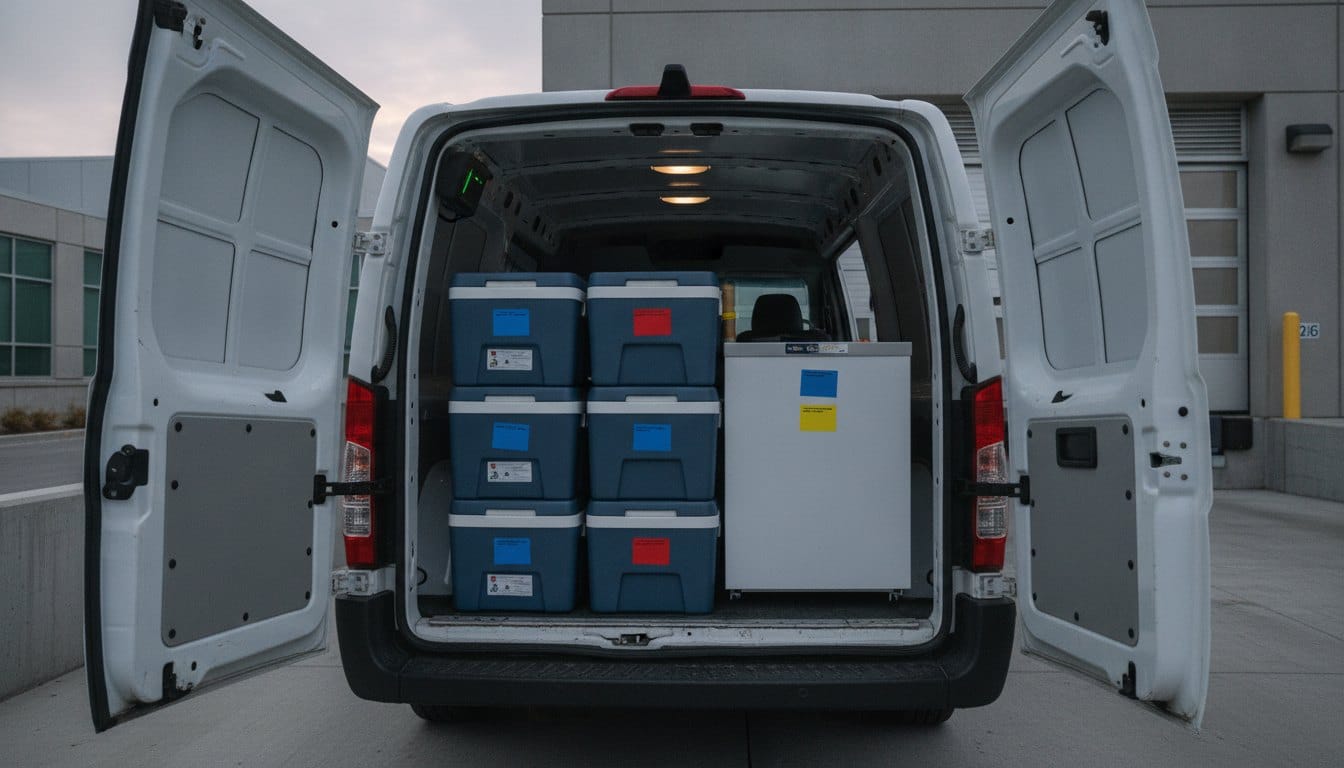
- Two labeled totes per route, sorted at the collection site, with the tier written on the requisition and the portal order
3. Time to Plating: Urine, Stool, Blood Cultures and CSF
The clock that matters in microbiology is time to plating, not time to delivery. Unpreserved urine should be plated within about 2 hours of collection at room temperature; refrigerated, it holds for 24 hours. In a boric acid tube it holds at room temperature for roughly 24 hours, and some systems are labeled for longer. Unpreserved stool should reach the bench within 1 to 2 hours or be refrigerated; stool in Cary-Blair holds for about 72 hours. Sputum should be plated within 2 hours or refrigerated. These are the laboratory’s acceptance criteria, and a specimen outside them is rejected and recollected.
Blood cultures and cerebrospinal fluid run on a tighter clock. CLSI guidance on blood cultures calls for bottles to be loaded into the continuous-monitoring instrument as soon as possible after collection; many laboratories set a 2-hour target and treat longer delays as a documented deviation, because every hour a bottle sits on a counter delays the first positive signal and the antibiotic decision that follows it. Cerebrospinal fluid for bacterial culture is a STAT specimen in every laboratory manual: hand carried, never refrigerated, at the bench within the hour. For route design this means a scheduled sweep every 2 hours at busy collection sites and a STAT trigger for the specimens that cannot wait for one; our STAT medical courier page covers how that trigger is placed from the portal.
Time limits that set the sweep schedule:
- Unpreserved urine: plate within 2 hours at room temperature, or refrigerate and plate within 24 hours
- Stool: unpreserved within 1 to 2 hours or refrigerated; in Cary-Blair about 72 hours
- Blood culture bottles: into the instrument as soon as possible, with a 2-hour target, never refrigerated
- Cerebrospinal fluid: STAT, room temperature, at the bench within the hour
- Sputum and wound swabs: within 2 hours, or refrigerated, with sputum plated within 24 hours
4. Anaerobes, Aspirates and Tissue
Obligate anaerobes die on exposure to air within minutes to hours, which makes the collection device the whole game. A swab is the worst device for anaerobic culture: too little sample and too much air. Aspirates and tissue are preferred. Fluid collected in a syringe is injected into an anaerobic transport vial at the bedside, because a capped syringe is both a poor oxygen barrier and a sharps hazard; the OSHA bloodborne pathogens standard at 29 CFR 1910.1030 governs how sharps are handled, and a syringe with a needle attached is never accepted for transport. Tissue travels in a sterile container with a few drops of sterile saline to prevent drying, never in formalin, which kills organisms and ends the culture. A tissue needed for both culture and histology is split at the bedside, not in transit.
Anaerobic transport vials hold viability for a limited period at room temperature, typically measured in hours to a day depending on the manufacturer, and refrigeration is harmful. These specimens come from operating rooms, interventional radiology and emergency departments, which means they arrive unscheduled and need a STAT pickup rather than the next sweep. The pickup record should show the vial sealed and the indicator unchanged, and the order should list the anaerobic specimen separately so dispatch assigns it a room-temperature tote and a direct run.
Anaerobic transport rules:
- Aspirates and tissue rather than swabs, injected into an anaerobic vial at the bedside
- No needles, no capped syringes, no formalin
- Room temperature only; refrigeration kills many anaerobes
- Direct STAT run, with the indicator checked and photographed at pickup
5. Packaging, Rejection Criteria and Route Design
Patient specimens for culture travel as Category B infectious substances under UN 3373: a leak-proof primary container, absorbent material sufficient for the full volume, a leak-proof secondary bag and a rigid outer container, as laid out in the PHMSA hazardous materials regulations. Cultured isolates sent between laboratories are a different case, because cultures of certain organisms are classified as Category A, with different packaging, shipper training and documentation. The rule for a courier program is simple: patient specimens are Category B unless the laboratory says otherwise, and isolates are classified by the sending laboratory before pickup. Our UN 3373 specimen transport page and our guide to hazardous materials and UN 3373 packaging cover the details.
Rejection criteria are set by the laboratory, and the common ones are transport failures: unlabeled or mismatched specimens, leaking containers, dry swabs, the wrong medium for the request, expired medium, refrigerated blood culture bottles, unpreserved urine beyond 2 hours at room temperature or 24 hours refrigerated, specimens in formalin, and syringes with needles. Each one is preventable at pickup with a checklist and a photo, which is why our guide to reducing specimen rejection rates through transport quality treats the courier as part of the laboratory’s quality system. Route design then follows the clock. A cluster of urgent care sites feeding a hospital core laboratory on Long Island runs 2-hour sweeps with two totes, a STAT overlay for cerebrospinal fluid, blood cultures and anaerobes, and geofenced photo proof at both ends with the tier recorded on every order, the model described in our guide to lab outreach program logistics.
Checks at pickup that prevent rejection:
- Two identifiers on the primary container matched to the requisition, sealed in the same bag
- Medium present, unexpired and correct for the request; swab not dry; bottle not underfilled
- Tier confirmed, ambient or refrigerated, and the specimen placed in the matching tote
- Leak check, absorbent in the secondary bag, rigid outer container for the route
- Collection time recorded, so the laboratory can compute time to plating on arrival
Key Takeaways
Microbiology specimen transport is a race between a living analyte and everything else in the container. The medium, the temperature bin and the time to plating are set by the laboratory; the courier’s job is to honor all three on every pickup and to prove it.
- Transport media hold organisms without growing them; device, expiry and fill are checked at pickup
- Room temperature for cold-sensitive organisms, blood cultures and anaerobes; 2 to 8 degrees Celsius for urine, stool, sputum and viral media
- Time to plating sets the schedule: 2-hour sweeps for routine sites, STAT for CSF, blood cultures and anaerobes
- Aspirates and tissue in anaerobic vials, never needles, never formalin
- Category B packaging for patient specimens; isolates classified by the sending laboratory before pickup
If your microbiology section is losing specimens to time and temperature, schedule a demo of the carGO Health platform to see how tiers, sweep frequency and STAT triggers are configured for culture work.
Frequently Asked Questions
Should blood culture bottles be refrigerated during transport?
No. Blood culture bottles are held and transported at room temperature and loaded into the continuous-monitoring instrument as soon as possible, with many laboratories setting a 2-hour target. Refrigeration slows or kills the organisms in the broth and can delay or prevent a positive signal, which is why a chilled bottle is a rejection in most laboratory manuals.
How long can a urine specimen wait before it is cultured?
Unpreserved urine should be plated within about 2 hours at room temperature. Refrigerated at 2 to 8 degrees Celsius, it is acceptable for 24 hours. Urine collected into a boric acid preservative tube holds at room temperature for roughly 24 hours, and some systems are labeled for longer. Beyond those limits bacterial counts no longer reflect the patient.
What temperature should microbiology swabs be transported at?
Most swabs in Amies or Stuart transport medium travel at room temperature or refrigerated and should reach the laboratory within 48 hours, with refrigeration preferred when delivery is delayed. The exception is any swab that may carry a cold-sensitive organism, such as a genital swab for Neisseria gonorrhoeae, which stays at room temperature.
How are anaerobic specimens transported to the laboratory?
As aspirates or tissue, not swabs. Fluid is injected into an oxygen-free anaerobic transport vial at the bedside, tissue goes into a sterile container with a few drops of saline, and nothing travels in formalin or with a needle attached. The vial stays at room temperature and moves on a direct STAT run rather than waiting for a scheduled sweep.
What are the most common reasons microbiology specimens are rejected?
Mislabeled or unlabeled containers, leaking containers, dry swabs, the wrong or expired transport medium, refrigerated blood culture bottles, unpreserved urine past 2 hours at room temperature or 24 hours refrigerated, specimens submitted in formalin for culture, and syringes with needles. All of them are visible at pickup, which is why a pickup checklist with a photo prevents most of them.
Related Resources