Genetic Sample Transport: Logistics for Genomic and Fertility Labs

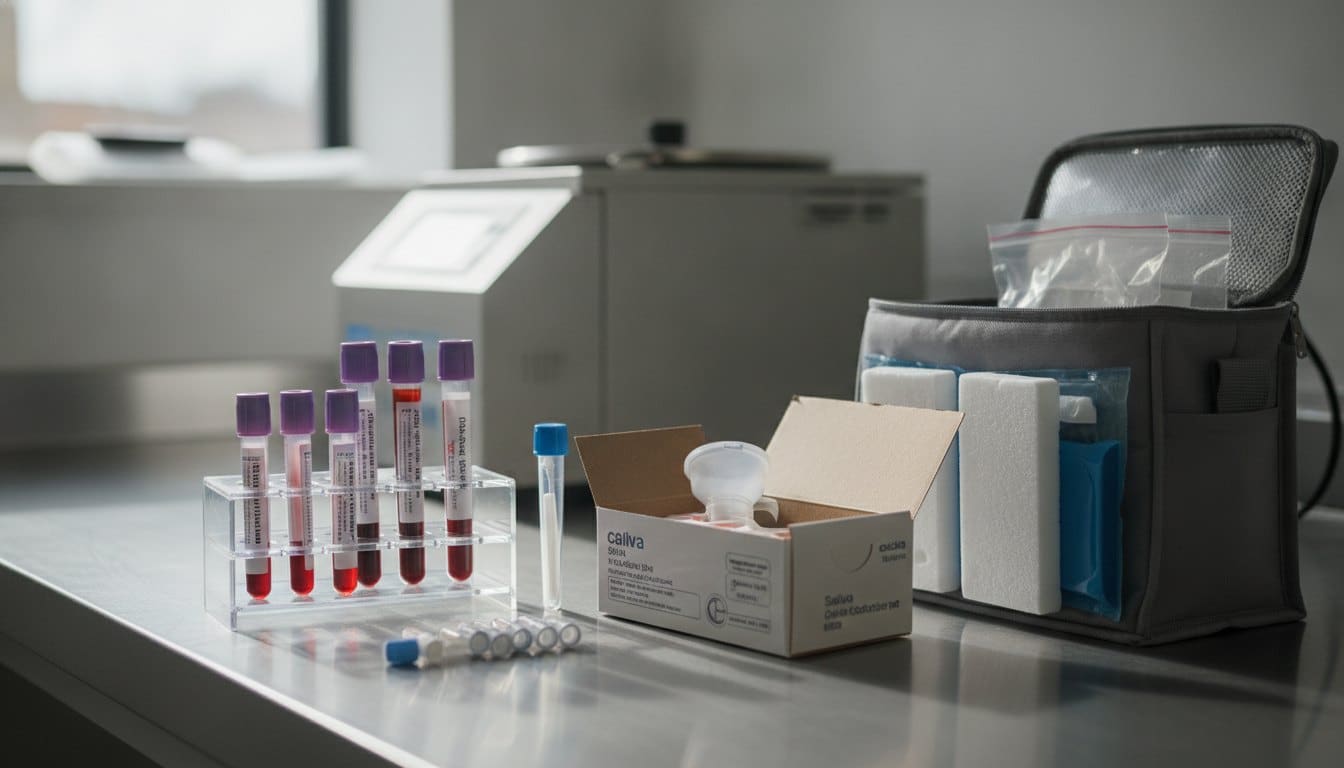
A buccal swab, a saliva kit, two tubes of maternal blood and a strip of 0.2 mL tubes holding five to ten cells each from a blastocyst do not look like they belong in the same courier tote. They share one property that matters more than anything else in genetic sample transport: the result depends on the sample arriving with its identity intact and its DNA in the condition the assay expects. A tube that overheats, freezes, leaks or loses its link to the right patient produces no result or, far worse, a result attached to the wrong person.
This guide is for genomic and fertility laboratory managers and the clinics that send them work. It covers handling rules for the four sample types that dominate germline and reproductive genetics, ambient versus refrigerated tiers, how embryo biopsy tubes move from an IVF clinic to a genomics laboratory, identity integrity at each handoff, and program design.
1. Genetic Sample Transport Starts With the Sample Type
Buccal swabs and saliva kits are the most forgiving samples in the category. A buccal swab’s enemy is moisture, not time: a dry swab holds usable DNA at room temperature for weeks, while a damp swab sealed in a warm vehicle grows mold within days. A saliva kit releases a stabilization buffer when the lid closes and is then stable at room temperature for months if the cap is sealed and the buffer was mixed.
Blood splits into two regimes. Whole blood for carrier screening and most germline panels is drawn into EDTA tubes; laboratories accept it ambient for several days, at 2 to 8 degrees Celsius for longer holds, and reject it frozen. Blood for non-invasive prenatal testing goes into cell-free DNA stabilization tubes whose manufacturers specify roughly 6 to 37 degrees Celsius, a window measured in days, and no refrigeration or freezing. NIPT drawn into plain EDTA must have its plasma separated within hours, which makes it a STAT delivery.
Embryo biopsy tubes are the fourth type; section 3 covers them. Classification varies too: blood ships as a Category B infectious substance under UN 3373 with the triple packaging described in the PHMSA hazardous materials regulations, while swabs and saliva are usually exempt human specimens. Our UN 3373 specimen transport page explains the packaging difference, and the DNA and genetic sample transport service page shows how the tier is set at order entry.
Sample types and their default handling:
- Buccal swabs: air dried, capped dry, ambient, kept away from humidity and heat
- Saliva kits: buffer released and mixed, cap sealed, ambient per the kit insert
- EDTA whole blood: ambient short term, 2 to 8 degrees Celsius longer, never frozen
- NIPT tubes: roughly 6 to 37 degrees Celsius, never refrigerated or frozen
- PGT biopsy tubes: upright, sealed, same day, at the laboratory’s specified temperature
2. Ambient Versus Refrigerated Handling for Genetic Specimens
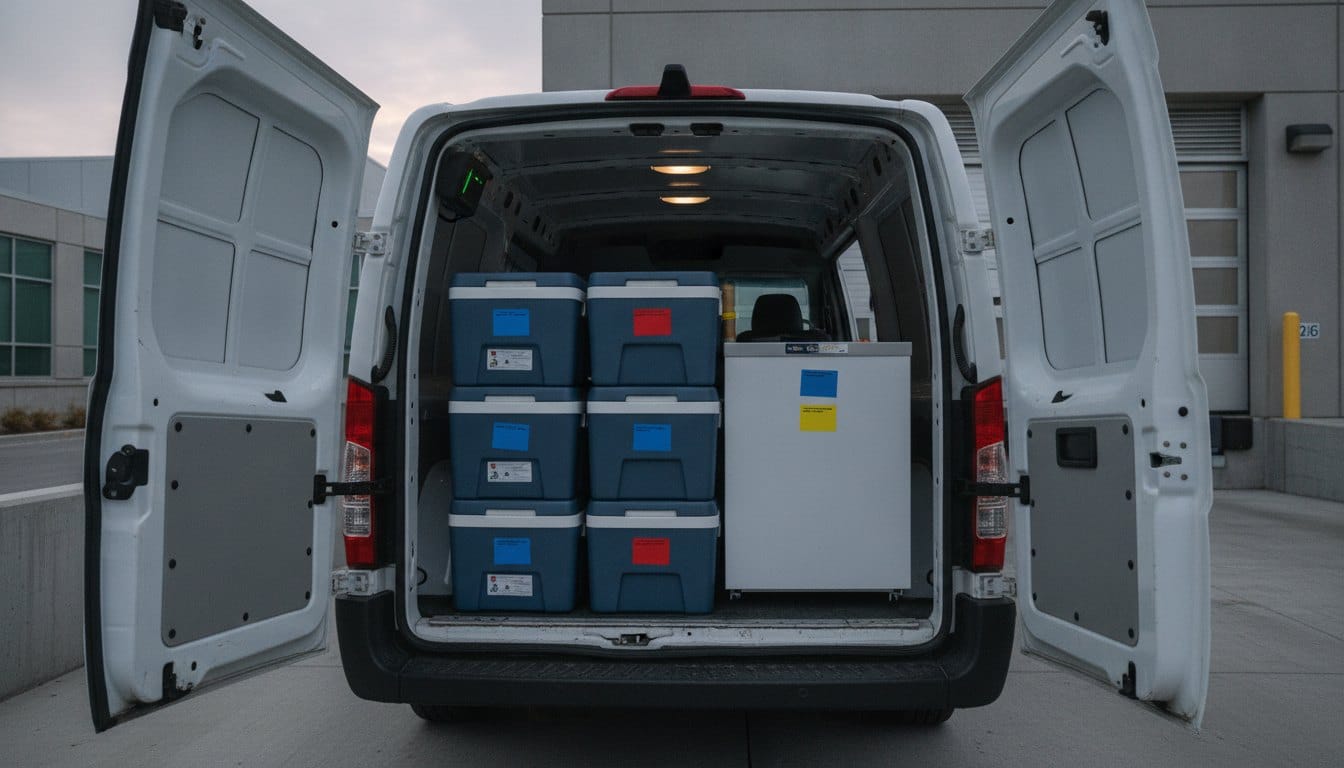
Ambient is the most misread word in specimen logistics. It means controlled room temperature, 15 to 25 degrees Celsius, held through a January morning in Vermont and an August afternoon in Philadelphia. An unconditioned cabin can exceed 50 degrees Celsius in summer and drop below freezing in winter; either extreme compromises a saliva kit’s buffer or a cell-free DNA tube. Proper ambient handling uses insulated totes with phase-change packs conditioned to about 22 degrees Celsius; our ambient medical transport page describes the equipment.
Refrigerated handling at 2 to 8 degrees Celsius applies to EDTA blood that will not reach the extraction bench inside the ambient window. It uses gel packs conditioned in a refrigerator, never a freezer, with a barrier layer between pack and tube; a frozen pack against a blood tube hemolyzes the outer layer. The refrigerated medical courier page covers pack conditioning.
The usual failure is mixed tiers in one container: an NIPT tube dropped into a refrigerated tote because the same practice also sent EDTA samples, which the laboratory will reject. Studies indexed by the National Library of Medicine have consistently reported that most laboratory errors arise in the pre-analytical phase. The fix is to specify the tier per order line in the portal and pack each tier in its own labeled tote; see our guide to pre-analytical errors in specimen handling.
Temperature rules that prevent rejected genetic samples:
- Treat ambient as 15 to 25 degrees Celsius held with conditioned packs, never an unconditioned cabin
- Keep cell-free DNA tubes out of refrigerated totes and away from frozen packs
- Condition gel packs at 2 to 8 degrees Celsius and separate them from tubes with a barrier layer
- Pack one tier per tote, label it, and write the rule into the specimen collection manual
3. Embryo Biopsy Tubes: From Fertility Clinic to Genomics Laboratory
Preimplantation genetic testing begins in the embryology laboratory on day five, six or seven of culture, when an embryologist removes five to ten trophectoderm cells from each blastocyst and places them in a labeled 0.2 mL PCR tube. The embryo stays vitrified at the clinic; only the tube travels. The laboratory’s report on those cells decides which embryo is thawed for transfer. The medical courier service for IVF and fertility clinics page covers the clinics’ other flows.
Tubes are packed upright in a rack, then in a sealed per-patient bag with a list mapping tubes to embryo numbers. Temperature follows the receiving laboratory’s validated protocol, either 2 to 8 degrees Celsius or frozen and transported on dry ice. Biopsy days fall on weekends and holidays and tubes are ready in the afternoon, so pickups must run seven days a week. Moving embryos and gametes themselves in liquid nitrogen dry shippers is a separate problem; see our guide to reproductive specimen transport for IVF and fertility logistics.
A tube that arrives empty, uncapped or unreadable cannot be redrawn; the only recovery is to warm the embryo, biopsy it again and refreeze it. A tube a day late can push the result past the transfer cycle’s scheduling point, and the cycle slips a month. These runs often cross state lines on a same-day clock, northern New Jersey to New York, for example, which is why clinics rely on the local coverage on our New Jersey medical courier service page.
Handling rules for PGT biopsy tubes:
- Upright and capped in a rack, inside a sealed per-patient bag, inside a rigid box
- Two patient identifiers plus the embryo number on every tube and on the enclosed list
- Temperature per the laboratory’s protocol, 2 to 8 degrees Celsius or dry ice, stated on the order
- Same-day delivery, late-afternoon pickup, seven days a week, no repackaging in transit
4. Sample Identity Integrity From Collection to Sequencer
Identity integrity means a result reported under a name belongs to that person and, for PGT, to that embryo. Laboratory standards treat it as foundational: CLSI guidance on patient and sample identification calls for at least two identifiers on every primary container, and CAP laboratory accreditation checklists require documented rejection criteria for mislabeled specimens and tracking from receipt through reporting. Those controls sit inside the laboratory; the sample spends hours outside it.
The courier cannot verify clinical identifiers; its job is to guarantee that what left the clinic is exactly what arrived: a manifest count and, where barcodes exist, a scan of each bag; tamper-evident bags never opened in transit; geofenced photos of the sealed bags at pickup and delivery; and a chain-of-custody record naming every handler, the mechanics covered in our guide to chain of custody in medical specimen transport. For genetic samples the one addition is per-patient bagging, which prevents the cross-patient swap a count alone would never catch.
When identity fails, the cost is recollection, and that cost is unequal. A swab is repeated at the next visit. An NIPT tube is redrawn inside a gestational window where the delay narrows the patient’s options. A PGT tube cannot be recollected without re-biopsying an embryo. Tier identity controls by consequence, with the strictest documentation on samples that cannot be replaced.
Identity checkpoints across the transport chain:
- Collection: two identifiers on every tube, requisition matched and sealed in the same bag
- Pickup: manifest count, barcode scan where available, photo of the sealed bags
- Transit: bags never opened, no consolidation across patients, tote sealed on multi-stop runs
- Delivery: geofenced photo, e-signature by accessioning staff, count reconciled to the manifest
5. Designing a Genetic Sample Transport Program
A genomics laboratory’s inbound flow has a recognizable shape. Obstetric practices send NIPT and carrier screening blood in predictable weekday volume; fertility clinics send biopsy tubes in bursts tied to their retrieval calendar, weekends included; genetics clinics send swabs and saliva kits in low daily counts. Each needs a different service mode. First, map every sending site by sample type, weekly volume, operating days and the laboratory’s batch cutoff, the time by which samples must be accessioned to make that day’s extraction run; our guide to lab outreach program logistics walks through it.
The service mix follows: scheduled routes with a fixed afternoon pickup for high-volume blood senders, a standing same-day arrangement for embryology laboratories to order the moment biopsies are done, and on-demand or nearby-route pickups for swab senders. carGO Health runs this mix on one platform, configured per account as described on the medical courier service for laboratories page: AI-assisted dispatch of routes, same-day and STAT orders, 24/7/365 operations across ten Northeast states, and a floating driver network that absorbs the weekend biopsy run without a vehicle idling all week.
Then measure four numbers: pickup-to-accession interval by site, temperature excursions by tier, rejection rate by site and reason, and identity discrepancies caught at accessioning. Reviewed monthly with the top sending clinics, they show when a clinic’s collection practice, not the courier, is the problem.
Program design checklist:
- Map every sending site by sample type, volume, operating days and distance
- Set pickup windows backward from the extraction batch cutoff, not forward from clinic convenience
- Routes for steady blood volume; same-day or STAT for biopsy tubes; on-demand for swab senders
- Require the temperature tier and tube count on every portal order, and confirm seven-day coverage
Key Takeaways
Genetic sample transport is four handling problems with one shared requirement: the sample must arrive at the right temperature, sealed, and unambiguously linked to the right patient and, for PGT, the right embryo. Specify the tier per sample type, bag per patient and measure the transport leg by site.
- Swabs and saliva kits travel ambient and dry; EDTA blood ambient or refrigerated; cell-free DNA tubes never refrigerated or frozen
- Ambient means 15 to 25 degrees Celsius held with conditioned packs, not the vehicle cabin
- PGT biopsy tubes move same day, upright and sealed, at the laboratory’s specified temperature, seven days a week
- Identity rests on two identifiers, per-patient bagging, manifest counts, sealed bags and photo proof at both ends
If your laboratory is onboarding fertility clinics, expanding an NIPT or carrier screening program, or losing samples to temperature and labeling rejections, schedule a demo of the carGO Health platform to see how tiers, manifests and same-day biopsy pickups are configured.
Frequently Asked Questions
How should buccal swabs and saliva kits be transported?
At controlled room temperature, roughly 15 to 25 degrees Celsius, in an insulated tote that shields them from vehicle heat and cold. Buccal swabs must be air dried and capped in a dry tube, because moisture degrades the DNA. Saliva kits must have the buffer released and mixed, with the cap sealed. Neither needs refrigeration.
Does blood for NIPT need to be refrigerated during transport?
No. NIPT blood is drawn into cell-free DNA stabilization tubes whose manufacturers specify roughly 6 to 37 degrees Celsius and instruct against refrigeration and freezing; outside that range the preservative stops working and lysed cells release maternal DNA that dilutes the fetal fraction. Transport it ambient, separate from refrigerated EDTA samples.
How are embryo biopsy samples for PGT transported to a genomics laboratory?
A few trophectoderm cells from each embryo are placed in a labeled 0.2 mL tube at the fertility clinic, racked upright, sealed in a per-patient bag with an embryo list and delivered the same day. Temperature follows the receiving laboratory’s protocol, either 2 to 8 degrees Celsius or dry ice. The embryo stays vitrified at the clinic; only the tube travels.
What temperature should genetic samples be kept at in transit?
Swabs, saliva kits and cell-free DNA tubes travel at controlled ambient temperature. EDTA whole blood travels ambient for short holds and at 2 to 8 degrees Celsius for longer ones, never frozen. PGT biopsy tubes travel at 2 to 8 degrees Celsius or on dry ice as the laboratory specifies. Pack each tier separately.
How do couriers protect sample identity for genetic testing?
By guaranteeing that what left the clinic is what arrived: a manifest count and barcode scan at pickup, tamper-evident per-patient bags never opened in transit, geofenced photos of the sealed bags at pickup and delivery, an e-signature from accessioning staff and a chain-of-custody record naming each handler. Clinical identifiers remain the responsibility of the collection site and the laboratory.
Related Resources