Hazardous Materials in Medical Transport: The Complete UN 3373 Guide
Every clinical specimen transported between healthcare facilities is classified as a hazardous material under federal transportation regulations. This is not an edge case or a technicality. The Department of Transportation and the international frameworks it follows classify biological specimens, cultures, and patient samples as dangerous goods that require specific packaging, labeling, documentation, and handler training. Hazardous materials medical transport is the regulatory reality of healthcare logistics, and healthcare organizations that treat specimen transport as routine package delivery are operating outside federal compliance requirements.
The classification that governs most healthcare specimen transport is UN 3373, Biological Substance Category B. This classification applies to specimens collected for diagnostic or investigational purposes that are not known or reasonably expected to contain pathogens that can cause permanent disability or life-threatening disease in healthy humans. While Category B specimens carry reduced regulatory requirements compared to Category A (UN 2814/2900), they still require trained handlers, specific packaging systems, and proper marking. Understanding this classification framework is essential for every healthcare facility that ships or receives clinical specimens.
1. Understanding the Biological Substance Classification System
The international dangerous goods classification system divides infectious substances into two categories based on the risk they pose to human or animal health during transport. Category A infectious substances (UN 2814 for substances affecting humans, UN 2900 for substances affecting animals) are those capable of causing permanent disability, life-threatening or fatal disease in otherwise healthy humans or animals when exposure occurs during transport. These include cultures of highly pathogenic organisms, specimens known to contain agents like Ebola, tuberculosis cultures, or rabies virus.
Category B infectious substances (UN 3373) include all other biological materials that do not meet Category A criteria. This is the classification that applies to the vast majority of clinical specimens transported daily by medical couriers: routine blood draws, urine samples, tissue biopsies, wound cultures, and other diagnostic specimens. While these specimens may contain infectious agents, they are not known or suspected to contain pathogens that meet the Category A threshold. The medical specimen transport operations of virtually every hospital, clinic, and laboratory in the country involve UN 3373 Category B substances.
The classification decision must be made by the shipper, which in healthcare contexts is typically the laboratory director, pathologist, or designated responsible person at the facility originating the shipment. When the shipper cannot determine whether a specimen meets Category A criteria, the default classification is Category A unless the shipper has professional judgment to apply Category B. For routine diagnostic specimens collected in standard clinical settings, Category B (UN 3373) is almost always the appropriate classification.
Biological Substance Classification Overview:
- Category A (UN 2814/2900): substances capable of causing permanent disability or life-threatening disease during transport
- Category B (UN 3373): biological substances not meeting Category A criteria, including most diagnostic specimens
- Exempt specimens: substances with minimal risk based on professional judgment, subject to reduced requirements
- Classification responsibility falls on the shipper, typically the laboratory director or designated facility official
- Default to Category A when insufficient information exists to classify a specimen as Category B
2. Packaging Requirements for UN 3373 Biological Substances
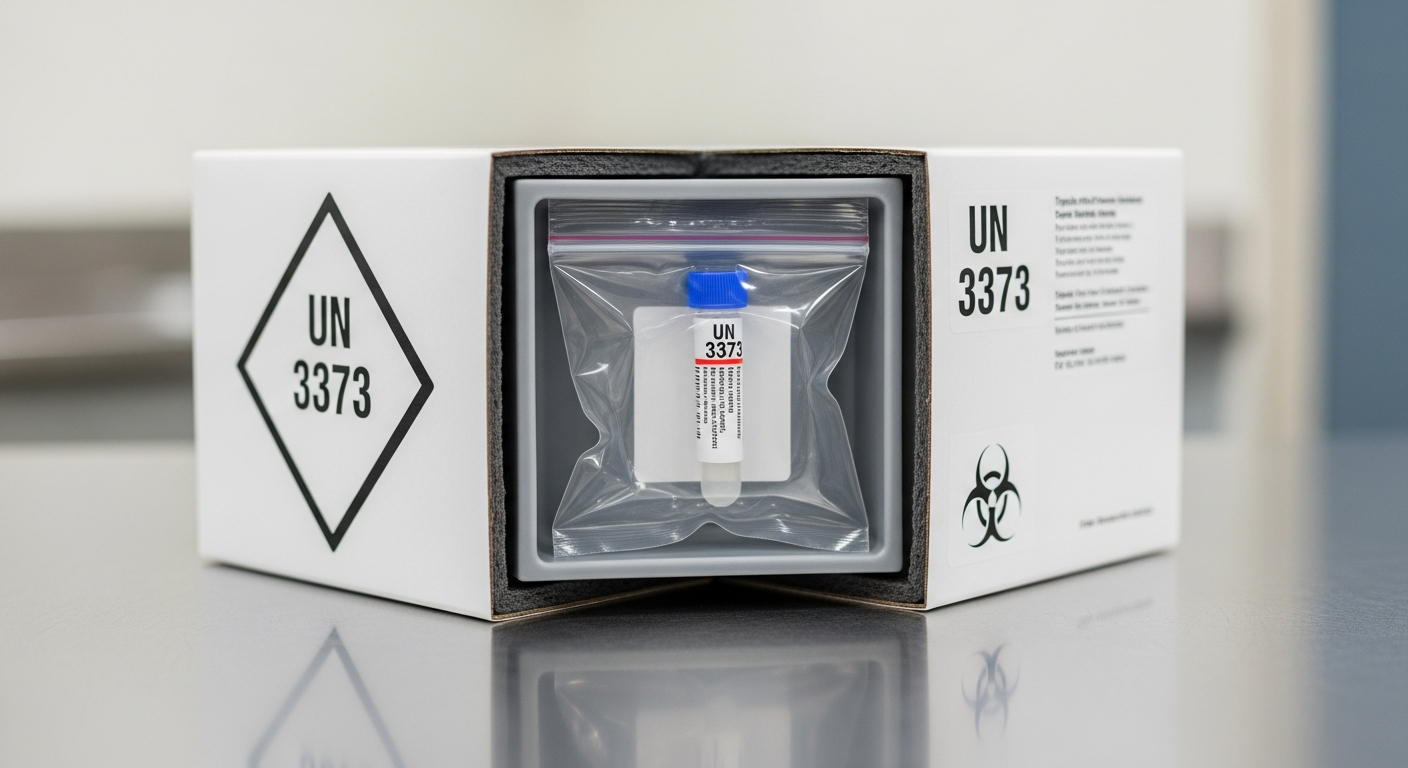
UN 3373 packaging follows a triple-containment system designed to prevent the release of biological material during transport even if the primary container fails. The system consists of three layers: a leak-proof primary receptacle (the specimen tube or container), a leak-proof secondary packaging (a sealed bag or container that holds the primary receptacle), and a rigid outer packaging that protects the entire assembly from physical damage during transport. Absorbent material sufficient to absorb the entire contents of all primary receptacles must be placed between the primary and secondary packaging.
The outer packaging for UN 3373 shipments must pass a 1.2-meter drop test as specified in the Code of Federal Regulations Title 49, Subtitle B. This test simulates the impact forces that a package might experience during handling and transport. The package must contain the biological material without any leakage from the secondary packaging after the drop test. Many commercially available specimen transport systems are pre-certified to meet this requirement, but healthcare facilities must verify that the packaging they use has been tested and documented as compliant.
For medical couriers, understanding the packaging system is essential because they may need to verify packaging compliance at pickup. A specimen presented in a single ziplock bag inside a cardboard box does not meet UN 3373 triple-containment requirements. A properly documented chain of custody should include verification that the packaging meets the required standard before the courier accepts the shipment for transport.
UN 3373 Triple-Containment Packaging Requirements:
- Primary receptacle: leak-proof specimen container (tube, vial, cup) properly sealed and labeled
- Secondary packaging: leak-proof bag or container enclosing the primary receptacle with absorbent material
- Outer packaging: rigid container passing 1.2-meter drop test, protecting contents from physical damage
- Absorbent material between primary and secondary layers sufficient to absorb entire contents of all receptacles
- Itemized list of contents placed between the secondary and outer packaging for identification
3. Marking, Labeling, and Documentation Requirements
UN 3373 shipments require specific markings on the outer packaging that identify the contents as biological substances. The outer package must display the UN 3373 diamond-shaped mark with the words “BIOLOGICAL SUBSTANCE, CATEGORY B” adjacent to the mark. The mark must be a minimum size of 50mm x 50mm with the line width at least 2mm and the letters at least 6mm high. The shipper’s name, address, and telephone number must also appear on the outer packaging, along with the recipient’s name and address.
Unlike Category A shipments, UN 3373 Category B substances shipped by ground transport are exempt from certain DOT documentation requirements including shipping papers (hazmat manifests). However, the shipper must still maintain records of what was shipped, and the courier must be able to identify the nature of the materials being transported in case of an incident. Many healthcare facilities include a specimen manifest with each shipment as a best practice even though it is not strictly required for Category B ground transport.
For couriers transporting UN 3373 materials, the practical documentation requirement includes verifying that packages are properly marked before acceptance, maintaining awareness of the biological nature of the cargo for incident response purposes, and completing OSHA and DOT compliance documentation as required by their employer’s training program. While the paperwork burden for Category B is lighter than Category A, the courier must still handle the materials with the awareness and precautions that biological substances require.
Marking and Documentation Requirements for UN 3373:
- UN 3373 diamond mark on outer packaging (minimum 50mm x 50mm) with “BIOLOGICAL SUBSTANCE, CATEGORY B”
- Shipper name, address, and telephone number displayed on outer packaging
- Recipient name and address on outer packaging for delivery identification
- Contents itemization list between secondary and outer packaging identifying specimen types
- Shipping papers exemption for ground transport but recommended specimen manifest as best practice
4. Training Requirements for Hazmat Medical Couriers
DOT regulations under 49 CFR 172.704 require that any person who directly affects hazardous materials transportation safety receive training commensurate with their responsibilities. For medical couriers transporting UN 3373 Category B substances, this includes general awareness training (understanding the hazmat regulations framework), function-specific training (the specific procedures and protocols for transporting biological substances), safety training (emergency response for spills or incidents), and security awareness training (recognizing and responding to potential security threats involving hazardous materials).
The training must be completed before a courier handles hazardous materials for the first time, and recertification is required every three years per DOT regulations. The employer must maintain records of training completion for each driver, including the training content, the date of completion, the trainer’s name, and certification that the driver has been tested on the material. These records must be available for inspection by DOT authorities. For medical courier companies, this documentation is a compliance obligation that must be maintained systematically for every driver in the network.
Beyond DOT requirements, OSHA bloodborne pathogen training adds another layer of required education. Since the biological substances being transported may contain bloodborne pathogens, OSHA’s Bloodborne Pathogens Standard requires annual training for workers with occupational exposure. This training covers routes of transmission, personal protective equipment use, spill response procedures, and post-exposure evaluation protocols. The combination of DOT hazmat training and OSHA bloodborne pathogen training constitutes the minimum medical hazmat transport qualification for any courier handling clinical specimens.
Required Training for Medical Hazmat Couriers:
- DOT general awareness training covering the hazardous materials regulatory framework and classification system
- Function-specific training on biological substance transport procedures, packaging verification, and handling
- Safety training covering emergency response for spills, leaks, and transport incidents involving biological materials
- OSHA bloodborne pathogen certification with annual refresher and documented completion records
- DOT recertification every three years with employer-maintained training records for each driver
5. Incident Response and Spill Procedures for Biological Substances
Despite proper packaging and handling, transport incidents involving biological substances can occur. A vehicle accident, a dropped container, or a packaging failure during transit can result in a spill or release of biological material. Medical couriers must be trained and equipped to respond to these incidents in a manner that protects public safety, minimizes environmental contamination, and complies with regulatory reporting requirements.
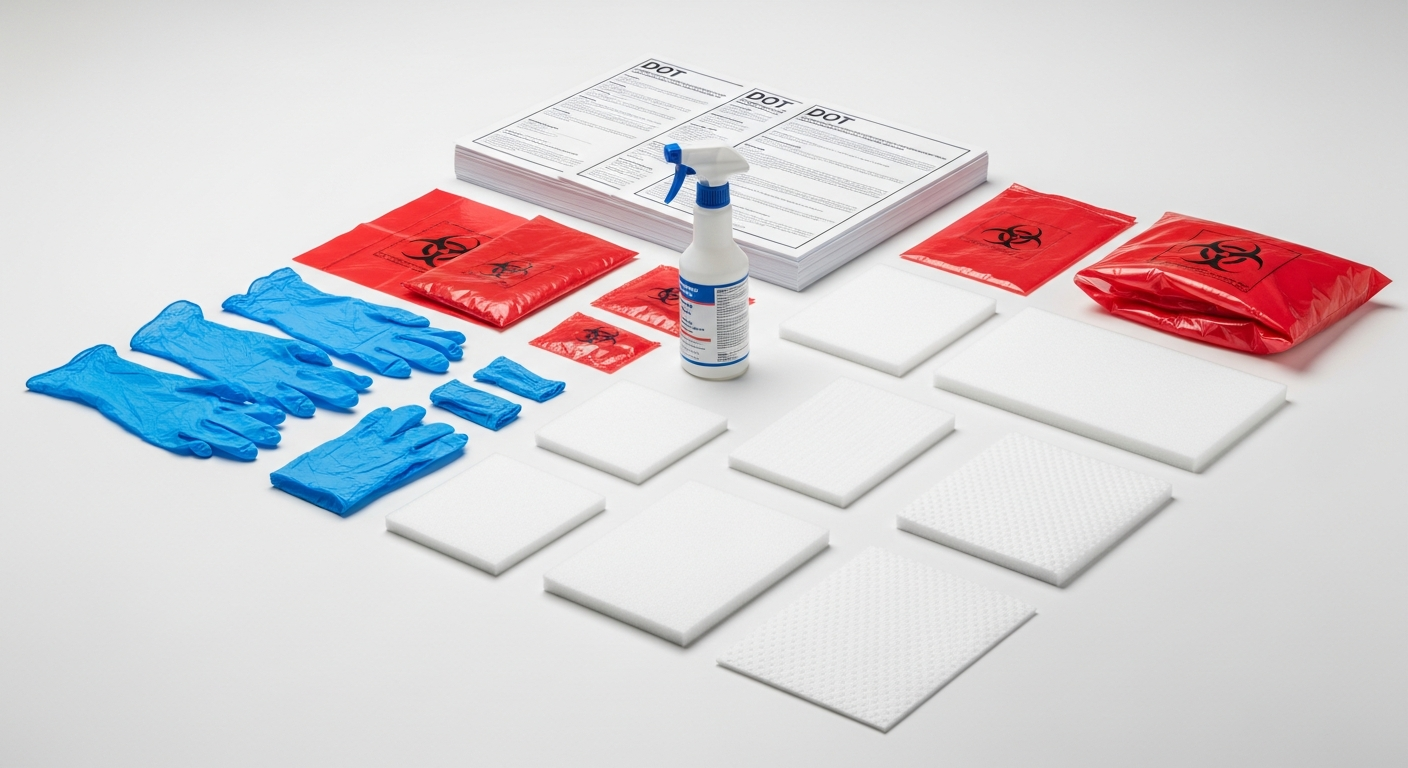
The spill response protocol for UN 3373 Category B substances in a courier vehicle includes securing the area to prevent exposure to other individuals, donning appropriate personal protective equipment (at minimum nitrile gloves), containing the spill using absorbent materials from the vehicle’s spill kit, decontaminating the affected area with an appropriate disinfectant such as a 10 percent bleach solution, and disposing of contaminated materials in a biohazard waste container. The courier must then notify their dispatcher and the shipper, and document the incident including the time, location, materials involved, and response actions taken.
At carGO Health, our certified couriers carry vehicle spill kits and receive training on incident response for biological substance releases. Our AI-powered dispatch platform enables immediate incident reporting and coordination, ensuring that the appropriate clinical and operational stakeholders are notified when a transport incident occurs. With real-time tracking, we know exactly where every courier is at all times, enabling rapid support deployment if an incident requires additional resources. Schedule a demo to learn how our compliance infrastructure protects your specimen transport operations.
Biological Substance Spill Response Protocol:
- Secure the area immediately to prevent exposure to other individuals near the spill location
- Don personal protective equipment including nitrile gloves before contacting any biological material
- Contain and absorb the spill using materials from the vehicle spill kit following trained procedures
- Decontaminate the affected area with appropriate disinfectant solution per OSHA exposure control plan
- Report the incident to dispatch with documentation of time, location, materials, and response actions
Key Takeaways
Hazardous materials regulations apply to virtually every clinical specimen transported between healthcare facilities. UN 3373 Biological Substance Category B classification governs the packaging, marking, training, and handling requirements for diagnostic specimens, blood samples, and cultures. Healthcare organizations that do not ensure their courier partners meet these requirements face regulatory risk, safety exposure, and potential liability for transport incidents. If your organization transports clinical specimens and you are unsure whether your current logistics arrangements meet DOT and OSHA requirements, contact carGO Health for a compliance review of your specimen transport operations.
Frequently Asked Questions
Are all clinical specimens classified as hazardous materials?
Most clinical specimens fall under UN 3373 Biological Substance Category B, which is classified as a regulated material under DOT. Some specimens may qualify as exempt based on the shipper’s professional judgment that they pose minimal risk, but the default classification for diagnostic specimens is Category B with its associated packaging and handling requirements.
What is the difference between Category A and Category B biological substances?
Category A (UN 2814/2900) substances are capable of causing permanent disability or life-threatening disease when exposure occurs during transport. Category B (UN 3373) includes all other biological substances not meeting Category A criteria. Most routine diagnostic specimens are Category B. Category A substances require significantly more stringent packaging, documentation, and transport requirements.
What packaging is required for UN 3373 specimens?
UN 3373 requires triple-containment packaging: a leak-proof primary receptacle, a leak-proof secondary packaging with absorbent material, and a rigid outer packaging that passes a 1.2-meter drop test. The outer packaging must be marked with the UN 3373 diamond and labeled with shipper and recipient information.
Do medical courier drivers need hazmat training?
Yes, DOT regulations require that anyone who directly affects hazardous materials transportation safety receive training including general awareness, function-specific, safety, and security awareness components. This training must be completed before handling hazmat and recertified every three years. OSHA bloodborne pathogen training is additionally required annually.
What should a courier do if a biological specimen spills during transport?
The courier should secure the area to prevent exposure, don personal protective equipment, contain the spill using vehicle spill kit materials, decontaminate with appropriate disinfectant, dispose of contaminated materials in a biohazard container, and report the incident to their dispatcher with full documentation of the time, location, materials involved, and response actions taken.
Related Resources