Medical Courier Compliance Checklist: Federal, State, and Industry Requirements

Every medical courier service that handles protected health information (PHI) must comply with the Health Insurance Portability and Accountability Act. This applies whether the courier physically transports paper records, labeled specimens, or digital devices containing patient data.

1. HIPAA Compliance for Medical Courier Services
Every medical courier service that handles protected health information (PHI) must comply with the Health Insurance Portability and Accountability Act. This applies whether the courier physically transports paper records, labeled specimens, or digital devices containing patient data.
HIPAA compliance for couriers includes several key requirements:
- Business Associate Agreements (BAAs) with every healthcare client
- Annual HIPAA training for all drivers and staff
- Written policies for handling, securing, and disposing of PHI
- Breach notification procedures and incident response plans
- Physical safeguards for specimens and documents during transport
The most common HIPAA violation in medical courier operations is inadequate physical security during transport. Specimens and documents must be kept in locked containers, vehicles must be secured when unattended, and drivers must never leave PHI-containing materials visible in parked vehicles.
Digital systems add another layer. Courier platforms that transmit patient names, specimen IDs, or delivery addresses must use encrypted communications and maintain access controls. A HIPAA-compliant courier platform handles these requirements systematically rather than relying on individual driver compliance.
2. OSHA and Workplace Safety Requirements
Medical couriers face unique occupational hazards that fall under OSHA Bloodborne Pathogens Standard (29 CFR 1910.1030). Any employee with reasonably anticipated exposure to blood or other potentially infectious materials must be covered under an Exposure Control Plan.
Required elements of a compliant medical courier safety program include:
- Written Exposure Control Plan updated annually
- Hepatitis B vaccination offered to all drivers at no cost
- Personal protective equipment (PPE) provided and maintained
- Annual bloodborne pathogen training with documentation
- Spill cleanup kits in every transport vehicle
- Post-exposure evaluation and follow-up procedures
Beyond bloodborne pathogens, medical couriers must comply with general OSHA standards for vehicle operation, ergonomic lifting, and hazard communication for any chemicals used in packaging or cleanup.
Companies should conduct annual safety audits and maintain training records for a minimum of three years past employee departure. OSHA penalties for serious violations can exceed $15,000 per instance.
3. DOT Hazardous Materials Transportation Regulations
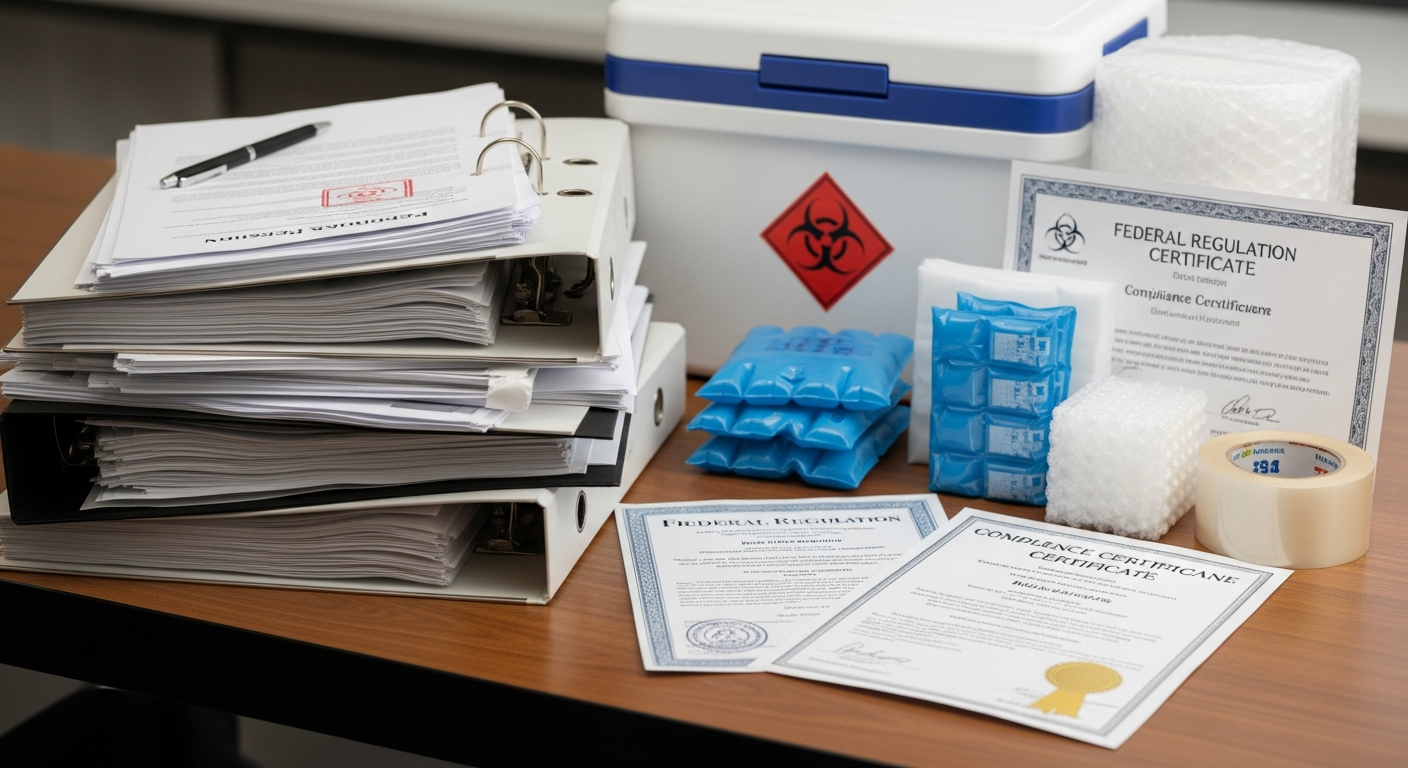
The Department of Transportation regulates the transport of clinical specimens under 49 CFR Parts 171-180. Most medical courier shipments fall under Category B infectious substance classification (UN 3373).
For UN 3373 shipments, DOT requires:
- Triple packaging: primary watertight container, secondary watertight container with absorbent material, rigid outer container
- Proper marking with the UN 3373 diamond symbol
- 95 kPa pressure differential testing for primary containers
- Drop test certification for the complete packaging system
Some shipments may qualify for the exempt human specimen exception under 49 CFR 173.134(b). This determination must be made by the shipper, not by the courier.
Couriers handling Category A infectious substances (UN 2814/2900) must hold DOT HAZMAT certification with security plans and background checks.
4. State-Level Licensing and Insurance Requirements
Medical courier compliance extends beyond federal regulations to state-specific requirements:
Business Licensing: Most states require courier services to hold a general business license. Some states have additional requirements for businesses transporting medical materials.
Vehicle Requirements: Commercial vehicle registration, regular inspections, and proper insurance are mandatory. Many states require higher liability limits for medical transport vehicles.
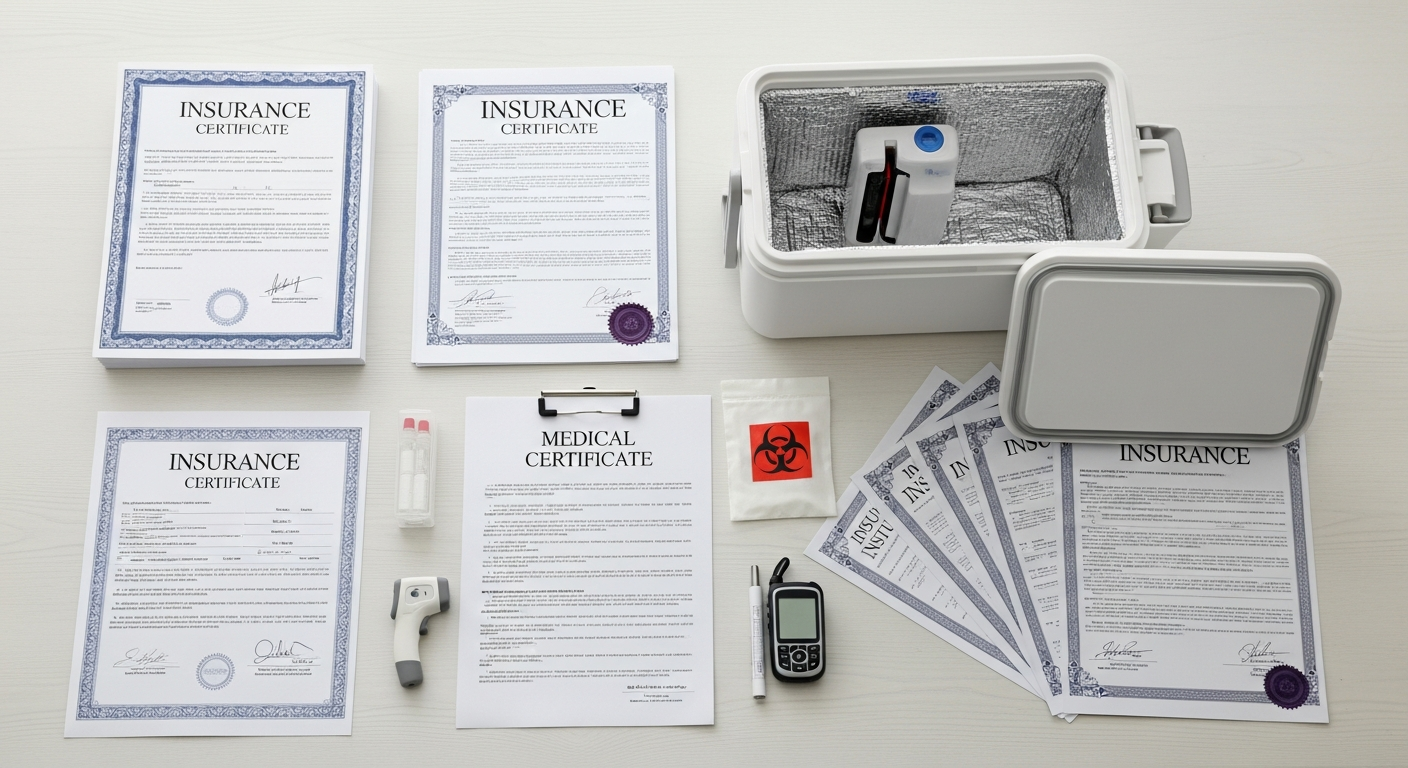
Insurance Minimums: Medical couriers should carry general liability, commercial auto, professional liability, and cargo insurance. Industry standard minimums are typically $1 million per occurrence.
Worker Classification: States are increasingly scrutinizing independent contractor classifications. Misclassification can result in penalties for unpaid employment taxes and benefits.
Operating across multiple states, as many medical courier services in the Northeast do, requires maintaining compliance with each state simultaneously.
5. Building a Compliance Management System
Managing compliance across all regulatory domains requires a systematic approach:
An effective compliance management system should include:
- Centralized document repository for all certifications and training records
- Automated expiration alerts for driver certifications and insurance policies
- Digital training tracking with completion verification
- Incident reporting and corrective action workflows
- Regular audit scheduling with documented findings
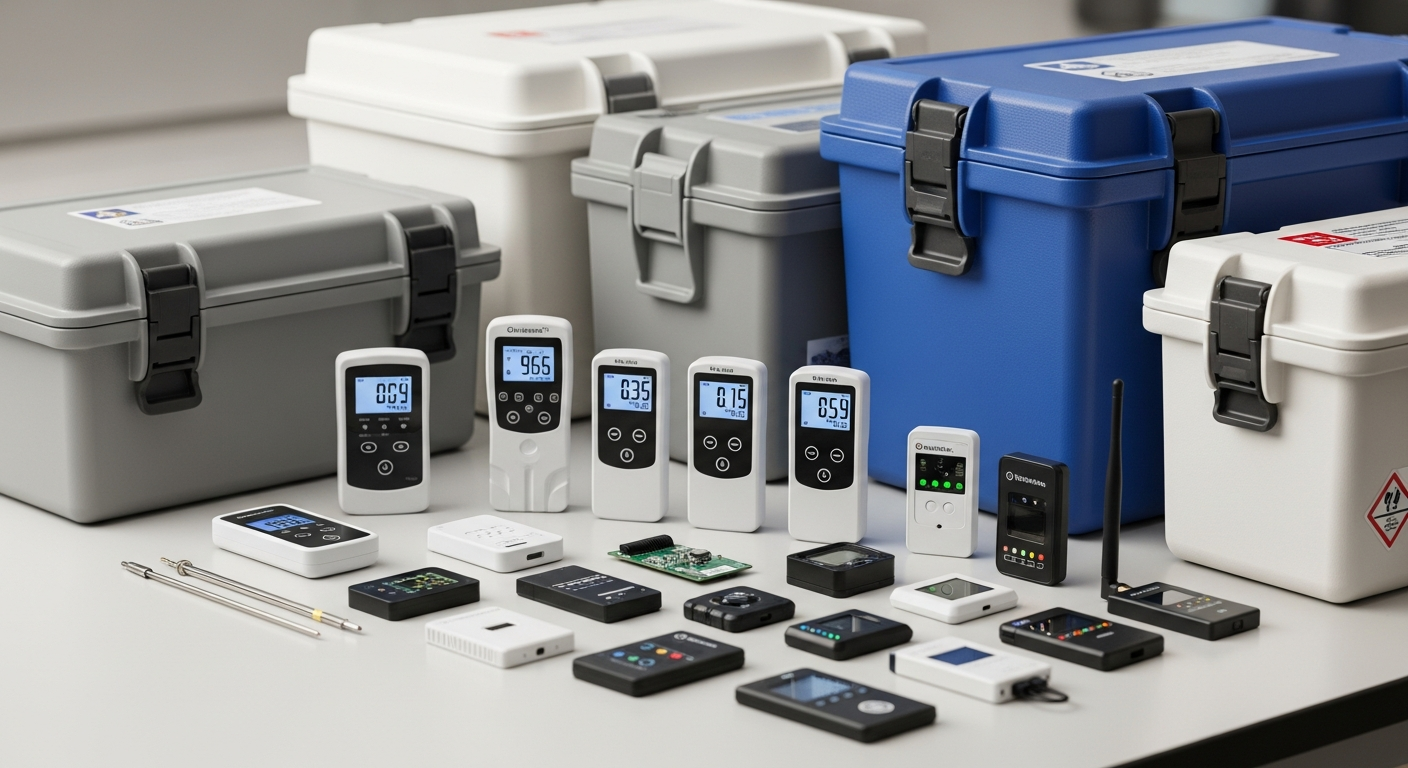
Technology platforms designed for medical logistics can automate much of this burden. Driver apps that require protocol acknowledgment, digital chain-of-custody systems, and automated temperature monitoring all create compliance documentation as a byproduct of normal operations.
Healthcare facilities evaluating courier partners should request compliance documentation as part of vendor assessment. Schedule a demo to see how a compliance-first approach works in practice.
Frequently Asked Questions
What certifications should a medical courier have?
Medical couriers should have HIPAA training, OSHA bloodborne pathogen training, DOT hazardous materials awareness training, and state-specific licenses. Drivers handling Category A substances need full DOT HAZMAT certification.
How often do compliance requirements change?
Federal regulations are updated periodically with significant revisions every few years. State requirements change more frequently. Review compliance quarterly and subscribe to regulatory update services.
What insurance does a medical courier need?
General liability ($1M minimum), commercial auto ($1M minimum), professional liability, cargo insurance, and workers compensation where required by state law.
Can a medical courier operate across state lines?
Yes, but multi-state operations require compliance with each state’s licensing, insurance, and regulatory requirements including business registration and vehicle inspection compliance.
What happens if a medical courier violates HIPAA?
Penalties range from $100 to $50,000 per violation with annual maximums up to $1.5 million per category. Criminal penalties including fines up to $250,000 and imprisonment can apply for knowing violations.
Related Resources