Home Health and Infusion Delivery Logistics: A Complete Guide for Providers
The shift toward home-based healthcare delivery is one of the most significant trends in the industry. Home infusion therapy, home health nursing visits, chronic care management programs, and post-acute care transitions all depend on a logistics infrastructure that can deliver medications, supplies, and equipment to patient homes and return specimens and documentation to healthcare facilities. Home health delivery logistics is the operational backbone of this care model, and its reliability directly determines whether patients receive timely treatment and whether providers can maintain the clinical standards required for reimbursement and accreditation.
The logistics requirements for home health and infusion services are fundamentally different from facility-based transport. Deliveries go to residential addresses rather than loading docks. Pickup locations change daily based on the nursing visit schedule. Temperature-sensitive infusion medications must maintain cold chain integrity from the pharmacy to the patient’s home, often across distances that span an entire metropolitan region. And the patients receiving these deliveries are frequently medically fragile, meaning that a late or missed delivery is not an inconvenience. It is a potential clinical event. For home health agencies and home infusion delivery pharmacies, choosing the right courier partner is a clinical decision as much as an operational one.
1. The Growing Demand for Home-Based Healthcare Logistics
Home health and home infusion are among the fastest-growing segments of the healthcare industry. The Centers for Medicare and Medicaid Services has expanded coverage for home-based services as evidence demonstrates that many treatments previously requiring hospital or clinic settings can be safely administered at home with appropriate support. Home infusion therapy for conditions including infections requiring IV antibiotics, autoimmune disorders needing biologic infusions, and cancer patients receiving chemotherapy at home has become a standard of care rather than an alternative treatment setting.
This growth creates a proportional increase in logistics demand. A home infusion pharmacy serving 200 patients may need to deliver medications, IV supplies, and pump equipment to residential addresses across a 50-mile radius every day. A home health agency with 100 active patients generates daily specimen collection and transport needs as nurses collect blood draws, wound cultures, and other samples during home visits that must reach the laboratory within specimen stability windows. The scale of these logistics operations rivals that of mid-sized healthcare facilities, but the delivery environment is far more complex because every address is different.
The economic incentives driving home-based care are powerful. Hospital-at-home programs can reduce costs by 30 to 40 percent compared to inpatient stays. Home infusion therapy is typically reimbursed at a fraction of outpatient infusion center rates while delivering equivalent clinical outcomes. But these cost advantages only materialize when the logistics infrastructure works reliably. A missed medication delivery that forces a patient to visit an emergency department for their infusion eliminates the cost savings and creates a negative patient experience.
Drivers of Home Health Logistics Demand:
- CMS expansion of home-based care coverage and reimbursement for infusion therapy and home health services
- Hospital-at-home programs requiring daily medication, supply, and specimen transport to residential addresses
- Post-acute care transitions where patients need medication delivery and specimen collection at home
- Chronic care management programs requiring regular laboratory monitoring with home specimen pickup
- Patient preference for home-based treatment driving healthcare organizations to expand home service capabilities
2. Home Infusion Medication Delivery Requirements
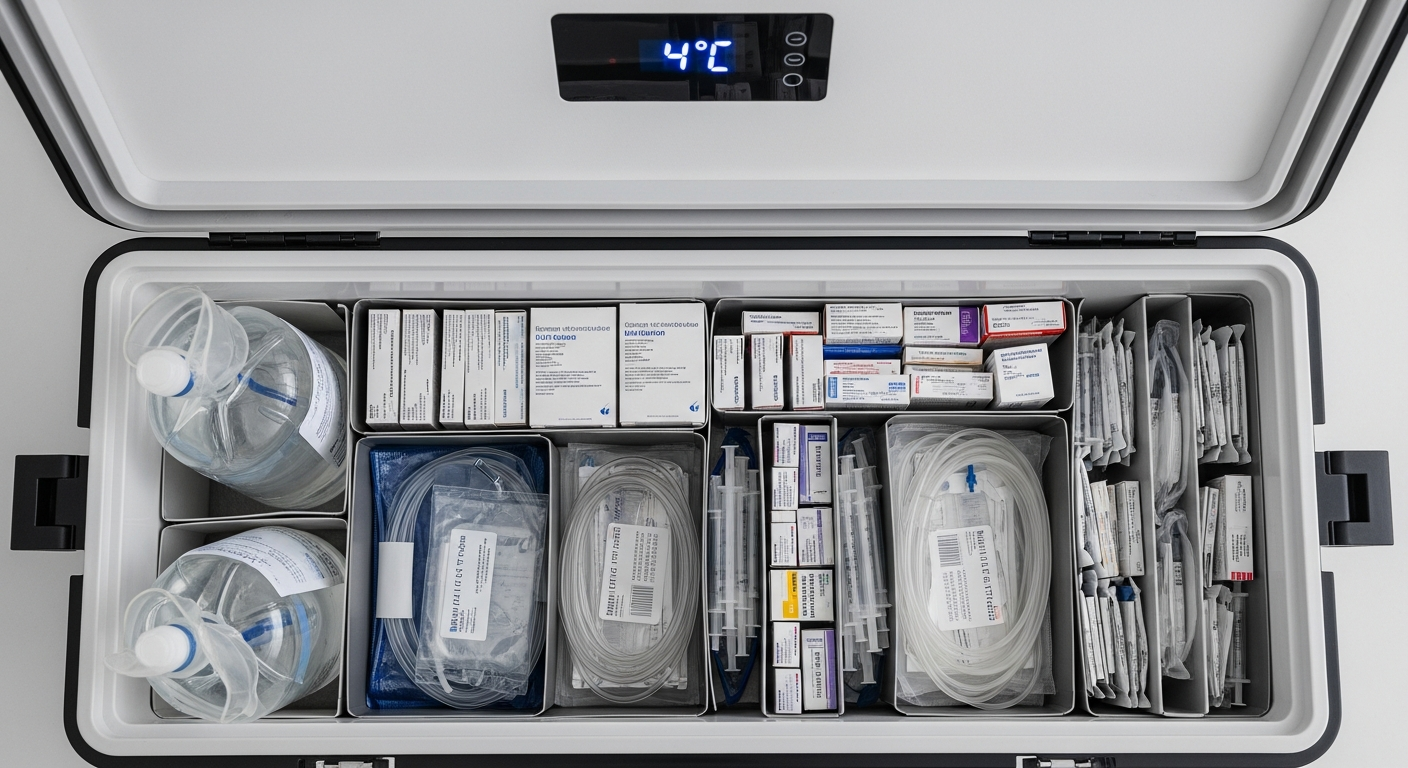
Home infusion medications represent some of the most demanding transport requirements in healthcare logistics. Many infusion drugs, including biologics, immunoglobulins, and certain antibiotics, require strict cold chain logistics with continuous temperature monitoring from the pharmacy compounding room to the patient’s home. A biologic medication that costs thousands of dollars per dose and requires weeks of insurance authorization becomes worthless if the cold chain is broken during a two-hour courier ride in summer heat.
Beyond temperature control, infusion medication deliveries require timing precision. Many infusion therapies operate on strict dosing schedules. A patient receiving IV antibiotics every 8 hours needs their next supply before the current supply runs out. A patient starting a new biologic infusion needs the medication delivered before the home health nurse arrives for the administration visit. Late delivery means the nurse cannot complete the infusion, the patient misses their dose, and the clinical treatment plan is disrupted. This timing dependency makes infusion therapy delivery a logistics category where reliability is not merely important. It is clinically necessary.
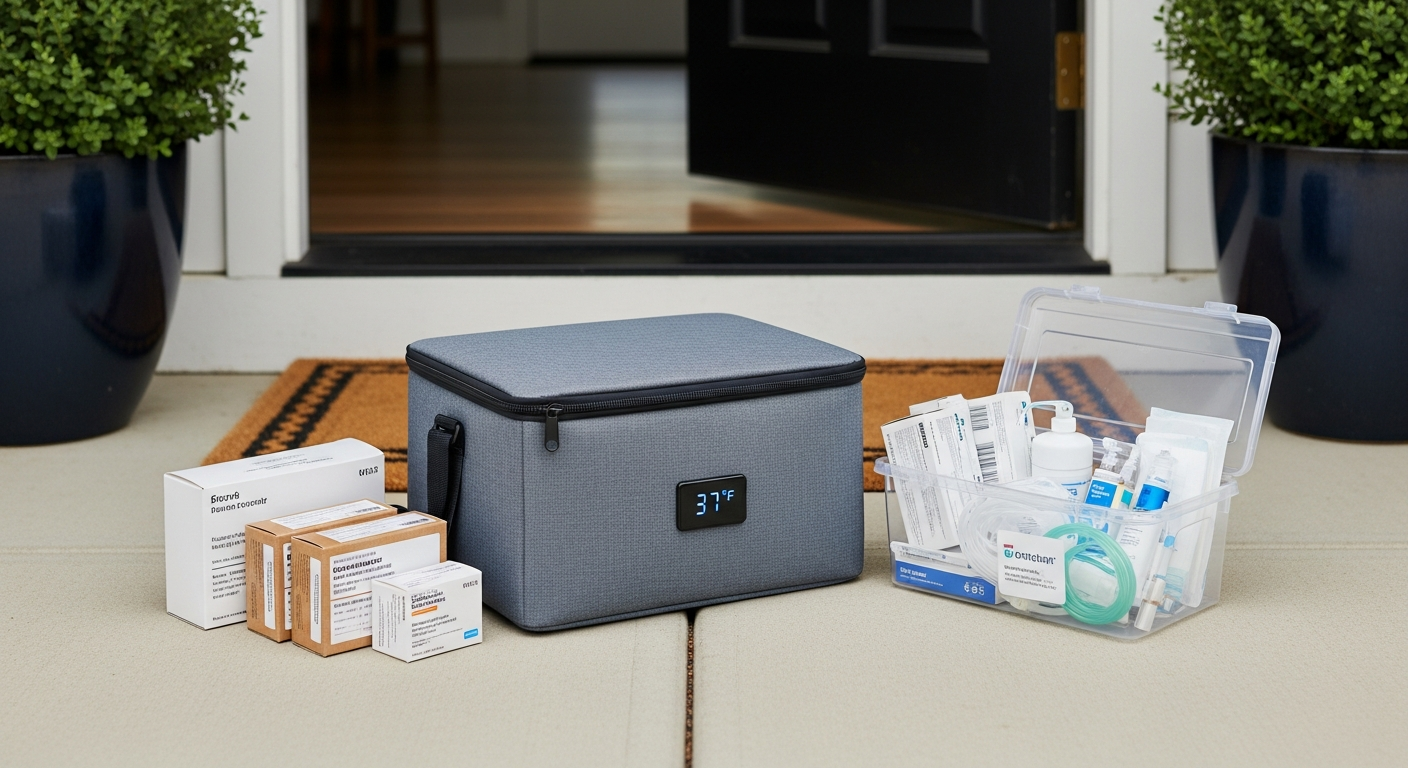
The delivery also includes ancillary supplies: IV tubing, saline flushes, alcohol swabs, sharps containers, and infusion pumps. These items must be delivered together with the medication so the nurse has everything needed for the administration visit. A delivery that arrives with the medication but without the correct tubing set is functionally incomplete. The courier service must verify completeness at pickup and maintain item integrity throughout transport. Chain of custody documentation ensures accountability for every item in the delivery from pharmacy to patient doorstep.
Home Infusion Delivery Requirements:
- Continuous cold chain maintenance with validated packaging for refrigerated biologics and specialty medications
- Timed delivery windows coordinated with nursing visit schedules and patient dosing requirements
- Complete supply verification ensuring medications and all ancillary items are present at delivery
- HIPAA-compliant handling of prescription labels and patient information during residential delivery
- Proof of delivery documentation with temperature logs for cold chain compliance records
3. Specimen Collection and Return Transport for Home Health
Home health nurses collect specimens during patient visits that must be transported to laboratories for processing. These specimens include blood draws for routine monitoring, wound cultures for infection surveillance, urine collections for kidney function assessment, and other diagnostic samples. The logistics challenge is that these specimens are collected at residential addresses throughout the service area at varying times throughout the day, and each specimen has a stability window that limits how long it can remain in transit before laboratory processing.
The traditional approach has nurses dropping specimens at a laboratory or collection point at the end of their shift, which may be hours after collection. For time-sensitive specimens, this delay can compromise results. A better model uses a home health courier service that collects specimens from nurses during their routes or picks up specimens from the patient’s home after the nursing visit. This approach reduces the time between collection and laboratory receipt, improving specimen quality and reducing specimen rejection rates that result from transport delays.
Coordinating specimen pickup from residential addresses requires a dispatch system that can handle dynamic routing. Unlike facility-based specimen pickup where the courier visits the same location at the same time each day, home health specimen pickup addresses change based on the nursing visit schedule. The courier must be dispatched to different residential locations each day, often with short notice as nurses complete their visits. AI-powered dispatch manages this complexity by optimizing courier routes in real time based on specimen collection notifications from nurses in the field.
Home Health Specimen Transport Requirements:
- Dynamic routing to residential addresses that change daily based on the nursing visit schedule
- Specimen stability compliance ensuring transport times stay within acceptable windows for each test type
- Temperature-controlled transport containers for specimens requiring refrigerated or ambient conditions
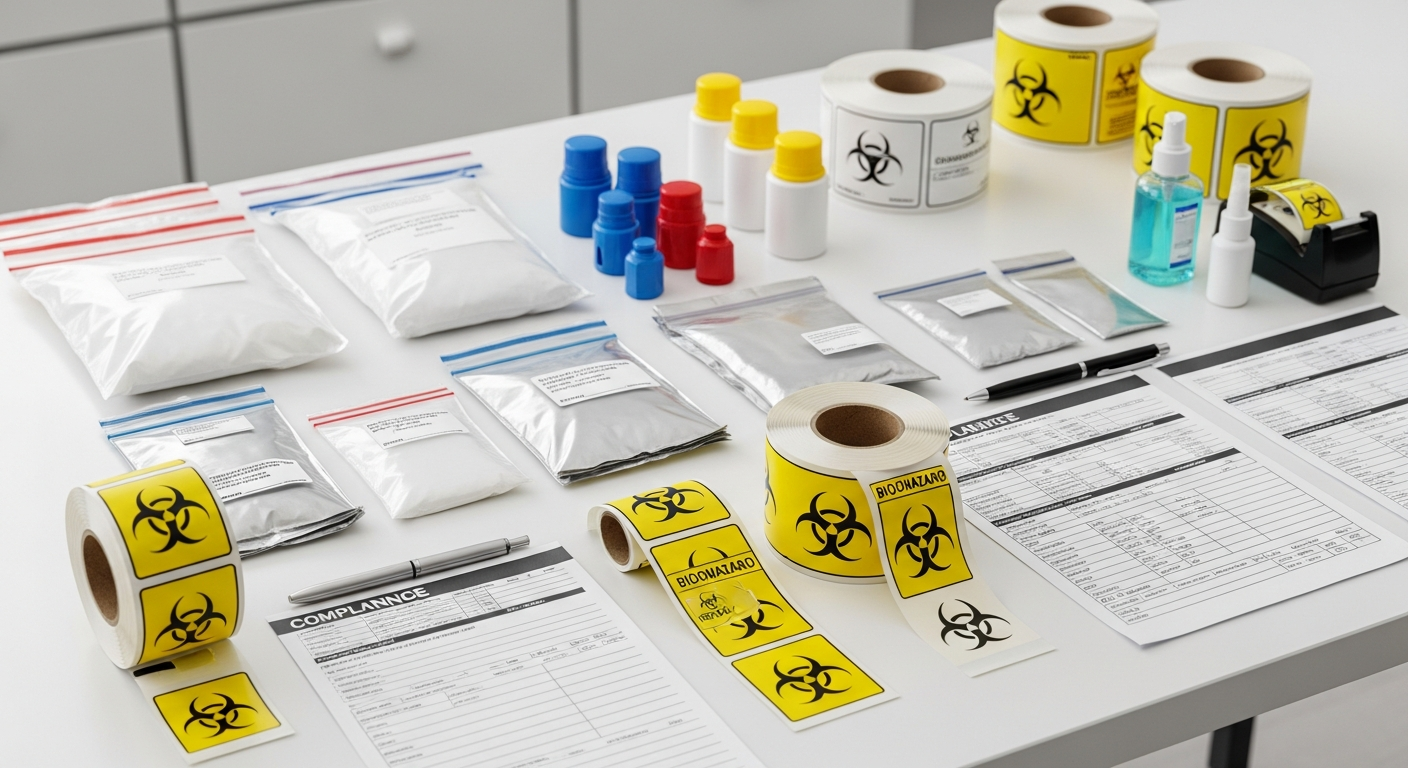
- OSHA-compliant handling with proper PPE and triple-containment packaging for biological specimens
- Real-time pickup notification and tracking so nurses can confirm specimen collection without phone calls
4. Challenges Unique to Residential Healthcare Delivery
Delivering to patient homes introduces logistics challenges that do not exist in facility-based transport. Access is unpredictable. Some patients live in apartment buildings with doormen who can receive deliveries. Others live in rural areas where the delivery address may be difficult to locate. Some patients have mobility limitations and cannot come to the door to accept delivery. Others have cognitive impairments that require the courier to verify the recipient’s identity with additional care. These variables make residential healthcare delivery fundamentally more complex per delivery than facility-based transport.
Weather and seasonal factors also affect residential delivery differently. A temperature-sensitive medication delivered to a facility loading dock enters climate-controlled space immediately. The same medication left on a patient’s doorstep in July heat or January cold is at risk. Couriers delivering to residences must coordinate delivery timing to ensure someone is available to receive the package, or use insulated packaging validated for the expected exposure duration. Temperature-controlled medical transport protocols for residential delivery require different approaches than facility delivery because the receiving environment is not controlled.
Patient privacy presents another consideration. Delivering clearly labeled medical supplies or pharmacy packages to a residential address can inadvertently disclose health information to neighbors or other household members. HIPAA-compliant delivery to residential addresses requires discreet packaging, professional courier appearance, and protocols for handling situations where the designated recipient is not available at the time of delivery.
Residential Delivery Challenges:
- Variable access conditions across apartments, houses, gated communities, and rural addresses
- Patient availability coordination to ensure someone can receive temperature-sensitive medications
- Environmental exposure risk for packages left at doorsteps in extreme heat or cold conditions
- Privacy protection through discreet packaging and professional courier protocols at residential addresses
- Identity verification for controlled substances and high-value specialty medications
5. Building a Reliable Home Health Courier Partnership
Home health agencies and infusion pharmacies selecting a courier partner need to evaluate capabilities that go beyond standard delivery metrics. The courier must handle temperature-sensitive medications, manage dynamic residential routing, maintain HIPAA compliance at the doorstep, and provide real-time visibility that allows clinical teams to coordinate nursing visits with delivery timing. The courier is not just a logistics vendor. They are an extension of the clinical team that the patient interacts with directly.
The evaluation should include the courier’s experience with residential healthcare delivery, their fleet capabilities for temperature-controlled transport, their technology platform for real-time tracking and proof of delivery, their driver training on patient interaction and privacy protocols, and their geographic coverage relative to the agency’s or pharmacy’s service area. A courier partner that primarily serves facility-to-facility routes may not have the residential delivery expertise that home health logistics demand.
At carGO Health, we support home health agencies and infusion pharmacies across New York, New Jersey, Connecticut, Massachusetts, and the greater Northeast with courier services designed for residential healthcare delivery. Our AI-powered platform handles dynamic routing to residential addresses, real-time tracking for clinical team coordination, temperature-controlled transport for infusion medications, and HIPAA-compliant delivery protocols. With over 200,000 orders completed and 24/7/365 operations, our infrastructure supports the scale and reliability that home-based care programs require. Schedule a demo to discuss how our services support your home health or infusion delivery operations.
Courier Partner Evaluation for Home Health:
- Verified experience with residential healthcare delivery including infusion medications and specimen pickup
- Cold chain transport capability with validated packaging and continuous temperature monitoring
- Technology platform supporting dynamic routing, real-time tracking, and proof of delivery documentation
- Driver training on patient interaction, privacy protection, and residential delivery best practices
- Geographic coverage matching your service area with sufficient driver density for reliable response times
Key Takeaways
Home health and infusion delivery logistics require specialized courier capabilities that go far beyond standard package delivery. Temperature-sensitive infusion medications, dynamic residential routing, specimen pickup from nurse visit locations, and HIPAA-compliant doorstep delivery all demand a courier partner with healthcare-specific expertise and technology. As home-based care continues to grow, the logistics infrastructure supporting it must scale to match. If your home health agency or infusion pharmacy is experiencing delivery reliability issues or cold chain concerns, contact carGO Health to explore courier solutions built for residential healthcare delivery.
Frequently Asked Questions
What types of deliveries do home health courier services handle?
Home health courier services handle infusion medication delivery to patient homes, specimen pickup from nursing visit locations, medical supply and equipment delivery, pharmacy prescription transport, and return logistics for used equipment and sharps containers. The service covers both outbound delivery and inbound specimen and supply return.
How do couriers maintain cold chain for home infusion medications?
Couriers use validated insulated packaging with gel packs or phase-change materials calibrated for the specific temperature range required by each medication. Continuous temperature monitoring provides data throughout transit, and delivery timing is coordinated to minimize environmental exposure at the residential doorstep.
Can medical couriers pick up specimens from patient homes?
Yes, medical couriers can pick up specimens collected by home health nurses at patient residences. The courier is dispatched based on the nursing visit schedule and uses OSHA-compliant packaging and handling protocols. AI-powered dispatch optimizes pickup routing across multiple residential locations to minimize specimen transit times.
How do home health deliveries handle HIPAA compliance?
HIPAA compliance for residential delivery includes discreet packaging that does not reveal medical contents, professional courier protocols for patient interaction, identity verification for controlled substances, and secure handling of prescription labels and patient documentation throughout transport and delivery.
What makes residential healthcare delivery more complex than facility delivery?
Residential delivery involves variable access conditions, patient availability coordination, environmental exposure risks for temperature-sensitive items, privacy considerations at the doorstep, and dynamic routing to addresses that change daily. Facility delivery uses consistent access points, controlled receiving environments, and fixed routes.
Related Resources