Medical Courier vs Gig Economy Delivery: A Healthcare Logistics Analysis
The gig economy has transformed consumer delivery expectations with on-demand speed, app-based convenience, and dynamic pricing. As healthcare organizations face pressure to reduce logistics costs while maintaining delivery performance, some have explored whether gig economy delivery platforms can serve as alternatives to specialized medical courier services. The question seems reasonable on the surface: if a gig driver can deliver a restaurant meal across town in 30 minutes, why not a specimen or a prescription? The answer lies in the regulatory, clinical, and operational gaps between consumer delivery and healthcare logistics that this white paper examines in detail. Medical courier vs gig delivery is not a comparison of speed or cost. It is a comparison of compliance infrastructure, clinical competency, and the consequences of failure in a domain where errors affect patient outcomes.
This analysis draws on federal regulatory requirements, industry data, and the operational realities of both delivery models to provide healthcare administrators, laboratory directors, and pharmacy managers with the information needed to make informed logistics decisions. The conclusion is not that gig delivery has no place in healthcare. It is that the specific requirements of medical transport, from HIPAA compliance and OSHA bloodborne pathogen standards to temperature management and chain of custody documentation, create a compliance and quality threshold that gig economy platforms are not designed to meet. Understanding where these models diverge is critical for any healthcare organization evaluating medical courier vs gig economy delivery options.
1. The Regulatory Compliance Gap
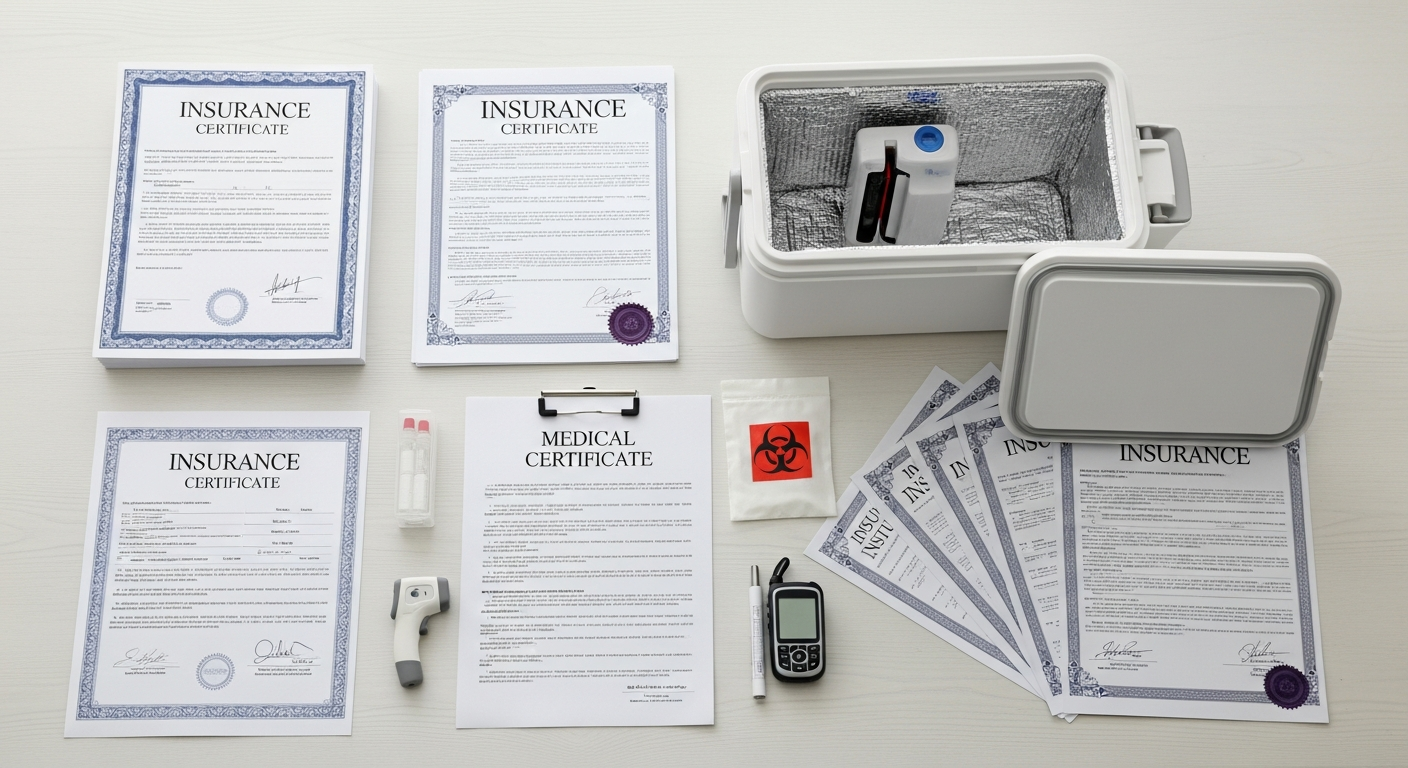
The most fundamental difference between specialized medical couriers and gig economy drivers is the regulatory compliance infrastructure that governs their operations. Medical courier services operate within a framework that includes HIPAA Business Associate Agreements, OSHA Bloodborne Pathogens Standard compliance, DOT hazardous materials training, state-specific medical transport regulations, and facility-specific credentialing requirements. Each of these regulatory layers imposes training obligations, documentation requirements, and operational protocols that must be maintained continuously and verified through audits.
Gig economy platforms are not structured to support this regulatory framework. The independent contractor model that defines gig work creates fundamental challenges for compliance. HIPAA requires Business Associate Agreements with any entity that accesses protected health information. Executing and maintaining BAAs with a rotating pool of gig drivers who may accept a healthcare delivery one day and a food delivery the next is operationally impractical. OSHA requires employers to provide bloodborne pathogen training to workers with occupational exposure, but gig platforms classify drivers as independent contractors, creating ambiguity about who bears the employer obligation for safety training.
The DOT hazardous materials training requirement adds another layer of incompatibility. Clinical specimens classified under UN 3373 require that handlers receive specific hazmat training and recertification every three years. Gig platforms do not provide this training, and drivers who have not received it are transporting hazardous materials in violation of federal regulations. The liability for this violation falls on both the carrier (the gig platform or the individual driver) and potentially the shipper (the healthcare facility that entrusted the specimen to an unqualified handler).
For healthcare organizations, the compliance gap is not a theoretical concern. A HIPAA violation resulting from a gig driver improperly handling patient information carries penalties of up to $1.5 million per violation category. An OSHA citation for using untrained personnel to handle biological specimens results in fines and corrective action requirements. A DOT violation for transporting hazardous materials with unqualified handlers creates legal exposure for the healthcare facility. These are real financial and legal risks that the cost savings of using gig delivery do not offset.
Regulatory Requirements: Medical Courier vs. Gig Economy:
- HIPAA Business Associate Agreement: required for medical couriers, structurally difficult for gig platforms
- OSHA bloodborne pathogen training: mandatory for medical couriers, not provided by gig platforms
- DOT hazmat training for UN 3373: required for medical couriers, absent in gig driver qualification process
- State medical transport licensing: maintained by medical courier companies, not applicable to gig platforms
- Facility credentialing and background checks: standard for medical couriers, inconsistent across gig platforms
2. Training and Clinical Competency Differences
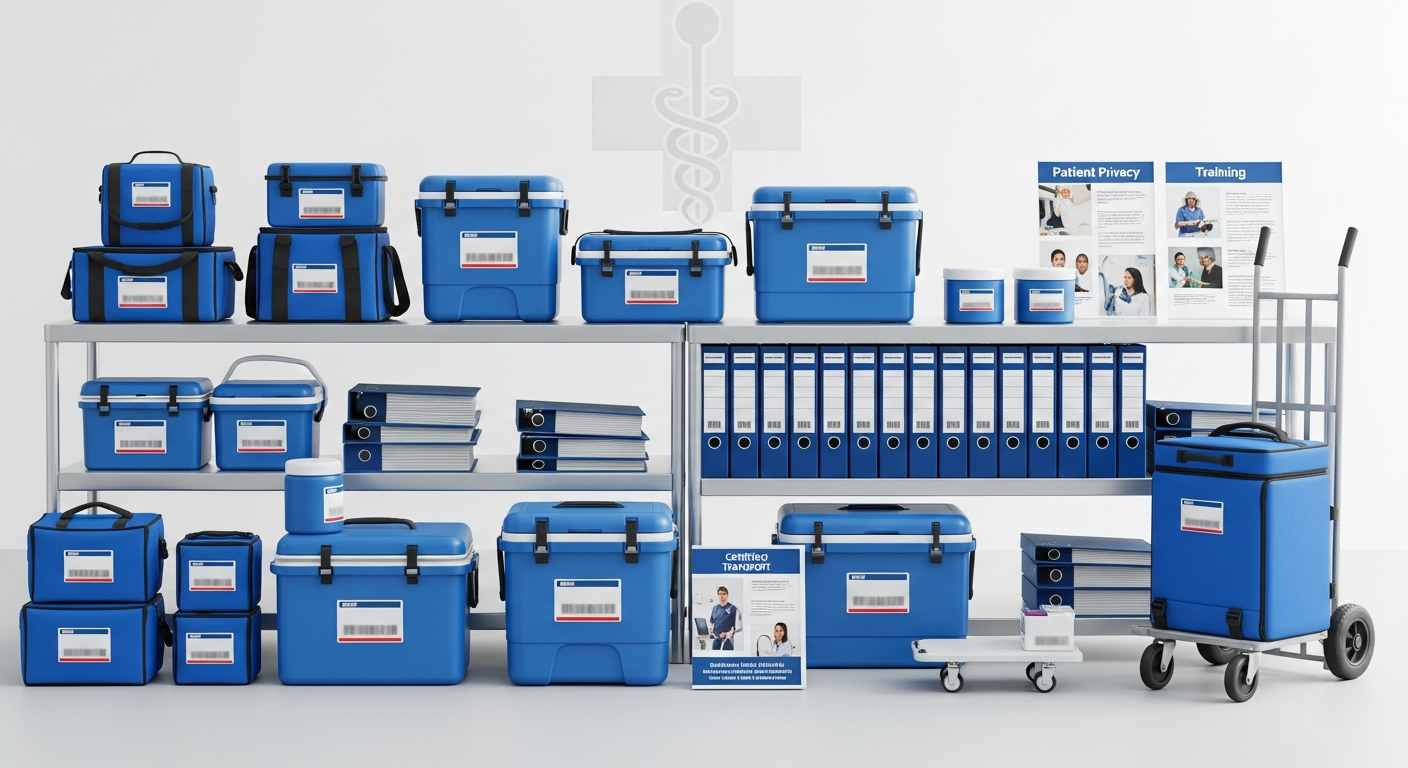
The training gap between specialized medical courier drivers and gig economy workers is not a matter of degree. It is a categorical difference in competency. A certified medical courier receives training on HIPAA privacy and security, OSHA bloodborne pathogen standards, DOT hazardous materials handling, specimen-specific transport protocols including temperature management across five tiers, chain of custody documentation, and facility-specific delivery procedures. This training is documented, tested, and renewed on defined schedules. The driver who picks up a specimen from a hospital laboratory has been specifically prepared for that task.
A gig economy driver receives platform onboarding that covers the delivery app interface, basic navigation, and customer service expectations. There is no healthcare-specific training component. The driver who accepts a healthcare delivery through a gig platform has the same preparation as the driver who accepts a sandwich delivery. They do not know how to verify specimen packaging compliance. They do not understand the significance of maintaining temperature control during transport. They cannot recognize when a specimen has been improperly prepared for transport. They do not know the difference between STAT and routine delivery priority classifications.
This training gap has direct clinical consequences. A pre-analytical error caused by improper handling during transport results in a rejected specimen, which delays diagnosis and requires the patient to undergo recollection. A temperature excursion on a medication delivery can render the medication ineffective or unsafe. A chain of custody failure on a controlled substance creates regulatory and legal exposure. These are not theoretical scenarios. They are the predictable outcomes of using untrained personnel for clinical transport tasks.
Research published by the National Institutes of Health documents that pre-analytical errors, many of which originate during specimen collection and transport, account for up to 70 percent of all laboratory errors. The cost of each rejected specimen ranges from $200 to $800 when factoring in recollection, reprocessing, delayed clinical decisions, and patient inconvenience. Multiplied across the thousands of specimens a healthcare facility handles monthly, the financial impact of using inadequately trained transport personnel is substantial.
Training Comparison: Medical Courier vs. Gig Driver:
- Medical courier: HIPAA, OSHA, DOT, specimen handling, temperature management, chain of custody training
- Gig driver: app onboarding, navigation basics, general customer service expectations only
- Medical courier: annual recertification documented and verified by employer with audit-ready records
- Gig driver: no healthcare-specific recertification or training verification process exists
- Medical courier: facility-specific delivery protocol knowledge for each healthcare location served
3. Reliability, Consistency, and Accountability
Healthcare logistics requires predictable, consistent performance. Laboratories depend on specimen arrivals matching processing schedules. Pharmacies coordinate medication deliveries with patient appointments and dosing timelines. Operating rooms need surgical instruments and tissue specimens transported within windows that align with surgical schedules. This predictability requires a courier workforce that is committed to healthcare delivery as their primary function, not drivers who toggle between food delivery, package delivery, and occasional medical transport based on which platform offers the best surge pricing at any given moment.
The gig economy model introduces reliability variables that healthcare operations cannot absorb. Driver availability fluctuates based on weather, time of day, competing platform demand, and individual driver preferences. During peak consumer demand periods like Friday evenings or holiday weekends, gig drivers gravitate toward the highest-paying delivery categories, which are typically food and retail, not healthcare. A healthcare facility that depends on gig delivery for STAT specimen transport may find that no drivers are available when the request is most urgent because the drivers are all delivering takeout food during a Friday night surge.
Accountability is another structural difference. A medical courier company assigns specific drivers to healthcare routes, trains them on facility procedures, and holds them accountable through employment or contracted relationships that include performance standards, quality metrics, and remediation procedures. If a delivery fails, the courier company identifies the root cause, takes corrective action, and implements process changes to prevent recurrence. Gig platforms offer customer service escalation but lack the operational control to conduct root cause analysis, enforce corrective actions, or guarantee that the same failure will not recur with a different driver on the next delivery.
For healthcare organizations subject to CAP accreditation or Joint Commission certification, demonstrating adequate control over specimen transport is a requirement. Using an uncontrolled pool of gig drivers for specimen transport creates documentation and accountability gaps that accreditation surveyors will identify. A medical courier partner provides the controlled, documented, auditable transport process that regulatory accreditation demands.
Reliability and Accountability Comparison:
- Medical courier: dedicated healthcare drivers with route assignments and performance accountability
- Gig platform: rotating driver pool with availability fluctuating based on competing demand and surge pricing
- Medical courier: root cause analysis and corrective action for delivery failures with process improvement
- Gig platform: customer service escalation without operational control over driver performance or quality
- Medical courier: audit-ready documentation satisfying CAP, Joint Commission, and regulatory requirements
4. Temperature Management and Specimen Integrity
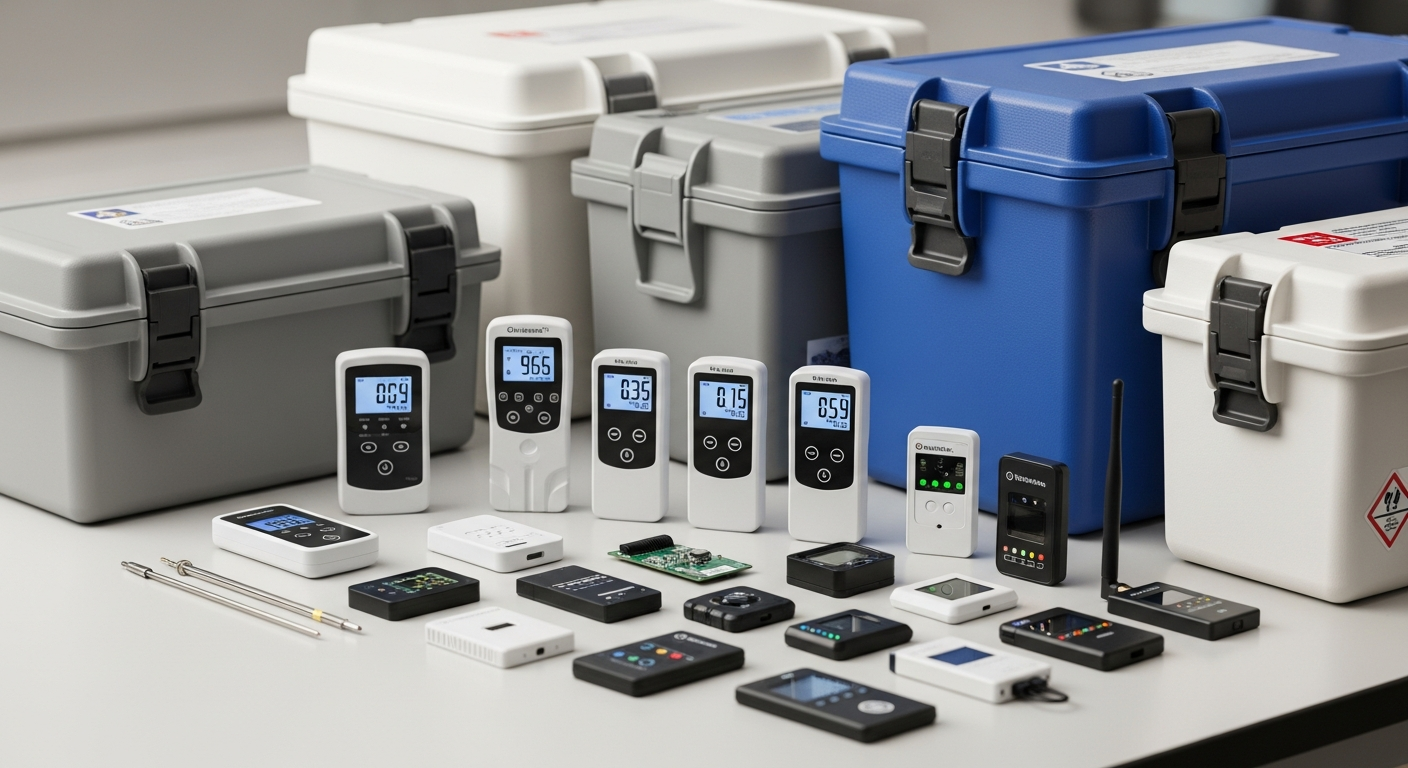
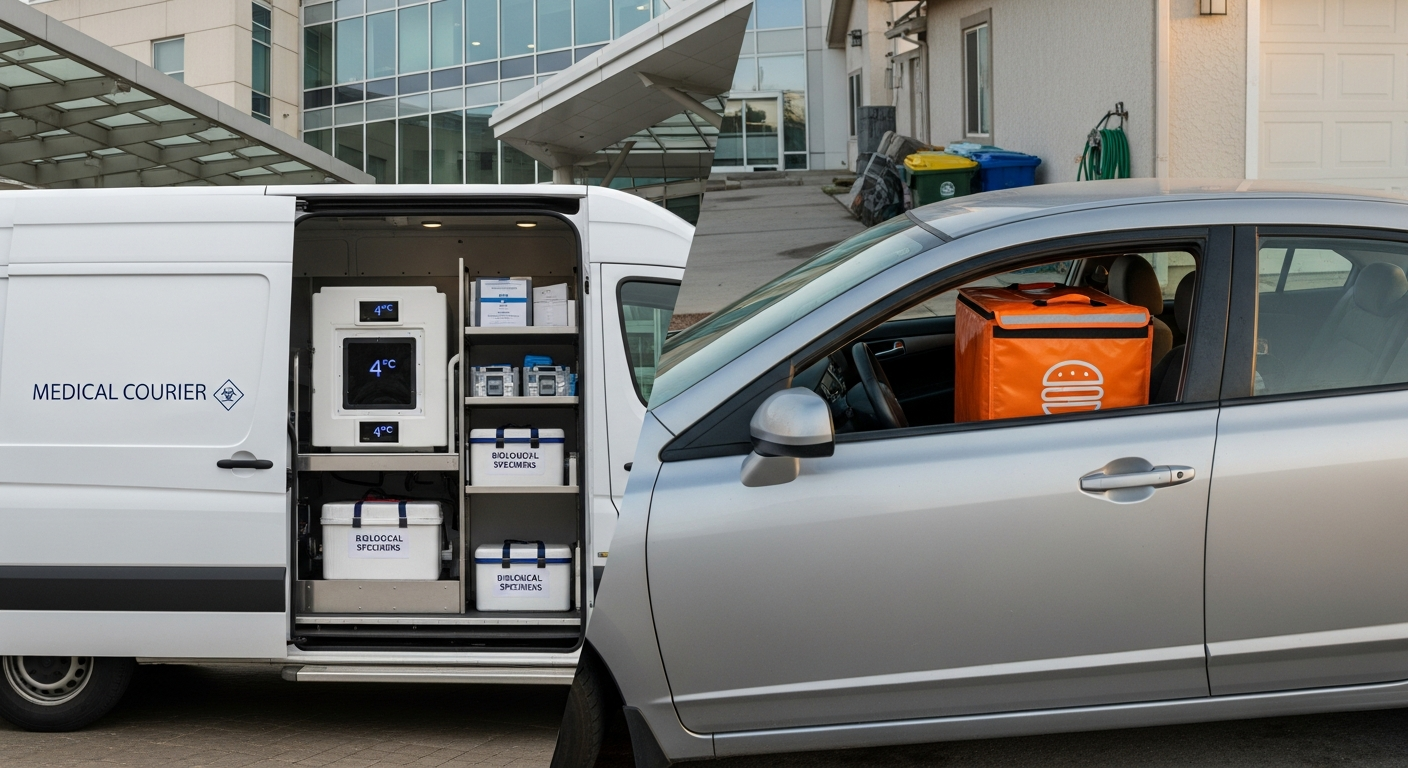
Temperature control is a non-negotiable requirement for a significant percentage of healthcare deliveries. Clinical specimens, pharmaceuticals, biologics, vaccines, and blood products all have temperature requirements that must be maintained continuously during transport. Medical courier vehicles are equipped with temperature-controlled compartments, validated insulated packaging, and monitoring devices that document the temperature throughout the delivery chain. Cold chain logistics is a core competency of specialized medical courier operations.
Gig economy vehicles are personal cars, many without climate control beyond the passenger cabin. There is no temperature-controlled cargo area. There are no validated insulated transport containers. There is no temperature monitoring equipment. A specimen placed in a gig driver’s car on a hot summer day sits in an uncontrolled environment where temperatures can fluctuate dramatically based on whether the driver has the air conditioning running, whether the car is parked in the sun while the driver completes another delivery, and how long the specimen remains in the vehicle before reaching its destination.
The impact of temperature excursions on specimen integrity is well documented. The CDC guidelines for clinical specimen handling specify temperature ranges for different specimen types, and deviations outside these ranges can produce inaccurate test results, trigger specimen rejection, or render medications unsafe for patient use. For reducing specimen rejection rates, temperature management during transport is one of the most impactful variables a healthcare facility can control. Using gig delivery for temperature-sensitive materials eliminates this control entirely.
Pharmaceutical transport introduces additional temperature stakes. Biologic medications costing thousands of dollars per dose that require 2-8 degree Celsius maintenance become worthless if the cold chain is broken. Vaccines that exceed their temperature range may lose efficacy without visible signs of degradation, potentially resulting in patients receiving ineffective immunizations. These are consequences that extend beyond financial loss into direct patient safety territory.
Temperature Management: Medical Courier vs. Gig Delivery:
- Medical courier: temperature-controlled vehicles with validated packaging and continuous monitoring equipment
- Gig delivery: personal vehicles with no temperature control beyond passenger cabin climate settings
- Medical courier: documented temperature logs providing chain of custody compliance for cold chain materials
- Gig delivery: no temperature documentation, monitoring, or excursion alerting capability
- Medical courier: five-tier temperature management (ambient, refrigerated, frozen, dry ice, cryogenic)
5. The True Cost Comparison: Beyond Per-Delivery Pricing
The argument for gig economy delivery in healthcare typically centers on cost. Per-delivery pricing on gig platforms can appear lower than specialized medical courier rates, particularly for routine, non-urgent deliveries. But this cost comparison is misleading because it considers only the direct delivery fee while ignoring the indirect costs that gig delivery healthcare risks create: specimen rejection costs, regulatory non-compliance exposure, medication waste from temperature failures, clinical workflow disruptions from unreliable delivery, and the administrative overhead of managing an uncontrolled delivery channel.
Consider the full cost model. A gig delivery that costs $15 compared to a medical courier delivery at $25 appears to save $10 per delivery. But if the gig delivery results in a specimen rejection at a rate even 2 percent higher than the medical courier (due to handling errors, temperature excursions, or transit time delays), and each rejection costs $400 in recollection, reprocessing, and delayed clinical decisions, the gig delivery actually costs more per delivery when the rejection costs are amortized across the delivery volume. For a facility processing 500 deliveries per month, a 2 percent increase in rejection rate means 10 additional rejections at $400 each, which is $4,000 in monthly rejection costs that more than eliminates the $5,000 in delivery fee savings.
Regulatory exposure adds another cost dimension. A single HIPAA violation can result in fines from $100 to $50,000 per violation, with annual maximums of $1.5 million per violation category. An OSHA citation for using untrained personnel carries penalties that can reach tens of thousands of dollars per incident. These are costs that never appear in the gig platform’s per-delivery pricing but are real financial risks that healthcare organizations assume when they use unqualified delivery services for medical transport.
The operational cost of managing gig delivery for healthcare is also frequently underestimated. Without a dedicated account manager, standardized procedures, and integrated tracking, healthcare staff spend time coordinating deliveries, following up on late or missing shipments, manually documenting transport conditions, and resolving quality issues that a medical courier platform would handle automatically. This administrative overhead consumes staff time that has its own cost, further eroding the apparent savings of gig delivery.
At carGO Health, our pricing model reflects the full value of compliant, reliable, technology-enabled medical courier service. Our AI-powered platform, certified courier network, and comprehensive compliance infrastructure deliver measurable cost savings when the total cost of healthcare logistics is considered, not just the per-delivery fee. With over 200,000 orders completed across New York, New Jersey, Connecticut, Massachusetts, and the greater Northeast, our infrastructure demonstrates that specialized medical courier service is not a premium cost. It is the cost-effective choice when all variables are accounted for. Schedule a demo to review a comprehensive cost comparison for your organization’s healthcare logistics operations.
True Cost Analysis: Medical Courier vs. Gig Delivery:
- Direct delivery fees: gig platforms appear lower but lack compliance infrastructure built into medical courier pricing
- Specimen rejection costs: $200-$800 per rejection from handling errors and temperature failures during gig transport
- Regulatory exposure: HIPAA fines up to $1.5M, OSHA citations, DOT violations from non-compliant transport
- Administrative overhead: staff time spent coordinating, tracking, and resolving gig delivery quality issues
- Medication waste: temperature-sensitive drugs and biologics lost to cold chain failures during uncontrolled transport
- Clinical workflow disruption: delayed or missed deliveries affecting patient care timelines and outcomes
Key Takeaways
The comparison between medical courier services and gig economy delivery is not close when evaluated against the regulatory, clinical, and total-cost requirements of healthcare logistics. Gig platforms offer speed and convenience for consumer delivery but lack the compliance infrastructure, specialized training, temperature management capabilities, and accountability structures that healthcare transport demands. Healthcare organizations that choose gig delivery over specialized medical courier services are not optimizing costs. They are transferring risk from a visible line item (courier fees) to hidden costs (rejections, violations, workflow disruptions, and patient safety exposure) that ultimately exceed any per-delivery savings. The right choice for healthcare logistics is a specialized medical courier partner with the compliance, technology, and operational infrastructure to protect patients, specimens, and the organization’s regulatory standing. Contact carGO Health for a detailed assessment of how our medical courier services compare to your current logistics approach.
Frequently Asked Questions
Can gig economy drivers legally transport medical specimens?
While no single law explicitly prohibits gig drivers from transporting specimens, DOT regulations require hazmat training for anyone handling UN 3373 biological substances, OSHA requires bloodborne pathogen training for workers with occupational exposure, and HIPAA requires Business Associate Agreements for entities accessing PHI. Gig platforms generally do not provide this training or execute these agreements, creating significant compliance gaps.
Is gig delivery cheaper than medical courier service for healthcare?
Per-delivery fees may appear lower on gig platforms, but the total cost including specimen rejection rates, regulatory violation exposure, medication waste from temperature failures, and administrative overhead typically makes gig delivery more expensive when all costs are accounted for. A 2 percent increase in rejection rates alone can eliminate the entire per-delivery fee savings.
What are the biggest risks of using gig delivery for healthcare?
The biggest risks include HIPAA violations from unprotected patient information handling, specimen integrity failures from lack of proper handling training and temperature control, unreliable delivery timing due to competing platform demand, regulatory non-compliance with DOT and OSHA requirements, and inability to maintain chain of custody documentation that satisfies accreditation standards.
Do any healthcare organizations successfully use gig delivery?
Some healthcare organizations have experimented with gig delivery for non-clinical items such as administrative documents, office supplies, or non-temperature-sensitive equipment. For clinical specimens, pharmaceuticals, and any materials involving protected health information or temperature requirements, specialized medical courier services remain the standard because gig platforms cannot meet the compliance and quality thresholds.
How should healthcare organizations evaluate their courier options?
Healthcare organizations should evaluate courier options based on regulatory compliance infrastructure (HIPAA BAA, OSHA training, DOT certification), driver training and qualification programs, temperature management capabilities, chain of custody technology, reliability metrics, accountability structures, and total cost including indirect costs of delivery failures. Per-delivery pricing alone is an insufficient evaluation criterion for healthcare logistics.
Related Resources