Temperature Excursion Management in Medical Transport: A Field Guide

Every excursion ends in one of three places: the product is used, the product is discarded, or nobody knows what happened and the decision is made by default. Temperature excursion management in medical transport is the discipline of reaching the first two deliberately: the excursion is detected while it is happening, the right person decides acceptability with the right data in front of them, and the decision is documented in a form that survives an inspection or a manufacturer’s complaint investigation.
This guide covers what counts as an excursion for the main product classes, why mean kinetic temperature is misunderstood, how loggers and alarms should be configured so that a reading and an excursion are not confused, who holds the acceptability decision, what the excursion record must contain, and the packaging fixes that close most recurring excursions.
1. What Counts as a Temperature Excursion in Medical Transport
An excursion is any period a product spends outside the storage range on its label or in the laboratory’s validated procedure. Controlled room temperature is 20 to 25 degrees Celsius, with brief label-permitted excursions between 15 and 30. Refrigerated is 2 to 8, and 1.9 is as much an excursion as 8.1; for many vaccines and biologics a drop below 0 degrees Celsius is worse than a rise to 12, because freezing denatures proteins and separates adjuvants irreversibly. Frozen pharmaceuticals sit at minus 25 to minus 15, ultra-low specimens at minus 80, cryogenic material in liquid nitrogen vapor below minus 150.
Blood products use ranges set by the transfusion community: red cells travel at 1 to 10 degrees Celsius, platelets at 20 to 24, plasma frozen. AABB standards for blood banks and transfusion services set the limits the transfusion service applies at receipt, and our guide to blood bank courier services and the safe transport of blood products covers the packaging for each component.
Mean kinetic temperature is routinely misused. MKT is a single calculated temperature that represents the cumulative thermal stress a product has experienced over a period, weighting warm intervals more heavily because degradation accelerates with heat. It is a tool for evaluating storage over weeks and months, which is how the World Health Organization guidance on time- and temperature-sensitive pharmaceutical products treats it. It is not a way to average away a three-hour spike on a delivery route, and it says nothing about a freeze, which is a physical event rather than a rate. The manufacturer’s stability data for that product and that duration decide, not the average.
Working ranges to write into the transport specification:
- Controlled room temperature: 20 to 25 degrees Celsius, label-permitted excursions 15 to 30
- Refrigerated: 2 to 8 degrees Celsius, with freezing treated as the more serious failure
- Frozen: minus 25 to minus 15 degrees Celsius for most frozen pharmaceuticals and vaccines
- Red cells 1 to 10 degrees Celsius in transit; platelets 20 to 24; plasma kept frozen
2. Detection: Loggers, Alarms and the Difference Between a Reading and an Excursion
Three logger classes are in common use. Single-use electronic loggers travel with the package and are read at delivery. Reusable Bluetooth loggers are read by the driver’s phone at pickup and delivery and sync to the platform. Real-time cellular loggers transmit continuously, the only class that lets dispatch intervene during an excursion rather than discover it afterward. Our guide to IoT temperature monitoring for medical couriers compares the hardware.
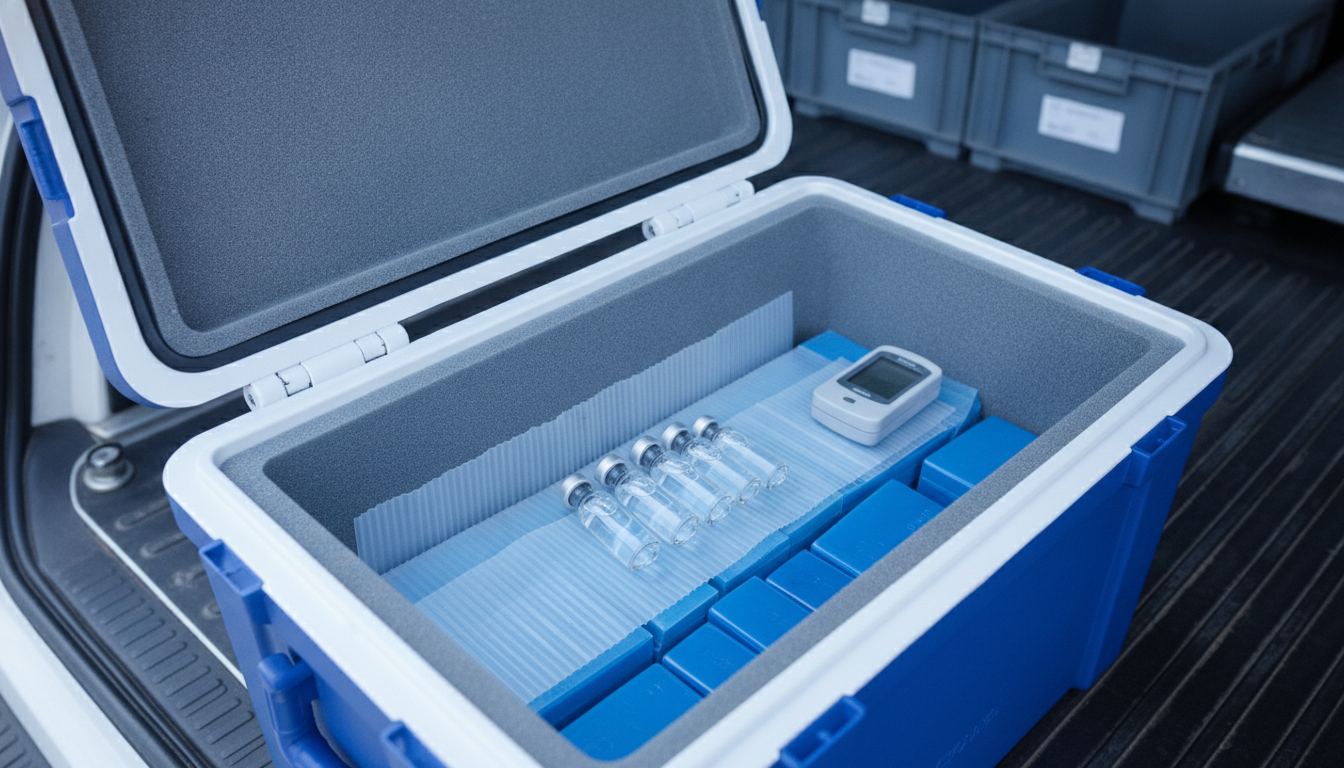
Probe choice decides whether the logger reports product temperature or air temperature. A buffered probe sits in a small vial of glycol with roughly the thermal mass of a vaccine vial, so a 90-second door opening at a stop barely registers; an air probe swings with every opening and generates alarms that are real readings but not real excursions. Sample every 1 to 5 minutes in transit. Combine a threshold with a delay, for example above 8 degrees Celsius for more than 15 cumulative minutes. Calibrate each logger annually against a national standard, to about plus or minus 0.5 degrees Celsius.
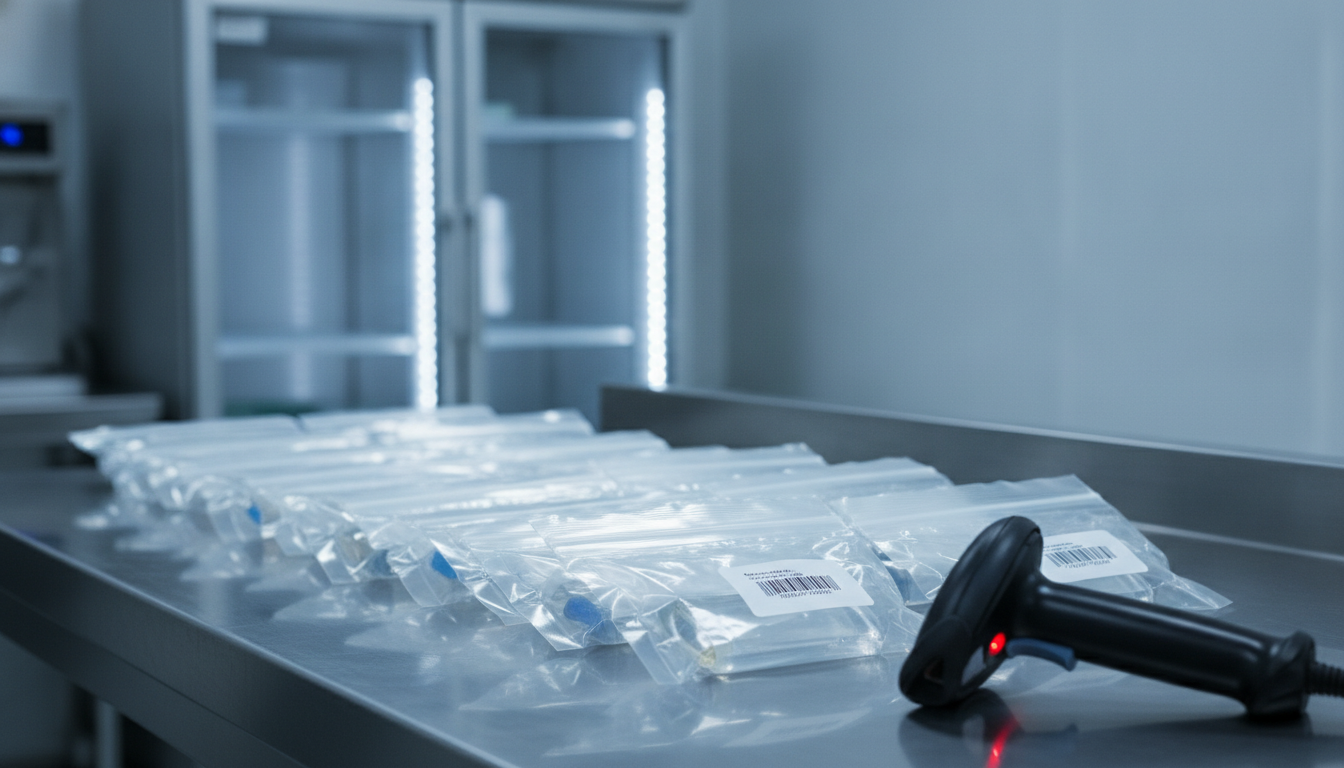
The probe goes beside the product, separated from the cold pack by the same barrier the product has. At delivery the receiver reads the minimum and maximum and downloads the trace; a green light is not a reconciled temperature record. The temperature-controlled medical transport page describes how the logger read is built into the delivery scan.
Logger configuration that separates readings from excursions:
- Buffered probe placed beside the product with the same barrier from the cold pack
- Sampling every 1 to 5 minutes in transit, every 15 to 30 minutes in storage
- High and low alarms with a threshold and a cumulative delay, both documented
- Minimum, maximum and full trace downloaded at delivery and attached to the order record
3. Who Decides Acceptability: The Laboratory, the Pharmacist and the Courier’s Limits
The courier’s role is bounded and should be written that way in the service agreement: detect, contain, notify, preserve. Contain means the product stays in its tier, or moves to the correct tier if the packaging failed, and is marked quarantined. Notify means the receiving laboratory or pharmacy hears before delivery, with the logger data. Preserve means nothing is discarded and the trace is kept. A courier never decides usability, because that requires stability data and licensure it does not hold.
For pharmaceuticals and vaccines the decision belongs to a pharmacist or the facility’s vaccine coordinator, who takes the product, lot, duration, minimum and maximum to the manufacturer’s stability data. The CDC vaccine resources for healthcare providers, direct that exposed vaccine be labeled do not use, kept at proper storage and held until the manufacturer or immunization program responds. The American Society of Health-System Pharmacists publishes the practice standards pharmacies use to document that call. Our guide to pharmaceutical courier services and cold chain compliance covers the pharmacy-to-clinic leg where most of these decisions arise.
For specimens the laboratory director or a designee decides analyte by analyte. Refrigerated serum that spent two hours at 22 degrees Celsius is acceptable for most routine chemistries and unacceptable for ammonia, lactate, parathyroid hormone or ACTH; a thawed coagulation specimen is rejected and recollected. The transfusion service applies its validated limits to blood components. The outcomes are the same four everywhere: accept, accept with a comment on the report, reject and recollect, or hold pending manufacturer guidance. The medical courier service for pharmacies page describes how the notification reaches the pharmacist in charge before the driver arrives.
Decision rights, by product class:
- Courier: detect, contain in tier, notify with data, preserve the product and the trace
- Pharmaceuticals and vaccines: pharmacist or vaccine coordinator, with the manufacturer’s stability data
- Laboratory specimens: laboratory director or designee, analyte by analyte
- Blood components: the transfusion service, under its validated limits
4. Documentation: The Excursion Record That Survives an Audit
An excursion record is opened when an alarm is confirmed, not after the product’s fate is known. It identifies the product or specimen, the lot or accession number, the required tier, the logger serial number and calibration date, the start and end times, the duration, the minimum and maximum reached, and the leg of the journey. It then records the containment action, who was notified and when, the decision, who made it and on what basis, and the final disposition.
The record lives in two places. The courier keeps it with the order’s chain-of-custody file beside the pickup and delivery photos; the chain of custody courier page shows where the logger trace sits in that file. The receiving facility keeps it in its own quality system. For a manufacturer or an outsourcing facility the governing text is the current good manufacturing practice rules at 21 CFR Part 211 on warehousing and distribution; the FDA current good manufacturing practice regulations page is the entry point. For a clinical laboratory, CAP checklist requirements on transport conditions and CLIA requirements on specimen integrity apply.
Fields in a complete excursion record:
- Product or specimen identity, lot or accession number, required tier
- Logger serial number, calibration date, probe type and placement
- Start time, end time, duration, minimum and maximum, and the leg where it occurred
- Containment action, notification times and recipients, decision, decision maker and basis
- Final disposition and, where repeated, the corrective action number it was linked to
5. Root Cause and Packaging Fixes for Temperature Excursions in Medical Transport
Most recurring excursions trace to a short list of causes. Gel packs straight from a freezer placed against refrigerated product freeze it within an hour. A pack-out qualified for an eight-hour summer route is used on a fourteen-hour one. An under-filled dry ice box, sublimating at roughly 5 to 10 pounds per 24 hours, runs out before a long day ends. And a vehicle cabin can exceed 50 degrees Celsius on a July afternoon in Philadelphia, which is why a tote belongs in an insulated, climate-managed cargo area and not on a seat; seasonal pack-out detail for the region is on our Philadelphia medical courier service page.
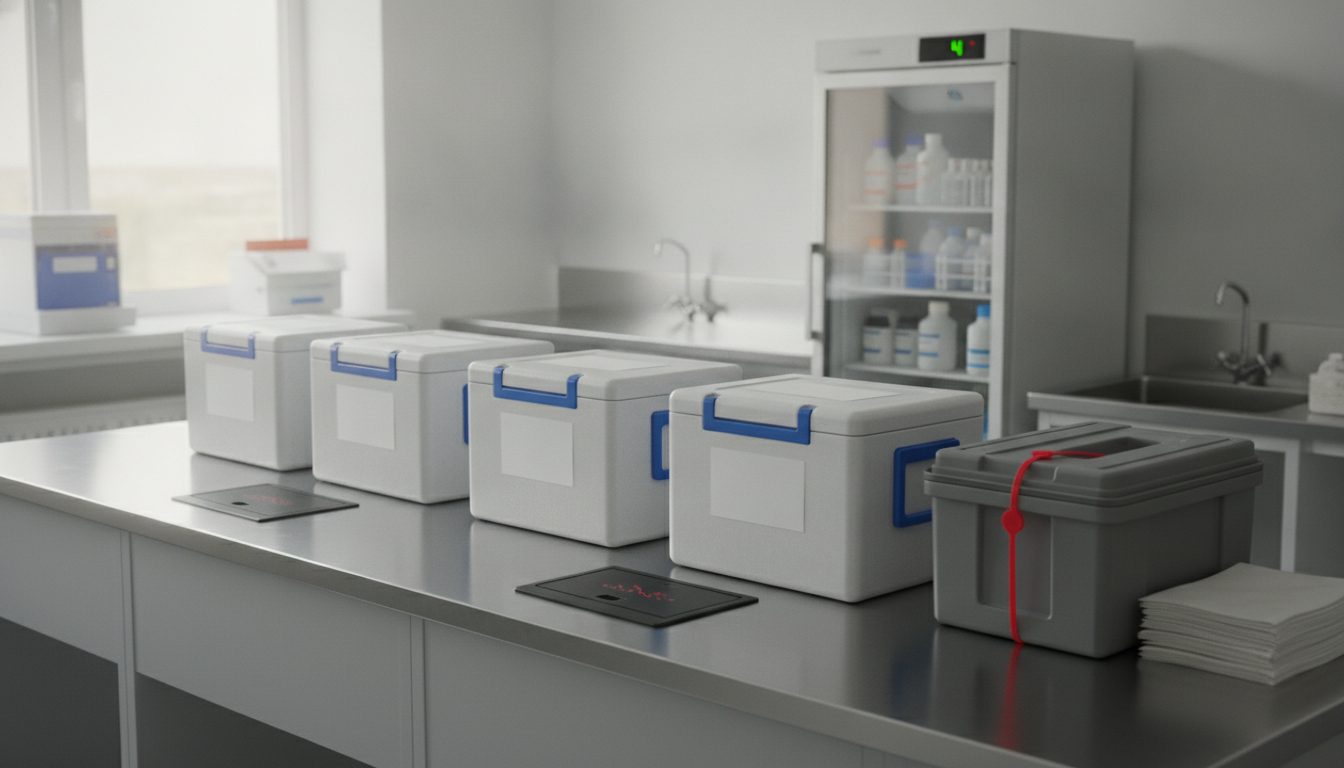
The fixes are mostly packaging and procedure. Qualify each pack-out against a summer profile and a winter profile, and select by date. Use phase-change packs conditioned to about 5 degrees Celsius for refrigerated product instead of frozen gel packs, with a corrugated or foam barrier between pack and product. Pre-chill totes. Cap route duration below the qualified hold time with margin, add a dry ice top-up point on long runs, and give frozen and refrigerated product separate containers. Our guide to cold chain logistics in healthcare and the refrigerated medical courier and dry ice medical shipping pages describe the equipment carGO Health uses for each tier.
Each corrective action needs an effectiveness check on the same route, season and logger configuration at 30 and 90 days. Without it a CAPA is a memo; with it, the excursion rate by route and by tier becomes a quality metric the laboratory or pharmacy reviews monthly with its courier.
Packaging and procedure changes that close recurring excursions:
- Seasonal pack-out qualification with summer and winter ambient profiles, selected by date
- Conditioned phase-change packs with a barrier layer; frozen gel packs kept away from refrigerated product
- Route duration capped below the qualified hold time, with dry ice top-up points on long runs
- Effectiveness check at 30 and 90 days, with excursion rate by route reviewed monthly
Key Takeaways
Temperature excursion management in medical transport is three jobs with three owners: the courier detects, contains and notifies; the pharmacist or laboratory director decides; both document. Mean kinetic temperature is a storage tool, not an excuse, and freezing is a failure that no average can soften.
- Write the exact range and the freeze limit for each product class into the transport specification
- Use buffered probes, 1 to 5 minute sampling and threshold-plus-delay alarms so readings and excursions are not confused
- Keep the acceptability decision with the pharmacist, laboratory director or transfusion service, never the courier
- Fix recurrences with seasonal pack-outs, conditioned packs, duration caps and a 90-day effectiveness check
If your excursions are still discovered at the receiving refrigerator rather than on the road, request a demo of the carGO Health platform to see how logger alarms, tier quarantine and the excursion record are built into each order.
Frequently Asked Questions
What is a temperature excursion in medical transport?
A temperature excursion is any period during which a specimen, pharmaceutical or blood product sits outside the storage range on its label or in the laboratory’s validated procedure. The duration, the extreme reached and the product’s stability data determine whether it is still usable; the reading alone does not.
What is mean kinetic temperature and does it apply to transport?
Mean kinetic temperature is a calculated single temperature that summarizes cumulative thermal stress over a period, weighting warm intervals more heavily because degradation accelerates with heat. It is designed for evaluating storage over weeks or months. It should not be used to justify a short transport spike, and it is irrelevant to freezing, which damages many biologics immediately.
Who decides whether a product is still usable after an excursion?
For pharmaceuticals and vaccines, a pharmacist or the facility’s vaccine coordinator, after consulting the manufacturer’s stability data. For laboratory specimens, the laboratory director or a designee, analyte by analyte. For blood components, the transfusion service under its validated limits. The courier detects, contains, notifies and preserves the product and the logger trace, but never makes the acceptability decision.
How should a temperature excursion be documented?
Open the record when the alarm is confirmed. Capture the product or accession identity, required tier, logger serial and calibration date, start and end times, duration, minimum and maximum, the containment action, who was notified and when, the decision and its basis, and the final disposition. Keep it with the order’s chain-of-custody file and in the receiving facility’s quality system.
What packaging changes prevent repeat excursions?
Qualify pack-outs against summer and winter profiles and select by date; condition phase-change packs to about 5 degrees Celsius and separate them from refrigerated product with a barrier; pre-chill totes; cap route duration below the qualified hold time; add dry ice top-up points on long runs; and keep frozen and refrigerated product in separate containers.
Related Resources