Urgent Care Specimen Pickup Logistics for Multi-Site Clinic Networks

An urgent care center is a laboratory’s most awkward client. It opens at 8:00am and closes at 8:00pm, seven days a week. It runs a dozen waived tests at the bedside and sends the rest out. And it is one of twenty or forty identical sites across three counties, each expecting a culture result by tomorrow afternoon whether the swab was collected at 9:00am or 7:45pm. Urgent care specimen pickup is the problem of serving all of that with routes that cost the same per stop as a nine-to-five physician office route.
This guide is for laboratory outreach managers and urgent care and retail clinic operators. It covers the specimen profile of these sites, why a single afternoon sweep quietly destroys turnaround, how to design multi-site routes with pickup windows by site, how to plan for the respiratory season surge, and how to pack, hand off and measure so that turnaround stays flat across the network.
1. The Urgent Care Specimen Profile: Point-of-Care Versus Send-Out
Most urgent care and retail clinics operate under a CLIA certificate of waiver, which allows tests the FDA has categorized as simple enough for a non-laboratory setting: rapid strep antigen, influenza and COVID-19 antigen tests, urine dipstick, urine pregnancy, fingerstick glucose, mononucleosis. The CMS Clinical Laboratory Improvement Amendments program page explains the certificate types. Everything else is a send-out.
The send-outs cluster into a few stability classes. Urine for culture must be refrigerated at 2 to 8 degrees Celsius if it will not be plated within about two hours, or collected into a preservative tube that holds it ambient for roughly 24 hours. Throat and wound swabs in bacterial transport medium travel ambient or refrigerated and should reach the bench within about a day. Respiratory swabs in viral transport medium for PCR panels are held at 2 to 8 degrees Celsius and are generally acceptable for up to 72 hours. EDTA blood for a CBC is usable for about 24 hours; separated serum holds for hours ambient and longer refrigerated. Our guide to point-of-care testing logistics covers the supply side of the waived menu.
The operational point is that almost nothing on the send-out list is in danger of expiring on a same-day route. What expires is the clinician’s promise. A patient told on Tuesday evening that the culture result will be ready Thursday morning is relying on the swab reaching the laboratory Tuesday night, not Wednesday afternoon.
Send-out classes and their transport conditions:
- Urine culture: refrigerated at 2 to 8 degrees Celsius, or preservative tube held ambient about 24 hours
- Bacterial swabs in transport medium: ambient or refrigerated, to the bench within about a day
- Respiratory PCR swabs in viral transport medium: 2 to 8 degrees Celsius, up to about 72 hours
- STI NAAT kits: ambient per the manufacturer’s insert, usually days
2. Extended Hours: Why a Single Afternoon Urgent Care Specimen Pickup Fails
The default laboratory route was built for physician offices that close at 5:00pm: one sweep around 4:00pm, specimens on the bench by early evening. Apply it to a clinic open until 8:00pm and everything collected after the sweep sits in the clinic refrigerator overnight and travels the next afternoon. A swab collected at 6:30pm Tuesday reaches accessioning around 5:00pm Wednesday, nearly 23 hours later, and the culture is read Friday.
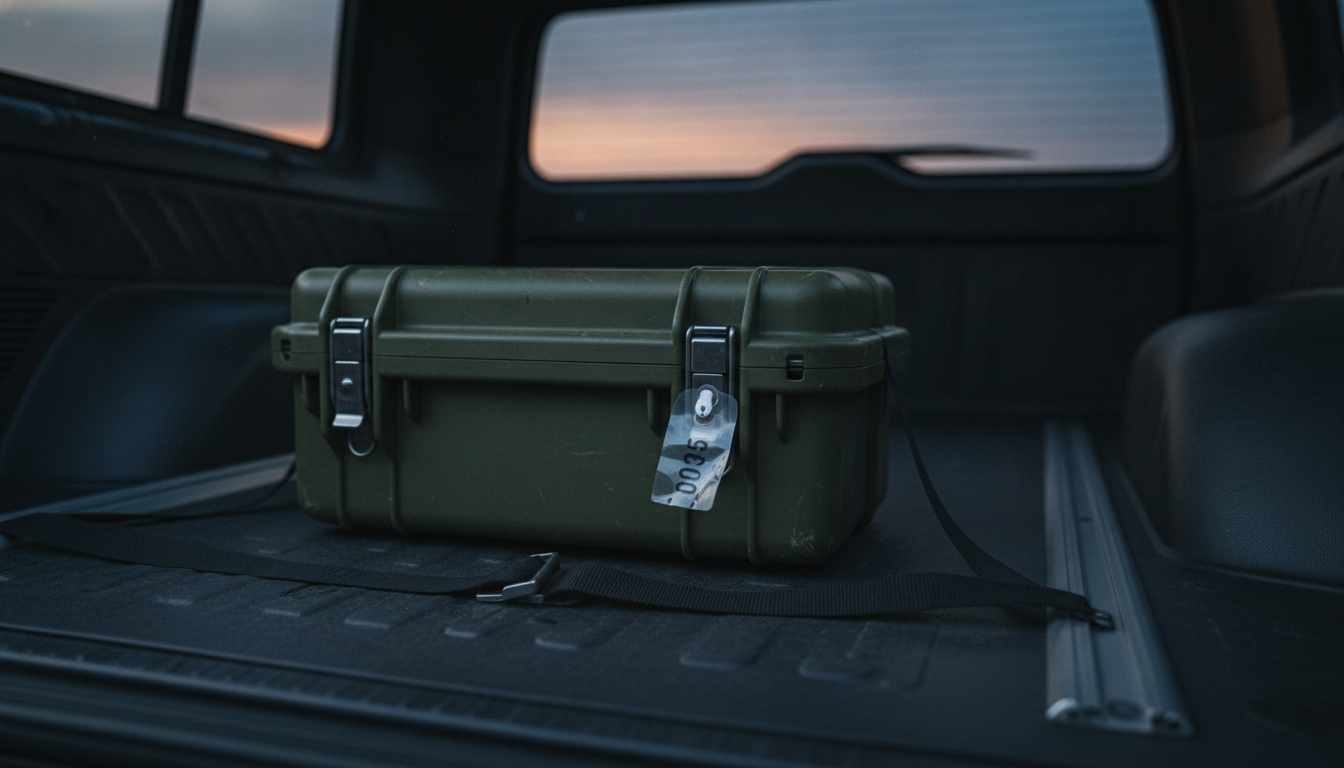
The fix is multiple sweeps anchored to the clinic’s hours rather than the laboratory’s. A workable pattern for a twelve-hour clinic is three pickups: late morning, around 11:30am, to clear overnight and early specimens; late afternoon, around 4:30pm, for the daytime peak; and a closing sweep after 8:00pm that delivers to the laboratory’s overnight accessioning shift. The closing sweep is the one that changes turnaround. It requires a courier operation that runs past 9:00pm every day, which is why carGO Health’s 24/7 medical courier coverage is the enabling condition for this client type.
Weekends need their own design. Weekend volume is often higher than weekday volume while laboratories run reduced accessioning shifts. A closing sweep on each weekend day, delivered to whichever laboratory shift is staffed, prevents a Friday-evening specimen from aging until Monday. Our scheduled medical courier routes page describes how recurring sweeps are set per site and per day of week.
Sweep patterns that match clinic hours:
- Late morning sweep around 11:30am to clear overnight holds and early visits
- Late afternoon sweep around 4:30pm for the daytime peak
- Closing sweep after 8:00pm, delivered to the overnight accessioning shift
- Saturday and Sunday closing sweeps timed to the laboratory’s weekend staffing
3. Multi-Site Route Design: Urgent Care Specimen Pickup Windows by Site
A network of twenty to forty clinics cannot be served by one route per sweep. Clustering comes first: group sites by drive time and by close time, so a closing sweep visits the 8:00pm sites in an order that puts the last one closest to the laboratory. Each site gets a pickup window, typically 30 minutes wide, published to the clinic so the medical assistant knows when to have the tote staged. Windows are built backward from the laboratory’s cutoff for the overnight run, not forward from when the first clinic happens to close.
Sequencing within a sweep changes daily, which is where AI-assisted dispatch earns its place. The platform re-sequences stops as sites confirm their totes are ready, skips a site that reports no specimens, and reassigns stops across drivers when one route runs long. The AI-optimized medical courier routing page explains the mechanics, and our guide to multi-site healthcare logistics coordination covers the client-side coordination that keeps forty sites on one plan.
A regional example: a network of roughly twenty urgent care centers across Bergen, Passaic and Morris counties feeding a reference laboratory near the Meadowlands. Three closing-sweep routes of six to eight stops each, converging on the laboratory between 9:30pm and 10:15pm, put every evening specimen on the overnight bench. Local coverage is on our northern New Jersey medical courier service page, and the medical courier service for urgent care page shows how site windows are configured.
Route design rules for clinic networks:
- Cluster sites by drive time and close time; six to eight stops per closing sweep
- Publish a 30-minute pickup window per site, built backward from the laboratory cutoff
- Let sites confirm readiness in the portal so dispatch can skip and re-sequence
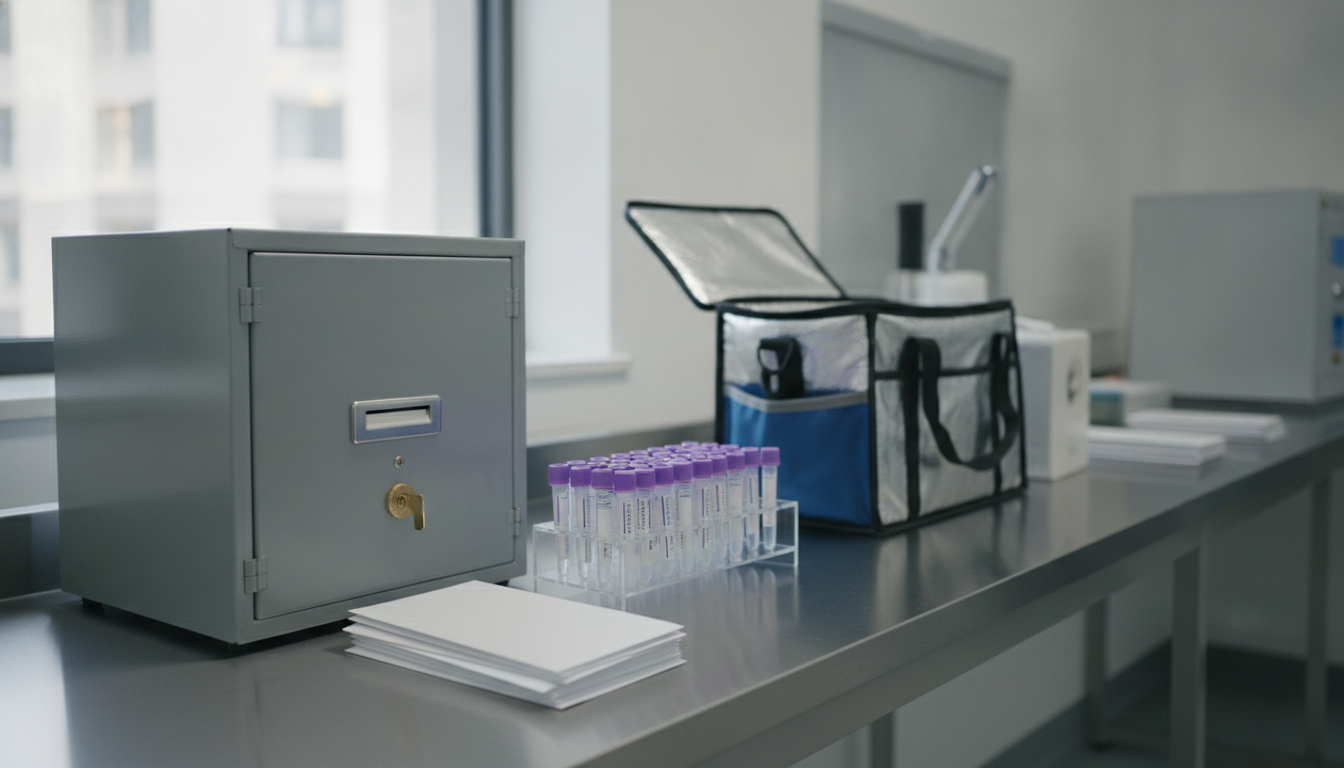
- Provide a secured, temperature-appropriate lockbox for sites that close before the window
4. Respiratory Season: Planning for the Surge
From roughly October through March, influenza, RSV and COVID-19 activity drive urgent care visits and, with them, respiratory PCR send-outs. The CDC seasonal influenza surveillance pages show the pattern each year: a climb through November and a peak between late December and February. For the courier the surge shows up as tote volume, refrigerated capacity and longer dwell at each stop while the medical assistant finishes packing.
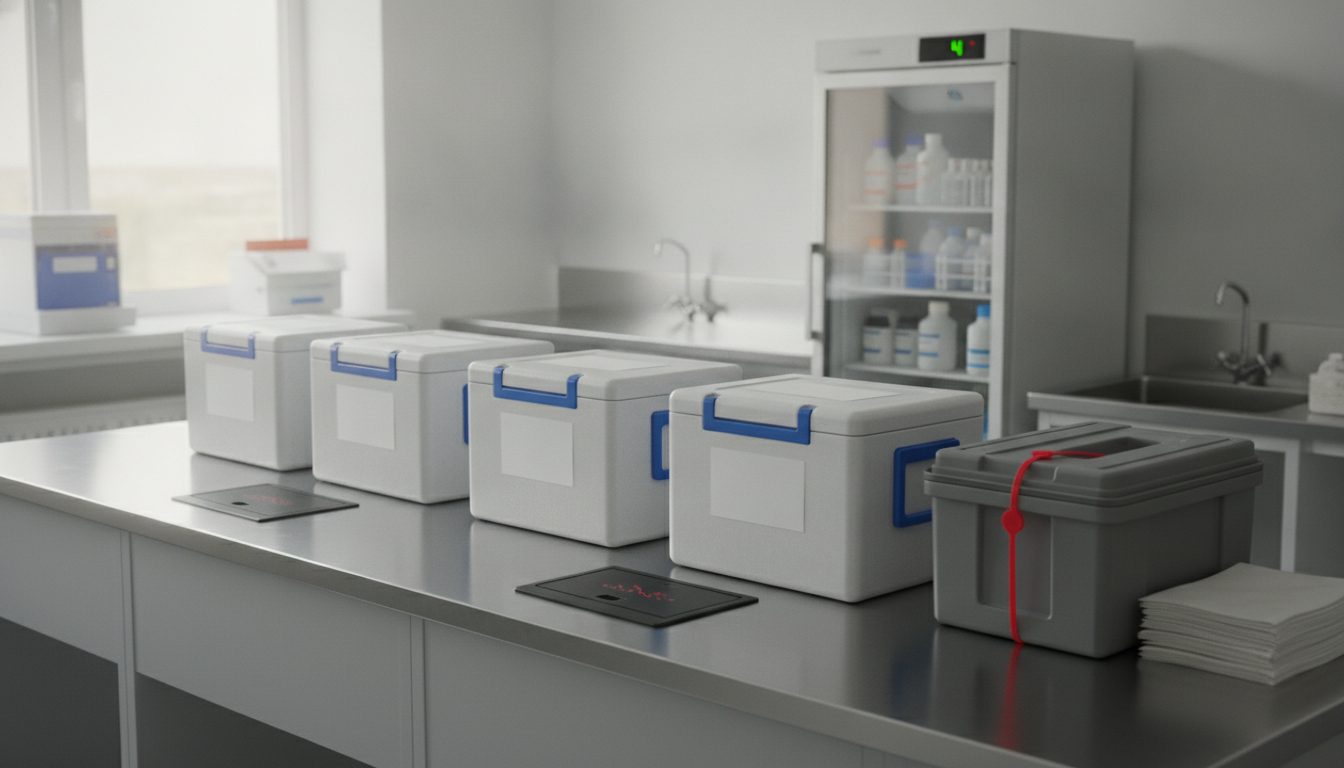
Capacity planning starts in September. The clinic network shares prior-season weekly volume by site; the laboratory shares its cutoff times and any plan for a second accessioning shift; the courier sizes refrigerated tote capacity per route and sets the point at which a route splits in two. The binding constraint is usually refrigerated tote volume, not the vehicle. Our refrigerated medical courier page covers pack conditioning for a tote opened at eight stops.
A floating driver network absorbs the surge differently from a dedicated vehicle. A floating network adds a midday sweep or splits the closing route for the weeks that need it and withdraws the capacity in March, which is the structural reason carGO Health runs urgent care networks on routes plus on-demand overlay rather than on parked vehicles. The laboratory-side planning is covered in our guide to lab outreach program logistics.
Surge planning checklist, September each year:
- Prior-season weekly send-out volume by site, with the peak weeks identified
- Laboratory cutoff times and any seasonal second accessioning shift
- Refrigerated tote capacity per route and the trigger volume for splitting a route
- A midday sweep that can be switched on by week rather than by season
5. Pack-Out, Handoff and Measuring Turnaround Per Clinic
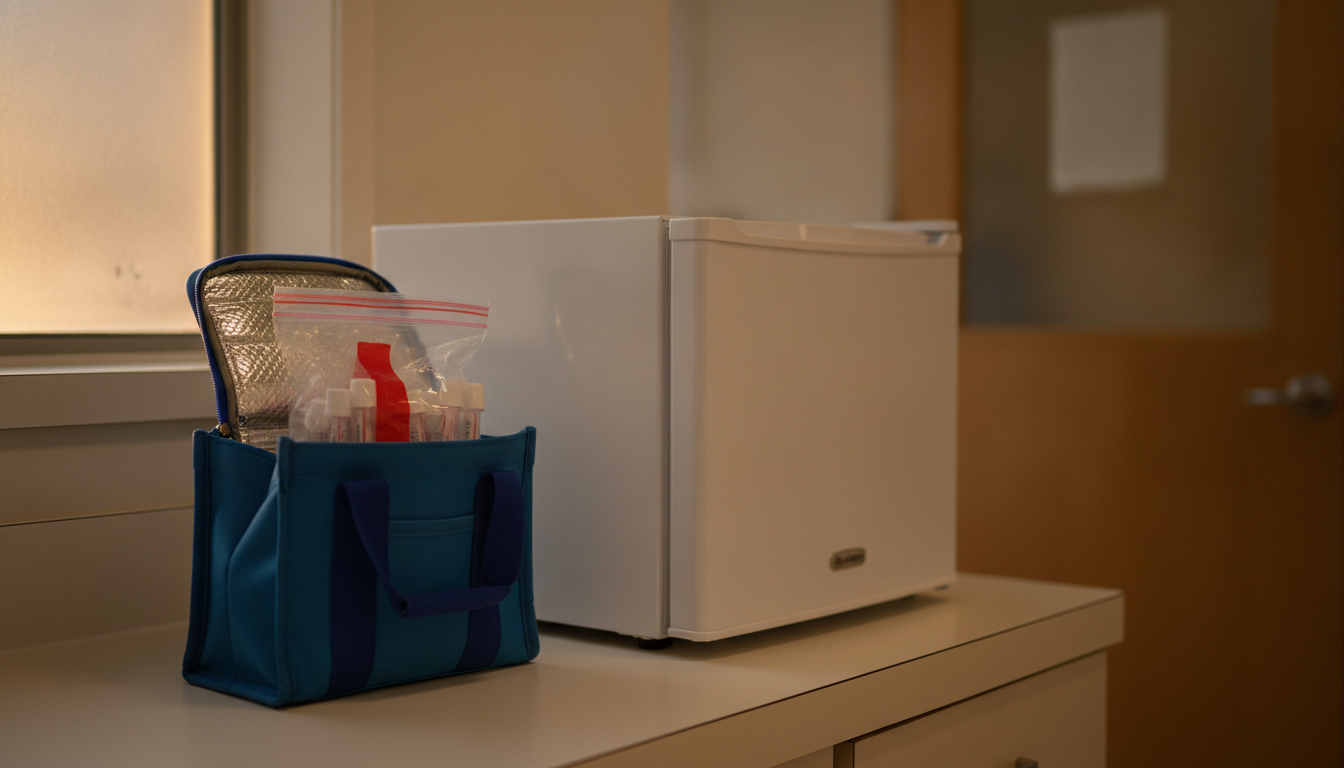
The clinic end of the pickup is usually handled by a medical assistant between patients. A one-page pack-out procedure covers the essentials: two patient identifiers on every container, specimen in a sealed biohazard bag with absorbent, requisition in the outer pocket, refrigerated send-outs staged in a dedicated specimen refrigerator rather than the vaccine refrigerator, and a pickup log or portal manifest listing the bag count. Handling falls under the OSHA bloodborne pathogens standard at 29 CFR 1910.1030, summarized on the OSHA bloodborne pathogens page, and collection details follow the CLSI specimen collection standards the laboratory should distribute to every site.
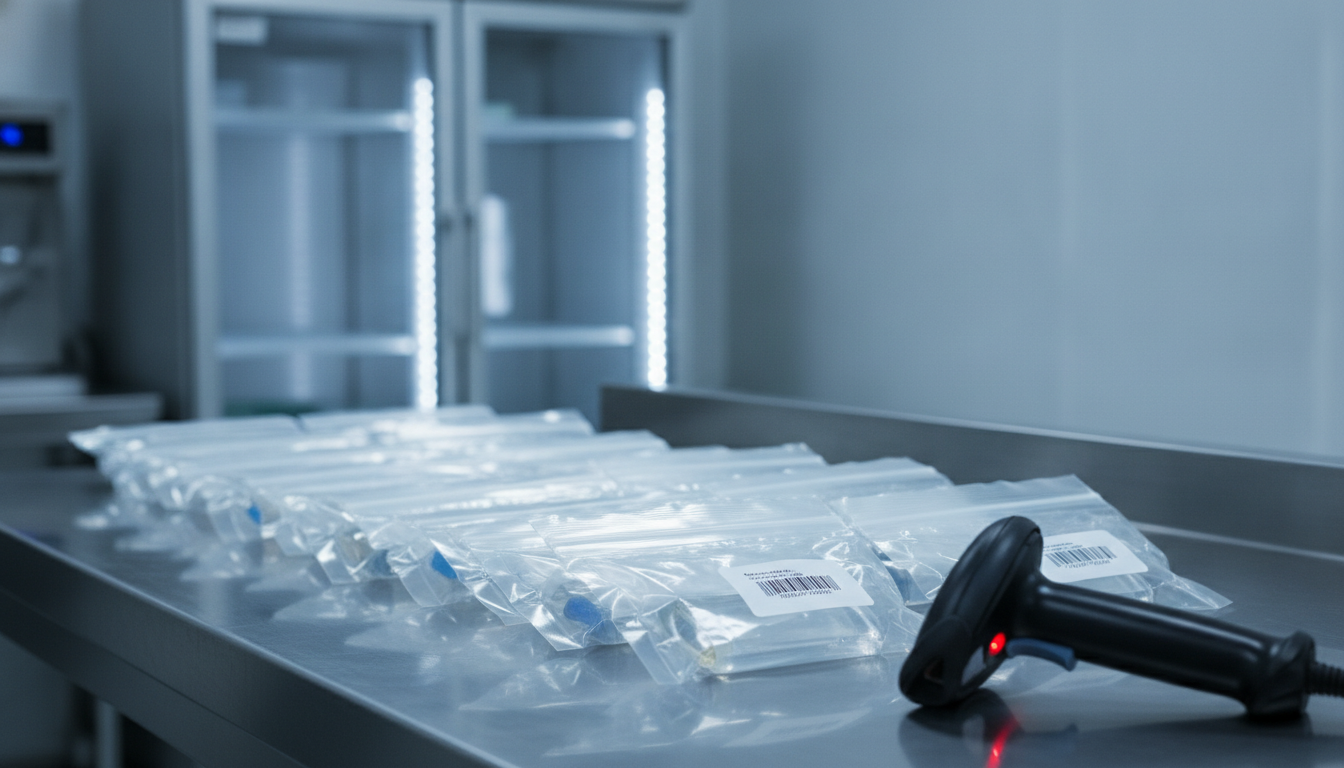
At the door, the courier scans the manifest or tote barcode inside the site’s geofence, confirms the bag count against the log, photographs the sealed totes and leaves within the window. At the laboratory, the receiving scan and e-signature close the order and start the accessioning clock. The two scans give the laboratory the number it needs per clinic: the interval from the end of the pickup window to accessioning, by site, by sweep, by day of week.
That per-clinic interval is what keeps turnaround flat. A network average hides the clinic that is always last on the route and always misses the cutoff. Review it weekly during respiratory season and monthly otherwise, alongside the rejection rate by site and reason. Our guide to medical courier performance SLAs and KPIs shows how to write those measures into the service agreement.
What to measure per clinic, not per network:
- Pickup window hit rate per site and per sweep
- Interval from end of pickup window to accessioning scan
- Share of specimens carried on the same-day closing sweep versus the next day
- Rejection rate by site and by reason, with pack-out errors separated from transport errors
Key Takeaways
Urgent care specimen pickup is a scheduling problem before it is a transport problem. The specimens are mostly stable for a day; the clinician’s promise is not. Flat turnaround across a clinic network comes from sweeps anchored to clinic hours, windows published per site, a closing sweep that reaches the overnight bench, and measurement per clinic rather than per network.
- Replace the single afternoon sweep with late morning, late afternoon and after-close pickups, seven days a week
- Cluster sites by drive and close time, publish 30-minute windows, end each sweep nearest the laboratory
- Plan respiratory season in September around refrigerated tote capacity and a switchable midday sweep
- Measure window hit rate, pickup-to-accession interval and same-day share per clinic
If your clinic network’s evening specimens are still traveling the next afternoon, schedule a demo of the carGO Health platform to see how site windows, closing sweeps and per-clinic reporting are set up for a multi-site network.
Frequently Asked Questions
How often should an urgent care clinic have specimens picked up?
A clinic open 8:00am to 8:00pm is best served by three sweeps: late morning, late afternoon and a closing sweep after 8:00pm that delivers to the laboratory’s overnight shift. The closing sweep matters most. Weekend clinics need Saturday and Sunday closing sweeps timed to the laboratory’s weekend staffing.
Which urgent care tests are sent out rather than run on site?
Under a CLIA certificate of waiver, clinics run rapid strep, influenza and COVID-19 antigen tests, urine dipstick and pregnancy tests, fingerstick glucose and similar simple tests on site. Send-outs typically include urine, throat and wound cultures, respiratory PCR panels, chlamydia and gonorrhea NAAT, complete blood counts, metabolic and lipid panels, thyroid tests and drug screens.
How should respiratory swabs be stored before pickup?
Swabs in viral transport medium for PCR testing should be held at 2 to 8 degrees Celsius in a dedicated specimen refrigerator, separate from the vaccine refrigerator, and are generally acceptable for up to about 72 hours after collection. They travel in a refrigerated tote with conditioned packs and a barrier layer.
How do multi-site routes keep turnaround consistent across clinics?
By clustering sites by drive time and close time, publishing a 30-minute pickup window per site built backward from the laboratory cutoff, ending each sweep at the site nearest the laboratory, and re-sequencing stops with AI-assisted dispatch as sites confirm readiness. Turnaround is then measured per clinic.
How should a laboratory plan courier capacity for respiratory season?
Start in September with prior-season weekly volume by site, the laboratory’s cutoffs and any seasonal second shift. Size refrigerated tote capacity per route, set the volume trigger for splitting a route, and prepare a midday sweep that can be switched on by week. A floating courier network adds and withdraws that capacity without a vehicle idling for the rest of the year.
Related Resources