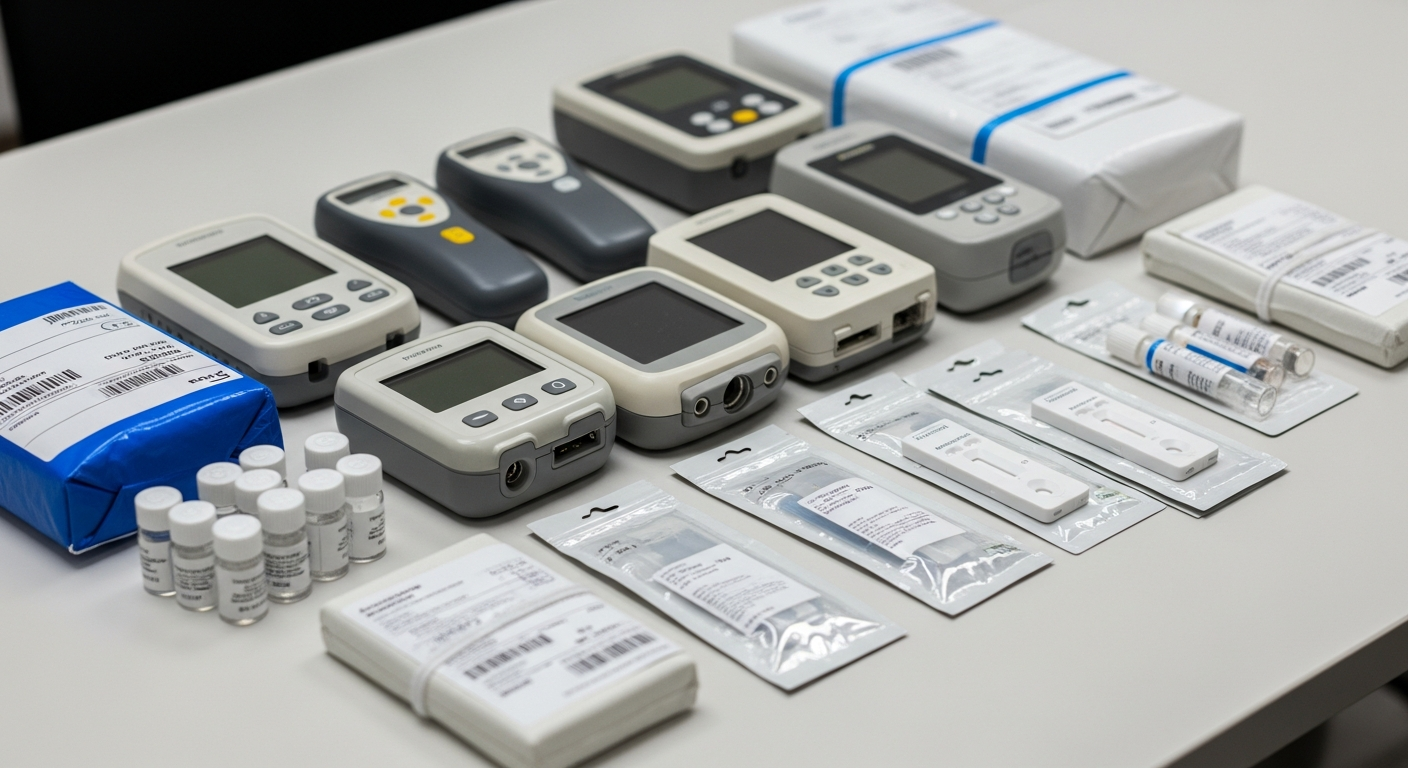
Radiopharmaceutical Delivery: Decay Clocks, Shielding and Compliance

Radiopharmaceutical delivery is the one segment of medical logistics where the product is measurably disappearing while it rides in the vehicle. A unit dose of fluorine-18 fludeoxyglucose (FDG) loses half of its activity roughly every 110 minutes. Technetium-99m loses half every six hours. Every run is planned backward from a calibration time and an injection schedule, and every minute of delay is paid for in lost activity, in doses outside the prescribed range, or in a patient sent home to rebook.
The regulatory layer is just as unforgiving. The US Department of Transportation governs the package, labels, paperwork and vehicle under Hazard Class 7; the Nuclear Regulatory Commission and its Agreement State counterparts license the pharmacy that ships the dose and the facility that receives it. This guide covers the decay math, packaging categories, handling and training rules, and receiving procedures a logistics manager should understand before any dose goes on a courier vehicle. A courier’s fitness for radiopharmaceutical transport should be settled in writing before the first dose ships.

1. Decay Clocks: Why Calibration Time Governs Radiopharmaceutical Delivery
Radioactive decay follows a fixed exponential law: activity halves once every half-life. Fluorine-18 has a physical half-life of about 110 minutes. Technetium-99m, the workhorse of general nuclear medicine, has one of about 6 hours. Gallium-68, used for PSMA and somatostatin receptor PET, has a half-life of about 68 minutes; iodine-123 runs about 13 hours and iodine-131 about 8 days.
A nuclear pharmacy labels each dose with an activity at a stated calibration time and draws enough extra activity to cover expected decay in transit. That overfill is the entire margin for delay. Sixty minutes of unplanned delay costs an F-18 dose roughly a third of its activity and a Ga-68 dose almost half; the same hour costs a Tc-99m dose about a tenth. Procedure standards from the Society of Nuclear Medicine and Molecular Imaging specify an administered activity range for each study, so a dose that decays below it is a protocol deviation, and the fallback is a replacement dose by on-demand STAT courier.
Scheduling rules that follow from the decay clock:
- Sequence multi-stop runs by half-life, shortest first: Ga-68 and F-18 before I-123 or Tc-99m kits.
- Set calibration time and delivery window together with the pharmacy, so overfill and route match.
- Agree a replacement-dose protocol in advance: who calls the pharmacy, who authorizes a second draw, what the cutoff is.
- Watch vehicle ETA against calibration time so the imaging department can reorder patients early.
2. DOT Hazard Class 7: Package Types, Labels and the Transport Index
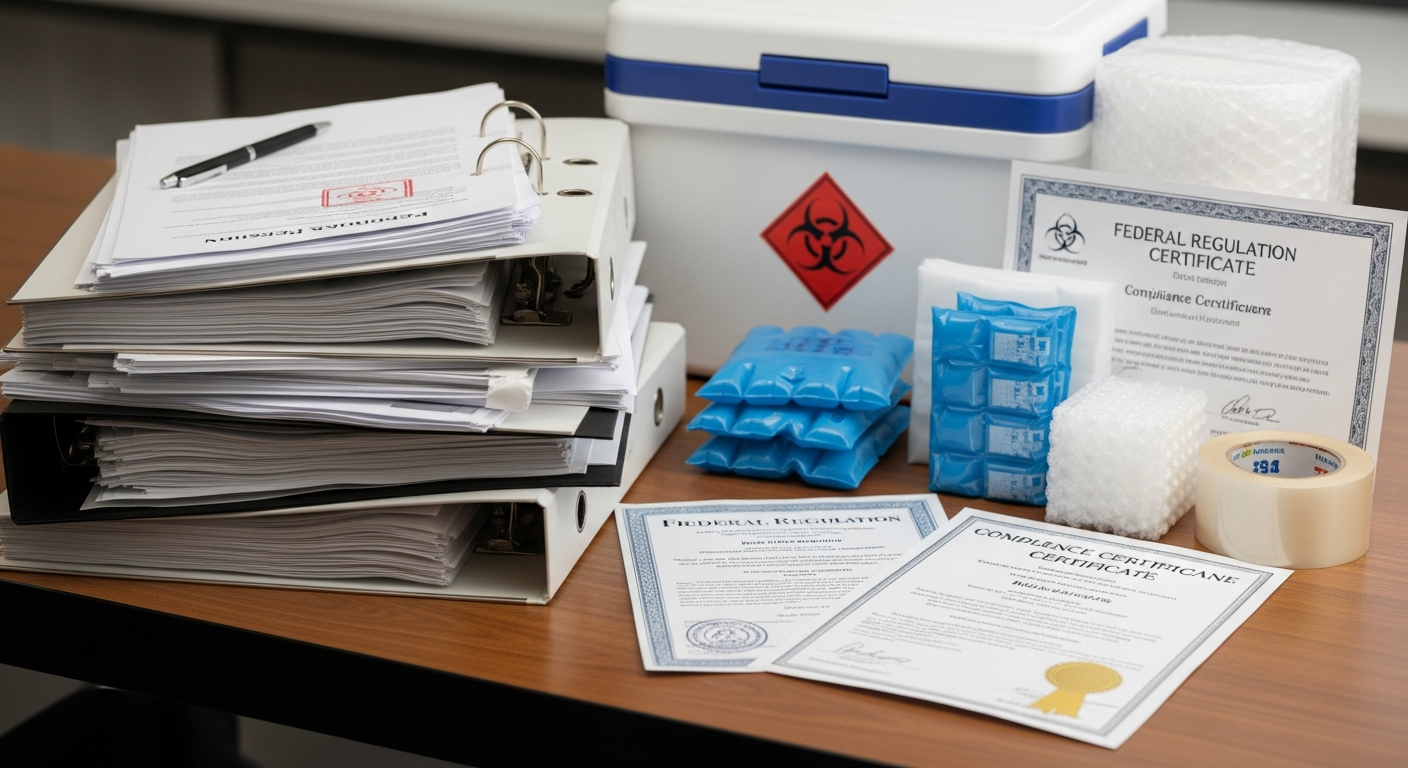
Radioactive material is Hazard Class 7 under the Hazardous Materials Regulations at 49 CFR Parts 171 through 180, administered by the Pipeline and Hazardous Materials Safety Administration. Excepted packages (UN2910, UN2911) hold very small activities and are relieved of most marking and documentation requirements. Type A packages (UN2915 for normal form material, UN3332 for special form) must pass water spray, free drop, stacking and penetration tests, and cover nearly every unit dose, vial and generator.
Each package also carries one of three labels, set by the surface dose rate and the transport index, the maximum dose rate at one meter in millirem per hour. White-I applies at or below 0.5 millirem per hour at the surface with a transport index of zero, Yellow-II up to 50 millirem per hour with a transport index of 1 or less, and Yellow-III up to 200 millirem per hour with a transport index up to 10. A RADIOACTIVE placard is required only for a Yellow-III package, and placarding is one trigger for PHMSA hazmat registration, so most unit-dose routes run unplacarded while remaining subject to the shipping paper, training and stowage rules in the OSHA and DOT compliance requirements post. Class 7 is distinct from the Division 6.2 rules in the UN 3373 guide.
Contents of a compliant Class 7 shipping paper:
- Proper shipping name and UN number, for example “Radioactive material, Type A package, non-special form, UN2915”.
- The radionuclide, its physical and chemical form, and the activity in becquerels, with curies in parentheses.
- The label category and the transport index for each package.
- A 24-hour emergency response number answered by someone who knows the shipment, plus the shipper’s certification.
3. NRC and Agreement State Rules on Both Ends of the Run
The DOT regulates the road; the NRC regulates the material and the people licensed to possess it. 10 CFR Part 30 licenses the pharmacy that distributes doses, 10 CFR Part 35 governs medical use at the receiving site, and 10 CFR Part 20 caps occupational exposure at 5 rem per year and public exposure at 0.1 rem per year. In Agreement States, which include most of the Northeast, the state program issues the license. Under 10 CFR Part 71, any licensee delivering licensed material to a carrier must comply with the DOT regulations. A courier is not the licensee: the pharmacy and the receiving facility hold the licenses, and the pharmacy must verify a new site’s authorization for the radionuclide and activity before the first delivery, which teams coordinating hospital courier service across facilities should expect for every new hot lab.
Receiving is a regulated act. Under 10 CFR 20.1906, a licensee must monitor a labeled package for radiation levels and removable contamination as soon as practicable and no later than three hours after receipt during working hours, or three hours from the start of the next working day if it arrived after hours. The package goes to an authorized individual and into locked, shielded storage, never to a loading dock or a security desk. The courier’s timestamped, e-signed delivery record joins the chain of custody file the licensee shows an inspector.
A receiving protocol agreed with the radiation safety officer:
- Named authorized recipients at each hot lab with an after-hours contact, so early PET deliveries are never refused.
- A survey meter and wipe test staged at the receiving point, with the three-hour clock started at delivery.
- A receipt log matching dose identifier, radionuclide, activity, calibration time and label category to the shipping paper.
- A discrepancy rule: any mismatch between manifest and package is held and reported to the pharmacy before the dose is drawn.
4. Shielding, Packaging and Vehicle Handling
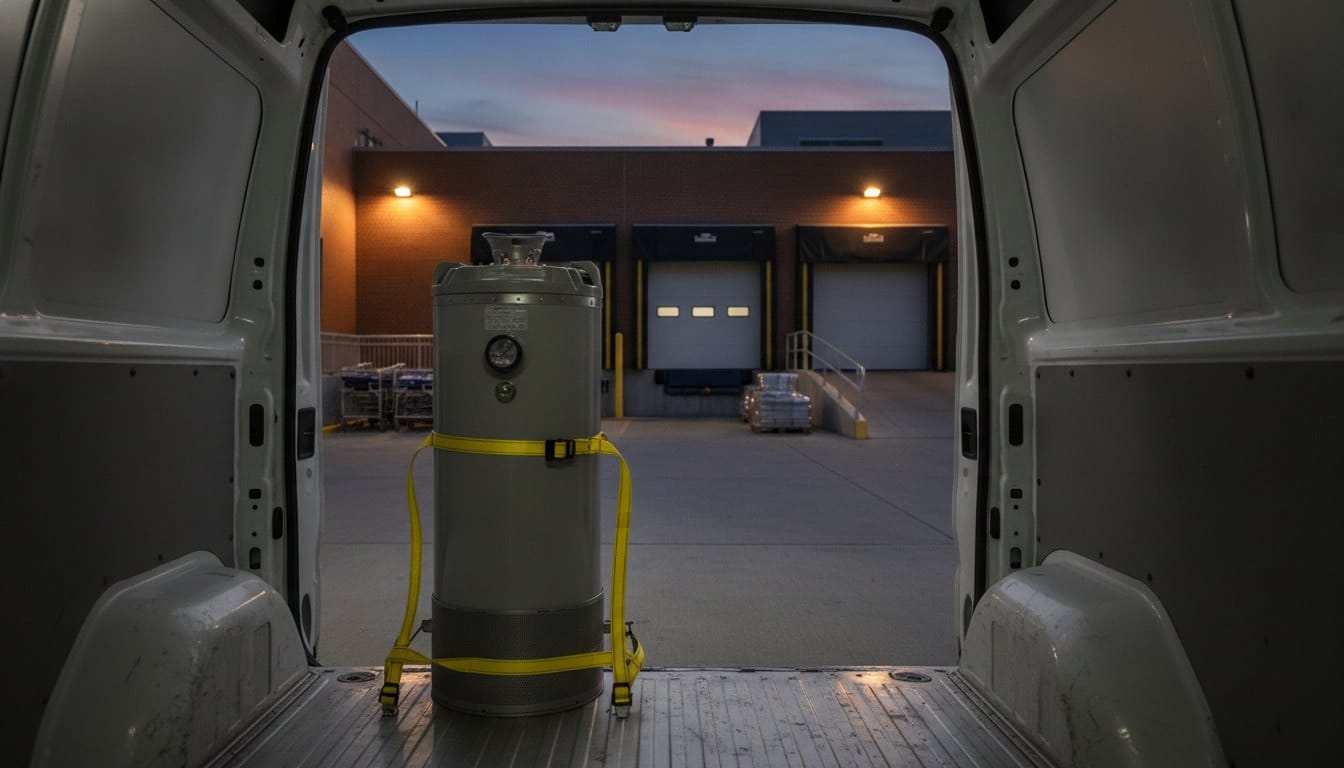
Shielding follows photon energy. Technetium-99m emits a 140 keV gamma ray that a fraction of a millimeter of lead halves, so a lead syringe shield and pig are effective. Fluorine-18 and gallium-68 annihilation photons at 511 keV need several millimeters of lead, or tungsten, per halving, so PET doses ship in heavier pigs. The pig sits in a foam insert inside a fiberboard or rigid plastic Type A outer with a tamper-evident seal; the shipper surveys the finished package at contact and one meter, checks removable contamination, labels it and completes the paperwork. A driver never opens a pig or accepts a package with a broken seal.
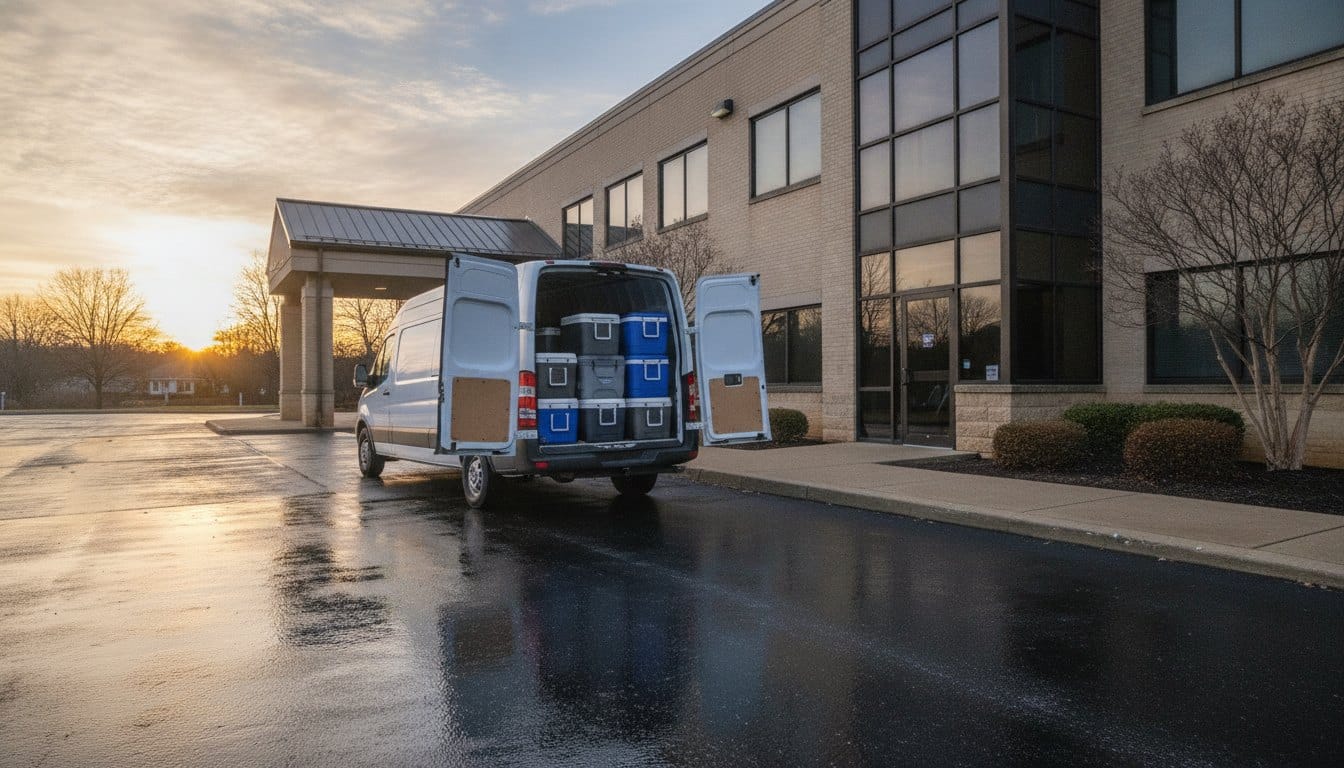
Inside the vehicle, time, distance and shielding protect the driver. Under 49 CFR 177.842, packages must be blocked and braced, kept a set distance from continuously occupied spaces and undeveloped film, and the transport indexes in a non-exclusive-use vehicle may not total more than 50. The exclusive-use limit of 2 millirem per hour in any normally occupied position is a sensible target for the driver’s seat. Route choice matters too: New York metropolitan tunnel and bridge authorities publish their own radioactive materials restrictions, and a dispatcher moving doses from a cyclotron in northern New Jersey into the city must check them before choosing a crossing.
Vehicle handling rules worth writing into the standard operating procedure:
- Stow packages in the rear cargo area, braced, label visible, nothing on top, no passengers, and never leave the vehicle unlocked.
- Carry the Emergency Response Guidebook; Class 7 incidents fall under Guides 161 through 166.
- After a collision or dropped package, isolate the area, call the emergency number on the shipping paper, and never attempt cleanup.
- Schedule pickups of empty pigs and spent generators as tracked healthcare reverse logistics runs so shielding returns to the pharmacy the same week.
5. Training, Insurance and What to Ask a Radiopharmaceutical Delivery Provider
Anyone who loads, handles or drives a Class 7 shipment is a hazmat employee under 49 CFR 172.704 and must complete general awareness, function-specific, safety and security awareness training first, with recurrence at least every three years and records retained for employment plus 90 days. The Class 7 function-specific module covers label categories, transport index, stowage distances, contamination control and incident response. This sits on top of the HIPAA, OSHA bloodborne pathogen and general DOT hazmat training a medical courier already completes, covered in the driver certification and training requirements post.
DOT does not require a dosimetry badge for a driver carrying White-I or Yellow-II packages, but 10 CFR 20.1502 requires monitoring for adults likely to receive more than 10 percent of the occupational limit, and the OSHA ionizing radiation standard applies outside NRC jurisdiction, so a courier running dense PET routes should show a dosimetry program or a documented assessment of why none is needed. The medical courier insurance requirements post explains how to read a certificate for hazmat exclusions. A specialized courier adds technology: real-time GPS tracking against calibration time, geofenced photo proof of delivery with a named recipient’s e-signature, and 24/7 dispatch for 4 a.m. cyclotron pickups before a 7 a.m. PET schedule. Ask any courier, carGO included, to document its position on each requirement in writing before the first dose ships.
Questions to put to any courier before the first dose ships:
- Which drivers hold current 49 CFR 172.704 training with a Class 7 module, and can records be produced?
- Does the courier hold PHMSA hazmat registration, and if not, what is the written basis for not needing it?
- Does the certificate of insurance exclude radioactive materials, and does cargo coverage address a lost or decayed dose?
- How is calibration time captured in the order, and how is the delivery timestamp reconciled against it?
Key Takeaways
Radiopharmaceutical delivery is governed by physics first and regulation second, and neither forgives a late vehicle. A manager who understands each product’s half-life, the Class 7 label categories, the licensee obligations at both ends and the driver training required can design a route that lands doses inside their activity window.
- F-18 loses about a third of its activity in a 60-minute delay, Ga-68 almost half, Tc-99m about a tenth; plan every route from the calibration time.
- Most unit doses ship as Type A packages with White-I or Yellow-II labels: shipping papers and training required, vehicle placards not.
- The pharmacy and the receiving facility are the licensees; the courier operates under DOT rules and delivers only to authorized recipients.
- Receiving sites must survey labeled packages within three hours, so the delivery timestamp starts a regulatory clock too.
If your nuclear medicine or PET program is reviewing how doses move from pharmacy to scanner, schedule a walkthrough of the carGO Health platform to see how calibration time scheduling, live ETA and geofenced proof of delivery fit a radiopharmaceutical route.
Frequently Asked Questions
How long does an F-18 FDG dose stay usable after it leaves the pharmacy?
Fluorine-18 has a half-life of about 110 minutes, so a dose retains roughly half its activity after that interval and about a quarter after 220 minutes. Pharmacies overfill each syringe to a calibration time set 30 to 90 minutes before injection. Once transit exceeds that margin, the technologist must inject less, reschedule or order a replacement dose.
Does a vehicle carrying radiopharmaceuticals need a RADIOACTIVE placard?
Under 49 CFR 172.504, a highway vehicle must display a RADIOACTIVE placard only when it carries a package bearing a Yellow-III label. Unit doses labeled White-I or Yellow-II, which cover most clinical deliveries, do not require placards. Shipping papers, package labels, driver training and stowage rules still apply in full either way.
What training does a driver need to transport Class 7 radioactive material?
Every hazmat employee, including a driver, must complete general awareness, function-specific, safety and security awareness training under 49 CFR 172.704 before handling Class 7 shipments, with recurrent training at least every three years. The Class 7 module covers label categories, transport index, stowage distances and incident response, and employers must keep the records.
What must a hospital do when a radiopharmaceutical package is delivered?
Under 10 CFR 20.1906, the licensee must survey a labeled package for radiation levels and removable contamination as soon as practicable, and within three hours of receipt during working hours or three hours from the start of the next working day if it arrived after hours. The package must be accepted by an authorized individual and locked in shielded storage.
Who is responsible for compliance: the pharmacy, the hospital or the courier?
The nuclear pharmacy and the receiving facility are the NRC or Agreement State licensees, each responsible for compliant shipping and receiving under 10 CFR Part 71 and the DOT regulations. The courier is a hazmat carrier subject to 49 CFR training, stowage, documentation and incident rules. Responsibility is shared, so procedures and training records should be exchanged before service begins.
Related Resources