Pathology Specimen Transport: Slides, Blocks and Tissue in Formalin

Anatomic pathology moves through a region in three physical forms, and each fails differently in transit. Tissue in formalin leaks, freezes or arrives with the specimen stuck in the lid. Glass slides crack, and their mounting media soften in a hot vehicle. Paraffin blocks, the patient’s only archival tissue, deform above roughly 56 C and cannot be replaced. Pathology specimen transport is therefore less about one temperature tier than about knowing which form is in the bag, what the receiving laboratory will do with it, and what clock it is on.
Dermatopathology adds volume and rhythm. A busy dermatology practice generates dozens of skin biopsies a day, each in its own small jar, and a regional dermatopathology laboratory collects from many such practices every evening to feed an overnight processing run. This guide covers handling for slides, blocks and formalin-fixed tissue, explains when formalin is and is not a regulated hazardous material, and walks through the pickup-to-report flow between dermatology practices and dermatopathology laboratories, building on the general principles of pathology specimen transport.
1. Formalin-Fixed Tissue: The Foundation of Pathology Specimen Transport
The standard fixative in surgical pathology is 10 percent neutral buffered formalin, roughly 4 percent formaldehyde by weight. Practices receive prefilled screw-cap containers, commonly 10 to 60 milliliters, and drop the specimen in at the chair. Fixation depends on volume: College of American Pathologists guidance calls for at least ten times the tissue volume in formalin, so a 4 millimeter punch biopsy fits a 10 milliliter jar while a wide excision needs the largest container in stock. Tissue headed for hormone receptor or HER2 testing must fix for 6 to 72 hours with cold ischemia under one hour, so pickup timing decides assay eligibility.
Temperature control for formalin means avoiding extremes. Fixed tissue travels as ambient medical transport. It must not freeze, because ice crystals damage morphology and a frozen jar can crack, and a vehicle cabin in northern New England drops well below 0 C in January. It must not bake either, since heat drives uneven fixation and raises vapor pressure in the jar. Not everything belongs in formalin: direct immunofluorescence specimens travel in Michel’s medium at ambient temperature, and fresh tissue for lymphoma workup, flow cytometry or culture travels unfixed at 2-8 C the same day.
Packaging standards for tissue in formalin:
- Close the cap fully and wrap the seam with sealing film; most leaks come from caps cross-threaded at the end of a visit.
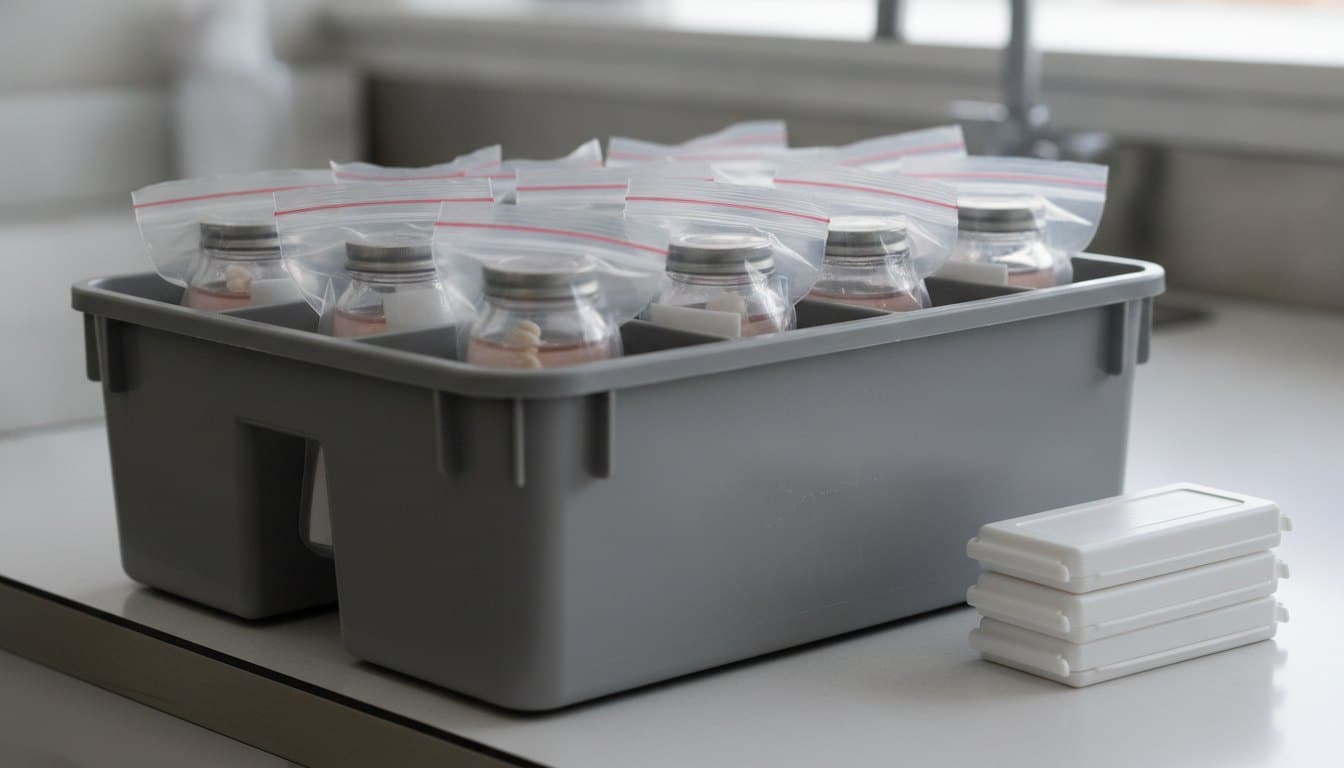
- Bag each jar in a leak-proof zip specimen bag with an absorbent pad sized for the full volume, requisition in the dry outer pocket.
- Load bagged jars upright in a rigid tote with dividers; in winter keep totes in the cabin, not an unheated cargo area.
- Separate formalin jars from Michel’s medium, fresh tissue and culture specimens, with the tier written on the tote label.
2. Glass Slides and Paraffin Blocks: The Archive on the Move
Slides and blocks are the laboratory’s permanent record of the case. CLIA regulations at 42 CFR 493.1105 require laboratories to keep histopathology slides for at least 10 years and paraffin blocks for at least 2 years, and the CAP checklist extends blocks to 10 years. A lost consult set is a lost medical record, so a laboratory lending slides or blocks for second opinions or send-out testing must track them out and back with the HIPAA discipline in the medical records courier guide.
The physical risks are mechanical and thermal. Stained slides ship in rigid plastic mailers holding 1 to 5 slides, slotted cardboard folders or 100 slide boxes, always fully seated so the glass cannot rattle. Histology paraffin melts between roughly 56 and 58 C, mounting media soften before that, and a closed vehicle in July sun passes 60 C within an hour, so slides and blocks ride in the cabin or an insulated container, never on a cargo floor. Each outgoing set is listed by accession number on a transmittal signed at both ends, the chain of custody practice that makes a lost slide traceable, and borrowed material comes home as a tracked reverse logistics trip.
Handling rules for slides and blocks:
- Log every slide and block by accession number on a transmittal signed at pickup and receipt; resolve count discrepancies on the spot.
- Fill empty mailer slots with blank slides or foam so nothing moves, and mark the outer box as fragile glass.
- Ship blocks tissue-face up in a cassette box or block tray, never in the same compartment as glass.
- Keep patient identifiers on inner materials only, and hold the box between roughly 10 and 25 C, out of direct sun.
3. When Formalin Is Hazmat and When It Is Not
Whether formalin needs hazmat paperwork depends on concentration and on what is inside. In the 49 CFR 172.101 hazardous materials table, formaldehyde solutions with not less than 25 percent formaldehyde are UN2209, Class 8, Packing Group III, and flammable formaldehyde solutions, typically methanol-stabilized, are UN1198, Class 3. The 37 percent stock a laboratory buys to make its own fixative meets those definitions, and moving it by road requires shipping papers, labels and trained hazmat employees, or limited quantity handling with each inner packaging at or below 5 liters. A 10 percent neutral buffered formalin jar, at about 4 percent formaldehyde, falls below the threshold.
The tissue inside is usually exempt from the Division 6.2 infectious substance rules too, because 49 CFR 173.134 excludes material in which pathogens have been inactivated, which is what fixation does. A bagged formalin biopsy is, in regulatory terms, an unregulated package that still deserves triple packaging, because a leaking jar in a vehicle is an OSHA formaldehyde exposure event for the driver; 29 CFR 1910.1048 sets a permissible exposure limit of 0.75 parts per million over eight hours. Two cases pull a shipment back into the regulated world: unfixed tissue from a patient with a suspected transmissible infection is Category B under UN3373, covered in the UN 3373 guide, and any air leg falls under the IATA Dangerous Goods Regulations and airline variations that may restrict formalin outright.
How to classify a pathology shipment before it leaves:
- Prefilled 10 percent NBF jars with fixed tissue: not a listed DOT hazardous material, not Division 6.2; triple pack anyway.
- Stock formaldehyde at 25 percent or more, or methanol-stabilized formalin: UN2209 Class 8 or UN1198 Class 3, with trained handling and shipping papers.
- Fresh tissue from a suspected infectious case, or cultures: Category B, UN3373, with the diamond mark and triple packaging.
- Any air leg: check IATA and the carrier’s variations before booking.
4. The Dermatology-to-Dermatopathology Flow, Hour by Hour
A dermatology practice runs on a clinic schedule, and its biopsies accumulate through the day in a specimen bin: shave biopsies of suspected basal cell carcinomas, excisions of pigmented lesions, and Mohs debulk specimens sent for permanent sections. Each jar carries two patient identifiers, the anatomic site with laterality and a specimen letter when a patient has several sites. A practice with three or four providers can fill a tote with 30 to 60 jars by late afternoon, which is why dermatology and pathology courier routes are built around the end of the clinic day.
The laboratory’s processing schedule sets the pickup time. Most dermatopathology laboratories load tissue processors in the evening for an 8 to 12 hour cycle, then embed, section and stain the next morning. A biopsy that arrives before the evening cutoff is typically reported within 24 to 48 hours; one that misses it waits a full day. That is why scheduled medical courier routes for dermatopathology cluster in the late afternoon and why a missed stop costs reporting days, not minutes. A laboratory in central New Jersey serving practices from the shore to the Philadelphia suburbs sequences its route by processor load time, farthest first, and sends rush melanoma cases by on-demand pickup ahead of the sweep.
Route design points for dermatopathology pickups:
- End each practice’s pickup window 60 to 90 minutes before processor load time, with the farthest stops earliest.
- Run a supply loop on the outbound leg: prefilled jars, bags, requisitions and Michel’s medium on the same route.
- Photograph the closed tote and record a jar count at pickup; reconcile at accessioning the same evening.
- Track labeling exceptions by practice and feed them back within the week; mismatched jars and requisitions are the leading cause of specimen rejection.
5. Turnaround and Accountability in Pathology Specimen Transport
Turnaround expectations in dermatopathology are tight and increasingly written into service agreements. Routine skin biopsies are commonly reported within 1 to 3 business days; immunohistochemistry adds a day or two; molecular send-outs take longer. Transport time cannot be recovered downstream, so laboratories running a lab outreach courier program should measure turnaround from pickup, not accessioning, and be able to show for any case when the jar left the practice and when it arrived.
The data behind that is simple: a timestamp and geofenced photo at pickup, a timestamp and e-signature at delivery, a count at each end, and a temperature exception record for items that travel refrigerated. A laboratory receiving that data for every tote answers a question about a missing case in minutes rather than by calling around. For the practice, accountability is simpler: did the biopsy reach the laboratory, and when? Practices should expect a pickup confirmation each evening, confirmation that a rush case has been collected, and a supply request path without a phone call.
What a laboratory should require from its transport process:
- Pickup and delivery timestamps for every tote, retained with the case record, so transit time is part of the turnaround audit.
- A photo of the tote at pickup and a signed receipt at the laboratory, available to the practice.
- Documented handling procedures for each form: formalin, Michel’s medium, fresh tissue, slides and blocks.
- Driver training records for HIPAA, OSHA bloodborne pathogens and DOT hazardous materials, since fresh tissue and stock formalin fall under those rules.
Key Takeaways
Pathology specimen transport succeeds when the three physical forms are handled on their own terms and the pickup schedule is built backward from the laboratory’s processing run. The regulatory answer on formalin is lenient for routine biopsies and strict for stock reagent and unfixed tissue; the operational answer is always the same: package for the worst day and record every handoff.
- Formalin-fixed tissue travels at ambient temperature, protected from freezing and heat, triple packaged even though 10 percent NBF is not a listed hazardous material.
- Stock formaldehyde at 25 percent or more, methanol-stabilized formalin and unfixed tissue from suspected infectious cases are regulated and need trained handling.
- Slides and blocks are medical records under CLIA and CAP; log them by accession number and keep them below about 40 C.
- Dermatopathology pickup windows are set by processor load time, and a missed evening cutoff costs a full reporting day; measure turnaround from pickup.
If your laboratory or dermatology group is reviewing how biopsies, slides and blocks move across the region, request a demo of the carGO Health platform to see how scheduled routes, on-demand rush pickups and geofenced proof of delivery fit a pathology workflow.
Frequently Asked Questions
Is 10 percent formalin a hazardous material for ground transport?
No. The DOT hazardous materials table lists formaldehyde solutions at 25 percent formaldehyde or more (UN2209, Class 8) and flammable formaldehyde solutions (UN1198, Class 3). Ten percent neutral buffered formalin contains about 4 percent formaldehyde, below the threshold, and fixed tissue is exempt from Division 6.2 rules because fixation inactivates pathogens. Stock 37 percent formalin is regulated.
What temperature should pathology specimens be transported at?
Formalin-fixed tissue, glass slides and paraffin blocks travel at ambient temperature, ideally between about 10 and 25 C, protected from freezing and from heat above roughly 40 C, since paraffin softens near 56 C. Fresh unfixed tissue for flow cytometry, lymphoma workup or culture is refrigerated at 2-8 C and delivered the same day. Michel’s medium specimens stay ambient.
How quickly are dermatopathology biopsies usually reported?
Routine skin biopsies are commonly reported within 1 to 3 business days of reaching the laboratory, with immunohistochemistry adding a day or two. The critical variable is the evening processor cutoff: a jar received before it is usually read the next day, while one that misses it waits for the next overnight run. Rush cases are collected on demand and accessioned first.
How should glass slides and paraffin blocks be packaged for a courier?
Seat slides fully in rigid plastic mailers or slotted folders with empty slots filled so nothing moves, place blocks tissue-face up in cassette boxes, and keep the two in separate compartments. List every item by accession number on a signed transmittal, keep patient identifiers off the outer packaging, and carry the box in the cabin away from heat.
What is the difference between formalin and Michel’s transport medium?
Formalin is a fixative that cross-links proteins for routine histology and immunohistochemistry. Michel’s medium is a preservative buffer, not a fixative, used for direct immunofluorescence on skin and mucosal biopsies in suspected bullous disease or vasculitis. Formalin destroys the immunoreactivity that immunofluorescence depends on, so the two must never be substituted; couriers keep them in separate, labeled compartments.
Related Resources