Biotech and Pharmaceutical Supply Chain Logistics: Site to Clinic

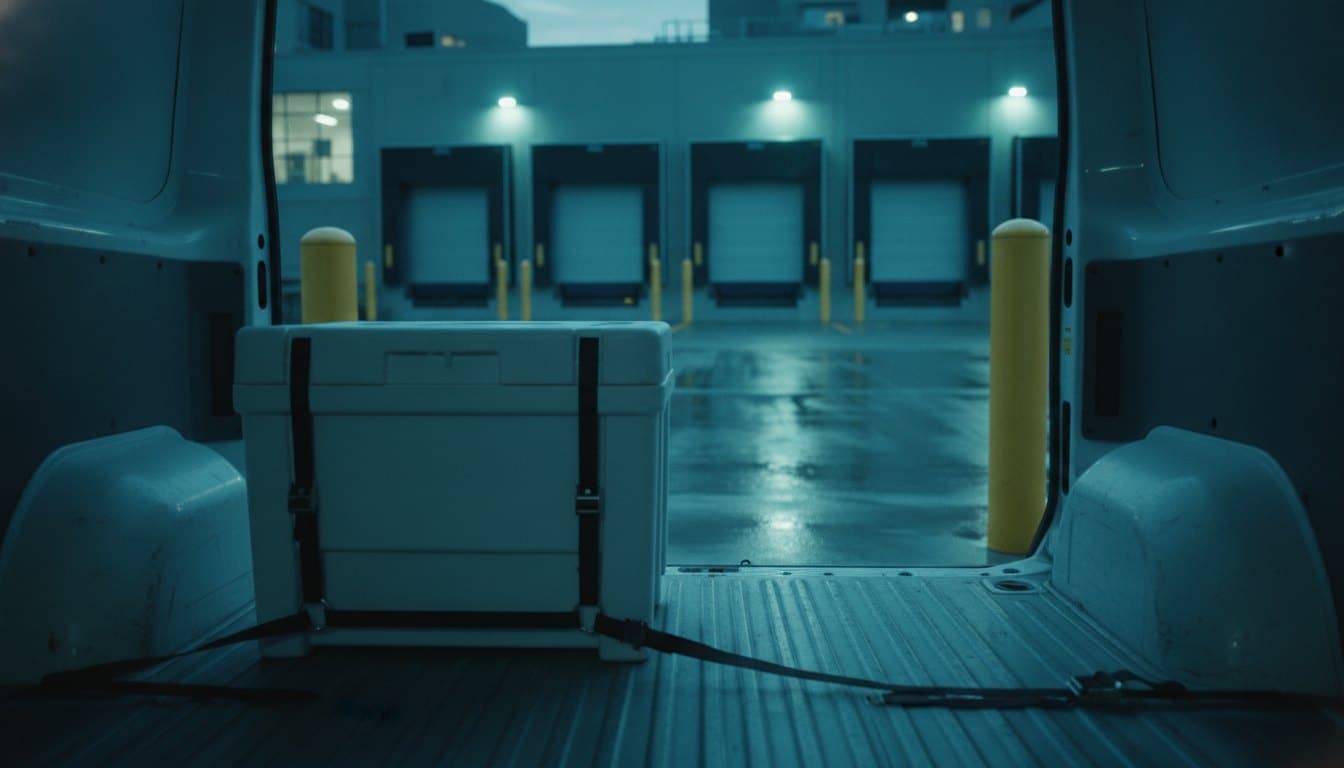
A biologic leaves a manufacturing suite under a quality system that controls every variable in the room. Twelve hours later it may be sitting on a loading dock in a shipper nobody has checked since the truck left the depot. Pharmaceutical supply chain logistics is the discipline that keeps the second scene from happening: it extends the manufacturer’s control across every handoff until the product reaches the pharmacy shelf, the infusion chair or the clinical trial site.
This guide follows a product from manufacturing site to clinic and stops at the handoffs where control is most often lost: the boundary between good manufacturing practice and good distribution practice, investigational product for clinical trials, temperature tiers and packaging, the documentation that travels with the product, and the last mile from depot to point of care.
1. From GMP to GDP: Where Manufacturing Control Ends and Distribution Control Begins
A drug or biologic is made under current good manufacturing practice, the FDA’s CGMP regulations in 21 CFR Parts 210 and 211 for drugs and the Part 600 series for biologics. Nothing ships until quality assurance releases the batch and issues a certificate of analysis. Once released product crosses the dock, good distribution practice takes over. GDP, described in World Health Organization guidance and USP General Chapter 1079, requires that labeled storage and transport conditions be maintained, verified and documented until the product reaches the dispenser.
The hard part is not the two frameworks but the seams between them. Responsibility passes from manufacturer to third-party logistics provider, through distributor and regional depot, and to the courier that delivers to a clinic. Each transfer needs a quality agreement that says who owns the product and its temperature data, who investigates a deviation, and who can quarantine or release. A courier in this chain is a GDP participant, not a delivery vendor: written SOPs, driver training records, calibrated loggers, and deviation reporting that reaches the sponsor’s quality unit within defined hours.
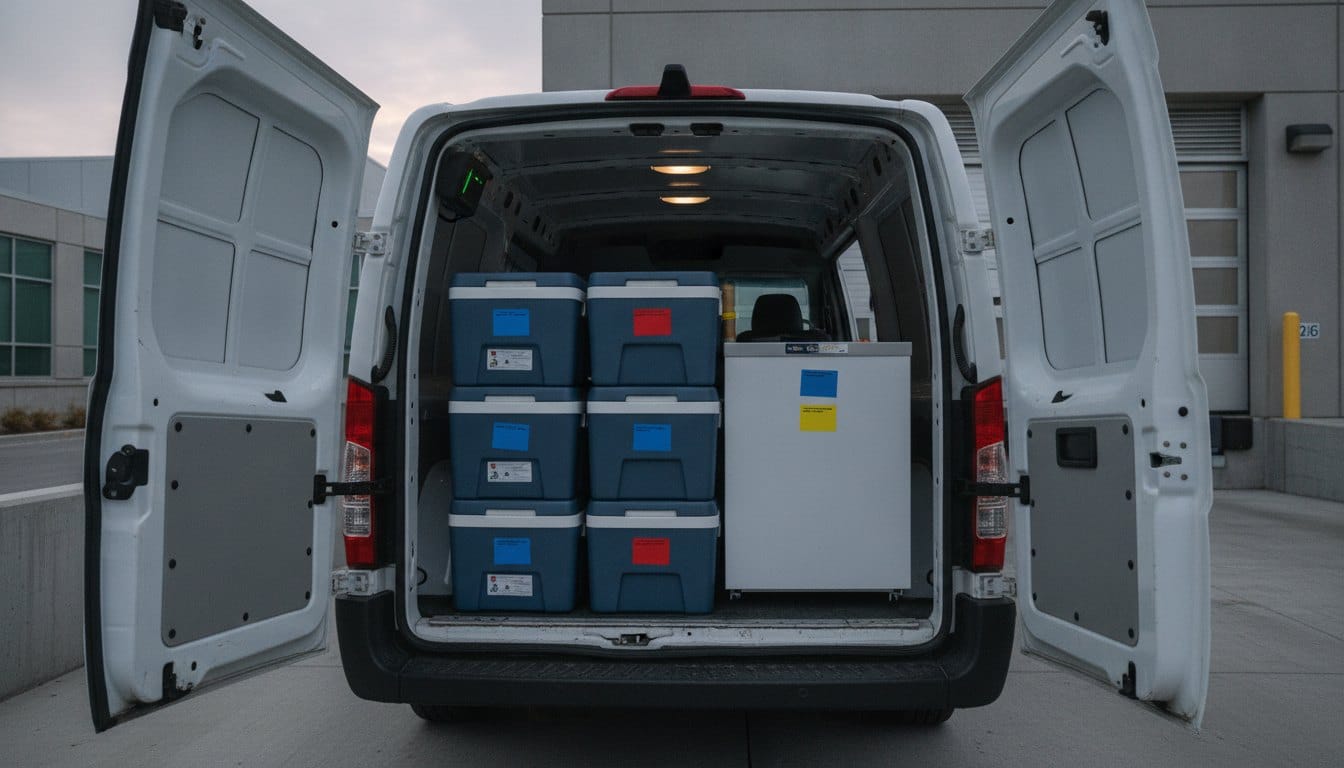
Regional depots hold inventory close to major metro areas so a hospital pharmacy or infusion center can receive product the same day. That final segment, sometimes 20 miles and sometimes 200, runs under the same label conditions as the long-haul leg but with more handoffs per mile. Our overview of pharmaceutical courier services and cold chain compliance covers the courier’s obligations.
What a quality agreement with a distribution partner should specify:
- Exact storage and transport condition per product, with permitted excursion ranges and durations
- Ownership of the temperature record for each leg and how it transfers at handoff
- Deviation notification timing, escalation contacts and who decides quarantine or release
- Training requirements for handlers and drivers, logger calibration intervals, and audit rights
2. Investigational Products: Clinical Trial Supply from Depot to Site
Investigational products add a second layer of accountability. Under 21 CFR Part 312, a sponsor may ship investigational drug only to participating investigators, must keep records of shipment and disposition, and must account for every unit through administration, return or destruction. Depots ship numbered kits on a schedule tied to patient visits, and the site pharmacy logs receipt, arrival temperature, dispensing and returns. A kit that arrives out of range or with a broken seal cannot be dispensed until the sponsor’s quality unit rules on it.
Timing is tight because kits are patient-specific and visits are protocol-bound; a kit needed for a Thursday infusion cannot arrive on Friday. Blinded studies add a constraint: the courier must never see, photograph or record anything that reveals treatment assignment, so labels carry kit numbers only and proof-of-delivery photos show the sealed shipper, never the contents. Ground delivery from a northern New Jersey depot to sites in Manhattan and Philadelphia avoids the transfers of a parcel network; our medical courier services for clinical trials page sets out the requirements.
Decentralized trials push investigational product beyond the site. FDA guidance on decentralized clinical trials describes shipping product to a participant’s home under the investigator’s oversight, with the same accountability and temperature requirements plus an identity check at the door. That needs a courier who can deliver inside a scheduled window, confirm the recipient, collect a signature, and bring back unused product or specimens; the specimen side is covered in our post on clinical trial specimen transport requirements.
Controls for an investigational product shipment:
- Shipment authorization naming the site, kit numbers and delivery window
- Sealed, tamper-evident shipper with a calibrated logger started before packing
- Blinding preserved at every step: kit numbers on labels, no open-container photographs
- Receipt acknowledgment with arrival time, logger reading and an authorized signature
- A documented return path for unused product and specimens collected at home visits
3. Temperature Tiers in Pharmaceutical Supply Chain Logistics
Controlled room temperature is defined by USP as 20 to 25 C, with excursions permitted between 15 and 30 C provided the mean kinetic temperature stays at or below 25 C. Refrigerated product, including most biologics and vaccines, is held at 2 to 8 C and protected from freezing; one freeze event can denature a protein invisibly. Frozen product is commonly stored at minus 20 C, ultra-cold product at minus 60 to minus 80 C, and cell therapies in vapor-phase liquid nitrogen below minus 150 C.
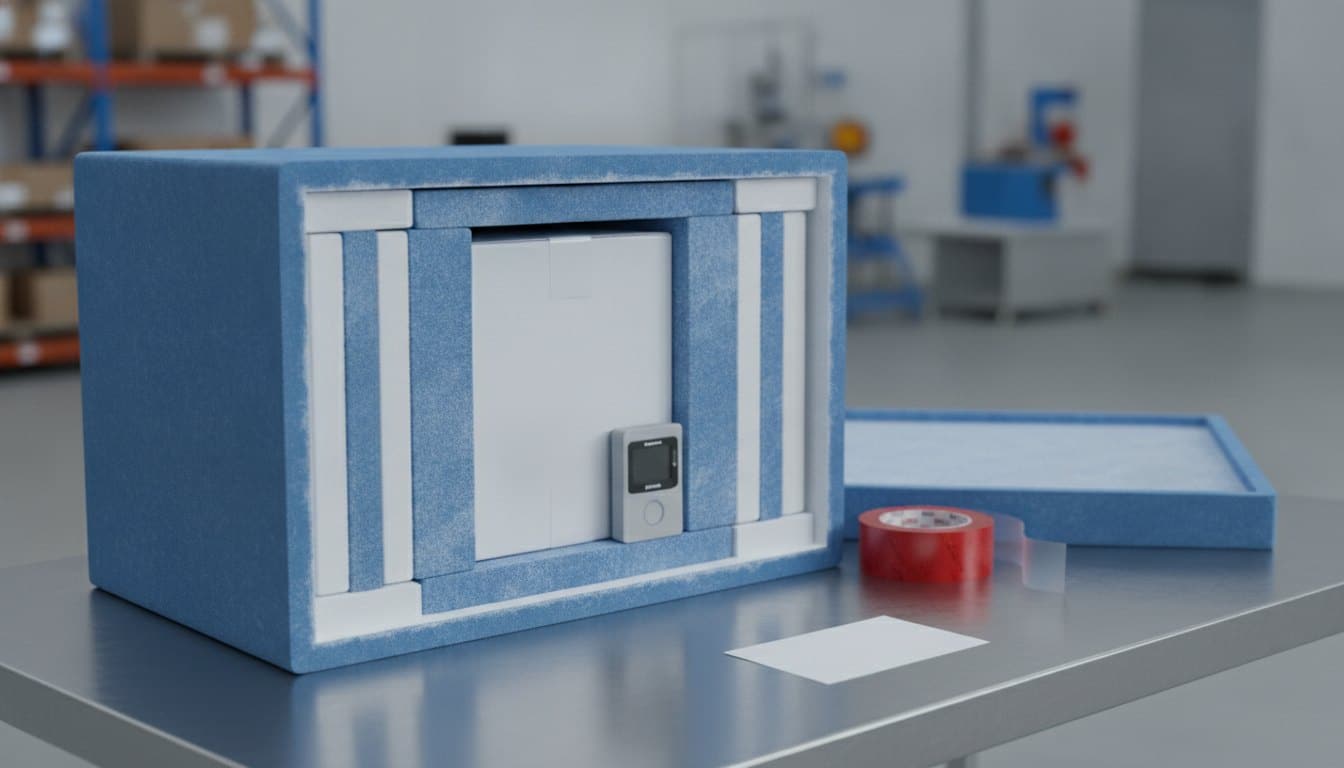
Packaging is qualified to a tier and a duration. A refrigerated shipper with phase-change material holds 2 to 8 C for a stated number of hours under a defined ambient profile and payload. Dry ice sublimates at roughly five to ten pounds per day, so a shipper packed at 06:00 for the long-haul leg may be marginal when a courier collects it at 16:00 for the last mile. Dry ice is also a Class 9 hazardous material, UN 1845, regulated for ground transport by the Pipeline and Hazardous Materials Safety Administration, and packaging must vent carbon dioxide.
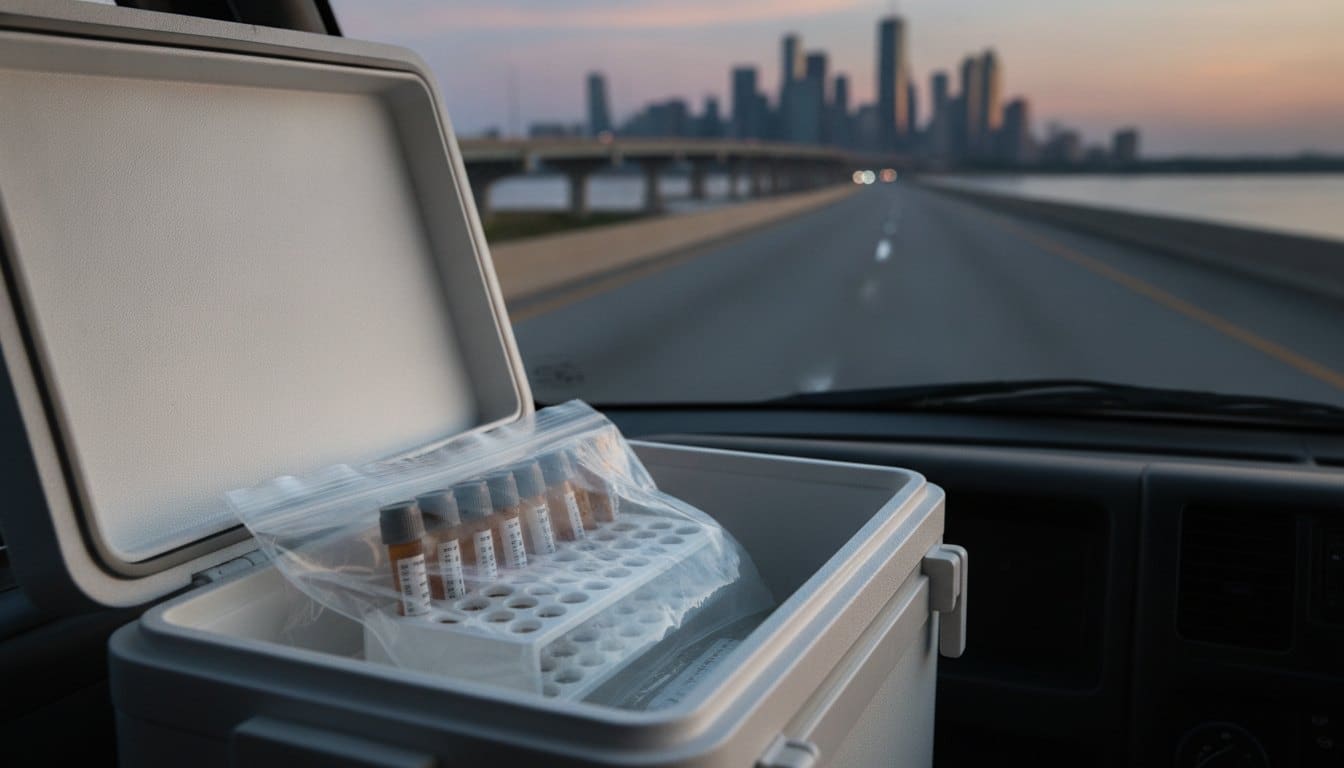
Monitoring closes the loop. Every cold chain shipment should carry a calibrated logger recording continuously, with data downloadable at receipt for the release decision. Alarm thresholds and short excursions are covered in our guide to cold chain logistics and temperature control best practices; biologics requirements are on our biologics cold chain transport page, and the FDA’s vaccines, blood and biologics resources are the reference for cell and gene therapies.
Tier-by-tier packaging checklist:
- Controlled room temperature: insulated shipper year-round, logger present, no direct sun
- Refrigerated 2 to 8 C: qualified shipper, conditioned coolant, freeze barrier, continuous logger
- Frozen minus 20 C: dry ice or qualified frozen packs rated for the full transit
- Ultra-cold minus 60 to minus 80 C: dry ice for the entire route, hazmat labeling and ventilation
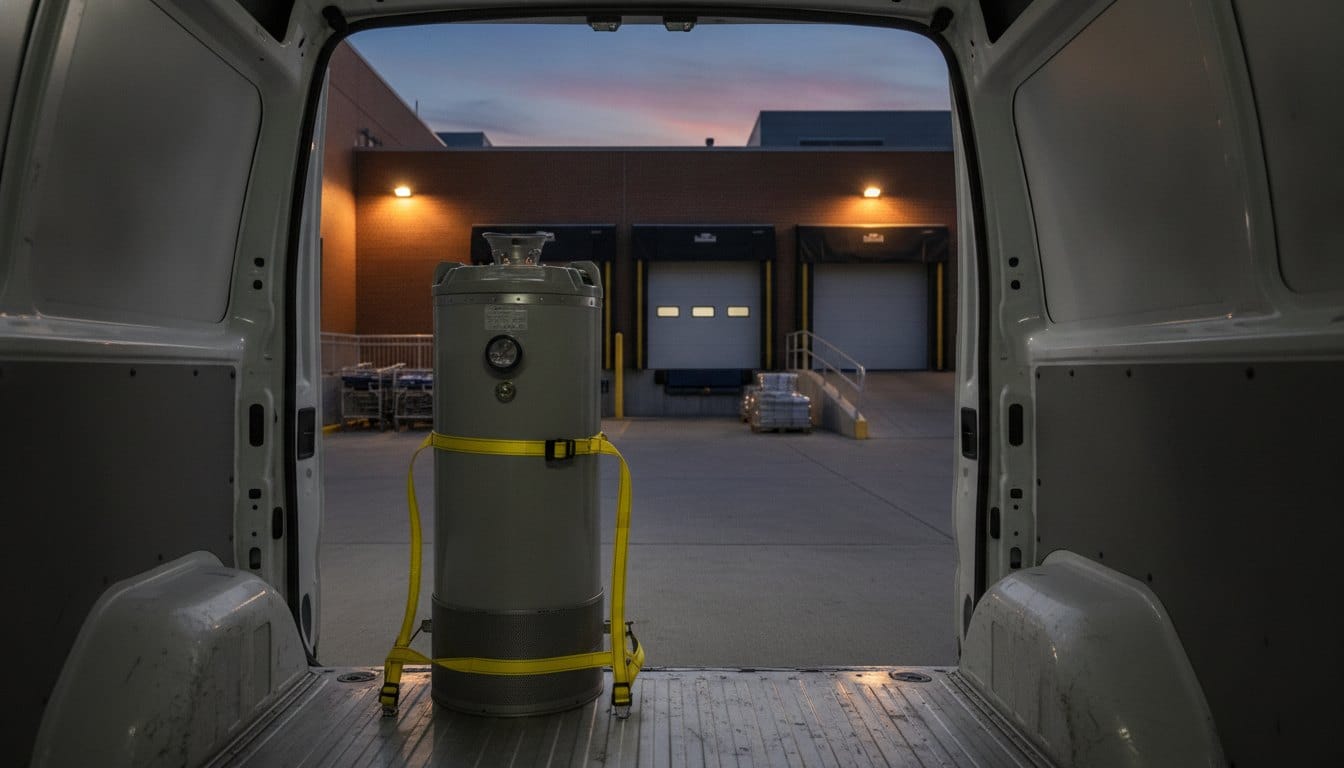
- Cryogenic: charged dry shipper kept upright, hold time verified against the transit plan
4. Documentation That Travels with the Product
In pharmaceutical distribution, documents are part of the product’s legal status. For finished prescription drugs, the Drug Supply Chain Security Act requires trading partners to exchange transaction information at the package level and to verify product identifiers, with electronic tracing requirements phased in from November 2023. Product that arrives without matching transaction data cannot be accepted into inventory. The courier does not generate that data, but its delivery record proves when possession transferred.
Beyond DSCSA data, a shipment carries a packing list against which the receiver counts, a certificate of analysis for the lot, the temperature record for each leg, and a chain-of-custody form signed at every transfer of possession. Schedule II controlled substances move on a DEA Form 222 or its electronic equivalent, signed by the receiving registrant. Investigational products add the shipment authorization and receipt acknowledgment. Anything missing at delivery is logged as a discrepancy on the proof-of-delivery record.
Proof of delivery is where courier documentation supports the chain or breaks it. A signature from whoever happened to be at the front desk is not a valid transfer for a controlled or investigational product. Name the receiving party in advance, have the driver verify the name, and make sure the e-signature record carries the geofence timestamp and a photo of the sealed shipper. Our chain-of-custody courier service page describes how each handoff is recorded.
Documents to verify at every handoff:
- Serialized product identifier and matching DSCSA transaction data
- Packing list reconciled to physical count, with discrepancies logged at receipt
- Continuous temperature record for the preceding leg, transferred before acceptance
- Chain-of-custody form with the name, time and signature of each party taking possession
5. The Last Mile of Pharmaceutical Supply Chain Logistics: Depot to Clinic
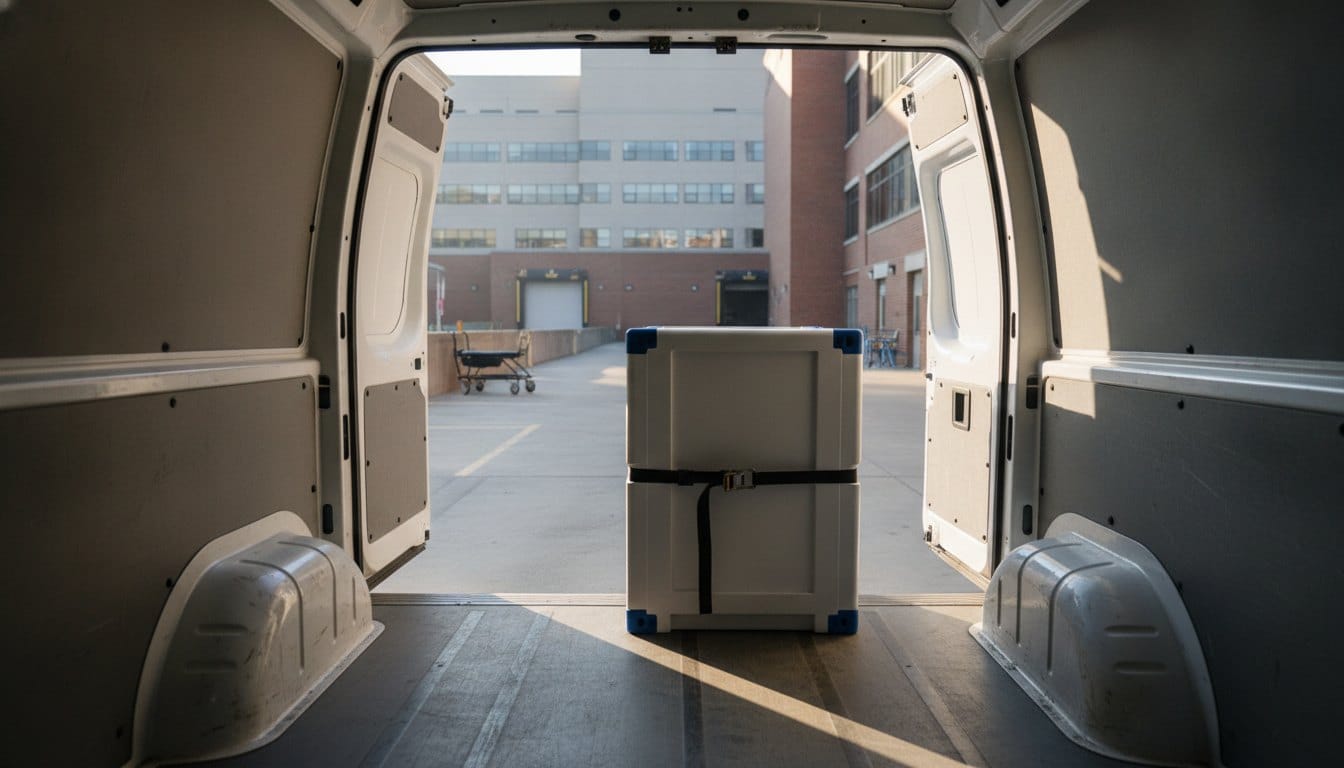
The last mile has the most handoffs per mile and the least controlled receiving environment. The destination might be a hospital pharmacy with a staffed dock, a specialty pharmacy in a strip mall, a fourth-floor infusion center with no dock, a physician practice with one refrigerator, or a patient’s home. Each has different receiving hours, a different authorized receiver, and a different ability to refrigerate product quickly. Treat them as identical stops and a 2 to 8 C shipper will eventually sit on a warm counter.
Write the delivery specification per destination type. Scheduled deliveries to hospital and specialty pharmacies fit a route model with fixed windows. Patient-specific products with short beyond-use dating, such as compounded infusions with a 24-hour limit, need same-day or STAT service timed to the appointment. A biologics depot in central New Jersey serving infusion centers from New Brunswick to Princeton might run a scheduled morning route for the hospital pharmacies and serve the infusion centers, whose schedules change daily, on demand. Coverage in that corridor is on our medical courier service for central New Jersey page; home delivery is in our home health infusion delivery guide.
Reverse flows belong in the same specification: recalls, expired inventory, returned investigational product and reusable shippers all travel back with the same documentation as the outbound leg. What the courier owes the manufacturer is on our medical courier services for biotech page: temperature-tiered transport, trained drivers, chain-of-custody records and 24/7 dispatch, so a Sunday recall pickup or a Friday night STAT is handled inside the process, not as an exception.
Last-mile requirements to write into the delivery specification:
- Receiving hours and the named authorized receiver for each destination
- Maximum time from arrival to product in storage, with a fallback if nobody is available
- Service level by product type: scheduled route, same-day, or STAT for short-dated product
- Inside delivery instructions for sites without a dock, including the exact handover point
Key Takeaways
Pharmaceutical supply chain logistics succeeds or fails at the handoffs. The manufacturing quality system does not follow the product out the door; distribution practice, a written quality agreement and a courier that behaves like a GDP participant have to carry it the rest of the way.
- Define ownership of the product and its temperature data at every transfer in a quality agreement
- Treat investigational product with Part 312 accountability: authorization, blinding, receipt and return path
- Match packaging and loggers to the tier and the full transit duration, including the last mile
- Verify DSCSA data, packing list, certificate of analysis and temperature record before accepting product
- Write the last-mile specification per destination type, with named receivers and a return process
To see how a courier portal handles temperature-tiered pharmaceutical deliveries, chain-of-custody records and same-day depot-to-clinic service across the Northeast, request a demo of the carGO Health platform.
Frequently Asked Questions
What is pharmaceutical supply chain logistics?
Pharmaceutical supply chain logistics is the planning, transport, storage and documentation that moves a drug or biologic from the manufacturing site through distributors and depots to the pharmacy, clinic or patient while maintaining its labeled storage conditions. It spans good distribution practice, temperature control, DSCSA traceability, chain of custody and last-mile delivery.
What is the difference between GMP and GDP?
Good manufacturing practice governs how a product is made and released inside the plant, under FDA regulations in 21 CFR Parts 210, 211 and 600. Good distribution practice governs everything after release: storage, transport, handling and documentation across every party that takes possession. GMP produces a product that meets specification; GDP keeps it that way until dispensed.
How is investigational product shipped to clinical trial sites?
Under 21 CFR Part 312, sponsors ship investigational product only to participating investigators, usually as numbered kits on a schedule tied to patient visits. Each shipment carries an authorization, a sealed tamper-evident shipper, a calibrated temperature logger and a receipt acknowledgment signed by an authorized person; unused product follows a documented return path.
What temperature ranges apply to pharmaceutical shipments?
Controlled room temperature is 20 to 25 C with excursions permitted between 15 and 30 C. Refrigerated product is held at 2 to 8 C and protected from freezing. Frozen product is commonly stored at minus 20 C, ultra-cold product at minus 60 to minus 80 C on dry ice, and cell therapies below minus 150 C in vapor-phase liquid nitrogen.
What documentation must accompany a pharmaceutical delivery?
A finished prescription drug needs DSCSA transaction data matching its serialized identifier, a packing list, a certificate of analysis, the temperature record for the preceding leg, and a chain-of-custody form signed at each transfer. Controlled substances add DEA forms, investigational products add sponsor authorization and receipt acknowledgment, and proof of delivery carries a timestamp, photo and e-signature.
Related Resources