Last-Mile Delivery in Healthcare: Why the Final Segment Matters Most
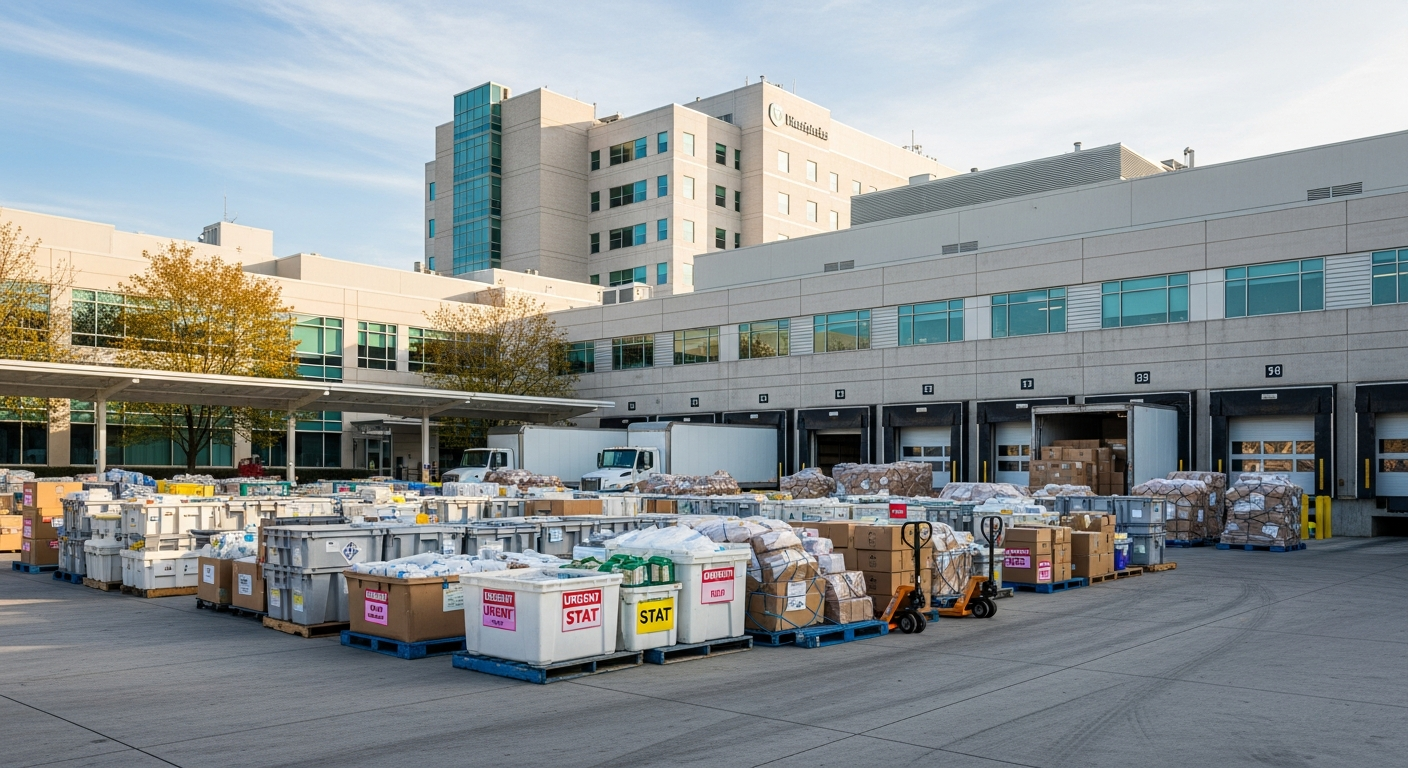
In every logistics chain, the last mile is the most expensive, most unpredictable, and most consequential segment. In healthcare, it is also the most clinically significant. The last mile delivery healthcare challenge encompasses the final transport segment that connects medical specimens, medications, supplies, and equipment to their destination, whether that destination is a hospital laboratory, a patient’s bedside, a pharmacy counter, or a residential address. Every delay, handling error, or routing failure that occurs in this final segment directly affects whether a specimen reaches the lab within its stability window, whether a medication arrives before a dosing deadline, or whether a patient receives the supplies they need for their treatment.
The last-mile problem in healthcare is fundamentally different from e-commerce or food delivery last-mile challenges. A delayed Amazon package is an inconvenience. A delayed specimen or medication can be a clinical event. The temperature, handling, and time constraints that govern medical transport do not pause during the final delivery segment. A specimen that was properly maintained for 90 percent of its journey but experienced a temperature excursion during the last 10 percent is still compromised. Healthcare last mile logistics requires the same rigor in the final delivery as in every preceding step, with additional complexity introduced by facility access requirements, delivery verification protocols, and the unpredictable variables of the last transport segment.
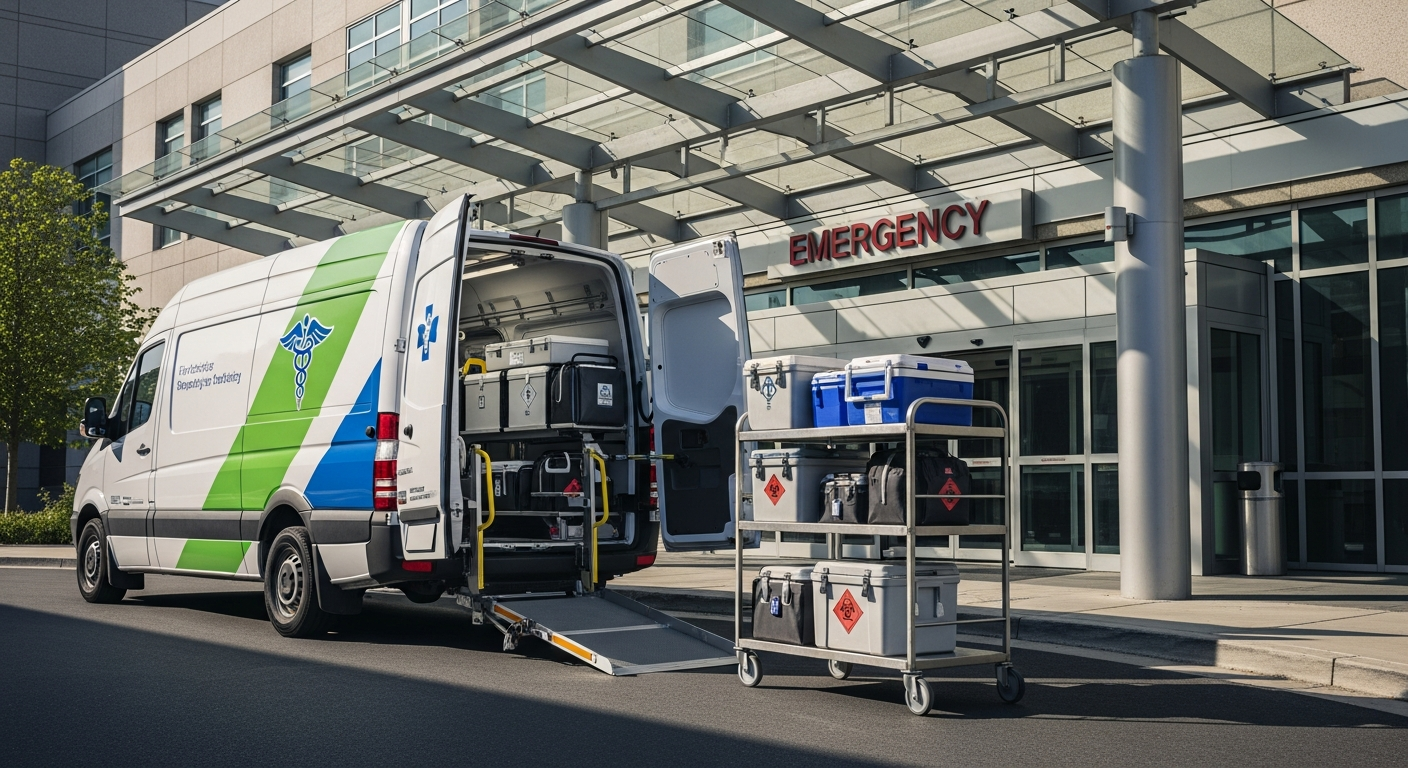
1. Why the Last Mile Is the Most Critical in Healthcare Logistics
The last mile of healthcare delivery concentrates the highest risk of failure in the shortest distance. This is where the specimen transitions from the courier’s controlled transport environment to the receiving facility’s intake process. It is where the medication moves from a temperature-controlled vehicle to a loading dock, an elevator, a nursing station, and finally a patient. Each of these transitions introduces variables: access delays at facility loading docks, elevator wait times in hospitals, handoff procedures that vary between receiving departments, and the physical handling required to navigate a specimen from a vehicle to a laboratory bench.
According to research from the National Institutes of Health, pre-analytical errors that occur during specimen handling and transport are the leading cause of laboratory diagnostic errors, with transport-related issues accounting for a significant percentage. Many of these errors occur during the final handling stages: specimen dropped during transfer, temperature interrupted during the walk from vehicle to laboratory, container damaged in an elevator, or specimen left at a receiving desk rather than delivered directly to the processing area. These are last-mile failures that proper protocols and trained couriers can prevent.
For STAT deliveries where clinical decisions are waiting on specimen results or medication arrival, last-mile delays have immediate patient impact. A blood culture specimen that arrives 20 minutes later than necessary because the courier could not access the laboratory loading dock during a shift change delays the antibiotic sensitivity results that an infectious disease physician needs to adjust a critical patient’s treatment. The transport chain worked perfectly for 95 percent of the journey. The last 5 percent failed.
Last-Mile Risk Factors in Healthcare:
- Facility access delays at loading docks, security checkpoints, and restricted-access laboratory areas
- Handoff variability between couriers and different receiving departments within the same facility
- Temperature exposure during the walk from vehicle to receiving area in extreme weather conditions
- Physical handling during elevator transport, corridor navigation, and multi-floor facility delivery
- Documentation gaps when specimens are left at receiving desks rather than delivered to the intended recipient
2. How AI Routing Optimizes the Healthcare Last Mile
Traditional courier dispatch assigns deliveries based on proximity and sequence. AI-powered dispatch technology transforms last-mile efficiency by incorporating variables that static routing cannot account for: real-time traffic patterns, facility-specific access schedules, historical delivery time data for each receiving location, specimen stability countdowns, and the current position and capacity of every courier in the network.
The impact of intelligent routing on medical last mile delivery is measurable. AI dispatch can predict that a delivery to a hospital laboratory will take 12 minutes longer during the 3 PM shift change than at 1 PM, and adjust the courier’s route accordingly. It can identify that routing through a specific corridor during rush hour adds 18 minutes to the transit time and select an alternative path. It can balance multiple deliveries on a single route while ensuring that the time-critical specimen is delivered first, even if it is geographically the second stop. These optimizations compound across hundreds of daily deliveries, improving on-time performance and reducing the transport-related failures that affect clinical operations.
Predictive analytics extend this optimization further. By analyzing historical delivery data, AI systems can identify patterns that human dispatchers miss: certain facilities consistently have longer intake times on Mondays, specific delivery corridors experience congestion during school drop-off hours, and particular laboratory receiving areas have restricted access during certain procedures. Building these patterns into the routing algorithm proactively avoids delays rather than reacting to them after they occur.
AI Routing Capabilities for Last-Mile Healthcare:
- Real-time traffic integration adjusting routes dynamically based on current road conditions
- Facility access scheduling that accounts for loading dock hours, shift changes, and restricted periods
- Specimen stability countdown integration prioritizing deliveries based on remaining viability windows
- Multi-stop route optimization balancing efficiency with individual delivery time constraints
- Predictive analytics using historical data to proactively avoid recurring delay patterns
3. Facility-Specific Delivery Protocols
Every healthcare facility has unique delivery requirements that affect last-mile execution. Some hospitals require couriers to check in at a security desk before proceeding to the laboratory. Others have designated courier entrances that bypass the main lobby. Some laboratory receiving areas accept specimens only at specific windows with staffed intake positions. Others use pneumatic tube systems or specimen drop boxes that couriers must know how to access. A last mile medical courier service that does not know these facility-specific protocols will waste time navigating unfamiliar buildings, waiting at wrong entrances, and creating delays that accumulate across every delivery.
The solution is courier platform intelligence that stores facility-specific delivery instructions and makes them available to the assigned courier before arrival. This includes the correct entrance location, parking protocol, security check-in requirements, the specific department and floor for delivery, the name or title of the authorized recipient, and any special handling instructions for the receiving department. When a courier arrives at a facility with this information already on their device, the last-mile segment executes smoothly because the courier is not solving an access puzzle on the spot.
For multi-site health systems, facility-specific protocol management becomes particularly important because a courier may serve multiple facilities in a single route, each with different access procedures. The platform must seamlessly provide the correct instructions for each stop, and the courier must be trained to follow facility-specific protocols rather than applying a generic approach to every delivery.
Facility Protocol Elements for Last-Mile Delivery:
- Designated courier entrance location and parking instructions for each facility in the delivery network
- Security check-in requirements including badge access, sign-in logs, and identification verification
- Department-specific delivery instructions including floor, room number, and authorized recipient contacts
- Receiving area operating hours and alternative delivery protocols for after-hours or weekend arrivals
- Special handling instructions for specific delivery types including STAT specimens and controlled substances
4. Last-Mile Solutions for Residential Healthcare Delivery
The growth of home health and medication delivery programs has added a residential last-mile challenge to healthcare logistics. Delivering to patient homes introduces variables that do not exist in facility delivery: no loading dock, no receiving department, no standardized access point. The courier must navigate to a residential address, confirm the correct recipient, deliver temperature-sensitive materials to someone who may have limited mobility, and document the delivery with proof that satisfies HIPAA and clinical documentation requirements.
Residential last-mile delivery requires different skills than facility delivery. The courier interacts directly with patients and family members rather than healthcare professionals. They must communicate professionally, protect patient privacy in a residential setting, verify recipient identity for controlled substances, and handle situations where no one is home to receive a delivery that cannot be left at the doorstep. These interpersonal and judgment skills are not required for facility delivery but are essential for residential healthcare transport.
Technology solutions for residential last-mile include delivery window notifications that allow patients to prepare for the courier’s arrival, real-time tracking links that patients can monitor from their phone, photo documentation of delivery placement, and digital proof of delivery with signature capture. These tools reduce failed delivery attempts and provide documentation that protects both the patient and the courier service.
Residential Last-Mile Solutions:
- Delivery window notifications allowing patients to prepare for courier arrival and ensure availability
- Real-time tracking links accessible to patients for monitoring delivery progress on mobile devices
- Identity verification protocols for controlled substance and high-value specialty medication deliveries
- Photo and signature-based proof of delivery documentation for HIPAA compliance records
- Failed delivery protocols with defined escalation procedures when no authorized recipient is available
5. Measuring and Improving Last-Mile Performance
Healthcare organizations cannot improve last-mile performance without measuring it. Key metrics include on-time delivery rate (percentage of deliveries completed within the committed window), average last-mile transit time (from final route segment initiation to delivery confirmation), first-attempt delivery success rate (particularly important for residential delivery), and exception rate (deliveries that experienced access delays, handoff failures, or other last-mile complications). These metrics should be tracked at the facility level because last-mile performance varies significantly based on destination-specific factors.
Continuous improvement in last-mile performance comes from analyzing exception data and implementing targeted solutions. If a specific facility consistently shows longer last-mile times on certain days, the root cause might be a recurring access restriction that can be accommodated with schedule adjustments. If residential deliveries in a certain area have a high failed-attempt rate, the solution might be improved delivery window communication or alternative recipient authorization protocols.
At carGO Health, our AI-powered platform continuously optimizes final mile healthcare delivery across our service area spanning New York, New Jersey, Connecticut, Massachusetts, and the greater Northeast. With over 200,000 orders completed and a 98.9 percent on-time performance rate, our infrastructure is built to execute the last mile with the same precision as every other segment of the healthcare logistics chain. Schedule a demo to see how our platform solves the last-mile challenge for your healthcare operations.
Last-Mile Performance Metrics:
- On-time delivery rate measuring percentage of deliveries completed within committed time windows
- Average last-mile transit time from final route segment to delivery confirmation by facility
- First-attempt delivery success rate particularly for residential and home health deliveries
- Exception rate tracking access delays, handoff failures, and other last-mile complications
- Facility-level performance analysis identifying location-specific improvement opportunities
Key Takeaways
The last mile of healthcare delivery is where logistics success or failure becomes clinically visible. Specimens, medications, and supplies that were properly handled for the first 90 percent of their journey can still be compromised by last-mile failures including access delays, handling errors, temperature exposure, and documentation gaps. AI-powered routing, facility-specific protocol management, and trained couriers who understand healthcare delivery requirements are the solutions to the last-mile challenge. If your organization is experiencing last-mile delivery issues that affect clinical operations, contact carGO Health to explore how our platform optimizes the most critical segment of healthcare logistics.
Frequently Asked Questions
What is last-mile delivery in healthcare?
Last-mile delivery in healthcare refers to the final transport segment that connects medical specimens, medications, supplies, and equipment to their destination. This includes the final approach to the facility, navigating internal building logistics, and completing the handoff to the authorized recipient with proper documentation.
Why is the last mile the most critical part of medical delivery?
The last mile concentrates the highest risk of handling errors, temperature exposure, access delays, and documentation gaps in the shortest distance. A specimen properly maintained for 90 percent of its journey can still be compromised by a last-mile failure, making this segment clinically decisive despite its short distance.
How does AI improve last-mile healthcare delivery?
AI improves last-mile delivery by incorporating real-time traffic data, facility access schedules, specimen stability countdowns, and historical delivery patterns into routing decisions. It predicts delays before they occur and adjusts routes dynamically, improving on-time performance across hundreds of daily deliveries.
What makes residential last-mile delivery different from facility delivery?
Residential delivery involves variable access conditions, direct patient interaction, recipient identity verification, privacy considerations, and the absence of standardized receiving infrastructure. Couriers need interpersonal skills and judgment that facility delivery does not require, plus technology solutions for delivery window communication and proof of delivery.
How should healthcare organizations measure last-mile performance?
Key metrics include on-time delivery rate, average last-mile transit time, first-attempt delivery success rate, and exception rate. These should be tracked at the facility level because last-mile performance varies by destination. Analyzing exception data identifies specific improvement opportunities at each delivery location.
Related Resources